

Eight Sleep Files for IPO Amid $3.5B Smart Sleep Market Surge
Eight Sleep
Sleep Health Service Provider
Currently, sleep health has emerged as a critical global issue. As the pace of life accelerates and stress levels rise, sleep disorders are becoming increasingly prevalent. According to the "2024 World Sleep Report," the number of individuals suffering from insomnia worldwide has surpassed 2 billion, with 45% experiencing difficulty falling asleep and 32% frequently waking up during the night.
It has given rise to a vast and continuously expanding sleep health market. Against this backdrop, Eight Sleep, a New York-based startup founded in 2014, is redefining the sleep experience with AI technology, creating deep-sleep solutions tailored to individual physiological needs.
Eight Sleep was born out of the personal experience of its co-founder and CEO, Matteo Franceschetti. As a serial entrepreneur, he had long suffered from sleep problems. After trying various sleep-aid products on the market, he found that these solutions all had obvious limitations: most could only monitor but not intervene, or their interventions were passive and limited in effectiveness.
It was precisely this disconnect between market offerings and genuine consumer needs that drove Matteo, along with co-founders Alexandra Zatarain and Massimo Andreasi Bassi, to embark on an in-depth exploration. Starting from foundational research in human evolution and sleep science, the team identified thermoregulation as a critical factor influencing sleep quality—one that had long been overlooked by the market. They recognized that modern, temperature-controlled environments disrupt the body’s innate circadian temperature rhythms, and that restoring these rhythms could be an effective approach to improving sleep.
This scientific insight became the cornerstone of Eight Sleep’s innovation: not only to precisely monitor sleep, but also to actively intervene in it. “Dynamic temperature control” was identified as the core intervention method most aligned with physiological principles, guiding smooth transitions between sleep stages by mimicking the body’s natural thermoregulatory rhythm, thereby improving sleep quality at its root.
Guided by this core direction, Eight Sleep’s development journey has been marked by steady, incremental progress:
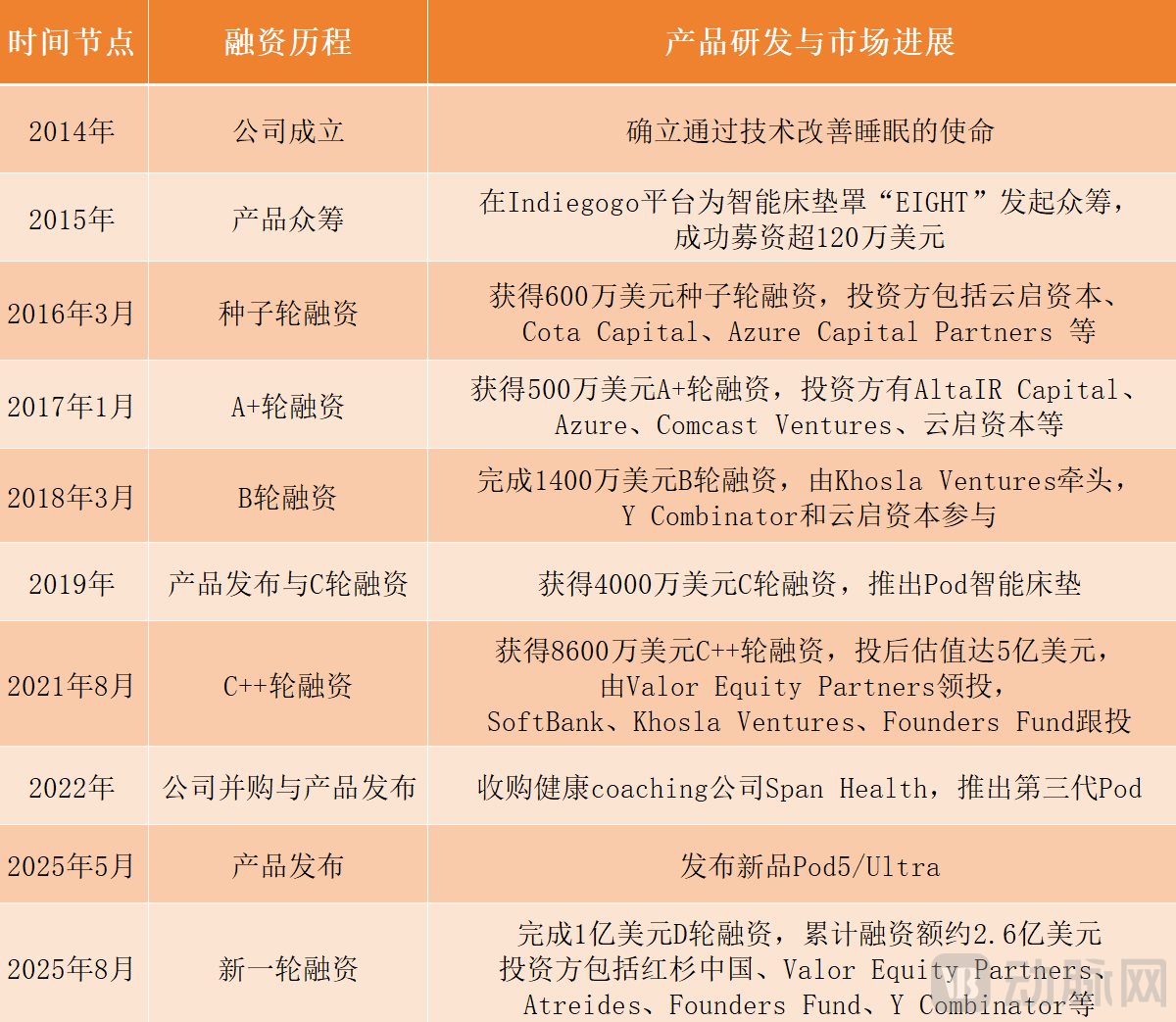
Overview of Eight Sleep's Development History
From a physiological perspective, there is a clear association between the circadian rhythm of core body temperature and the sleep–wake cycle. Sleep onset is typically accompanied by changes in the temperature gradient from the distal extremities (hands, soles of the feet, ankles, etc.) to the proximal regions (chest, abdomen, back, and head), as well as cutaneous vasodilation, which promotes heat dissipation and lowers core body temperature. Conversely, body temperature begins to rise prior to awakening in the early morning. This process is governed by the suprachiasmatic nucleus (SCN) of the hypothalamus and regulated through melatonin secretion.
Based on this principle, Eight Sleep has built three innovative technological pillars:
First isPrecision Temperature Control System, employing water-circulation thermal management technology for more precise and quieter performance than air-based systems. It offers a temperature regulation range of 18°C–43°C, with a rapid response time of under 60 seconds. Zoned control technology enables independent temperature regulation for the left and right sides, achieving an accuracy of ±1°C.
Next isUnobtrusive Biological Monitoring System, medical-grade physiological parameters such as heart rate, heart rate variability (HRV), and respiratory rate can be collected without wearing any devices, by using a high-precision pressure sensor array.
Finally,Intelligent Algorithm Platform, employing machine learning-driven personalized temperature curve optimization and a sleep quality assessment system based on physiological data.
At the core product level, Eight Sleep’s flagship Pod smart mattress achieves a breakthrough in sleep intervention through a synergistic “hardware + algorithm” architecture. The product consists of a foam mattress, an ActiveGrid water-cooled cover, and a Hub unit.
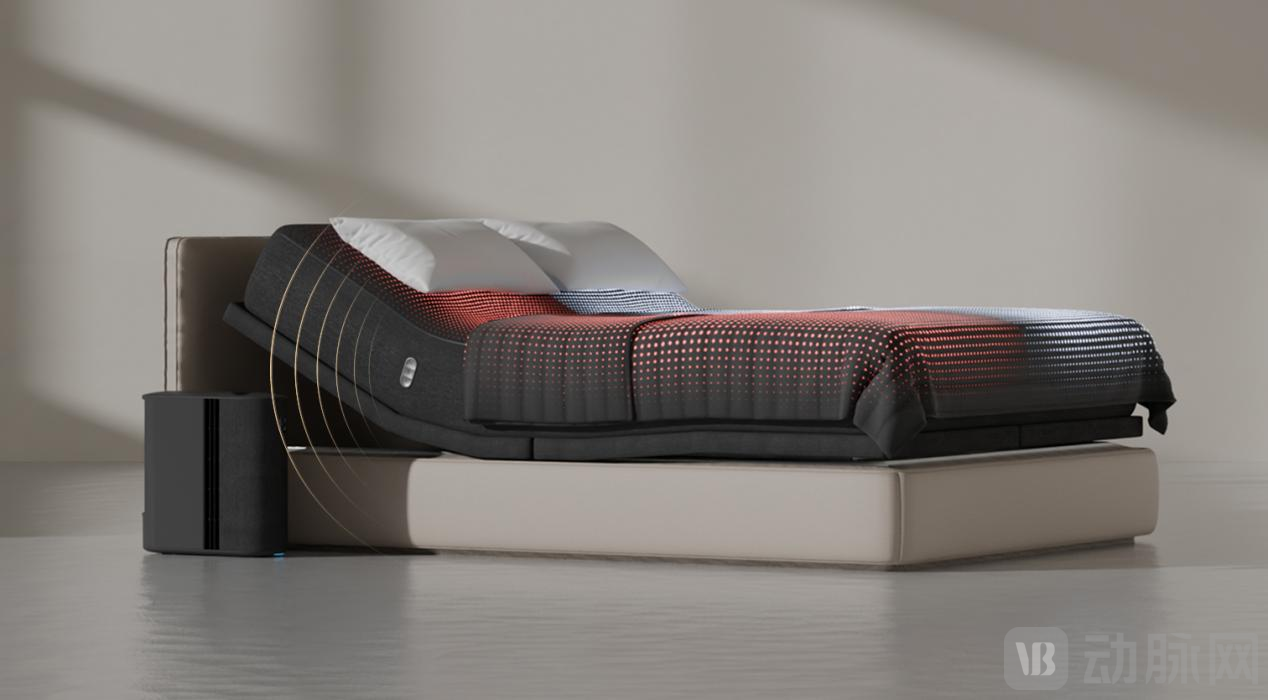
Pod Smart Mattress Diagram Source: Eight Sleep Official Website
Specifically, the bedsheet incorporates 35 contactless sensors based on piezoelectric materials and flexible circuit design. These sensors can capture environmental data such as bedroom temperature, humidity, and weather conditions in real time, detect subtle signals like blood flow and respiratory vibrations, and accurately monitor 12 physiological indicators, including heart rate, respiratory rate, sleep stages, snoring frequency, and turning-over frequency. This data provides precise support for subsequent AI analysis and intervention.
The mattress’s temperature control system is centered on AI-driven Autopilot technology, going beyond simple constant-temperature regulation to deliver a dynamic optimization solution based on individual sleep rhythms and personal data. The system continuously monitors changes in the user’s sleep stages, automatically lowering the temperature by 1–2°C during deep sleep to maintain sleep depth, and raising it by 0.5–1°C during rapid eye movement (REM) sleep to stabilize dream cycles. It also supports independent temperature control on each side of the mattress, catering to the personalized needs of couples.
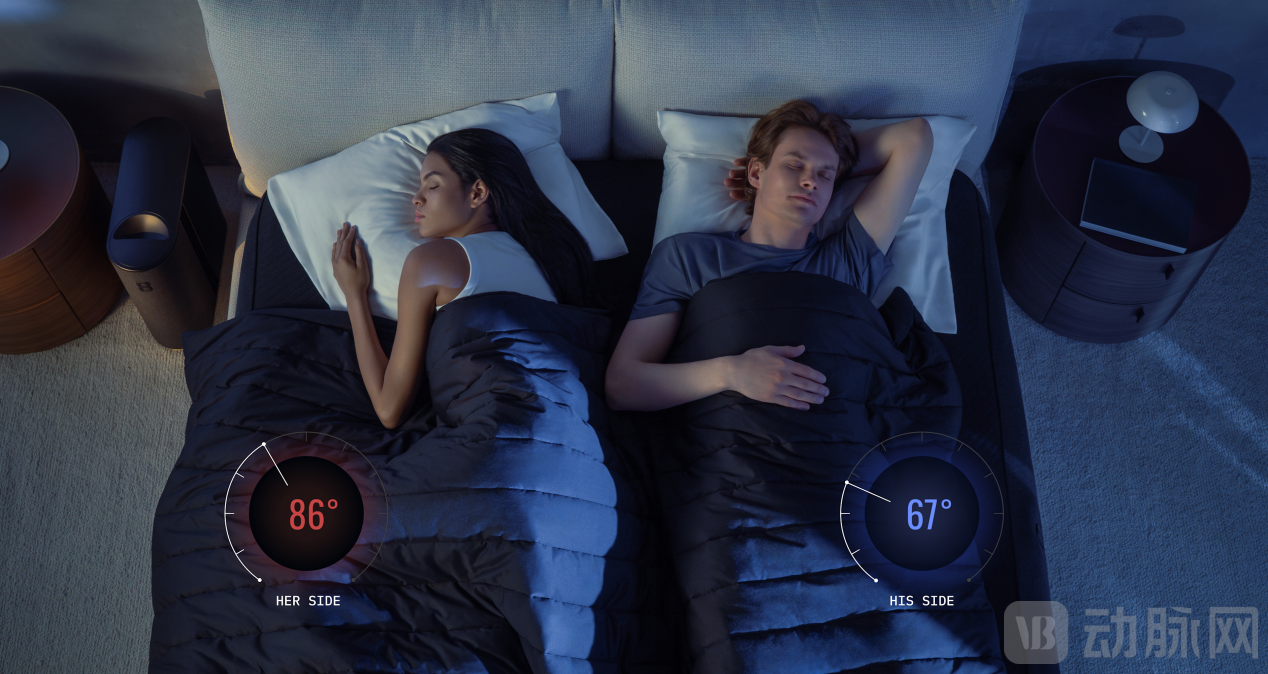
Independent Temperature Control on Both Sides of the Mattress Source: Eight Sleep Official Website
To address the specific scenario of menopausal hot flashes in women, Eight Sleep has also developed a “Hot Flash Mode.” This feature can be activated via the app or an embedded button on the mattress, lowering the bed surface temperature by 3–4°C within 10 seconds and maintaining this cooling effect for 15–20 minutes. Once the sensation of intense heat is alleviated, the temperature gradually returns to the baseline level. The parameter settings for this mode are derived from an in-depth analysis of data collected from over 1,200 menopausal women, covering more than 13,800 cooling and rewarming cycles, ultimately achieving a precise balance between “rapid relief of hot flashes” and “uninterrupted sleep continuity.”
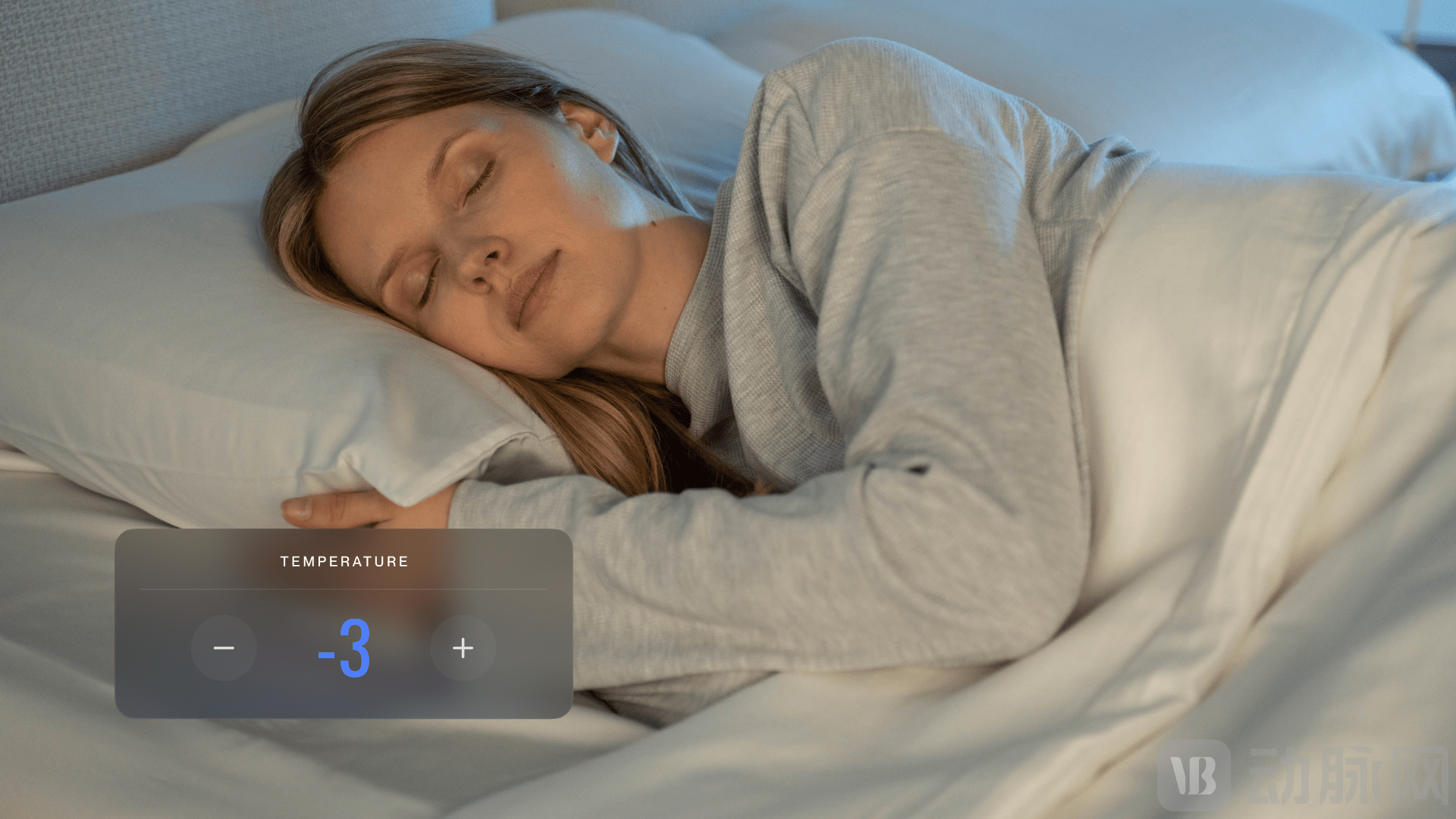
Diagram of a 3°C Decrease in Bed Surface Temperature Source: Eight Sleep Official Website
In addition to temperature control, Eight Sleep has achieved unobtrusive snore monitoring and mitigation. Its Pod 5 Ultra model features “passive snore detection and intelligent mitigation,” operating without wearable devices or microphones by relying solely on a high-precision array of vibration sensors positioned in the mattress area corresponding to the chest.
The sensor accurately identifies snoring behavior using a neural network trained on data from over 2,500 snorers. When persistent snoring is detected, it adjusts the base at a subtle rate of 0.5–1 degree per minute, slowly elevating the head of the bed to an angle of 6–15 degrees. This adjustment reduces airway obstruction by optimizing sleep posture. The entire process operates at noise levels below 25 decibels with imperceptible movement, avoiding sleep disruption while delivering significant relief.
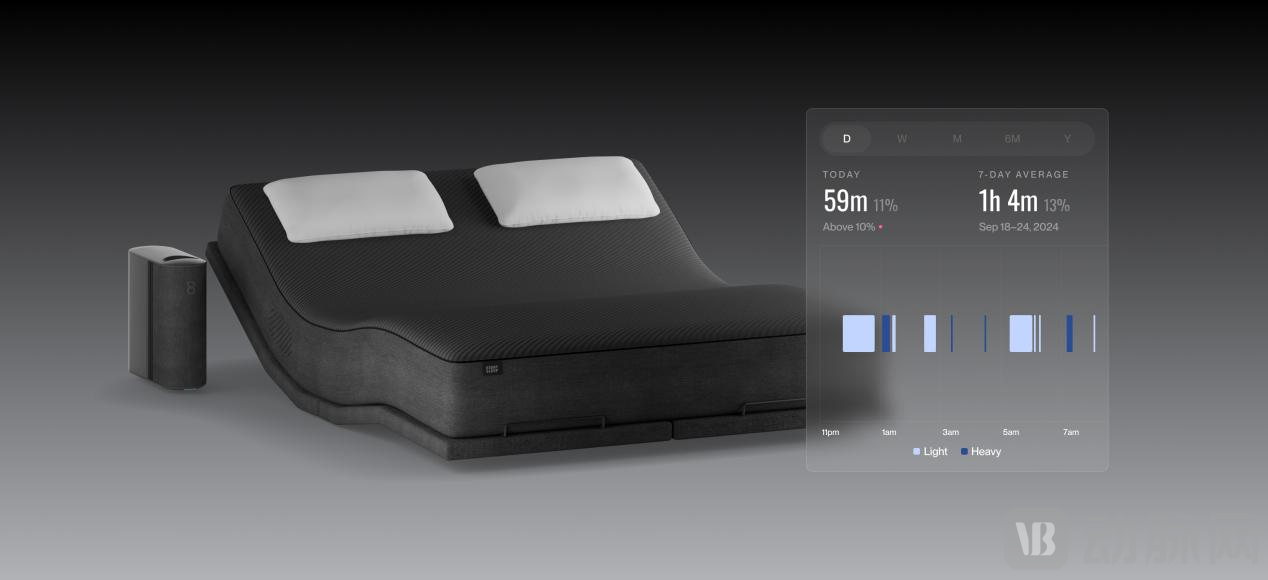
Schematic Diagram of Automatic Sensor Base Adjustment Source: Eight Sleep Official Website
Currently, Eight Sleep holds 14 patents in the field of consumer sleep technology. Additionally, this August, Eight Sleep plans to submit two medical device classification requests to the FDA, aiming for certification related to sleep apnea and menopause-associated features.
Eight Sleep’s technology has not only transformed the user experience but also gained recognition from the scientific community. Research presented at the 2025 Seattle Sleep Conference showed that users of the product experienced a 3% reduction in sleeping heart rate, a 13% increase in heart rate variability (HRV), and a 10% extension in deep sleep duration, with particularly notable improvements observed among women and individuals with poor-quality sleep.
Long-term tracking also shows that after six months, users’ sleep hygiene index improved by 27%, Epworth Sleepiness Scale scores decreased by 3.4%, and sleep onset latency was reduced by 12%. Furthermore, sleep optimization led to enhanced aerobic capacity, with over 90% of users reporting dual improvements in energy levels and sleep quality.
The capital market has responded with equal enthusiasm. In August this year, the company completed a new round of financing worth $100 million, bringing its total cumulative funding to approximately $260 million. The list of investors includes not only top-tier institutions but also elite athletes such as Ferrari F1 driver Charles Leclerc and McLaren Racing CEO Zak Brown. These investors, drawn from communities engaged in high-frequency, high-intensity training, have indirectly validated the product’s practicality and efficacy through their extreme demand for sleep recovery.
The company’s market performance has been equally impressive. As of 2025, cumulative sales of Eight Sleep’s Pod series smart mattresses have surpassed $500 million (approximately RMB 3.5 billion). In 2024, online sales of the Pod series reached $75 million, with a repurchase rate of 35% and a Net Promoter Score (NPS) as high as 78.
Alongside its market success, the company has also garnered authoritative industry recognition: it was named to Fast Company’s “World’s Most Innovative Companies” list for three consecutive years, received TIME magazine’s “Best Inventions of the Year” award twice, and earned a nomination for “Best Health Tech Product” at CES 2025.
Underpinning its capital confidence and market performance are a massive user base and deep data assets. Through usage by millions of users worldwide, Eight Sleep has cumulatively collected over 1 billion hours of sleep data, covering user samples across different ages, genders, occupations, and climatic regions.
These data not only continuously feed back into algorithm optimization but also make Eight Sleep one of the few companies globally capable of deeply interpreting human sleep patterns. Research conducted by the company based on these data, such as studies on the “correlation between temperature and sleep quality,” has strengthened its technical authority and industry leadership at the academic level.
Eight Sleep’s success is merely a microcosm of the rapid development in the sleep technology market.
According to a report by Zhongyan Puhua Industry Research Institute, the scale of China’s sleep economy market has shown a steady upward trend, with its value expected to exceed RMB 570 billion in 2025. Globally, this market holds even broader prospects.
Currently, the sleep health market has gradually formed three core tracks: “environmental sleep aid,” “health supplement sleep aid,” and “technology-driven sleep aid.”
Among these, tech-enabled sleep aid, as an emerging and highly promising sector, is leveraging AI algorithms and computing power to provide consumers with proactive sleep health management solutions.
While overseas company Eight Sleep leverages advanced technologies to build sleep optimization systems, domestic enterprises in China are accelerating their market expansion. Tech giants such as Huawei and Xiaomi are capitalizing on their ecosystem advantages by entering the market with portable devices like smart bands and sleep monitors, focusing on precise sleep data collection and health analysis. Traditional furniture companies like De Rucci are building on their heritage in home furnishings by launching smart mattresses equipped with AI algorithms; these products layer sleep monitoring and dynamic adjustment features onto foundational comfort, thereby meeting traditional users’ demand for the “essential attributes of bedding.” Meanwhile, numerous small and medium-sized enterprises are targeting niche scenarios with a “small but beautiful” strategy—for example, developing hypoallergenic smart cribs for mothers and infants, or specialized sleep pillows for snorers—thereby building differentiated competitiveness by addressing specific needs.
Currently, sleep technology is shifting from passive monitoring to active intervention. As consumers place increasing emphasis on sleep quality, the market will see more innovations and opportunities. This tech-driven sleep revolution has only just begun, and for countless people longing for a restful night’s sleep, getting a good night’s rest will no longer be a luxury.