

MicroTech Medical's Equil® Patch Insulin Pump Approved for Pediatric Use in China, Expanding Access for Patients Aged 3 and Above

MicroTech Medical
Developer of Medical Device Products for Diabetes Management
Major Good News for Children and Adolescents with Diabetes!
On September 24, MicroTech Medical issued an announcement,Equil®The pediatric and adolescent indications for the patch-type insulin pump have recently been approved by the National Medical Products Administration. This makes Equil®Patch insulin pumps have further expanded their coverage to include children and adolescents aged 3–17 years, building upon their existing use in adult diabetes management.And at Equil®In the process of adding new indications, MicroTech Medical chose to collaborate with The Children's Hospital, Zhejiang University School of Medicine, and six other top-tier children's hospitals across China to jointly complete clinical validation, which fully demonstrated the efficacy and safety of insulin pump therapy in the treatment of diabetes in children and adolescents.
With Equil®Patch-type insulin pumps have newly received indications for pediatric and adolescent use, overcoming the limitations of previous clinical treatments for diabetes in these age groups. This development is poised to challenge the current dominance of overseas insulin pump products in the pediatric and adolescent diabetes treatment market, offering new therapeutic options for millions of children and adolescents with diabetes in China, as well as for the global diabetic population.
The Pain Points and Unmet Needs in the Treatment of Diabetes in Children and Adolescents Have Long Been Overlooked.
Epidemiological studies show that type 1 diabetes mellitus (T1DM) remains the predominant form of diabetes among children and adolescents globally and in China, accounting for 80%–90% of cases in this population.The incidence and prevalence of T1DM are increasing year by year both globally and in China, with significant variations in incidence across different countries and regions.The T1DM China study conducted from 2010 to 2013 found that the incidence rate in the 0–14-year age group in China was 1.93 per 100,000 person-years, with the peak incidence occurring in the 10–14-year age group. The incidence of T1DM in China is rising rapidly, with the rate among individuals under 15 years of age having increased nearly fourfold over the past 20 years.

Visit to MicroTech Medical's Brand Heritage Day Event
Due to the historical lack of attention within the industry, a large number of patients with type 1 diabetes mellitus (T1DM) have endured extremely “painful” experiences in blood glucose management. During MicroTech Medical’s recent “Brand Origin Day” event, one T1DM patient shared their personal story, stating, “I was diagnosed with type 1 diabetes at the age of 12. Blood glucose control is more challenging for children with type 1 diabetes than for adults. I frequently experienced nocturnal hypoglycemia as a child. My mother would set an alarm every day to prick my finger for blood glucose testing in the early hours of the morning. I had my finger pricked at least ten times a day.” Another patient mentioned being diagnosed with type 1 diabetes in 1991, having progressed from the era of “alcohol lamp urine sugar testing,” which represented the most backward stage of glucose monitoring technology. The cumbersome treatment process during that period led to poor adherence to glucose management, ultimately resulting in multiple complications, including diabetic retinopathy.
With the growing clinical emphasis on diabetes in children and adolescents, the Chinese Guidelines for Diabetes Prevention and Treatment (2024 Edition) have added two new chapters—"Diabetes in Children and Adolescents" and "Type 1 Diabetes"—to build upon previous editions. The Guidelines note that the etiology and pathogenesis of type 1 diabetes mellitus (T1DM) are not yet fully understood; its pathophysiological hallmark is a significant decline or absence of insulin secretion resulting from a marked reduction or loss of pancreatic β-cell mass.Patients with type 1 diabetes mellitus (T1DM) rely on insulin for survival. The “Guidelines” recommend using multiple daily injections of prandial and basal insulin or continuous subcutaneous insulin infusion (CSII) as alternative therapies to control hyperglycemia, thereby reducing the risk of diabetic complications.
For patients, the aforementioned multi-injection therapy entails up to four injections per day and as many as 28 injections per week, which significantly compromises patient adherence, thereby undermining diabetes management and increasing the risk of diabetic complications. In contrast, continuous subcutaneous insulin infusion (CSII), or insulin pump therapy, offers more pronounced advantages by eliminating the need for frequent injections, thus substantially improving patient adherence.
However, in the past, due to the lag in research and development and clinical trials by domestic companies, there was a long-term lack of effective, available, and certified domestically produced insulin pump products for children and adolescents with diabetes. Patients who needed to use insulin pumps often opted for products from overseas companies. These patients faced issues such as high prices and limited accessibility of overseas insulin pumps. Moreover, since these overseas products were largely based on data from foreign populations, patients also encountered problems related to population adaptability.
This has become a “hidden pain” for children and adolescents with diabetes. It is no wonder that patients with type 1 diabetes, while visiting MicroTech Medical’s “Brand Origin Day” offline event to see its rapidly evolving innovative technological products, lamented—wishing that their younger selves could have lived in this era. Today, MicroTech Medical’s Equil®Patch-type insulin pumps are transforming the historical need for frequent injections among pediatric and adolescent patients with diabetes, further reducing the incidence of complications caused by factors such as poor adherence.
It is worth mentioning that, in addition to patients with T1DM, Equil®Patch insulin pumps are also suitable for patients with type 2 diabetes who require long-term, multiple daily insulin injections, as well as for other types of diabetes requiring long-term insulin replacement therapy (e.g., post-pancreatectomy).
With MicroTech Medical's Equil®Patch-type insulin pumps have gained new indications for pediatric and adolescent patients, addressing previous clinical treatment limitations. The market for diabetes management in children and adolescents is seeing the emergence of players capable of reshaping the competitive landscape.
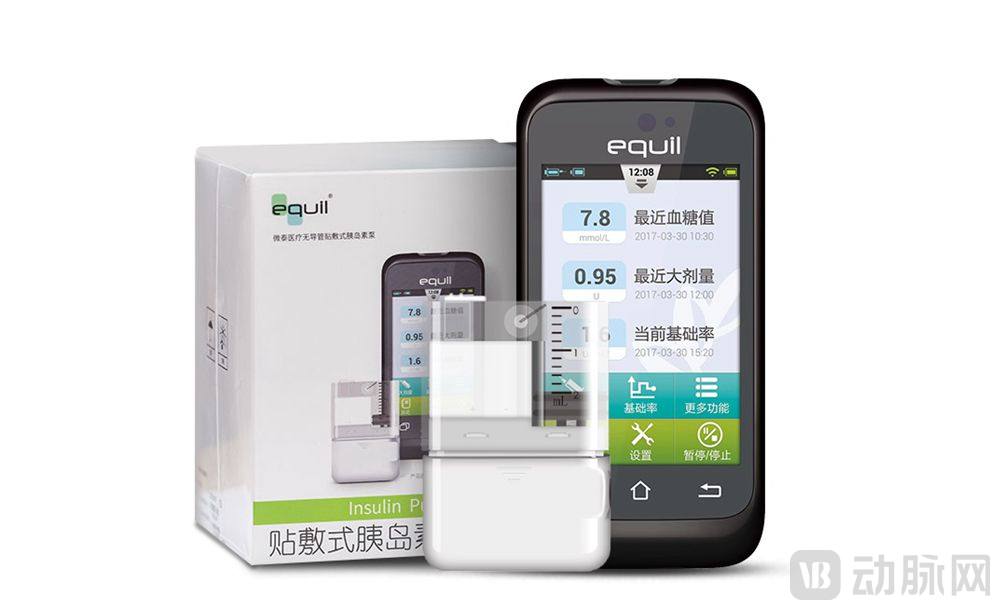
And behind the reshaping of the competitive market landscape, it is evidently also related to Equil®—Related to the Unique Advantages of Patch Insulin Pumps
First, in terms of therapeutic mechanism, Continuous Subcutaneous Insulin Infusion (CSII) offers advantages over multiple daily injection therapy, including precise glycemic control, personalized treatment, and the elimination of frequent injections.Multiple-dose insulin therapy requires multiple daily insulin injections to provide basal insulin (intermediate-
(long-acting insulin analogs) + mealtime insulin (short-acting insulin/rapid-acting insulin analogs). The cumulative number of injections can reach up to 28 times per week. In contrast, an insulin pump can achieve continuous automatic insulin infusion according to preset modes, maximizing the simulation of normal physiological insulin secretion patterns and enabling precise glucose control. Furthermore, while multiple daily injection therapy may lead to blood glucose fluctuations due to significant variability in the absorption of long-acting and intermediate-acting insulins, Continuous Subcutaneous Insulin Infusion (CSII) therapy ensures stable absorption of rapid-acting insulin, allowing for personalized insulin regimens tailored to different scenarios.
Secondly, Equil®Patch insulin pumps, unlike tube-based insulin pumps, offer patients greater convenience in daily life.Traditional tubing insulin pumps primarily present three major challenges during use: first, tube tangling restricts daily activities; second, the bulky pump body is inconvenient to place; and third, these issues lead to poor adherence. The patch-style insulin pump addresses these problems through innovative product design—compared with traditional tubing insulin pumps, Equil®Patch-type insulin pumps offer advantages such as more precise and safe delivery, greater convenience and flexibility in wear and use, cost-effectiveness through semi-disposable designs, enhanced privacy, and the absence of issues like tube occlusion or tubing entanglement. They significantly improve patient adherence.
According to a two-arm, open-label, crossover controlled study involving 29 patients with type 1 diabetes mellitus (T1DM) (mean diabetes duration: 12.1 ± 5.7 years), who underwent 12-week crossover trials with both tubed insulin pumps and patch insulin pumps, indicators such as treatment satisfaction, user evaluations, and glycated hemoglobin levels were observed. The results showed that 76% of the patients preferred the patch insulin pump.

Finally, from the perspective of the product itself, Equil addresses the higher-intensity exercise needs of children and adolescents.®Patch-type insulin pumps have also undergone targeted product optimizations.For example, Equil®Patch-style insulin pumps provide multi-mode on-demand injection, enabling precise infusion based on a 0.025U micro-motor; meanwhile, they offer IP28 comprehensive waterproofing, allowing users to keep the device on while bathing or swimming; additionally, their lightweight design of 23g and compact size make them easy for users to carry around.
To enable more pediatric and adolescent patients to use Equil with peace of mind®Patch Insulin Pump: Currently, MicroTech Medical offers patients a one-week trial experience, allowing users to personally experience the blood glucose control benefits of the patch insulin pump.
At Equil®Behind the development of innovative products such as patch insulin pumps lies the comprehensive strength of MicroTech Medical.
First, MicroTech Medical is one of the few companies in China with full-stack in-house R&D capabilities in the field of diabetes management.On the one hand, the company’s independently developed innovative products, such as the “Patch Insulin Pump System” and the “Continuous Glucose Monitoring System,” exhibit performance that is at a globally leading level. On the other hand, building on its core products, the company has developed the Jiantang Doctor Informatics Glucose Management System, enabling “comprehensive-scenario, full-course, integrated” management centered on patients with diabetes.
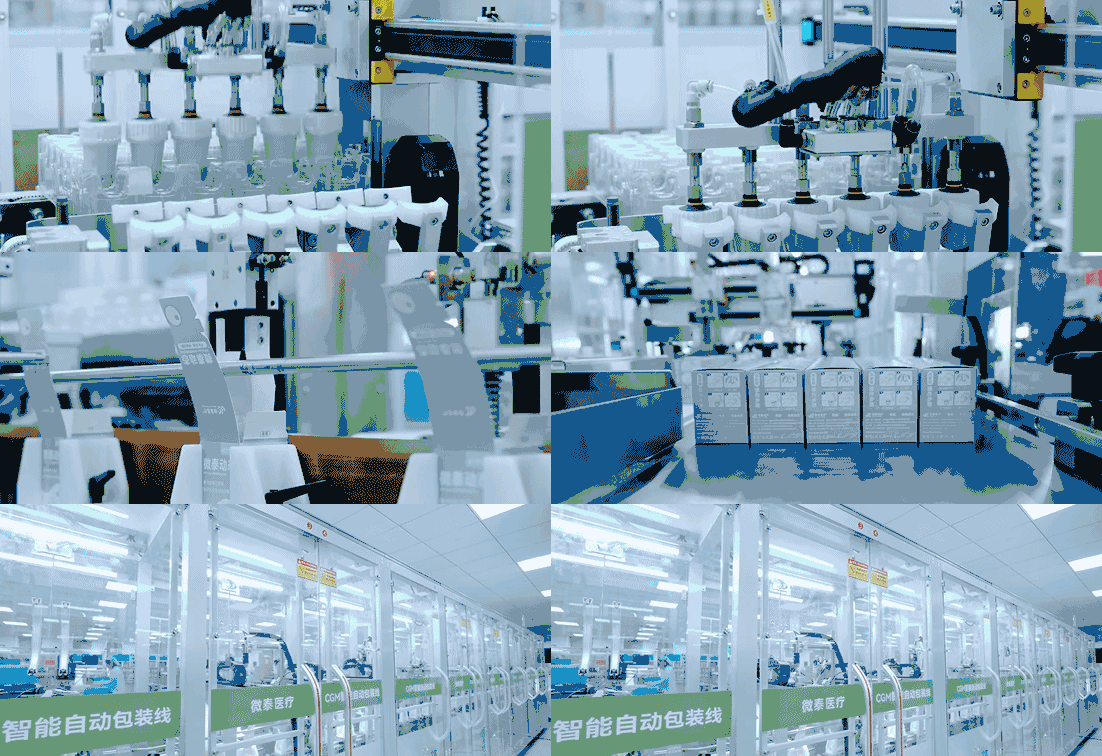
Second, MicroTech Medical is accelerating the implementation of intelligent manufacturing capabilities.Currently, it operates a 15,000 m² production facility, with an additional 44,000 m² factory under construction. During the Brand Origin Day event, MicroTech Medical also showcased its automated production lines to the public, which attracted significant attention from visitors. In the future, it will further support Equil.®Rapid Production and Market Launch of the Patch Insulin Pump Series.
Third, market strength ensures Equil®Innovative products such as patch insulin pumps are rapidly reaching consumers.Since its founding in 2011, MicroTech Medical has grown into a national-level “Little Giant” enterprise specializing in refined, distinctive, and innovative products, as well as a high-tech enterprise, with its products exported to 118 countries and regions worldwide. Its early market accumulation will further empower Equil.®Patch Insulin Pumps Enter the Global Market.
Currently, as the only company in China with both an approved patch insulin pump and a calibration-free continuous glucose monitoring system on the market, MicroTech Medical’s 3C+ Digital Glucose Management System integrates the most advanced monitoring devices, treatment devices, and software platforms available in China’s diabetes care market. By leveraging innovative products, artificial intelligence, and big data cloud platforms, it provides diabetic patients with closed-loop management services covering the entire disease course and all scenarios. Building on this foundation, MicroTech Medical continues to innovate—It is reported that the new insulin pump, expected to hit the market next year, will feature a built-in artificial pancreas algorithm. When used in conjunction with a continuous glucose monitor (CGM), it will enable intelligent closed-loop insulin delivery, offering patients a more user-friendly solution.

Lan Yi, Deputy General Manager of Domestic Marketing at MicroTech Medical
Behind these explorations lies MicroTech Medical’s unwavering commitment to deepening its presence in the diabetes management market and supporting patients.As Mr. Lan Yi, Deputy General Manager of Domestic Marketing at MicroTech Medical, stated during the Brand Origin Day event, “MicroTech Medical will continue to optimize its products and services, enabling more Chinese families to access safe, advanced, and convenient diabetes management devices.” Today, the addition of pediatric and adolescent indications for MicroTech Medical’s insulin pump is merely a new beginning; there is much more to look forward to in the future.