

How promising is AI + synthetic biology? A leading domestic player in a niche sector plans to list in Hong Kong
On June 25, Suzhou Maga Technology Co., Ltd. ("Mega Robotics"), a provider of autonomous agents, submitted its listing application to the Hong Kong Stock Exchange, with Morgan Stanley, Huatai International, Deutsche Bank, and CCB International serving as joint sponsors.

Maga Technology's revenue is growing rapidly. According to the prospectus, Maga Technology's revenue increased from RMB 455 million in 2022 to RMB 930 million in 2024, representing a compound annual growth rate of 43.0%. During the same period, the company incurred net losses of RMB 759 million, RMB 742 million, and RMB 780 million respectively. The current order backlog has significantly increased to RMB 1.5 billion.
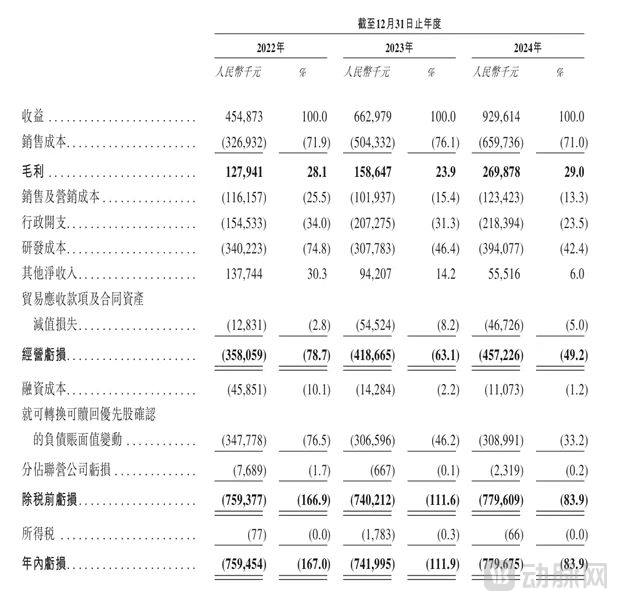
Source: Prospectus (All images in this article are from the prospectus)
In the pre-IPO shareholder structure, according to the prospectus, Huang Yuqing, Qiao Zhixin, Zhang Yan, Yu Chuntao, and Ding Xinyu are acting in concert and together constitute the largest single shareholder group, collectively holding approximately 16.08%. Other shareholders include Innovation Works, Joy Capital, Granite Asia, Goldman Sachs Asset Management, Future Capital, etc.
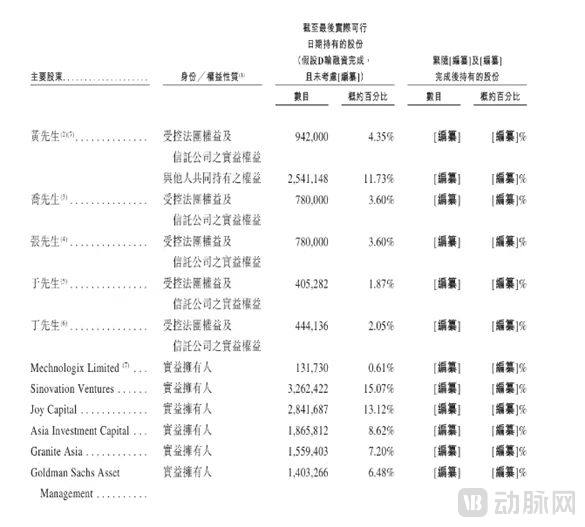
Huang Yuqing is the founder and CEO of Maga Technology, who co-founded the company in 2016 with partners Qiao Zhixin and Zhang Yan.
Before founding Maga Technology, Huang Yuqing worked at Beijing Rigol Technologies Co., Ltd., a subsidiary of Rigol Technologies, Inc., a company listed on the Shanghai Stock Exchange, from January 2009 to March 2016. He received a Bachelor's degree in Information Engineering from Xi'an Jiaotong University, China, in July 2008, and a Master's degree in Business Administration from Tsinghua University, China, in January 2024.
01
Ranked first domestically and sixth overall
An agent is a computer system or entity capable of autonomous action, perceiving its environment, making decisions, and interacting with the environment. It typically relies on large language models as its core decision-making and processing unit, possessing the ability to think independently and use tools to progressively accomplish assigned goals. Autonomous agents are driven by artificial intelligence, advanced algorithms, and sophisticated motion control.
According to the prospectus, Maga Technology is a provider of autonomous agents in the field of robotics technology applications in China, dedicated to enhancing productivity and driving innovation for enterprises in smart laboratory and intelligent manufacturing scenarios.
Measured by revenue generated from smart laboratory scenarios in 2024, Suzhou Maga Technology Co., Ltd. ranks first among domestic autonomous agent suppliers in China, with the broadest coverage of robotic technology applications for autonomous agents in the country.
Agents can be applied across various industries and can independently or collaboratively perform diverse tasks. Suzhou Maga Technology Co., Ltd.'s autonomous agent and multi-agent solutions are primarily used in intelligent laboratories and intelligent manufacturing fields.
In 2024, Maga Technology's smart laboratory and intelligent manufacturing segments accounted for 31.7% and 68.3% of total revenue, respectively.
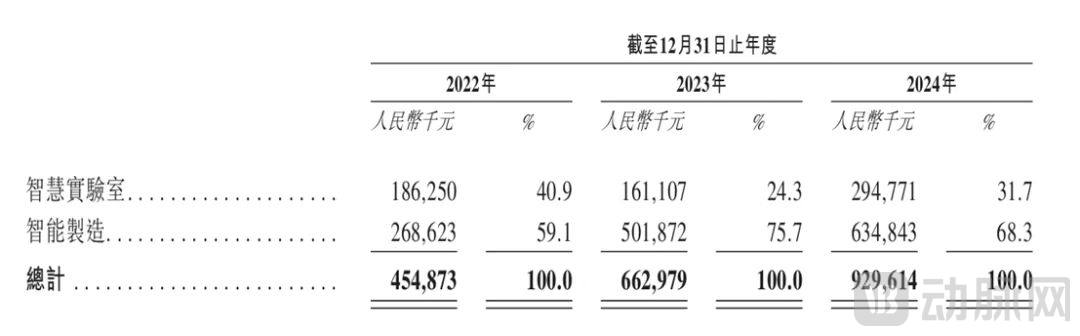
Mainly due to external special factors during a specific period, Maga Technology's revenue from smart laboratories decreased by 13.5% from RMB 186 million in 2022 to RMB 161 million in 2023, and increased by 83.0% to RMB 295 million in 2024, while revenue from intelligent manufacturing increased from RMB 269 million in 2022 to RMB 635 million.
From a market landscape perspective, according to the prospectus, the competitive landscape of intelligent agents in smart laboratories exhibits a moderate level of market concentration, with leading international players coexisting with emerging domestic competitors, and the top 10 companies collectively holding 50.9% of the market share.
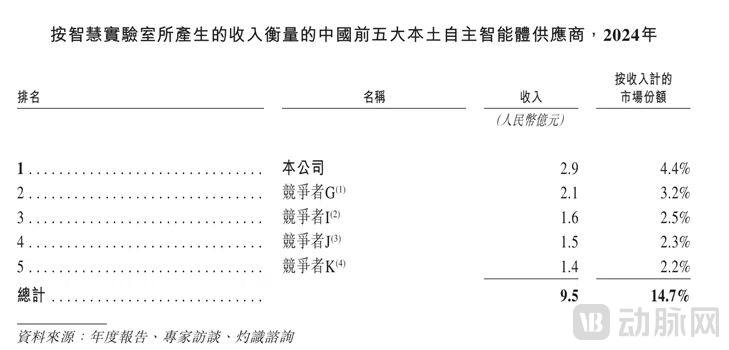
Suzhou Maga Technology Co., Ltd. ranks sixth among the top 10 autonomous agent providers measured by revenue generated from smart laboratories, with a market share of 4.4%.
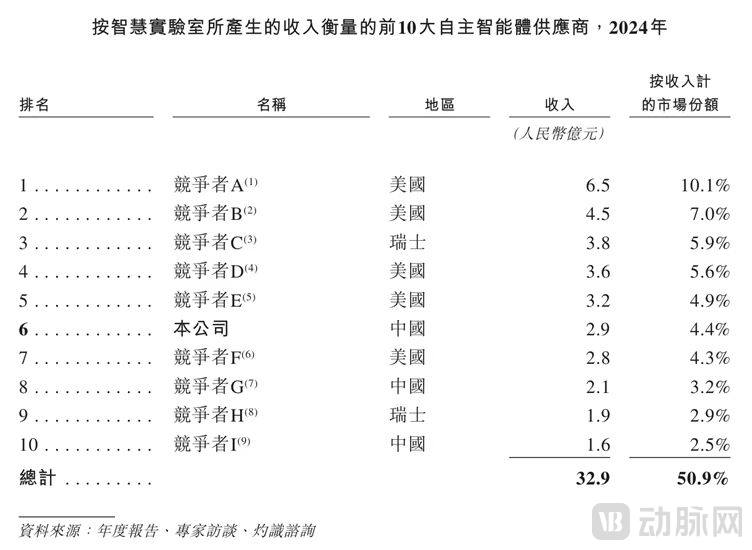
Among the top five domestic autonomous agent vendors in China ranked by revenue generated from smart laboratories, Maga Technology ranks first.
02
Integrating synthetic biology and automation
Notably, based on its two core businesses, Maga Technology is achieving in-depth expansion in professional applications within the synthetic biology industry.
For example, the multi-agent solution initially designed by Maga Technology for life science testing is now being applied in early drug discovery and synthetic biology, and its fully automated molecular experiment cluster is particularly suitable for strain screening, antibody screening, and synthetic biology.
According to the official WeChat account, in recent years, Maga Technology has actively expanded into the field of automated synthetic biology, leveraging automation, high-throughput processing, rapid turnaround, and intelligent data management as core technologies. By integrating these with practical applications in synthetic biology such as strain screening, yeast directed evolution, and vector construction, the company has developed multiple automated platforms.
Behind this layout, automation and intelligence originally hold significant importance for the field of synthetic biology.
According to Tong Si, a researcher at the Shenzhen Institute of Advanced Technology, Chinese Academy of Sciences, relying on automation enables machines to conduct repetitive, controllable, and large-scale experiments.
Because life is a complex system with nonlinear operational rules, rational design faces significant challenges. For example, in the research on synthetic artemisinin using engineered yeast, finding the "right strain" relied solely on repeated trial and error, taking ten years to accomplish.
However, by relying on automation, machines can conduct repetitive, controllable, and large-scale experiments. Moreover, automated, high-throughput equipment platforms, along with standardized experimental methods, algorithms, and procedures, can address the industry's challenges of slow research speed, low efficiency, and high labor costs, thereby facilitating the establishment of companies in the synthetic biology field.
In addition to applications in the field of synthetic biology, agents are receiving significant attention from the industry as the most mainstream future application of large models.
According to CIC data, the global autonomous agent robotics technology market size has grown from approximately 31.8 billion yuan in 2020 to about 114.3 billion yuan in 2024, representing a compound annual growth rate of 37.7%. It is projected to reach approximately 383.7 billion yuan by 2030. As various industries accelerate their transformation toward intelligent automation, there remains significant potential for market penetration.
The Chinese autonomous agent robot technology market is experiencing accelerated growth, increasing from RMB 6.2 billion in 2020 to RMB 33.7 billion in 2024, with a compound annual growth rate of 52.9% between 2020 and 2024. The market is projected to reach RMB 135.7 billion by 2030, with a compound annual growth rate of 26.1% from 2024 to 2030.
03
The "Pressure" of the Domestic Industry Leader
As the market heats up and grows rapidly, there may be an increasing number of participants.
Maga Technology stated in its prospectus that competition is expected to intensify with new market entrants and the emergence of more advanced technologies. Its competitors include autonomous agent manufacturers leveraging their background in traditional robotics development to enter the industry, as well as emerging manufacturers that have focused on autonomous agent development and commercialization since their inception.
Some of these competitors may have stronger financial resources, broader technical capabilities, more flexible pricing strategies, greater sales and marketing strength, longer operating histories, and higher brand recognition. This could place a burden on our business, operating results, and financial condition, create pricing pressure on our products, and affect our revenue and profitability.
Besides competition, funding is another pressure that Maga Technology needs to face.
Mega Robotics stated that the company incurred net losses in 2022, 2023, and 2024. As it is currently expanding its business operations and continuously investing in research and development within the rapidly growing robotics technology market, it may continue to face significant losses in the future and may not be able to achieve or sustain profitability if it fails to generate sufficient revenue and manage costs effectively.
Additionally, Maga Technology may need to secure substantial additional funding to support growth and operations, as technological advancements and R&D efforts are capital-intensive. Maga Technology has invested heavily in business and technological innovation and will continue to invest significantly in executing its business strategy. Failure to obtain sufficient financing could hinder the company’s progress in key areas such as technological innovation, product development, and talent acquisition, and may affect its ability to maintain a leading position in the industry revolution.
In terms of technology, Maga Technology stated that it might face risks related to the technologies currently adopted and applied, such as imaging, measurement and testing, AI and robotics, and automation technologies, which are highly complex, may contain defects or fail to operate as expected, and it may not be able to successfully manage its technological infrastructure.
Another point worth noting is that Zhang Yaqin,院长 of the Institute for AI Industry Development at Tsinghua University, mentioned in an interview that agents are still at a very preliminary stage, and most products in the market may not yet be true intelligent agents. "An intelligent agent requires a closed loop encompassing task duration, accuracy, memory, reasoning, planning, decision-making, and action capabilities. If tasks need to be pre-divided into n subtasks, each with a fixed path, then it is likely just automation."