

SeserGene Announces 100% Complete Response in Early Trials of CG105, a Non-Viral CAR-T Therapy Reducing Manufacturing Costs by 50–80%
Recently, CG105, a CAR-T product developed by Seacell Gene, a subsidiary of Huahai Pharmaceutical, based on its proprietary non-viral DNA technology platform,In the investigator-initiated trial (IIT) for multiple myeloma, the therapy demonstrated significant efficacy. Among the three patients who completed infusion, two achieved complete response (CR) and one achieved stringent complete response (SCR). The treatment exhibited a high safety profile, with no immune effector cell-associated neurotoxicity syndrome (ICANS) observed. The product is poised to proceed with an Investigational New Drug (IND) application.
In 2019, Dr. Li Linhong, who has over three decades of experience in cell therapy R&D and previously served as Director of Cell Engineering at an overseas-listed biotech company, returned to China at the invitation of Huahai Pharmaceutical. Together with Dr. Zhu Xiangyang, Chairman of the company, she co-founded Cytoheal Biotechnology (Shanghai) Co., Ltd., achieving breakthroughs in the key technology of “non-viral gene delivery platforms,” which have been clinically validated.
In light of the “million-dollar” price tags on current cell therapy products and the ongoing discussions surrounding their manufacturing convenience, production cycles, capacity constraints, and tumorigenic risks, how can these issues be addressed at the “source”? Can innovations in vector technology resolve these challenges and make such novel therapies affordable for the general public? What new possibilities will delivery innovations bring to CAR-T therapy? VCBeat discussed these questions with Dr. Li Linhong, CEO and Chief Scientist of CytoSail Therapeutics.

Dr. Linhong Li earned her Ph.D. in Biophysics from the Roswell Park Cancer Institute under the supervision of Dr. S. W. Hui. She joined MaxCyte, a company specializing in non-viral cell therapy technologies, where she served for 19 years. Dr. Li led the Cell Engineering Department in the research and development of non-viral biotechnologies. Together with her team, she helped MaxCyte, an innovative company, achieve a successful initial public offering (IPO).
1Key Innovations in Electroporation-Mediated DNA Delivery: Overcoming the Efficiency Challenges of Non-Viral Vectors
In fact, tracing back to the early exploration of ex vivo CAR-T therapies, both non-viral and viral vector delivery technologies have been critical pathways. Non-viral methods introduce CAR genes into T cells via transposons, electroporation, lipid nanoparticles, and other non-viral means, aiming to circumvent the potential immunogenicity, insertional mutagenesis risks, and high production costs associated with viral vectors. However, non-viral DNA delivery has faced a bottleneck in efficiency that the industry has yet to overcome. Consequently, viral vectors (such as lentiviruses and γ-retroviruses) achieved clinical validation more rapidly, becoming the undisputed mainstream product pathway.
Meanwhile, Cysell continues to build on Dr. Li Linhong’s decades of expertise in this field, focusing on the ongoing research and development of non-viral delivery technologies. At the core of non-viral delivery is electroporation-mediated DNA delivery (electrotransfection), a typical non-viral physical delivery method. This technique uses short, high-voltage electrical pulses to create transient nanopores in the cell membrane, allowing exogenous DNA to enter the cytoplasm directly, thereby achieving efficient, rapid, and virus-free gene delivery.
Seser Qing’s “Non-Viral DNA Targeted Delivery Platform” has undergone comprehensive upgrades, including optimized instruction structures, process enhancements, and balanced cytokine utilization. This has enabled industrial-scale site-specific integration of non-viral DNA, further improving the precision and throughput of in vivo T-cell targeted transfection to achieve CAR expression, while significantly reducing the risk of insertional mutagenesis.
Building on a robust R&D foundation, CytoGene’s non-viral DNA targeted delivery platform has achieved breakthroughs in key technologies and made progress in enhancing core therapeutic efficacy. In one of its pivotal pipelines—an investigator-initiated trial (IIT) for the treatment of multiple myeloma—the CG105 product has demonstrated significant efficacy. Among the three patients who have received cell infusion to date, human efficacy data showed two cases of complete response (CR) and one case of stringent complete response (SCR). Preclinical animal studies have also demonstrated in vivo efficacy comparable to that of viral vector-based CAR-T therapies.
2Costs Reduced by 50%–80%, Non-Viral Vectors Address Pain Points in Scalable Manufacturing
“After achieving breakthroughs in the most critical technical development and efficacy data, the primary goal of Saisier Qing is to reduce costs, making it more affordable and accessible for a larger patient population,” said Dr. Li Linhong. Another core challenge in developing novel delivery systems lies in scalable manufacturing and cost control, particularly regarding CMC (Chemistry, Manufacturing, and Controls) and the feasibility of clinical translation. Without resolving issues related to the large-scale production of viral vectors or developing non-viral alternatives, CAR-T therapy will struggle to become accessible for second-line, first-line, or even outpatient treatment settings.
The upfront costs of viral delivery are primarily concentrated on viral vector R&D and production capacity. As the bottleneck in scaling up viral production is gradually being resolved, the more critical issues lie in the complexity of manufacturing processes and the associated ancillary resource costs. In contrast, the Saisier Qing non-viral vector platform significantly reduces these ancillary costs due to its highly streamlined manufacturing process and accelerated clinical development timeline.
In terms of manufacturing, electroporation technology offers simple and rapid operation with high uniformity, and has been successfully applied in the production of over 30 batches of clinical-grade products. Furthermore, T cells following electroporation can be directly expanded in standard culture media without requiring specialized culture systems, significantly reducing manufacturing costs and further amplifying the cost advantage of non-viral vectors.
In the long term, the process convenience, low cost, and low production capacity barriers of non-viral vector platforms will lay a solid foundation for subsequent expansion into universal CAR-T therapies.
3“Black Box Warning” Shadow: How Can CAR-T Unlock the Autoimmune and Chronic Disease Markets?
Previously, the FDA issued a “boxed warning” for all marketed BCMA/CD19-targeted autologous CAR-T cell products. The underlying reason is that retroviral/lentiviral vector-mediated integration of the CAR transgene occurs at multiple sites with nearly random and uncontrollable characteristics. If an insertion site falls near an oncogene, tumor suppressor gene, or critical regulatory element, it can activate oncogenic pathways through insertional mutagenesis, leading to malignancies in transgene-positive T cells. Although the overall incidence of this risk is low, it can manifest from weeks to years after infusion and may be fatal; therefore, lifelong monitoring is required.
“Safety concerns underlying tumorigenic risk have posed certain obstacles to the expansion of CAR-T therapies into autoimmune and chronic disease fields,” said Dr. Li Linhong. In contrast, non-viral vectors, with their superior safety profile in targeted integration, hold the promise of disrupting this paradigm. Taking Saier’s electroporation-based DNA delivery approach as an example, site-specific insertion via non-viral DNA vectors enables direct integration at designated loci, resulting in minimal off-target effects and excellent safety. This enhances both the applicability of the product and its clinical monitoring requirements.
With breakthroughs in cost and safety, non-viral vectors offer rapid and efficient development and manufacturing. Dr. Li Linhong noted that the proprietary non-viral DNA targeted delivery platform can complete early-stage R&D—including design, animal efficacy studies, acute safety assessments, and CMC for production—within as little as six months, thereby advancing to Investigator-Initiated Trials (IIT) in humans. This means that the advantages of a platform-based approach and replicable expertise can be further amplified, shining brightly in subsequent indication expansion and pipeline portfolio exploration.
Dr. Li Linhong pointed out that, based on clinical application and characteristic data of CAR-T therapy, the core product CG105 is an autologous CAR-T product, with sufficient patient immune cells able to be harvested for customization within an average of eight days. Its non-viral DNA platform will first undergo rapid efficacy validation in hematologic malignancies, before advancing into solid tumors and universal (off-the-shelf) pipelines.
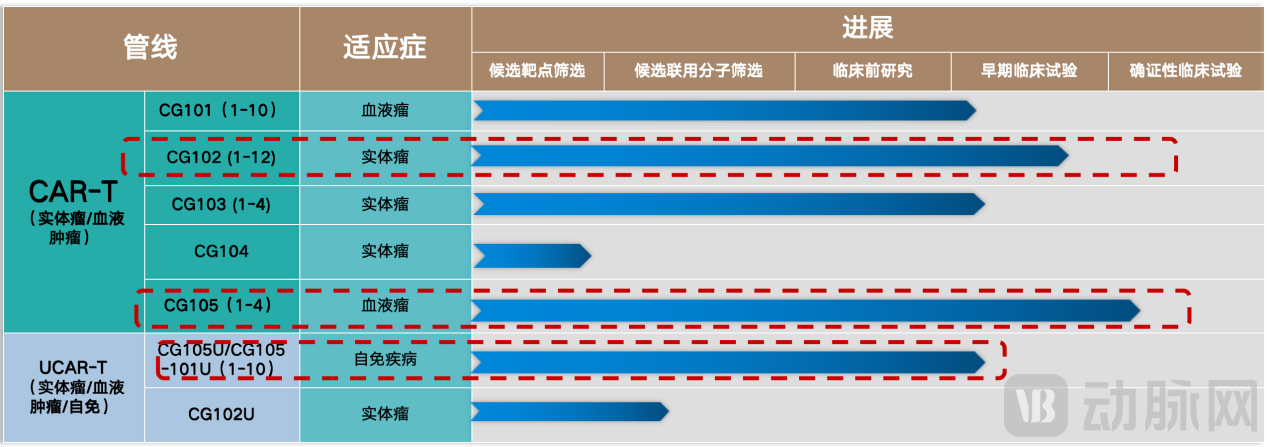
From the perspective of CAR-T expansion, different vector technologies may align with distinct indications—ranging from oncology, autoimmune diseases, and chronic conditions to antiviral, anti-fibrotic, and anti-aging applications—thereby unlocking diverse commercialization prospects.
There is no fixed, one-size-fits-all standard for technological pathways and treatment regimens. New-generation technical solutions continue to emerge, not to negate the value of existing technologies, but to join forces with them in expanding the imaginative horizons of the field. Ultimately, technological advancement, scalable manufacturing, and cost control will converge to form an emerging CAR-T therapy model that tangibly benefits patients. We await future developments with keen interest.