

Shijing Medical Secures China's First Regulatory Approval for PBM-LED Myopia Control Device, Ushering in a New Era of Vision Health

DOBOSO
Intelligent Medical Platform Provider
Introduction: The First Certification Under the New Regulations Seizes the First-Mover Advantage
On September 16, 2025, “Beibeile,” a PBM-LED myopia treatment device independently developed by Guanglang Biology, a subsidiary of DOBOSO, officially received market approval from the National Medical Products Administration (Registration Certificate No.: Qiong Xie Zhu Zhun 20252160084). It became the first LED red-light myopia treatment device in China to obtain a Class II medical device registration certificate following the implementation of the new red-light therapy regulations on July 16, 2025.
This milestone breakthrough not only marks a pioneering achievement by Chinese enterprises, which have leveraged Photobiomodulation (PBM) technology to carve out a novel pathway and offer new alternatives beyond the established approaches of optical defocus and pharmacological interventions in global myopia prevention and control, but also presents investors and the industry with a promising commercial blueprint. Driven by the triple forces of strong national policy support, iterative advancements in industrial technology, and surging market demand, the successful approval of the “Beibele” PBM-LED Myopia Treatment Device has undoubtedly injected robust momentum into the entire myopia prevention and control industry.
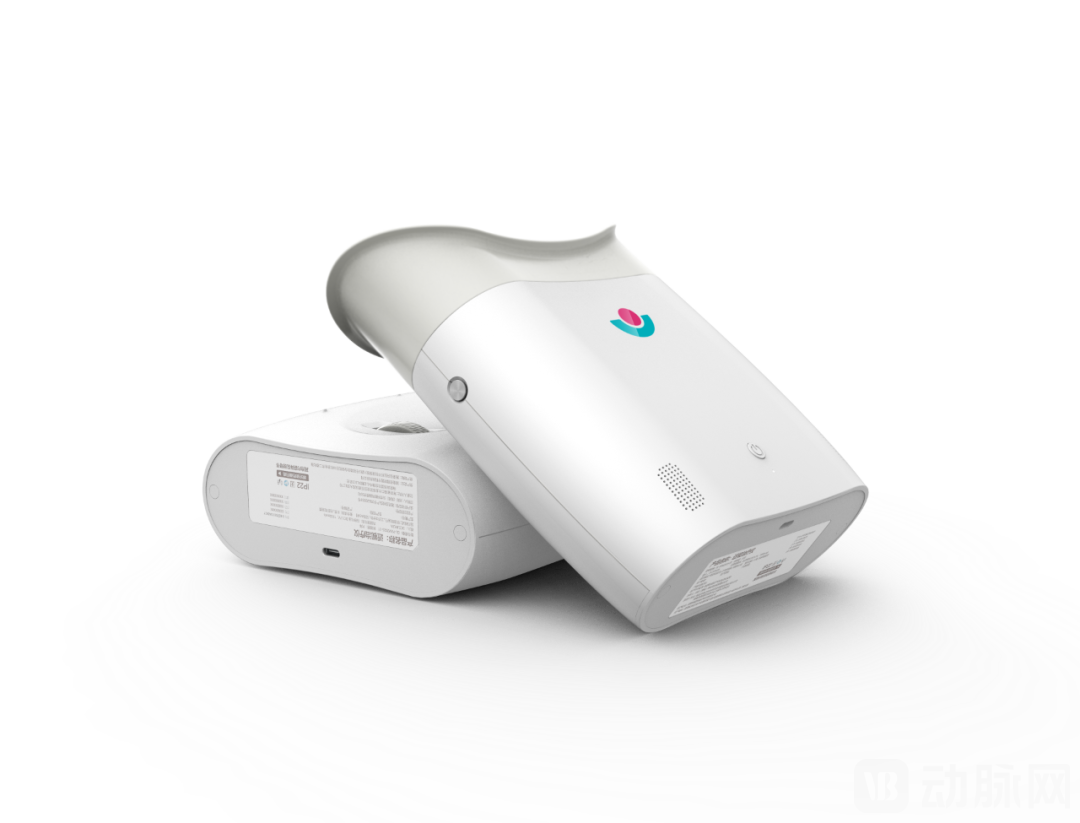 Figure 1. Schematic diagram of the “Beibeile” PBM-LED myopia treatment device
New Policy Winds of Change: Industry Reshuffling Amid Policy Shifts
Regulatory Escalation Reshapes Market Landscape
On July 16, 2025, the National Medical Products Administration (NMPA) officially released the "Guiding Principles for the Classification and Definition of Light-Source Medical Devices for Myopia Control and Amblyopia Treatment (No. 25, 2025)," establishing clear regulations and comprehensively upgrading regulatory requirements for laser and LED red-light devices. This policy shift has brought profound changes to the industry, creating significant market opportunities for companies that achieve compliance early. Under the new policy framework, existing laser-based red-light myopia control products are explicitly reclassified as Class III medical devices and are prohibited from being marketed or sold until they obtain Class III certification. Consequently, the red-light therapy market is undergoing a comprehensive reshuffle, with photobiomodulation (PBM) LED red-light therapy expected to remain the sole option for a considerable period. As the first approved product following the issuance of the new regulations, the launch of the "Beibeile" PBM-LED Myopia Treatment Device holds significant strategic importance. It not only enjoys first-mover advantage during the policy bonus period but also establishes substantial competitive barriers in terms of regulatory compliance, technical standards, and market access.
Strict Approval Highlights Product Value
Notably, although the “Beibele” PBM-LED myopia treatment device is classified as a Class II medical device, its registration and approval process referenced the latest regulations, such as the “Technical Review Points for Laser Equipment Used in Myopia and Amblyopia (No. 6, 2024),” and underwent rigorous evaluation according to the high standards applicable to Class III medical devices. The product received unanimous approval from a panel of clinical experts, meeting the industry’s highest standards in key areas including benefit-risk assessment, dose-response relationship studies, and energy safety analysis. This ensures the product’s safety and efficacy, providing robust risk mitigation for both users and investors. In the field of medical device investment, regulatory compliance is often a decisive factor in a project’s success or failure. Leveraging nearly two decades of expertise in optometry and ophthalmology, DOBOSO’s strong commercialization capabilities and compliance management will safeguard the product’s sustainable long-term growth.
Industry Recognition: Technological Innovation Leads Global Consensus
As an emerging, next-generation approach to myopia control developed in recent years, photobiomodulation (PBM) red light therapy was first piloted in China and has since rapidly become a focal point of global research. Owing to its well-documented efficacy and established safety profile, it has gained broad recognition among experts and the academic community both domestically and internationally, and has been incorporated into expert consensus statements and prevention and control guidelines in China and worldwide.
In July 2022, the Chinese Journal of Experimental Ophthalmology published the “Expert Consensus on Repeated Low-Intensity Red-Light Irradiation as an Adjunctive Therapy for Myopia in Children and Adolescents (2022),” which provides professional guidance across eight aspects: the fundamental principles of myopia prevention and control using repeated low-intensity red-light irradiation, target populations, methods and dosing, examination items and irradiation frequency, device selection and power output, adverse reactions, treatment discontinuation, and recommendations for combined use with other therapies.
In June 2025, the China Association of Chinese Medicine released the "Guidelines for Integrated Traditional Chinese and Western Medicine in the Comprehensive Prevention and Control of Myopia in Children and Adolescents" (T/CACM 1653—2025), which explicitly affirms that repeated low-level red-light therapy can improve uncorrected visual acuity in children and adolescents (consensus recommendation), control the increase in spherical equivalent refraction (Grade D evidence, strong recommendation), inhibit axial elongation (Grade D evidence, strong recommendation), and increase choroidal thickness (Grade B evidence, strong recommendation), with rare adverse reactions (consensus recommendation).
In June 2025, the World Society of Pediatric Ophthalmology and Strabismus (WSPOS) released the “2025 Consensus Statement on Myopia,” in which red-light therapy was formally included as an independent chapter in an international professional consensus for the first time. It has been recognized by authoritative international organizations as one of the four core strategies for global myopia prevention and control. The consensus explicitly affirms the core value of red-light therapy in myopia prevention and control, highlighting its superior efficacy and enhanced safety profile: “Efficacy Level: More effective than mainstream defocus spectacles and orthokeratology (OK) lenses; Unique Advantage: The only method that demonstrates significant control effects even in high myopia (>−6.00 D); Safety Baseline: Data from 1,436 children worldwide show a severe adverse event rate of only 0.088 per 100 person-years, far lower than that of OK lenses (20.6) and atropine (7.32).”
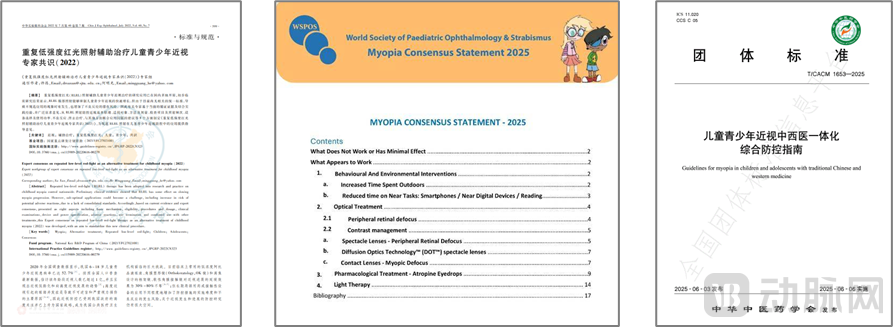
Figure 2. Expert Consensus and Prevention and Control Guidelines in China and Globally
Technical Breakthrough: Superior Design Ensuring Both Safety and Efficacy
Superior Design of Homogenized Spot Technology
“Beibeile” PBM-LED Myopia Treatment Device employs unique beam homogenization technology. After shaping through a series of specialized optical components, it outputs a stable beam and spot with uniform power, wavelength, continuity, divergence, and irradiance. The light reaches the fundus through the eye’s refractive system (cornea, pupil, lens, and vitreous body), causing no irritation or damage to the corneal epithelium even with long-term use. This design inherits the mature technical approach of previous-generation laser products, ensuring that red light energy is evenly applied to target cells, thereby activating mitochondrial activity and thickening the choroid.
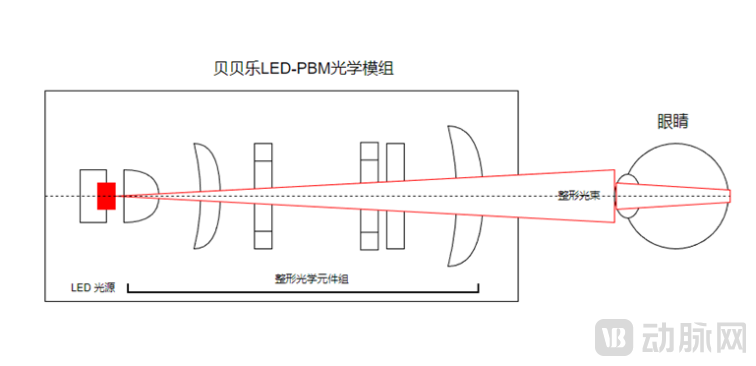
Figure 3. Schematic Diagram of the Optical Path Structure of the “Beibeile” PBM-LED Myopia Treatment Device
In contrast, other devices on the market employ a “focused optical path,” where light is directly focused onto the corneal surface. This design may cause localized energy concentration, leading to chronic “micro-stimulation” of the cornea and posing potential risks such as corneal epithelial damage and reduced tear film stability, thereby creating hidden safety hazards for long-term treatment. Furthermore, their annular spot design deliberately avoids the central macular region of the retina, which plays a core functional role, and acts only on the peripheral retina. This “off-target” design prevents red light from effectively activating key cellular pathways, making it difficult to achieve axial length control. Clinical feedback describing the annular spot as having “minimal efficacy” further corroborates this limitation.
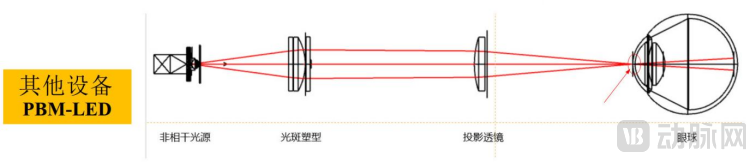
Figure 4. Schematic diagram of the optical path structure of other devices
Strictly Adhere to Standards to Build a Safety Shield
“Beibeile” PBM-LED Myopia Treatment Device has passed the ISO 15004-2:2024 international standard test for photobiological safety, is classified as a Group 1 device, poses no potential optical hazards, and features a tenfold safety margin in irradiance compared to international safety standards. The product fully complies with the classification requirements of New Policy 16-03 and establishes a “full-process safety barrier” through four real-time protection systems (millisecond-level emergency response, power-on self-test, distance monitoring, and abnormal power-off protection).
Meanwhile, DOBOSO has partnered with China’s largest commercial insurance company to provide product liability insurance for every user of the “Beibele” PBM-LED myopia treatment device. The coverage includes a per-accident compensation limit of up to RMB 1 million and an annual aggregate payout limit of up to RMB 20 million. This robust risk protection system ensures that every “Beibele” user can use the device with peace of mind and undergo treatment with confidence.
Superior safety advantages are decisive in the pediatric medical device market, enabling companies to build strong brand trust and value recognition during marketing efforts, thereby creating favorable conditions for rapid market penetration of their products.
Clinical Validation: Authoritative Data Delivers Top-Tier Evidence-Based Support
The “Beibeile” product series has received authoritative endorsement from Professor Qu Jia’s team at Wenzhou Medical University Eye Hospital, a leading institution in the field of optometry and ophthalmology with top-tier national and world-class medical research capabilities and industrial influence. Professor Qu Jia, Chief Scientist of the National Clinical Research Center for Ocular Diseases and a senior expert in optometry and ophthalmology, led a randomized controlled clinical trial to evaluate the safety and efficacy of the “Beibeile” comprehensive therapeutic device for myopia and amblyopia. The data showed that after 12 months of treatment, the axial length changes in the intervention group and control group were 0.03 mm and 0.33 mm, respectively (△AL: IG 0.03 mm vs. CG 0.33 mm), corresponding to an axial length elongation inhibition rate of 91%. The spherical equivalent refraction changes in the intervention group and control group were 0.07 D and -0.63 D, respectively (△SER: IG 0.07 D vs. CG -0.63 D), yielding a refractive error progression inhibition rate of 111%. The trial results demonstrated that the therapeutic efficacy in the intervention group was significantly superior to that in the control group, with no adverse events observed.
In the future, the “Beibele” PBM-LED myopia treatment device will continue to engage in scientific research collaborations with top-tier experts, further exploring the efficacy of LED red-light therapy in various clinical application scenarios for myopia prevention and control—including monotherapy, combination therapy with other treatment modalities, first-line therapy, and second-line therapy—thereby accumulating more high-quality evidence-based data for the industry.
Market Opportunity: Tapping into a Multi-Billion Dollar Unmet Need
Precise User Profiling at Scale
According to the latest data from the National Health Commission, the myopia rate among children and adolescents in China has exceeded 50%, with the total number of myopic individuals surpassing 700 million. Among them, the myopic population aged 6–18 years constitutes the core target market for PBM-LED red light therapy, with an estimated size of over 100 million. Moreover, traditional myopia control products, such as optical defocus devices (orthokeratology lenses, defocus soft contact lenses, and defocus spectacle lenses) and pharmacological treatments (low-concentration atropine), have educated the annual market for many years. As a result, target users have developed a relatively mature understanding of myopia prevention and control, and their payment habits have been well established.
However, due to the limited efficacy of traditional myopia control products, a significant proportion of users in the market still experience unsatisfactory outcomes or discontinue treatment due to adverse reactions. The continuous progression of myopia and high rates of treatment dropout remain prevalent, indicating substantial unmet needs in the market. There is an urgent industry demand for more effective and safer next-generation myopia control therapies. PBM-LED red light therapy, offering superior efficacy and enhanced safety profiles, can be used either as a monotherapy or in combination with other traditional treatments. This versatility positions it as a robust option for both first-line and second-line myopia control interventions, holding immense commercial potential. Based on the 5–10% market penetration rate observed with traditional myopia control products, the market size is projected to reach nearly RMB 100 billion. The vast target population and strong market demand provide broad growth prospects for the commercial development of the “Beibele” PBM-LED Myopia Treatment Device.
Policy Support Accelerates Market Development
In recent years, the Chinese government has continuously strengthened policy support for myopia prevention and control. From the "Implementation Plan for Comprehensive Prevention and Control of Myopia in Children and Adolescents" to supporting policies issued by local governments, a favorable policy environment has been created for the development of the myopia prevention and control industry. Particularly under the backdrop of the "Healthy China 2030" strategy, myopia prevention and control has been elevated to the level of national strategy. This policy support not only provides strong assurance for product market promotion but also offers investors long-term and stable policy expectations.
Future Outlook: A Full-Cycle Ecosystem of Eye Health Products
Expand Product Pipeline and Indications
Leveraging PBM red light technology and a digital healthcare platform, DOBOSO will continue to develop a series of products tailored for different age groups and indicated for myopia prevention and control, strabismus and amblyopia, dry eye, visual fatigue, age-related macular degeneration, glaucoma, and other conditions, thereby building a comprehensive product portfolio matrix.
Strengthening System Development and Ecosystem Building
DOBOSO will further establish and improve a professional service network covering China, providing users with full-process services ranging from product selection and usage guidance to efficacy evaluation. By collaborating with ophthalmic hospitals, optometry centers, schools, and other institutions, the company will build a comprehensive myopia prevention and control ecosystem, achieving synergistic development across the upstream and downstream of the industry chain.
Conclusion: Seize Opportunities to Embrace a Bright Future
The successful approval of the “Beibeile” PBM-LED myopia treatment device marks not only a significant milestone in the development history of DOBOSO but also a crucial turning point for China’s myopia prevention and control industry. Driven by the triple forces of policy support, technological breakthroughs, and market demand, the myopia prevention and control industry is ushering in unprecedented opportunities for development.
We believe that, against the backdrop of growing societal emphasis on the visual health of children and adolescents, the “Beibeile” PBM-LED myopia treatment device will play a pivotal role in myopia prevention and control. It will bring hope and brighter prospects to millions of families, generate substantial returns for investors, and make significant contributions to China’s efforts in myopia prevention and control. Let us join hands to seize this historic opportunity and jointly create a bright future for the myopia prevention and control industry!
About DOBOSO
DOBOSO has been deeply engaged in the field of medical optometry for nearly two decades, serving as a global digital pioneer in the eye care industry. Its product “Duobaoshi” was the first digital therapeutic approved in China for the treatment of strabismus and amblyopia (2012), while “Beibeile” became the first digital therapeutic approved in China for myopia prevention and control (2021). Additionally, “Beibeile” PBM-LED is the first LED red-light therapy device for myopia treatment approved in China (2025). The company’s products have also obtained medical device certifications in multiple countries and regions, including the EU CE mark, Vietnam, and Indonesia.
DOBOSO offers a comprehensive suite of independently developed innovative products and solutions, including an online platform for vision therapy, photobiomodulation therapy, VR-enabled wearable smart devices, eye-tracking technology, artificial intelligence, and graphic image analysis. As of October 2025, the company holds more than 61 granted invention patents and 47 software copyrights, and has been honored with titles such as National High-Tech Enterprise and Guangdong Province’s Specialized, Refined, Differential, and Innovative Enterprise. Its business covers 30 provinces, municipalities, and autonomous regions across China, and it has established stable cooperative relationships with over 2,800 hospitals. DOBOSO remains committed to leading the development of intelligent ophthalmic healthcare, delivering more precise, efficient, and reliable diagnostic and therapeutic solutions to patients worldwide.