

Yansi Neuromorphic Leverages Algorithm-Centric Strategy to Redefine Brain-Computer Interface Innovation

INSIDE
--
In collaboration with Huashan Hospital Affiliated to Fudan University, one company has drawn significant attention this year by enabling the decoding of neural electrical activity and real-time translation of intended speech through implanted stereoelectroencephalography (sEEG) electrodes. Additionally, it allowed patients with rare diseases to experience non-invasive brain-computer interface (BCI)-based full-command control of the video game Black Myth: Wukong, earning praise such as “controller players were completely outclassed.”
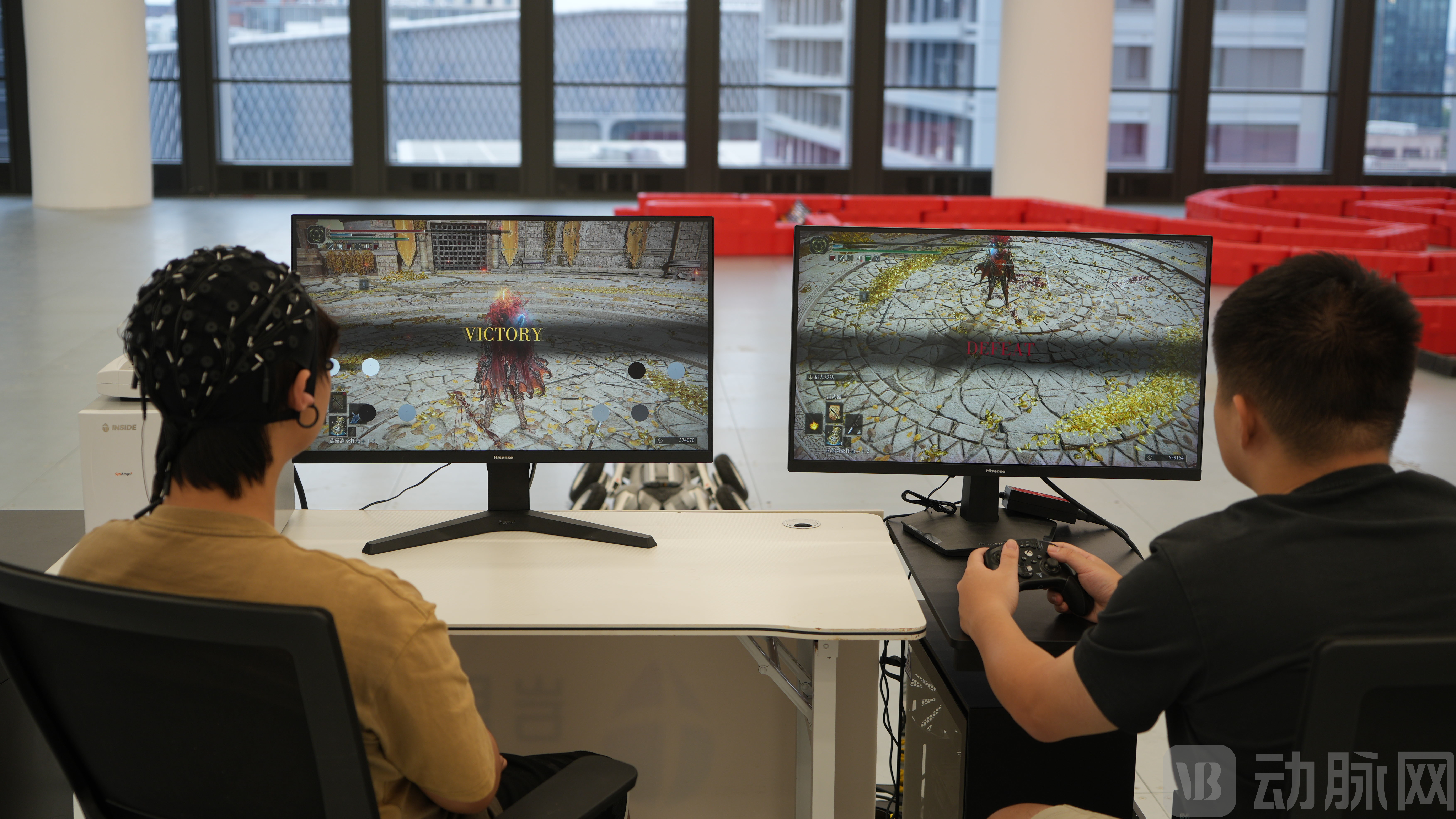
INSIDE is a brain-computer interface (BCI) enterprise rooted in the interdisciplinary field of artificial intelligence and neuroscience. Unlike most BCI companies in China and abroad, INSIDE has chosen a “radically different” path, which has become the primary reason for the high level of attention it has garnered within the industry.
Hardware devices are trending toward modularization and standardization,
Data and Algorithms Will Become the Core of Brain-Computer Interface Development
A sharp focus on algorithms and systems for neural signal decoding in brain-computer interfaces is the most distinctive feature of INSIDE. This stems from INSIDE’s precise and forward-looking assessment of the development trends in brain-computer interfaces.
Brain-computer interfaces (BCIs), as an interdisciplinary industry integrating materials science, signal processing and communications, mechanical engineering, neuroscience, artificial intelligence, and other fields, have seen most early-stage companies conduct related research and business development based on the backgrounds of their founding teams. For instance, companies with expertise in materials science tend to focus on electrode development, those with backgrounds in signal processing and communications concentrate on developing EEG acquisition systems, while firms with mechanical engineering expertise prioritize the development of peripheral control technologies such as robotic arms and dexterous hands.
In other words,Early brain-computer interface companies, driven by their technological DNA, have largely focused on the development of hardware devices.Today, with technological iterations and further advancements in manufacturing capabilities, brain-computer interface (BCI) hardware devices such as chips and electrodes are gradually moving towards modularization, standardization, and mass production. In the near future, BCI companies will be able to purchase hardware modules on demand and assemble them into complete BCI systems, much like the current smartphone and new energy vehicle industries.
“We predict that,"It may take only 5–7 years for brain-computer interface hardware to become fully modular and standardized."Dr. Li Meng, Chief Scientist at INSIDE, revealed, “This will accelerate the development pace and industrial efficiency of the brain-computer interface industry.”
Against this backdrop, neural activity data and neural decoding algorithms are gradually becoming the core determinants of the value of brain-computer interface (BCI) systems. Electroencephalogram (EEG) signals acquired by hardware are growing exponentially; relying solely on hardware upgrades cannot resolve the efficiency bottleneck in “converting raw EEG data into effective interaction information.” Even if high-resolution EEG signals are obtained through BCI hardware, the system remains difficult to deploy in practice unless neural decoding algorithms can efficiently interpret brain intent.
This logic bears a strong resemblance to the development of artificial intelligence: The leadership of OpenAI’s ChatGPT stems not primarily from GPU hardware, but from model capabilities built upon massive corpora and advanced algorithms. For brain-computer interfaces (BCIs), the core bottleneck lies in “translating neural activity into information suitable for high-throughput interaction,” and AI-based neural encoding/decoding algorithms are key to overcoming this challenge. In other words, algorithms and systems focused on neural signal decoding/encoding are becoming the critical strategic frontier in the BCI field.
Moreover, in the interview, Li Meng emphasized that, compared to the slow data accumulation and small scale of foreign brain-computer interface (BCI) companies, China’s abundant clinical resources have fostered a fertile ground for the development of core BCI algorithms and software domestically, providing crucial support for the Chinese BCI industry to achieve “overtaking on a new track.”
INSIDE is among the earliest companies in China to focus on neural signal encoding and decoding. The company boasts a robust talent pool: its Chief Scientist, Li Meng, previously served as a postdoctoral researcher at Harvard University and as a research scientist at the Max Planck Society in Germany; its CEO, Dr. Zhao Fang, was a research scientist at the Medical College of Georgia in the United States; and many core team members hail from prestigious universities both domestically and internationally, including Harvard University, Carnegie Mellon University, and Peking University. Through years of collaboration with leading clinical hospitals, INSIDE has accumulated extensive data resources. This strong foundation in both talent and data has provided critical support for the development of its EEG large model, serving as a powerful “booster” for its emergence.
Enhancing Generalization Capabilities: Large EEG Models Press the Accelerator on Brain-Computer Interface Development
Strong generalization capability is the core feature of INSIDE’s brain-inspired EEG large model.
VCBeat has learned that traditional brain-computer interfaces (BCIs) require training tailored to a single task (such as speech reconstruction or motor control) and a single individual, leading to pain points that hinder the industrial implementation of BCIs, including high deployment costs, poor user experience, and difficulties in application deployment. For example, adapting a motor decoding model for a single patient may require a team of three to four PhD holders working for two to three months.
Meanwhile, INSIDE’s EEG foundation model learns the intrinsic patterns of neural activity through pre-training, achieving triple generalization across tasks, individuals, and time. New users require only minimal fine-tuning for adaptation, eliminating the need for large-scale retraining; a single model can cover multiple task types; and it enables stable, long-term decoding without frequent recalibration. This “foundation pre-trained model + task-specific fine-tuning” paradigm significantly lowers the barrier to entry for brain-computer interfaces (BCIs), serving as a key enabler for their widespread adoption.
Compatibility with various brain-computer interface (BCI) modalities (e.g., non-invasive, invasive, and semi-invasive) is also a key feature of INSIDE’s EEG large model.According to Li Meng, the model adopts a “combined invasive and non-invasive data training” approach. This training paradigm enables the model to achieve invasive-level “high-precision decoding” and “noise suppression” capabilities, thereby significantly enhancing the decoding accuracy of non-invasive brain-computer interface systems.
Meanwhile, the joint pre-training of “invasive + non-invasive” approaches has expanded the application scope of INSIDE’s brain-inspired EEG large model, and can to some extent enhance the accessibility and safety of brain-computer interfaces.
Taking the collaboration between INSIDE and Huashan Hospital Affiliated to Fudan University as an example, INSIDE’s EEG large language model can decode 1,951 commonly used Chinese characters based on a training set of just 54 characters, achieving an extrapolation ratio of up to 1:36. Furthermore, the model can decode a Chinese sentence of unlimited length within half a second. The electrodes employed in this clinical trial were stereoelectroencephalography (sEEG) electrodes, which have been widely used in clinical practice for many years. By empowering mature clinical electrode hardware with innovative algorithms, INSIDE has demonstrated the feasibility of this approach through a concrete example.
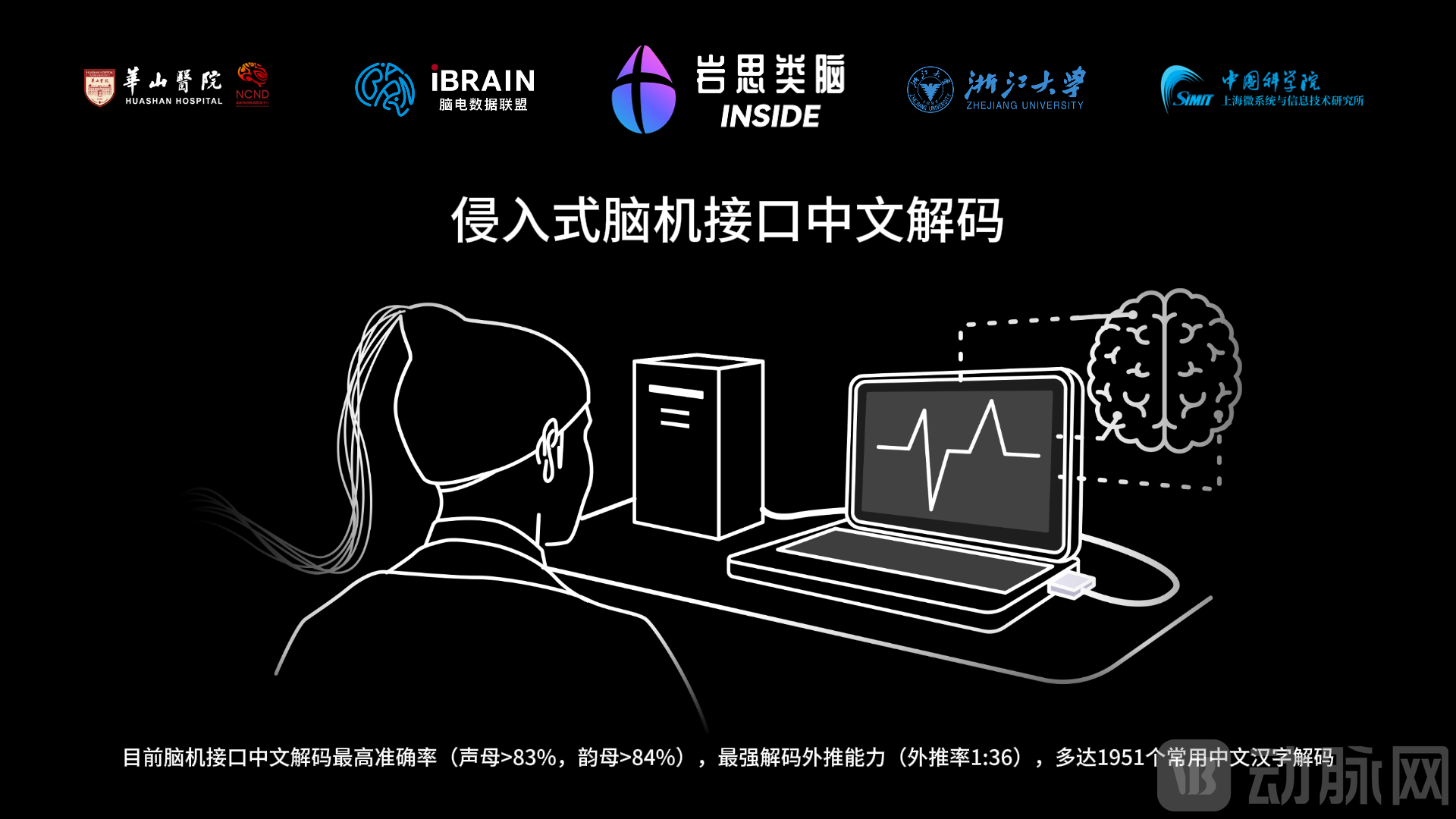
Furthermore, INSIDE will further expand its presence in the two major sectors of entertainment and lifestyle, as well as healthcare. In the realm of entertainment and lifestyle, INSIDE is actively pursuing innovative integration of non-invasive brain-computer interfaces with devices such as AR/VR glasses, smart home systems, and robotic dogs. In the healthcare sector, INSIDE has established a strategic footprint in both consumer healthcare and clinical healthcare. The consumer healthcare segment primarily focuses on neuromodulation applications, including brain state management, while the clinical healthcare segment centers on the reconstruction of higher-order brain functions.
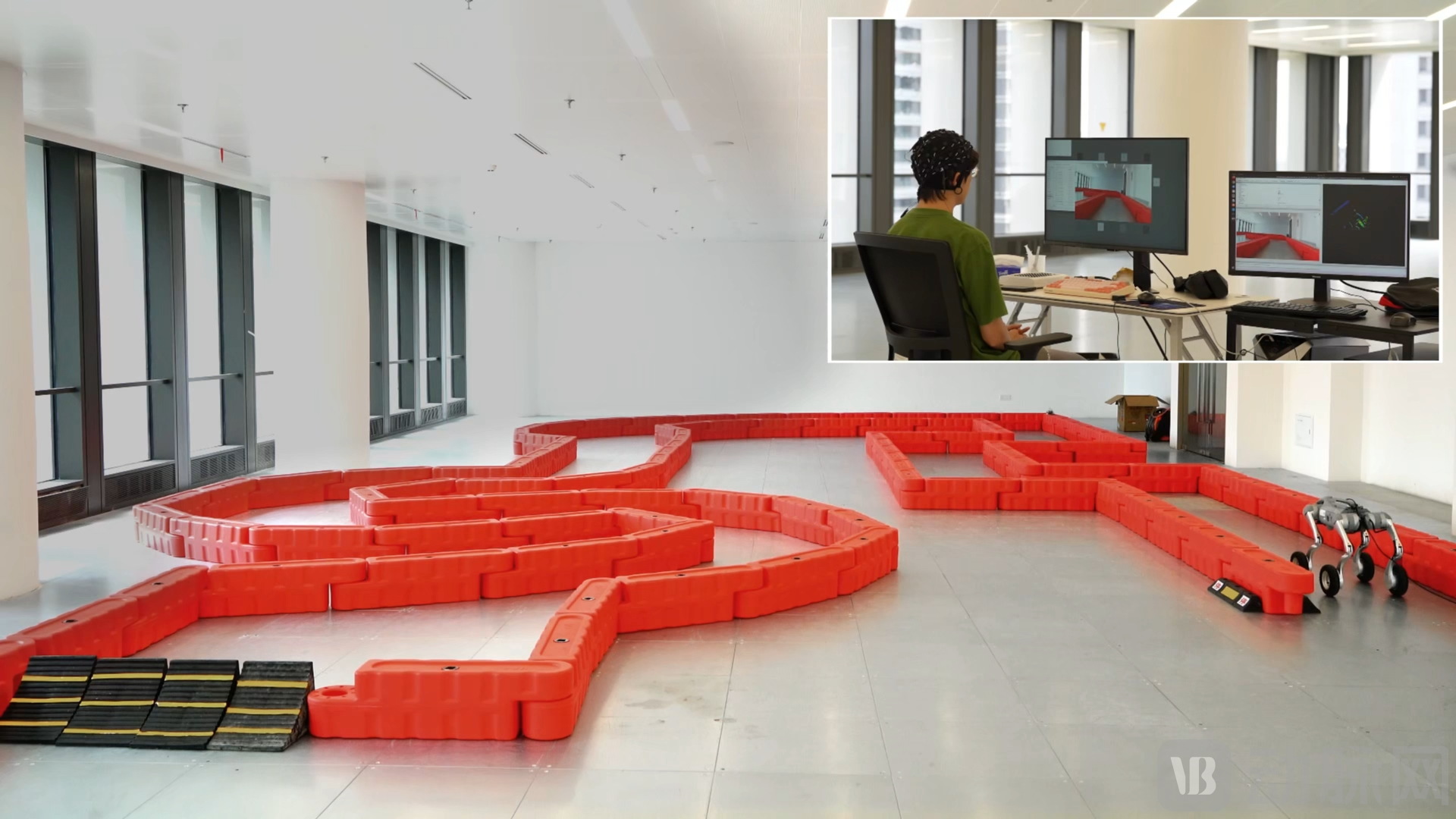
Regardless of the field involved, INSIDE will continuously drive technological innovation and practical application of core brain-computer interface algorithms by leveraging the flywheel effect of “data accumulation – model optimization – product development – scenario expansion – more data.”
Three Major Trends Shape the Future of Brain-Computer Interfaces: Who Will Seize the First-Mover Advantage?
At the end of the interview, Li Meng also shared with VCBeat his insights on the future development trends of brain-computer interfaces from the perspective of INSIDE:
First, the performance boundaries of invasive and non-invasive brain-computer interface systems need to be continuously explored.Relevant practices by INSIDE have demonstrated that non-invasive approaches already surpass invasive ones in certain key performance metrics within scenarios such as brain-controlled gaming. Consequently, the application boundaries between invasive and non-invasive brain-computer interfaces (BCIs) remain to be further explored. In the future, if non-invasive BCIs can address a broader range of needs, they will significantly reduce user costs and promote widespread accessibility of BCI technology. In contrast, invasive BCIs should focus on supporting more advanced brain functions and meeting higher performance demands, such as high-precision language decoding and consciousness analysis, thereby offsetting their inherent risks and costs through “high-value” applications.
Secondly, EEG data and encoding-decoding algorithms will become core assets.As hardware devices evolve toward modularity and scalability, the core competitiveness of brain-computer interfaces will increasingly center on data and the encoding-decoding algorithms trained on massive datasets.
Finally, the integration of brain-computer interfaces with intelligent wearables will give rise to new application scenarios, while ethical and safety standards must be concurrently refined.The core limitation of brain-computer interfaces (BCIs) is “limited interaction scenarios,” while the primary pain point of smart wearable devices, such as AR glasses, is “low interaction freedom.” Combining the two can achieve complementary advantages. Furthermore, as “the highest-quality AI training data,” EEG data will facilitate the development of neuromorphic intelligence and promote the deep integration of brain science and AI. Meanwhile, ethical and safety issues must be addressed concurrently: INSIDE has participated in the formulation of ethical guidelines organized by national ministries. In the future, the industry needs to establish mechanisms for data de-identification, algorithm evaluation, and security audits to ensure compliant technological development.
Currently, the brain-computer interface (BCI) industry is at a critical juncture of transformation characterized by “modular hardware and intelligent algorithms.” Driven by multiple factors, including abundant clinical resources and supportive industrial policies, China’s BCI sector can achieve “leapfrog development” by adopting a differentiated strategy centered on “data + algorithms.” In the future, as technology matures and application scenarios expand, BCIs are poised to become the “next-generation interaction portal,” following mobile phones and PCs. Companies such as INSIDE will play a pivotal role in this evolution.