

Arterial Network On-Site Observation | Global Issue Temperature at the 2025 World Health Summit: Collective Resilience, Shared Responsibility, and Scientific Trust
Image source: World Health Summit
From October 12 to 14, 2025, the World Health Summit (WHS) was held in Berlin, Germany. As the most influential high-level dialogue platform in the global health sector, it attracted more than 4,000 political leaders, policy experts, scientists, and industry representatives from over 140 countries. VCBeat was invited to cover the event on-site, observing the latest trends in global health governance and new developments in cross-sector collaboration.
This year’s summit theme is “Taking Responsibility for Health in a Fragmenting World.” Centered on this theme, the organizers have established six sub-topics: “Reducing the Burden of Non-Communicable Diseases,” “Application of Artificial Intelligence in Global Health Systems,” “Transforming the Global Health Architecture,” “Peace and Health,” “Climate Crisis and Health Risks,” and “Health of Women and Children.”
Axel Radlach Pries, Chair of the World Health Summit, emphasized at the conference: “To address emerging threats such as pandemics and the climate crisis, we need to build resilient and inclusive systems, innovative financing mechanisms, and genuine partnerships that empower local leadership. This requires a fundamentally new approach to healthcare—strengthening primary care, deepening community engagement, and ensuring the safety and security of healthcare workers. It also demands stronger international cooperation based on solidarity, equity, and the fair sharing of data, samples, and outcomes. The World Health Summit drives this transformation by fostering collaboration and dialogue, and by keeping health issues at the top of the international agenda.”
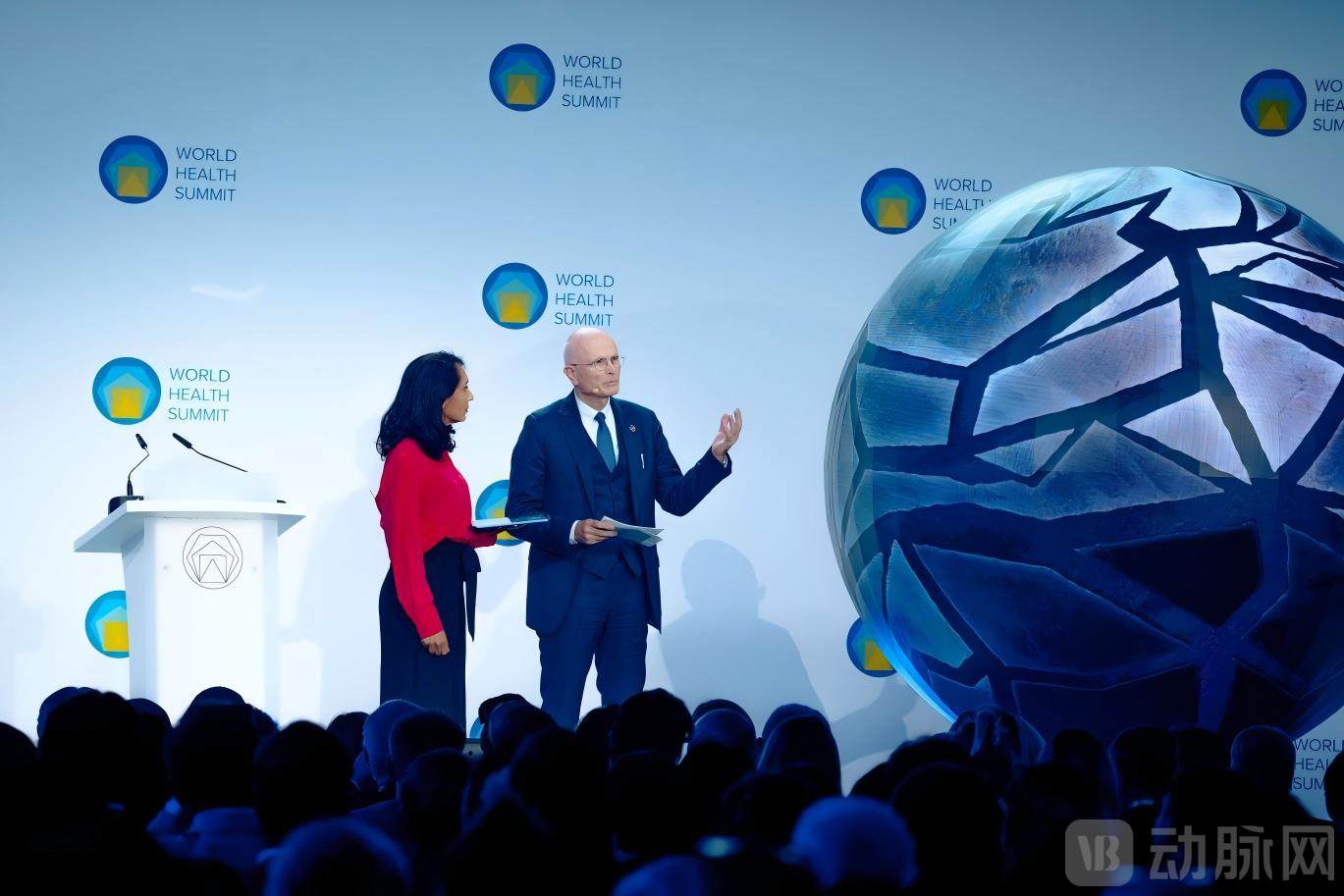
Image source: World Health Summit
The latest findings from the Global Burden of Disease (GBD) study were also released at the summit. A report published concurrently in The Lancet indicates that while overall global mortality rates continue to decline, mortality among adolescents and young adults is rising, with non-communicable diseases (such as cardiovascular disease, stroke, and diabetes) now accounting for two-thirds of all deaths worldwide. Christopher Murray, Director of the Institute for Health Metrics and Evaluation (IHME), pointed out: “The data reveal stark inequalities. We need to translate insights into action—by strengthening prevention, improving accessibility, and building more equitable health systems.”
At the policy and governance level, the summit’s keynote forum, “Reshaping the Global Health Architecture: Rethinking Governance and Financing Models,” sparked extensive discussion. Winnie Byanyima, Executive Director of UNAIDS, called on the international community to rebuild a more equitable health financing system: “Disease is not only a tragedy but also an economic burden. Health, development, and the economy are deeply intertwined; debt relief and reforms in tax cooperation are key to achieving global health goals.” Reem Alabali-Radovan, Germany’s Federal Minister for Economic Cooperation and Development, announced that Germany would provide €1 billion in funding to the Global Fund to Fight AIDS, Tuberculosis and Malaria.
Representatives from the industry are equally concerned with balancing “innovation and investment.” Jane Halton, President of the Coalition for Epidemic Preparedness Innovations (CEPI), stated, “Countries need to unlock new sources of funding beyond traditional aid frameworks. We will propose benchmarks to help countries self-assess whether their investments are sufficient.” This reflects that enterprises and fund organizations are exploring more flexible and sustainable approaches to global health investment. At the thematic forum “Navigating Change: Pharmaceutical Manufacturing Amid AI, Geopolitics, and Supply Chain Risks,” Josh O’Harra, Senior Vice President of Eli Lilly and Company, pointed out that reducing supply chain clustering and promoting localized production can significantly enhance resilience, citing Eli Lilly’s collaborative insulin production with EVA Pharma in Egypt as an example. Meanwhile, although generic drugs and vaccines may offer the highest social return on investment, innovation continues to play a vital role. Despite the substantial societal investment required for innovative drugs, the social benefits they deliver are equally significant.
According to on-site observations by VCBeat, governments worldwide are focusing on the sustainability of health systems and innovation in governance models; policy experts are paying attention to cross-sector collaboration and the linkage mechanisms between emotional well-being and social stability; while businesses and capital institutions are exploring new equilibria in technological innovation and health-related investment and financing. Against the backdrop of intensifying global uncertainty, health has become a core issue for social resilience, equitable development, and international cooperation.
About the World Health Summit
The World Health Summit is the leading platform in the field of global health, bringing together stakeholders from politics, science, the private sector, and civil society to jointly shape the global agenda for the future of health. Founded in 2009, the World Health Summit is held annually in October in Berlin. It is organized by the World Health Summit Foundation GmbH, an entity wholly established by Charité – Universitätsmedizin Berlin.