

Global Call to Action: 7th Nordic Conference on Sustainable Healthcare to Unveil Blueprint for a Green Medical Future in November
The WHO’s 2025 report reveals that cardiovascular deaths attributable to heatwaves have surged by 60% over the past decade, while greenhouse gas emissions from healthcare systems themselves are becoming “accomplices” in the very diseases they seek to treat. The global healthcare industry accounts for 4.6% of annual carbon emissions—twice that of the global aviation industry—with operating rooms alone contributing 33% of an institution’s total emissions. Clearly, this “treatment–pollution” paradox has formed a vicious cycle.
WHO Director-General Tedros Adhanom Ghebreyesus stated bluntly, “Carbon emissions are the pathogen of this health crisis.” The healthcare industry has become an “accelerator” of the climate crisis, reversely eroding our health dividends.
Why Is the World Focusing on Sustainable Healthcare?
Globally, the medical resources wasted annually due to excessive testing and the misuse of disposable devices are equivalent to the basic diagnostic and treatment needs of 1.5 billion people for an entire year. Among emergency equipment in China’s tertiary hospitals, only 10% are equipped with waste disposal functions, leaving a large volume of consumables to become an environmental burden. Health problems induced by climate change have already caused annual global losses of $1.6 trillion. Under the traditional healthcare model, Huashan Hospital’s energy-saving renovations alone generated sufficient funds to reinvest in equipment upgrades, underscoring the reality that “failure to transform means bankruptcy.”
Unsustainable healthcare models are rapidly depleting limited resources, sowing the seeds for systemic collapse.Therefore, sustainable healthcare is not a matter of choice; it is the only path to “stem the bleeding” in healthcare systems and “prolong the life” of human survival.As repeatedly emphasized by the World Health Organization in its series of reports on “Climate Change and Health,” actions to reduce greenhouse gas emissions are, in essence, public health interventions that encompass the entire population.
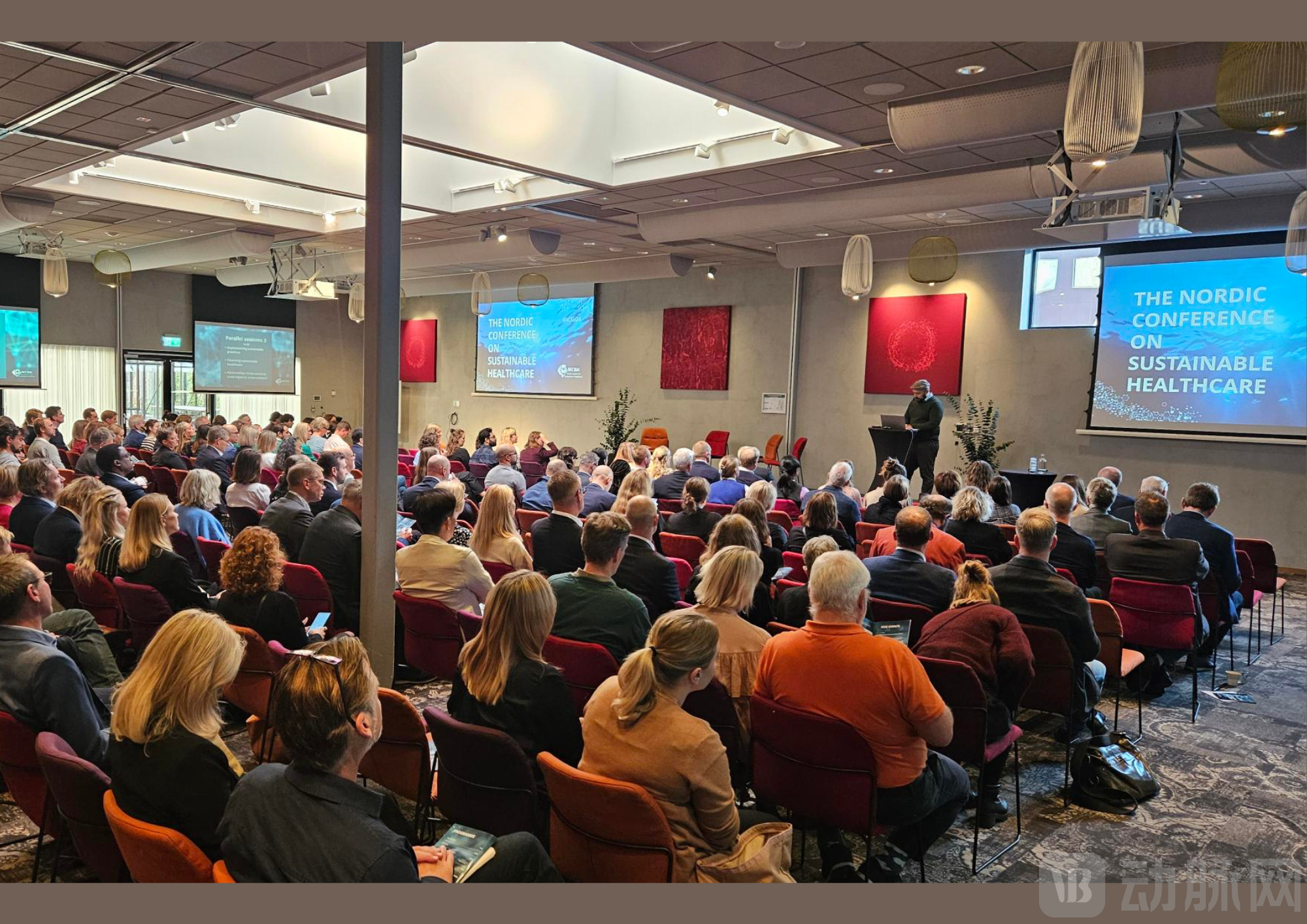
What Exactly Is Sustainable Healthcare?
Sustainable healthcare is not a new concept; in fact, Nordic countries have long been committed to addressing issues in this field.Environmental and Social Issues. China has been engaging in communication and cooperation with Nordic countries on sustainable healthcare since 2020.Simply put, sustainable healthcare is a new medical model within full-lifecycle healthcare that achieves a balance between health and the environment through policy, technology, and management.
This encompasses three dimensions of sustainability: environmental, service-related, and economic. Environmental sustainability includes initiatives such as operational carbon reduction, waste recycling, and supply chain restructuring. For instance, Huashan Hospital affiliated with Fudan University reduced its carbon dioxide emissions by 2,500 tons and improved air conditioning energy efficiency by 29% after adopting solar panels and intelligent air conditioning systems. The Nordic “Closing Gaps” project reduced pharmaceutical residues in water bodies by 40% through optimization of upstream drug production, while Swedish companies have developed biodegradable surgical instruments that enable “zero-waste operating rooms.”
The essence of sustainable healthcare services lies in delivering precise and efficient medical supply. This includes reducing disease incidence through community health management, enhancing efficiency and minimizing resource waste by updating the application of digital technologies in clinical settings, and narrowing health disparities through policy design to ensure that developing countries can share access to green medical technologies. Sustainable healthcare innovations in Nordic countries have repeatedly debunked the economic misconception that “sustainability equals higher costs.” For instance, Sweden’s “Zero-Carbon Hospital” initiative reduced annual carbon emissions from 12,000 metric tons in 2019 to 3,000 metric tons in 2024, cut medical waste landfill volume by 92%, and achieved a three-year payback period for energy-saving retrofit investments.
Through structural, sustainable healthcare initiatives across three dimensions, three major balances were gradually achieved.
1. Balancing Health Benefits and Environmental Impact: Minimizing carbon emissions while providing diagnostic and therapeutic services to reduce the ecological damage caused by medical activities;
2. Balancing Service Accessibility and Resource Efficiency: Avoiding Overtreatment and Resource Waste, and Extending Healthcare Coverage to a Broader Population Through Precision Services;
3. Balancing Short-Term Clinical Needs with Long-Term Health Value: Shifting from “Disease Treatment” to “Prevention First” to Reduce the Overall Healthcare Burden Through Chronic Disease Management and Health Education.
This concept aligns closely with the philosophy of “Green Medicine,” representing not only an innovation in medical technology but also an upgrade in health perspectives. It places “human health” within the framework of the “community of life on Earth,” echoing the World Health Organization’s emphasis that “health is not merely the absence of disease, but a state of complete physical, mental, and social well-being.”
Current Best-in-Class Cases in Sustainable Healthcare
Currently, the Nordic countries can be regarded as the global benchmark for sustainable healthcare.
1. Policy Foundation: From Top-Level Design to Implementation Assurance
Sweden’s 2014 Patient Act incorporated “environmental friendliness” into the evaluation criteria for healthcare services, mandating that all public hospitals complete a carbon footprint audit every three years. Alongside this legislative leadership, the five Nordic countries have implemented robust execution measures, allocating more than 85% of their healthcare expenditure—which exceeds 9% of GDP—to establish a dedicated “Green Healthcare Innovation Fund.” This fund covers upfront costs such as energy-efficient retrofits and the research and development of environmentally friendly medical devices, thereby providing financial support for sustainable healthcare innovation.
2. Technological Innovation: Demand-Driven Hard-Core Breakthroughs
Driven by the dual engines of policy and funding, Nordic sustainable healthcare innovation has maintained a leading momentum. Iceland has established a unified national electronic health record system, reducing the rate of duplicate examinations across institutions by 40%, thereby indirectly lowering energy consumption of medical equipment and the use of disposable supplies. Drawing on the Netherlands’ total intravenous anesthesia (TIVA) technology—which reduces carbon emissions by 82% compared to traditional methods—Nordic hospitals have widely adopted “low-carbon surgical packages,” incorporating modules such as recyclable instruments and guidelines for the use of energy-efficient equipment. Swedish companies lead the research and development of biodegradable medical consumables; their absorbable surgical sutures achieve a 98% complete degradation rate in the human body, reducing environmental residue from traditional consumables by 90%.
3. Management Mechanism: Practical Empowerment of the NCSH Model
In the process of popularizing the concept of sustainable healthcare, the Nordic Center for Sustainable Healthcare (NCSH) has played a pivotal role. As the central hub coordinating sustainable healthcare practices across the five Nordic countries, it serves as a “catalyst” for policy translation, an “incubator” for technological innovation, and a “bridgehead” for exporting global best practices. As the lead organization of the Sustainable Healthcare Alliance, its core mission is to promote a triple balance of “environmental friendliness, service efficiency, and economic viability” within healthcare systems through the development of standardized tools, cross-border resource integration, and international collaboration.
Its core competitiveness lies in its proprietary “Determine-Baseline-Action-Reference” four-pillar implementation model, which has become a universal framework for the sustainable transformation of healthcare institutions worldwide:
Diagnosis (Determine): Precisely identify the core pain points of institutional carbon emissions and resource waste through over 200 quantitative indicators;
Baseline: Establish a dynamic database based on healthcare data from the five Nordic countries to set tiered targets for institutions of varying scales and types;
Action: Provide a modular toolkit containing directly implementable practical solutions, such as guidelines for medical waste classification, procurement lists for energy-saving equipment, and templates for low-carbon clinical workflows;
Reference: The global best practices database is updated quarterly and currently includes over 120 cases.
As a native Nordic “practical operator,” he led the “Closing Gaps” project in the Baltic Sea region, reducing pharmaceutical residue pollution by 40% through full value chain management and validating the core value of upstream interventions. He provided technical support for Karolinska University Hospital’s “Zero-Carbon Retrofit” in Sweden, helping it achieve 100% renewable energy coverage and reduce medical waste landfilling by 92%. He also participated in the design of Norway’s “Medical Community” project, establishing a chronic disease prevention and remote monitoring system that lowered per capita healthcare carbon emissions in pilot areas by 32%. More importantly, NCSH dispelled the misconception that “environmental investment equals increased costs.” By leveraging technical tools and management optimization, it enabled the Nordic healthcare system to reduce carbon emissions by 28% compared to 2010 levels while raising patient satisfaction to 91%. Its promoted “industry-academia-research closed-loop” model has facilitated the mass production of 15 categories of biodegradable medical products, achieving a win-win scenario for both environmental and economic benefits.
The operational model of NCSH validates the core logic of sustainable healthcare—systemic transformation rather than isolated optimization. By integrating policy alignment, technological empowerment, and cross-sector collaboration, it has not only positioned Northern Europe as a “testing ground” for global green healthcare but also promoted the shift of sustainable healthcare from a “Nordic choice” to a “global imperative” through tool export and experience sharing.
For more insights from NCSH, please refer to the "2025 Sustainable Healthcare Trends Report." Download the report at: https://vbdata.cn/reportDetail/b28735c7b32f6d86a4604e7321493b4d.
Welcome to the Nordic Sustainable Healthcare Conference
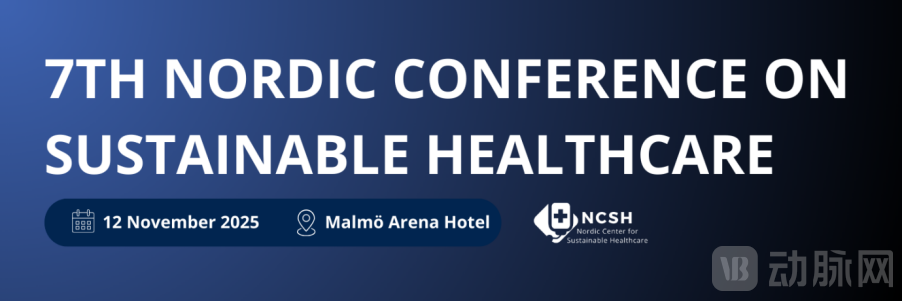
As a core member of the Global Sustainable Healthcare Alliance, we led the drafting of the “2025 Sustainable Healthcare Trends Report,” translating Nordic experiences into replicable global action plans. On November 12, 2025, we will host the Nordic Sustainable Healthcare Conference in Sweden, bringing together industry leaders from over 25 countries. Under the theme “Green Transformation in Healthcare,” the conference will integrate cutting-edge insights and actionable strategies from the report to jointly advance the development of sustainable healthcare worldwide.
Today, the medical innovation industry is flourishing. We are witnessing a growing and increasingly diverse array of innovative enterprises and solutions tailored to the healthcare sector. Digital health, sustainable medical technologies, climate-smart healthcare, and circular healthcare will all shape the future direction of medical innovation.
Healthcare is evolving from “treating diseases and saving lives” to “safeguarding the community of life.” Whether you are a hospital administrator, policymaker, or technology innovator, the Nordic Summit in November serves as a pivotal milestone for translating report concepts into industry transformation. Visit the official website of the Nordic Sustainable Healthcare Conference for more information. (Conference website: https://www.nordicshc.org/events/conference.html)
As WHO Director-General Tedros Adhanom Ghebreyesus stated, “Sustainable healthcare is not a matter of choice, but one of survival.” This November, let us join hands in Sweden to build a symbiotic future for healthcare and our planet.