

Midea Building Technologies Unveils 'Smart Control + Low Carbon' Dual-Engine Strategy to Address Pharma Manufacturers’ Cost and Compliance Challenges
Amid the growing demand for precision medicine and personalized therapy, the global pharmaceutical manufacturing industry is undergoing a transformation from “traditional batch production” to “continuous” and “intelligent” manufacturing. Under multiple pressures—including volume-based procurement, cost control, and green transition—traditional pharmaceutical processes are increasingly showing limitations in quality consistency, production efficiency, and cost management. Emerging technologies such as artificial intelligence, digital twins, and the Internet of Things (IoT) have become key enablers for the industry’s entry into this new phase.
From October 16 to 18, Midea Building Technologies showcased its comprehensive multi-scenario solutions for the medical and pharmaceutical industries at the 67th China International Pharmaceutical Machinery Exposition (Autumn 2025). During the event, Yin Jie, Director of the Public Utility Industry Division at Midea Building Technologies, explained how the company leverages its two core capabilities—"intelligent control" and "green low-carbon"—to provide new momentum for pharmaceutical enterprises in addressing common challenges and achieving high-quality development.
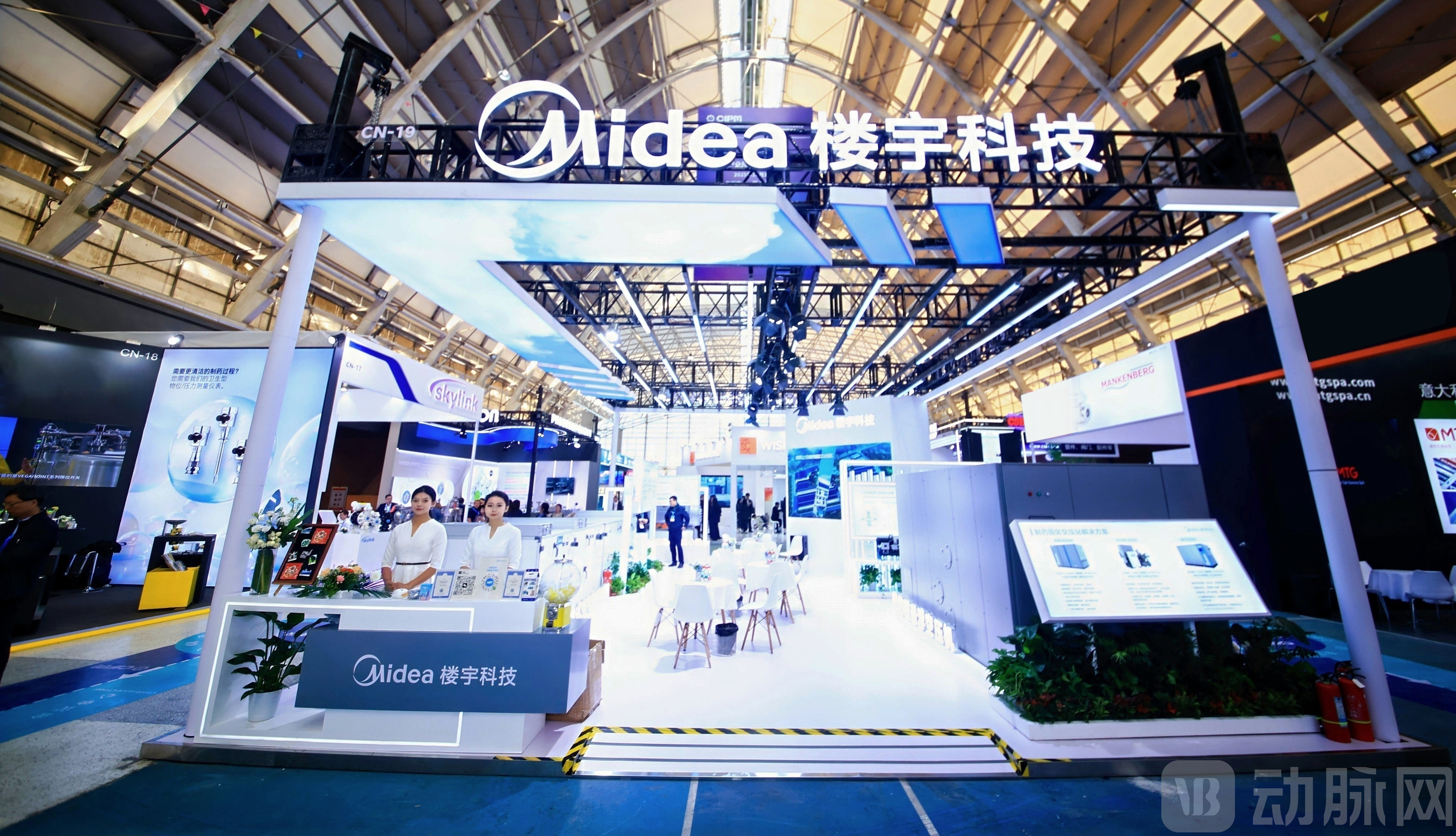
Unearthing Value from Pain Points: The Dual Challenges of “Compliance” and “Cost Reduction”
Against the dual backdrop of increasingly stringent global pharmaceutical regulations and the deepening of China’s volume-based procurement (VBP) policies, pharmaceutical companies are facing unprecedented pressure regarding compliance and cost control. Yin Jie pointed out that the U.S. FDA, China’s NMPA, and the European EMA have incorporated data integrity into the core assessment metrics for the lifecycle management of drugs and medical devices, significantly raising the compliance barriers for pharmaceutical enterprises.
Meanwhile, as a typical high-energy-consuming industry, the pharmaceutical sector relies heavily on HVAC systems to maintain critical parameters such as cleanliness, temperature, and humidity. The substantial energy consumption generated by these systems has led to an unprecedented increase in pharmaceutical companies’ sensitivity to energy costs and equipment maintenance expenses, particularly against the backdrop of centralized volume-based procurement.
However, many pharmaceutical companies currently exhibit significant shortcomings in equipment and digitalization. Yin Jie further pointed out that there is a lack of efficient coordination between HVAC systems and production equipment in many pharmaceutical plants. The substantial heat and moisture generated during equipment operation directly compromise the stability of workshop environments, leading not only to energy waste but also to increased equipment failure rates and maintenance costs, thereby further exacerbating the challenges enterprises face in reducing costs.
“From cleanroom environmental control to cost reduction and efficiency enhancement, and further to digital-intelligent management, pharmaceutical companies need to adopt a systematic approach to address multiple challenges,” emphasized Yin Jie. Against the backdrop of accelerating global expansion by Chinese pharmaceutical enterprises, “compliance” and “cost reduction” serve not only as key constraints on corporate development but also as dual engines driving the construction of competitive advantages. Only those companies that rapidly adapt to evolving regulatory paradigms and advance low-carbon and intelligent transformations will secure their ticket for sustainable growth in the global competitive landscape.
Strategic Layout: Midea’s “Software-Hardware Integration” Panorama
In response to the pharmaceutical industry’s growing demands for compliance, cost control, and flexible manufacturing, Midea Building Technologies leverages the deep integration of its hardware product portfolio with intelligent systems to help pharmaceutical companies achieve high-quality, low-carbon development. At the hardware level, Midea Building Technologies has established a comprehensive product architecture that covers key stages from environmental control in clean areas to process production.
Among these, modular air handling units support customization of 24 functions to meet the needs of pharmaceutical companies for processing air at different cleanliness levels. Maglev chillers and ultra-high-temperature heat pump systems provide stable heating and cooling sources for pharmaceutical processes. High-temperature heat pumps can produce steam at up to 200°C, replacing traditional boilers to facilitate green upgrades in pharmaceutical enterprises. In the warehousing sector, Midea Building Technologies’ cool storage constant temperature and humidity system can precisely control the ambient temperature within 0–20°C and humidity within 35%–75%, ensuring the safety of drug storage.
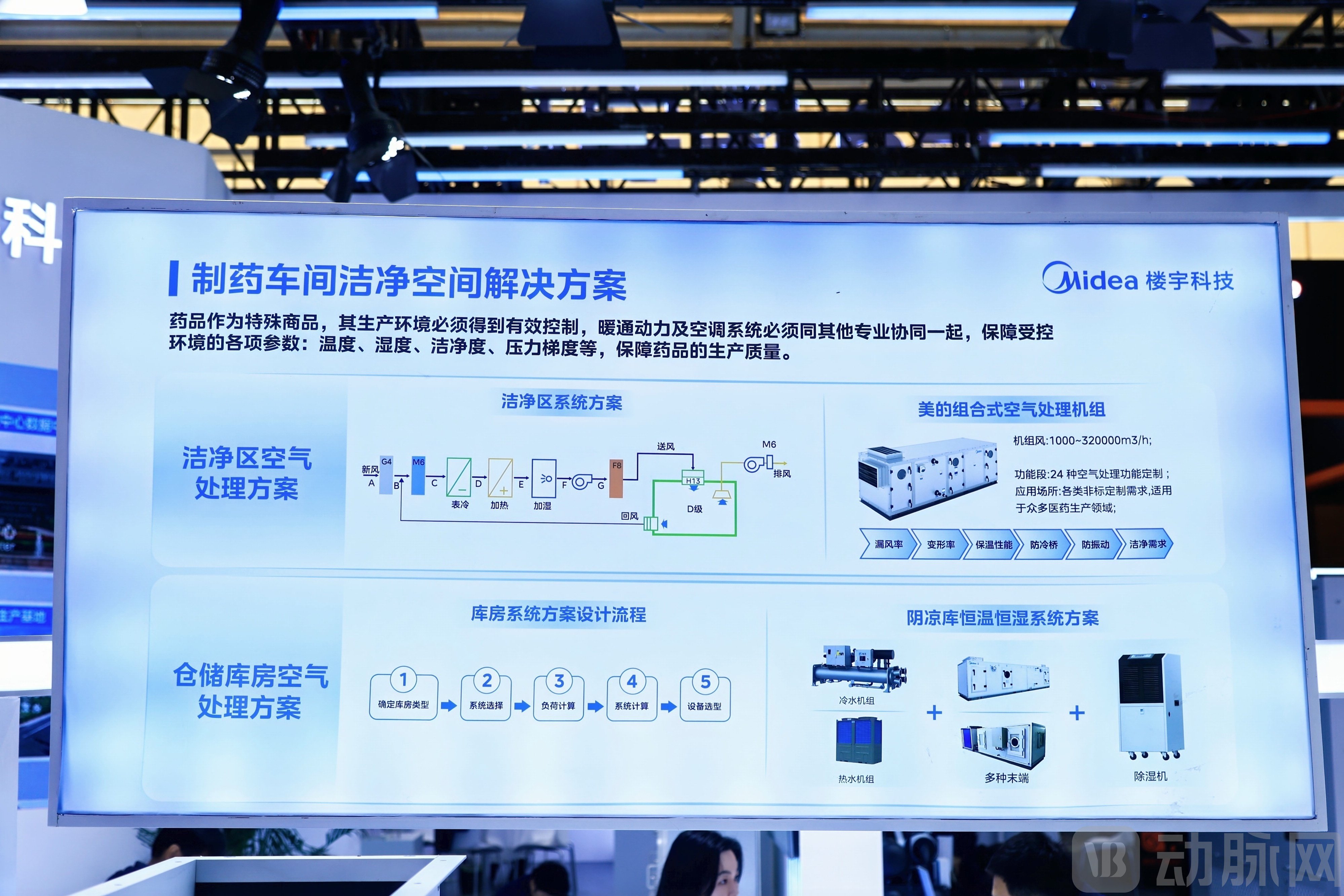
The regulation of these devices is collaboratively managed by the “Midea Control System” and the “iBUILDING Intelligent Platform,” enabling real-time monitoring and intelligent scheduling of key parameters such as temperature, humidity, cleanliness, and pressure gradients. The system can also automatically record data and generate reports compliant with GMP and FDA standards, ensuring regulatory compliance while efficiently optimizing energy-efficiency algorithms to reduce corporate operational costs.
Technology Foresight: Future-Oriented Continuous Manufacturing and Modular Facilities
In response to emerging production models such as continuous manufacturing and modular facilities, Midea Building Technologies has also made forward-looking strategic arrangements. “Modular magnetic bearing chiller plants feature rapid deployment and flexible scalability, significantly shortening retrofit timelines. Meanwhile, the high-capacity magnetic bearing chillers in the 1,500–2,000 refrigeration ton range, currently under development, will better meet the centralized cooling demands of large-scale pharmaceutical bases,” said Yin Jie.
In the production phase, Midea Building Technologies provides tailored solutions based on the specific needs of production line development. For instance, to meet customers’ stringent requirements for parameters such as temperature and humidity control, low-dust conditions, airtightness, and positive/negative pressure differentials, Midea Building Technologies delivers customized solutions by iteratively enhancing product performance and upgrading control systems, thereby ensuring a stable and reliable production environment.
In the development of energy and management systems, Midea Building Technologies leverages advanced energy control technologies and equipment to provide customers with real-time, efficient energy system optimization solutions. Furthermore, Yin Jie emphasized, “Once customers express needs for improving energy efficiency or upgrading management, we can respond promptly by utilizing the latest energy management platforms and control devices to help them achieve energy savings, cost reduction, and system intelligence.”
In the realm of cutting-edge collaboration and joint innovation, Midea Building Technologies also partners with forward-thinking clients who pursue technological breakthroughs by establishing joint project teams. Together, they conduct collaborative research and development centered on new management concepts, operational models, or equipment requirements, ultimately delivering tailored new products or system solutions that help clients maintain a competitive edge.
As the pharmaceutical industry accelerates its transformation toward intelligence and sustainability, Midea Building Technologies’ product philosophy of “software-hardware synergy and full-chain coverage” is becoming a reliable pathway for enterprises to ensure regulatory compliance while reducing costs and improving efficiency. The competitive focus in the pharmaceutical sector is expanding from “drug R&D” to “production and operational efficiency.” Leveraging its accumulated expertise in carbon control, energy management, and temperature regulation within the smart building sector, Midea Building Technologies has entered the pharmaceutical industrial scenario, identifying a precise and high-potential growth avenue.
It is also evident that Midea Building Technologies is no longer merely a supplier of energy-saving equipment; instead, it leverages digital solutions centered on “energy management + environmental compliance” to help pharmaceutical companies establish core cost advantages amid fierce competition. Under the “Dual Carbon” goals, such comprehensive solutions—capable of enhancing overall energy efficiency and quantifying carbon emission reductions—will provide strong momentum for both new construction and retrofitting projects in the pharmaceutical industry.