

iSono Health Files for IPO: Pioneering Wearable Automated Breast Ultrasound System ATUSA Enables 2-Minute Portable Scans

iSono Health
Breast Health Monitoring Product Developer
Recently, iSono Health secured $3 million in seed funding for its flagship product, the ATUSA Whole-Breast Ultrasound Imaging System.
iSono Health, founded in 2015, is a breast health screening manufacturer based in California, USA. Since its inception, iSono Health has received support from the U.S. National Science Foundation SBIR grants, Y Combinator, Foothill Ventures, Draper Associates, Plexo Capital, ATO Ventures, Camford Capital, JLAB, Texas Medical Center Innovation, and other leading medical centers.
In 2022, the ATUSA system received FDA 510(k) clearance. This isThe World's First Wearable Automated Breast Ultrasound Imaging System, its accompanying software can perform automated image acquisition and analysis for the diagnosis of breast cancer.
Breast cancer is one of the most common cancers worldwide. According to data released by global cancer organizations, the global incidence rate of breast cancer is increasing at approximately 1.2% per year. By 2050, the number of breast cancer cases worldwide is projected to rise by 38%, and annual deaths from the disease are expected to increase by 68%. The latest statistics from the National Cancer Center show that in 2022, there were 357,200 new cases of breast cancer in China, ranking second only to lung cancer among female cancers and accounting for 15.6% of all new cancer cases. The prevention and control of breast cancer in China remains a significant and long-term challenge.
“Early Diagnosis and Early Treatment” is the key to reducing breast cancer mortality. iSono Health aims to improve global access to care for breast diseases among women through automated and portable technologies, thereby increasing breast cancer survival rates.
1Addressing the Pain Points in Clinical Breast Cancer Diagnosis
Mammography and ultrasound are currently the most commonly used methods for breast cancer screening. In clinical practice, mammography and ultrasound are not mutually exclusive; they are often used in combination to improve the diagnostic rate of the disease.
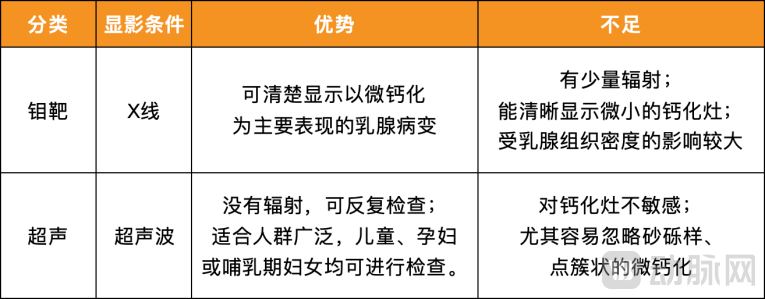
Overview of the Advantages and Disadvantages of Mammography vs. Ultrasound
However, mammography and ultrasound screening also have certain limitations:
First, there is a lack of unified standards.The accuracy of ultrasound diagnosis is highly dependent on the operator's experience and technical proficiency, and interpretations of the same lesion may vary among different physicians.
Second, there are limitations in examining special populations.For example, lactating breast tissue, implants, or postoperative scars may interfere with the accuracy of mammography and ultrasound examinations.
Finally, there is an insufficient ratio of professional staff.According to Professor Huang Yubei from Tianjin Medical University Cancer Institute and Hospital, who spoke at the 2025 "West Pie Conference," China currently has approximately 150,000 ultrasound physicians. Based on the current population, this equates to an average of only 1.4 ultrasound physicians per 100,000 people, indicating a severe shortage of professionals specializing in breast cancer screening in China.
To minimize human error and enhance the applicability and convenience of examinations, the ATUSA full-breast ultrasound imaging system integrates wearable hardware, automated scanning, and AI-assisted analysis, introducing a new “plug-and-play” paradigm to breast imaging.
2Fully automated hands-free scanning completed within 2 minutes
The ATUSA whole-breast ultrasound imaging system offers the following key advantages: 3D visualization and localization capabilities; broad applicability across diverse patient populations; convenient and efficient operation; and remote data management with tele-diagnosis support.
● Features 3D visualization and localization capabilities for rapid imagingThe ATUSA scanner can automatically capture the entire breast volume, helping physicians more precisely locate and assess breast lesions. By utilizing the ATUSA method, reliance on sonographer operation is eliminated, thereby helping physicians reduce human error and maintain the accuracy and standardization of diagnostic results.
● Radiation-free, suitable for a wide range of users.ATUSA’s ultrasound technology carries no radiation risk, allowing for long-term monitoring in pregnant and breastfeeding women. Furthermore, while traditional X-ray mammography has lower sensitivity in dense breast tissue, ATUSA’s ultrasound technology can more effectively detect tumors in dense breasts.
● Quick and convenient to use, with fully automatic hands-free scanning completed within 2 minutes.Throughout the scanning process, patients experience a completely hands-free procedure without the need for coupling gel or compression. According to the iSono Health website, each breast can be scanned in just two minutes, which is 10–15 times faster than manual palpation. Furthermore, its portable design enables use in primary care settings or at home, reducing reliance on specialized medical institutions and physicians.
● Provides remote data management and remote diagnosis.Scan data from the ATUSA system can be uploaded to the cloud for long-term storage, facilitating improved diagnostic accuracy and continuity. Remote diagnosis also breaks down geographical barriers, enhancing healthcare accessibility and enabling breast cancer screening for populations worldwide.
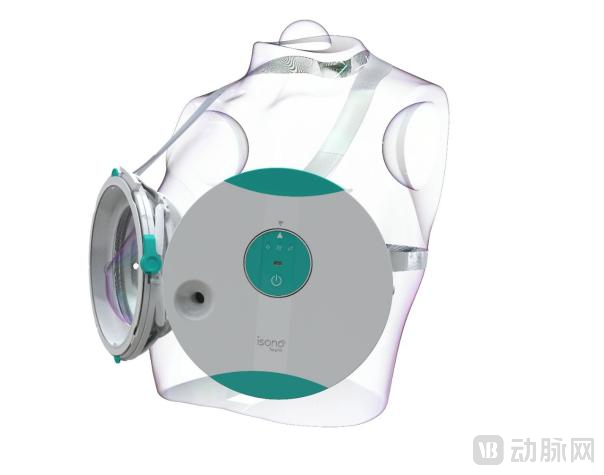
ATUSA product. Image source: iSono Health official website
The launch of ATUSA marks a significant advancement in breast cancer screening technology. Currently, the AI capabilities of ATUSA are still in the research and development phase; next, it needs to be deployed in clinical settings to validate its safety and efficacy. If AI can be leveraged to automatically classify lesion risk levels (e.g., negative, benign lesions, probably benign), it could further enhance the accuracy of primary care screening and provide personalized solutions for women worldwide.
3Female Entrepreneurship, Backed by Top-Tier Brands, Building a “Business + Technology” Expert Team
iSono Health was co-founded by two female engineers. The company boasts an experienced team whose core members have previously held positions at renowned medical and technology companies such as Roche, Medtronic, Boston Scientific, and Intel, bringing extensive expertise in medical imaging and artificial intelligence.
Neda Razavi is the Founder and CEO of iSono Health. With extensive business and marketing experience, she has held various leadership roles at companies including Illumina, Roche, Abbott Laboratories, Medtronic, Natera, Allergan, and Baxter BioScience. She specializes in developing market entry strategies to guide product development and drive business growth.
Shadi Saberi, another co-founder and Chief Technology Officer, holds master’s and doctoral degrees in Electrical and Computer Engineering from Carnegie Mellon University. Prior to joining iSono Health, she worked at Broadcom and Intel. She has over 13 years of research and industry experience in hardware system development, IC and PCB design, and system architecture.
Tony is a mechanical engineer at iSono Health, with over 20 years of experience in the field of medical device development. Previously, he worked at large corporations such as Siemens and Covidien, as well as at startups like Evalve Inc. (which was acquired by Abbott’s vascular business). He also served as a consultant for Boston Scientific, assisting in the launch of its MDU5 IVUS (intravascular ultrasound) system. As a high-end imaging device used in coronary intervention diagnosis and treatment, this system has enhanced the precision of intravascular imaging.
Leveraging the expertise of its core team in commercial development and imaging technology, along with the future potential of the ATUSA whole-breast ultrasound imaging system, iSono Health is poised to attract more investors to further advance its product development.
4The Blue Ocean of “AI + Wearable” Devices for Breast Cancer Screening
Amid the wave of AI technological advancement, the integration of “AI + Wearables” has become a major trend.
In the field of breast cancer, China has not yet approved any “AI + wearable” products for breast cancer screening. However, some manufacturers are actively conducting research in the “AI + wearable” device sector. For example, QiMai Technology has launched an out-of-hospital follow-up solution for breast tumors, which consists of three modules: the “Smart Health Watch A Series,” a patient-side mobile app, and a physician-side follow-up management backend.
Helping patients achieve 24/7 dynamic monitoring. The “±0.01°C ultra-high-precision NTC thermistor” developed by Shiheng Electronics can be applied to smart bra prototypes, using a spiderweb-like array to monitor abnormal breast temperatures and enable early warning for breast tumors.
Overall, current wearable breast cancer screening devices face challenges such as high technical barriers, stringent regulatory approval requirements, and insufficient clinical validation. It is anticipated that with the continuous improvement of AI healthcare regulatory frameworks and ongoing innovation in medical technology, more domestically produced wearable breast cancer detection devices will enter clinical trials in the future, enabling early diagnosis and treatment of breast cancer and benefiting women at large.