Askon Medical: Five-Year Journey Since Launching the World’s First Host-Free Ultrasonic Scalpel
Recently, Ansukang successfully held the launch ceremony of the “Medical Device Collaborative Innovation Center” in partnership with Soochow University, alongside celebrations marking the company’s fifth anniversary. The two parties will engage in deep industry-academia-research collaboration, focusing on three key areas: joint breakthroughs in core technologies, collaborative talent development, and shared achievements. Their goal is to make “Suzhou Intelligent Manufacturing” a shining hallmark in the global medical device sector and to provide Chinese healthcare professionals with superior, more user-friendly medical devices.
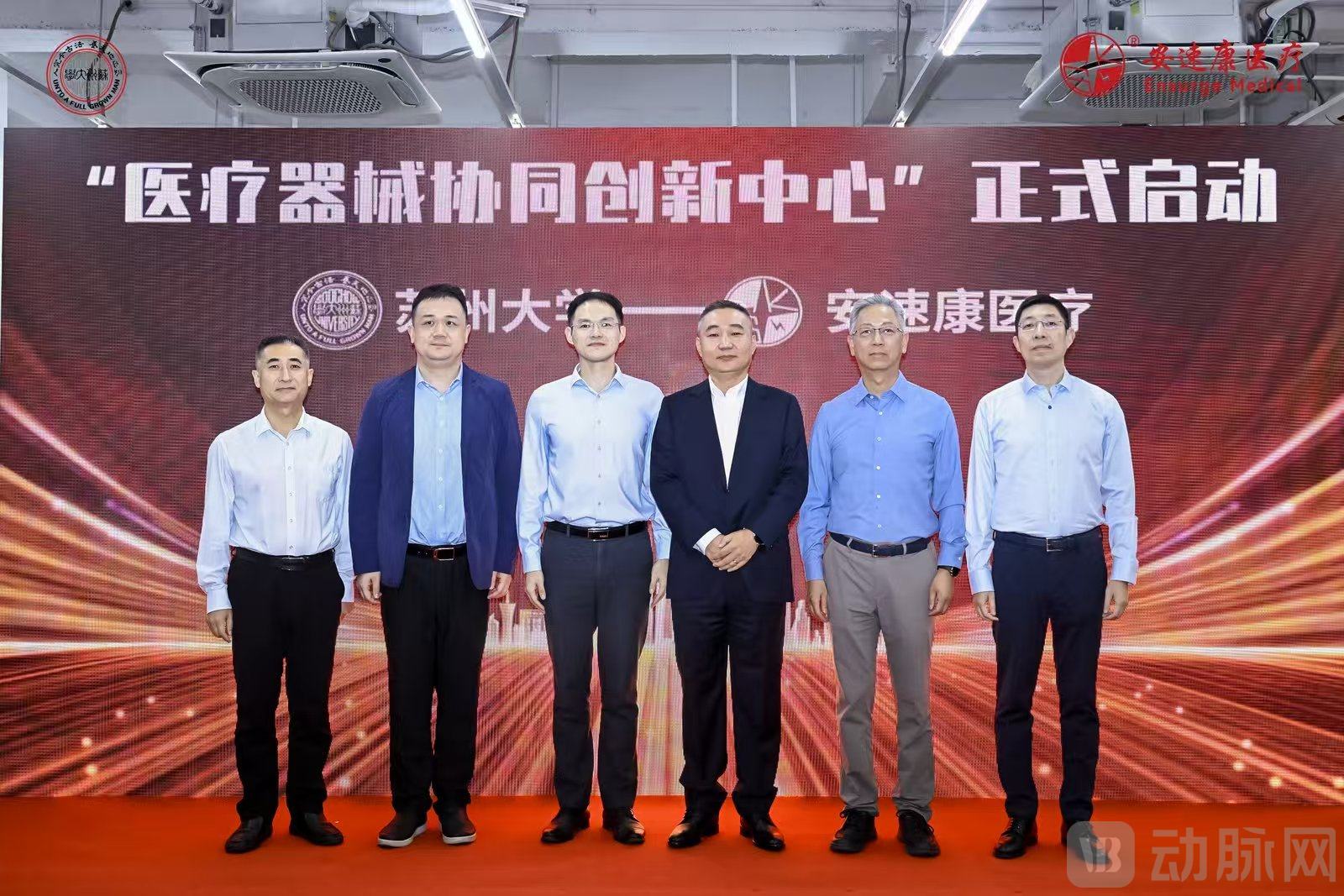 Soochow University-ANSKON Medical “Medical Device Collaborative Innovation Center” Successfully Launched (Image source: ANSKON Medical)
This strategic move, marking Ansukang’s fifth anniversary, also aligns with the core essence of its development over the past five years. Ansukang’s entrepreneurial journey is, in itself, a growth story characterized by confronting challenges through technological innovation and evolving from skepticism to recognition.
From its inception, it has been in the spotlight due to its bold vision of “eliminating the ultrasonic scalpel console.” Today, it has broken the technological monopoly held by international giants, responding to all concerns with four Class III medical device certifications, full coverage in centralized procurement, and a strong reputation.Ansuokang’s five-year journey is a microcosm of how Chinese medical device companies with original innovations have moved from facing skepticism to earning respect through their capabilities.
On the Occasion of Its Fifth Anniversary, VCBeat and Ansukang Review How It Overcame Skepticism with Core Strengths and Glimpse Its Plans for the Next Chapter.
1Avoid the Red Ocean of Competition in Host Ultrasound Scalpels, and Provide Medical Professionals with Superior and Simpler Medical Devices Through Innovation
Ansukang was established during the pandemic. At that time, witnessing the hardships of intense workloads and the selfless dedication of healthcare workers holding the front line deeply moved the Ansukang team, clarifying its core mission: to provide Chinese healthcare professionals withBetter, Simplerof medical devices. This philosophy not only pertains to the products themselves, striving for superior performance and greater ease of use to facilitate both clinical procedures and non-clinical management, but also extends to facilitating business cooperation for all partners.
Therefore, Ansukang chose to start with the field of ultrasonic scalpels, where its team has deep technical expertise. According toZhang Tao, Chairman of AnsukangIntroduction: Before the company initiated its R&D efforts on ultrasonic surgical devices, the market already had numerous participants. Johnson & Johnson held an absolute dominant position, while other domestic brands were largely in a phase of learning and imitation, relying on low-price strategies to compete in the market and struggling to achieve breakthroughs in core performance metrics.
Furthermore, most ultrasonic scalpel brands offer a standard configuration comprising a console, handpiece, and blade tip. To capture market share, manufacturers must deploy their consoles in operating rooms. Currently, established brands with console-based ultrasonic scalpels have secured the majority of the market. “If Ansukang were to enter the R&D field for console-based ultrasonic scalpels, it would inevitably face fierce competition, making it difficult to penetrate the market and achieve its goal of ‘empowering healthcare professionals,’” explained Zhang Tao, Chairman of Ansukang. Therefore,Avoiding the red-ocean competition of “host slot occupation” has become the core starting point for the company’s business considerations.
From a technical perspective, there is still room for breakthrough in the architecture of traditional ultrasonic scalpels. Since its inception in 1992,The core architecture of traditional ultrasonic scalpel systems has not undergone fundamental changes and has been in use for over 30 years.The traditional configuration model of “console + handpiece + blade” has remained unchallenged, with all brands continuing to manufacture and market devices according to this pattern for years. This has resulted in an excessively large number of consoles in operating rooms, even being stored in hallways, which significantly increases hospital management costs. More critically, ultrasonic scalpels feature a “dedicated device–specific application” characteristic; mismatches can easily lead to adverse events or even medical malpractice.
In contrast, the electronics industry has witnessed rapid advancements in device performance and design capabilities, fully possessing the technical conditions necessary to break through traditional architectures. Consequently, based on multidimensional considerations—including adherence to its core mission, assessment of the competitive market landscape, analysis of pain points associated with traditional technical architectures, and evaluation of the maturity of electronic technologies—Ansukang has decided to develop a “host-free” ultrasonic scalpel system.
Mr. Zhang Tao candidly stated that the development of the host-free ultrasonic scalpel by his team proceeded very smoothly. This success was attributable, on one hand, to the profound expertise and extensive experience accumulated by core members of the Ansukang team in industry insights and related technical fields. On the other hand, guided by the principle of “radical concepts, steady execution,” the team adopted a prudent, meticulous, and well-directed R&D strategy. Particularly for highly innovative new designs, they consistently prioritized the goal of “getting it right the first time,” avoiding reckless advancement.
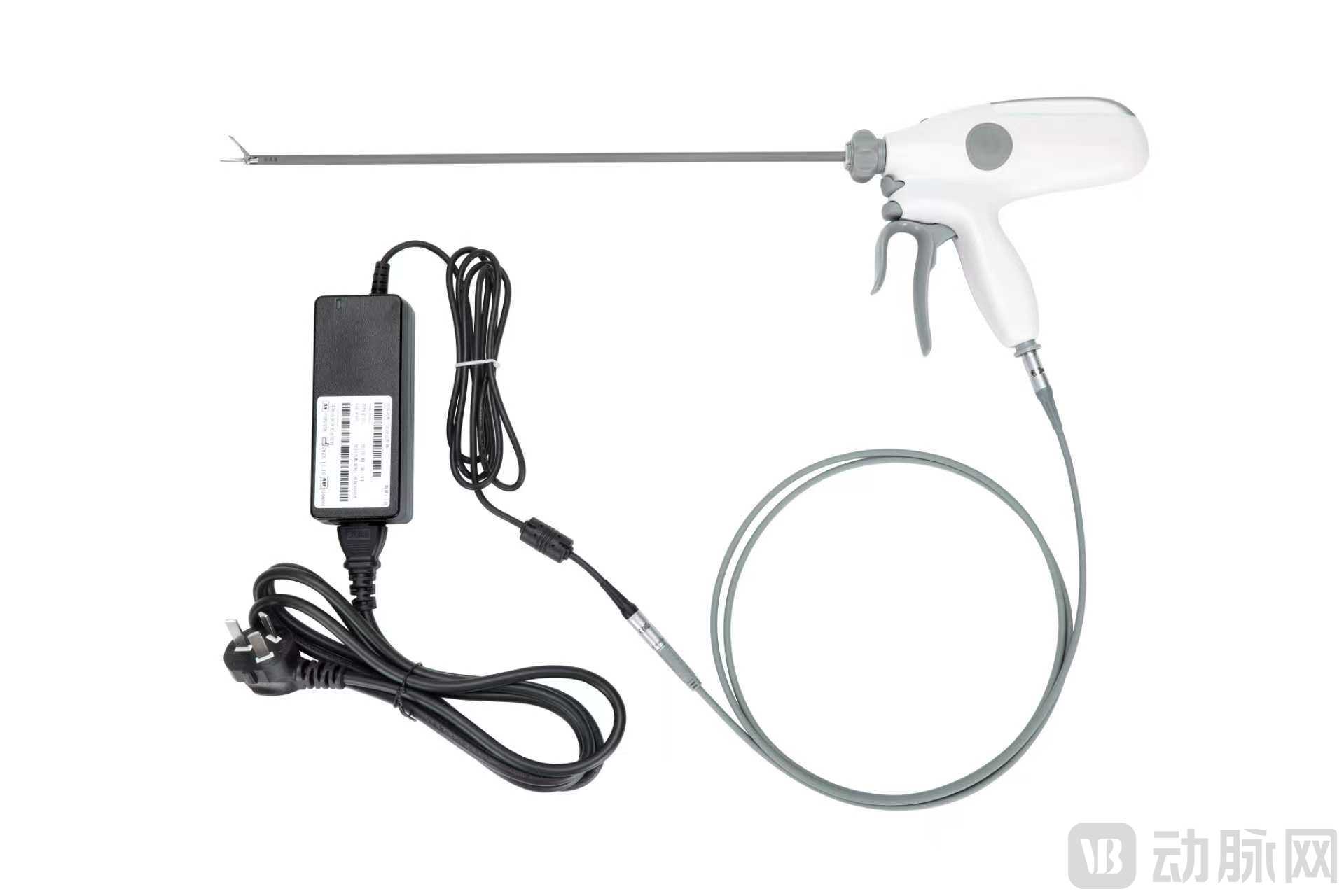
Ansuokang Medical’s Self-Developed New Generation Host-Free Ultrasonic Scalpel with Detachable Handpiece | Image Source: Ansuokang Medical
2World’s First Host-Free Ultrasonic Scalpel System with Detachable Blade: Delivering Multidimensional Benefits for Surgeon Operation, Commercialization, Hospital Management, and Patient Safety
In Mr. Zhang Tao’s view, the current ultrasonic scalpel market has gradually formed two core camps: the camp with console-based ultrasonic scalpels and the camp with console-free ultrasonic scalpels.
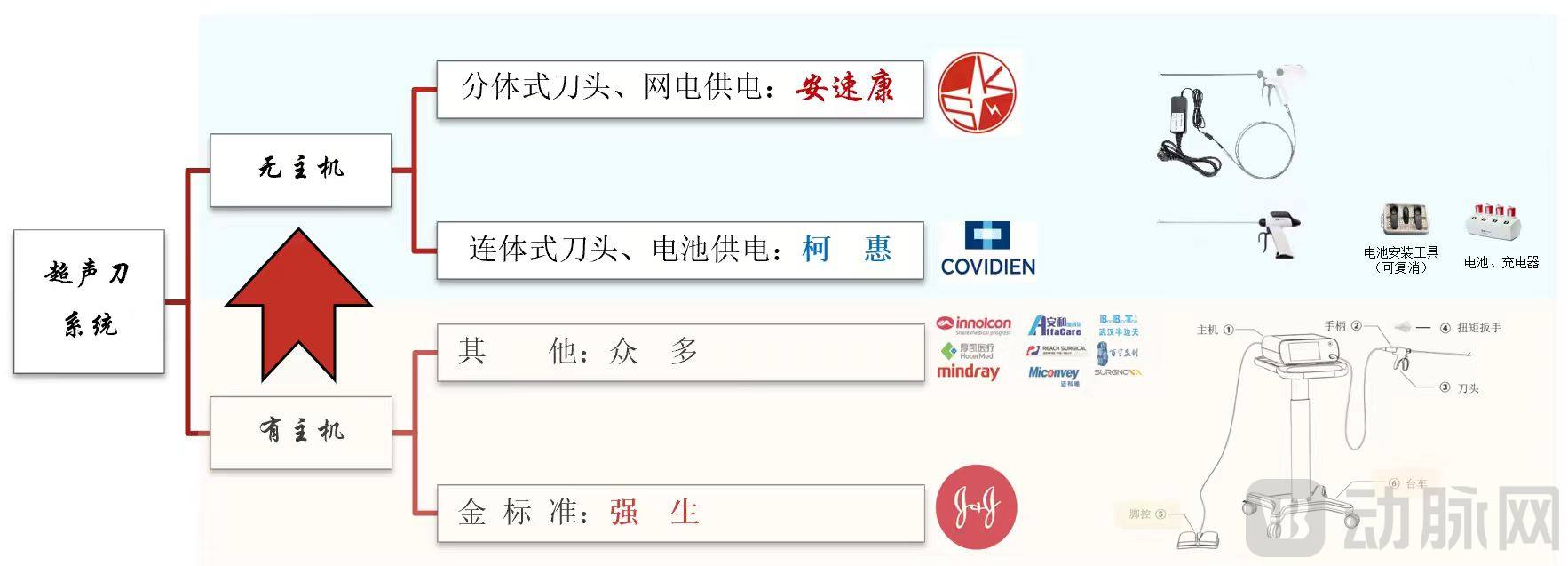 Distribution of the Ultrasonic Scalpel Market Landscape. Source: Ansukang Medical
Among these, the console-based ultrasonic scalpel sector is predominantly represented by Johnson & Johnson and encompasses numerous domestic brands as well as some imported brands. Their products share a highly unified core configuration, consistently adopting a “console + handpiece + transducer” combination. In contrast, the console-free ultrasonic scalpel sector currently comprises only two companies globally: Medtronic and Ansucon. Although neither company’s products require a separate console, there are significant differences in product design and functional details, such as transducer structure and power supply methods.
“Compared to traditional ultrasonic scalpel systems,“The biggest product highlight of the host-free ultrasonic scalpel lies in its ‘host-free’ design,” introduced Mr. Zhang Tao. This feature gives it inherent advantages in non-clinical management, enabling cost reduction and safety risk control.
Traditional ultrasonic scalpel systems, as standalone devices, require hospitals to manage, maintain, and transport them after procurement, significantly increasing the workload for nursing staff. In contrast, host-free ultrasonic scalpels eliminate these processes and avoid costs associated with fixed asset amortization. Furthermore, Ansukang’s modular-tip, host-free ultrasonic scalpel adopts a proprietary interface design that is incompatible with other ultrasonic scalpel brands. This effectively prevents the erroneous connection of components from different brands, thereby mitigating the risk of potential medical accidents.
Furthermore, the transducer tip of the Ansukang console-free ultrasonic scalpel features a highly streamlined design that excludes the handle grip, effectively reducing medical waste generation and lowering hospital disposal costs. Meanwhile, this compact tip design reduces packaging size to just one-fourth to one-fifth of that required for console-based ultrasonic scalpel tips, thereby decreasing hospital storage space requirements and alleviating the workload of healthcare staff during handling and inventory checks, thus further optimizing operational efficiency in non-clinical processes.
Meanwhile, “The “host-free” design enables the Ansukang host-free ultrasonic scalpel not only to be desirable for hospitals but also to overcome the traditional barriers of slow equipment deployment, allowing hospitals to “rapidly put it into clinical use.”
In terms of commercial implementation,Ansukang Console-Free Ultrasonic Scalpel Enables Efficient Hospital Adoption in the Centralized Procurement EnvironmentIn China’s centralized procurement environment, ultrasonic scalpel blades are classified as medical consumables and can be introduced into hospitals by winning bids in centralized procurement programs. However, ultrasonic scalpel generators are not included in the scope of centralized procurement for consumables; instead, hospitals must initiate separate tendering processes on a case-by-case basis, which is cumbersome and time-consuming. For distributors and hospitals, adopting An Sukang’s generator-free ultrasonic scalpel system allows for direct hospital entry and rapid deployment as long as its blades win bids in centralized procurement, significantly shortening the adoption cycle.
In addition to non-clinical benefits,Ansukang’s console-free ultrasonic scalpel delivers greater benefits from the surgeon’s operational perspective, enhancing convenience and unlocking functional value.
First,One-Handed Controllable Integrated Operation. The Ansu Kang hostless ultrasonic scalpel integrates the ultrasonic generator, handle grip, torque wrench, and display screen within the handle, allowing the surgeon to perform all control operations with a single hand.
Second,Idle Gear Activation. In terms of gear control, although traditional ultrasonic scalpels are equipped with two physical buttons, the system actually includes five power levels. By default, these two physical buttons correspond to Level 3 and Level 5, which are responsible for coagulation and cutting functions, respectively. Before the advent of Ansukang products, only these two levels were used in clinical practice. This was not because the other levels lacked clinical value, but rather because traditional devices placed the adjustment controls on the main unit, which is typically located in the non-sterile area of the operating room. During surgery, both the lead surgeon and the instrument nurse are in the sterile field and cannot touch the main unit; meanwhile, the circulating nurse, who is the only one able to operate the main unit, cannot remain stationed in a single operating room at all times. This disconnect in operational workflow has resulted in Levels 1, 2, and 4 being almost unused for nearly three decades, with more than 60% of the device’s functionality failing to be effectively utilized.
AnsuKang integrates complete control functions into the handle within the sterile field, enabling the lead surgeon to adjust energy levels in real time and independently according to surgical needs. This improvement not only liberates clinical flexibility long constrained by traditional designs but also fully unlocks the potential of ultrasonic surgical devices, earning high recognition and widespread adoption among clinical practitioners.
Thirdly,# Root Cause Resolution of Cable Tangling IssuesTraditional console-based ultrasonic scalpels have significant limitations in their cable layout: the cable connecting to the console exits from the rear of the handpiece. During clinical procedures, the lead surgeon must frequently adjust the angle of the blade tip according to tissue position. However, the cable at the rear of the handpiece twists synchronously with the rotation of the blade tip. As the number of twists increases, cable tangling is likely to occur, forcing the surgeon to pause and untangle the cable, thereby compromising surgical efficiency. If the tangling is not detected in time, the cable may snap back like a spring; if the blade tip is in an activated or high-temperature state, this can easily cause accidental injury, potentially leading to medical accidents.
To address this pain point, Ansukang has adjusted the cable exit position to the underside of the handle in its host-free ultrasonic scalpel design, aligning better with ergonomic principles. More critically, Ansukang has achieved complete separation between the cable and the rotation of the blade tip. According to feedback from lead surgeons, the blade tip enables true 360-degree continuous rotation; even with persistent angle adjustments, the cable does not become tangled, thereby fundamentally resolving the inherent risks associated with traditional designs.
Fourth,Zero Learning Curve Adaptation. All product design innovations by Ansukang consistently adhere to the principle of “not altering the operating habits of the primary surgeon.” Mr. Zhang Tao explained, “Primary surgeons routinely use a variety of surgical instruments; if innovative designs were to change their established operational habits, it would increase their learning burden and could potentially compromise surgical efficiency.” Market feedback since the products’ launch indicates that Ansukang has largely achieved this objective—demonstrating high clinical acceptance and enabling primary surgeons to operate the devices immediately without requiring additional training.
andEnhanced Clinical Operational Efficiency Further Delivers Patient Benefits。
First, the hostless ultrasonic scalpel enhances the surgeon's operational efficiency and will further shorten surgical time.Reduce Surgical Risk for Patients。
Second, Ansukang’s console-free ultrasonic scalpel achievesCore Performance Guarantee with Safety FirstBarrierUnlike some device manufacturers that focus solely on cutting speed, Ansukang has consistently prioritized safety throughout its R&D process, with hemostatic efficacy serving as a key metric for assessing safety. In this regard, the company’s blades across all models match the performance of imported products. Optimization of cutting speed is pursued only after ensuring stable hemostasis, allowing for gradual improvements that meet the clinical demand for “safety first, with balanced efficiency,” thereby reducing intraoperative blood loss and accelerating postoperative recovery for patients.
Overall,Ansu Kang’s modular-tip, console-free ultrasonic surgical system delivers multi-stakeholder benefits from the perspectives of surgeon operation, commercial implementation, hospital management, and patient safety.
3Secured Four Class III Certifications in Five Years, Achieved Full Coverage in Centralized Procurement, Generated Over RMB 60 Million in Sales Revenue, and Maintained a “Zero Blade Breakage During Activation” Record Across More Than 60,000 Surgeries
Mr. Zhang Tao candidly admitted that, during its development, An Sukang also faced some baseless skepticism, such as: “Why did multinational corporations not take the lead in developing host-free ultrasonic scalpels? Instead, it was An Sukang that achieved this breakthrough first?”
“There will always be a first mover for any innovation; why can’t Ansukang assume that role?” Mr. Zhang Tao said with a smile. “The market for host ultrasonic scalpel brands is already highly saturated, and introducing another similar product would not thoroughly address the existing clinical pain points.” Therefore, “The orientation of “addressing the practical pain points of healthcare workers” has determined that Ansukang will embark on a path of differentiated innovation.
As for why multinational corporations have not taken the lead in this area, Mr. Zhang Tao believes that the reasons can be analyzed from two perspectives. First, from a business standpoint, multinational corporations are largely incumbents with vested interests in existing markets. Their host ultrasonic scalpels are already core “cash cow” products, commanding an extremely high market share. For mature products that dominate established markets, there is no business imperative to disrupt the current market landscape through radical innovation, as doing so could undermine their own established market positioning.
Second, from a technical perspective, in the face of entirely new system-level innovation, all participants must break through existing cognitive frameworks and explore novel technological directions; the core challenges they face are fundamentally no different. Such innovation is not merely a breakthrough in a single technology but rather a systematic engineering endeavor. “It is like a chain with interlocking links; if any link has a technological weakness, the entire system will fail,” explained Mr. Zhang Tao. AndThe Ansukang team boasts a comprehensive technological portfolio and solid accumulated expertise, with virtually no significant weaknesses.Moreover, this “disruptive innovation” hasThe Innovative Spirit of the R&D TeamThe requirements are high, and the core team of Ansukang possesses precisely this quality. Furthermore, the team’s scientific and prudent R&D strategy further ensures the smooth progress of research and development.
In the early stages after obtaining its registration certificate, Ansukang did not engage in large-scale marketing and promotion. Instead, it adopted a pragmatic approach focused on clinical trials—requiring sales representatives to proactively engage with trusted clinical department heads, introduce the product, and secure opportunities for trial use to gather feedback based on actual clinical performance. During this process, some department heads raised questions: “Traditional ultrasonic scalpels rely on a console to provide energy, whereas Ansukang integrates these functions into the handpiece. Is the energy output sufficient? Can the cutting efficiency meet standards? Is the hemostatic effect reliable?” In response, Ansukang’s sales representatives would say, “You will know once you try it yourself.” Leveraging confidence in the product’s performance, this strategy of encouraging trial use achieved a remarkably high success rate; nearly all department heads, driven by curiosity and clinical needs, arranged for product trials.
“The host-free ultrasonic scalpel model has completely overturned the entrenched perceptions of most industry insiders, so it is only natural that some skepticism has arisen; indeed, a complete absence of doubt would be inconsistent with the objective laws governing the market entry of innovative products,” stated Mr. Zhang Tao.In response to these doubts, Ansu Kang has adopted a pragmatic strategy focused on clinical practice, letting its actual achievements over the past five years speak for themselves.
According to Mr. Zhang Tao, during the three-month early trial and promotion phase, An Sukang conducted 123 trial surgeries across 22 provinces in China, ultimately achieving a clinical approval rate of 97.3%.As of August 2025, the Ansu Kang host-free ultrasonic scalpel has been used in over 60,000 commercial surgeries, achieving a clinical record of “zero blade breakage during activation.” The product’s innovation and operational experience have gained recognition from numerous clinical experts, with an increasing number of them stating that the quality and performance of the Ansu Kang host-free ultrasonic scalpel are on par with imported products.
From a market performance perspective, after the launch of Ansukang’s host-free ultrasonic scalpel product, its market volume continued to grow at a high rate, even under the centralized procurement environment.Surgical volume in the second quarter of this year doubled compared to the first quarter.. It is reported that imported ultrasonic scalpel products previously held a near-monopoly in a leading top-tier tertiary hospital, but by August this year, Ansukang’s market share had risen to 70%.
In addition, Mr. Zhang Tao shared several “highlight moments” that served as significant milestones in Ansukang’s five-year development journey:
First,Having been established for five years, it has successfully obtained four Class III registration certificates.: In the ultrasonic scalpel niche sector, the average time from a company’s establishment to obtaining its first Class III medical device registration certificate is approximately five years, whereas AnsuKang’s efficiency significantly outperforms the industry average;
According to Mr. Zhang Tao, the company has currently developed two generations of ultrasonic scalpel tips, covering four series and ten models. The performance of Ansukang’s first-generation “Disposable Ultrasonic Soft Tissue Surgical Scalpel Tip” is comparable to that of imported products, and after optimization, its performance has improved by 10% on this basis. The second-generation tip features a more refined structural design. “If the first-generation tip is likened to the ‘tip of a chopstick,’ then the ‘second-generation tip’ is like an embroidery needle,” Mr. Zhang Tao offered this vivid analogy. From the perspective of clinical adaptability, the second-generation tip is better suited for delicate dissection scenarios and can more effectively meet the stringent requirements for instruments in narrow surgical operating spaces.
Second,Achieved full coverage of winning bids in centralized procurement across all 31 provinces, autonomous regions, and municipalities directly under the Central Government in China: Qualification for centralized procurement is a mandatory market access requirement for medical consumables; lacking the status of a winning bidder in centralized procurement makes it difficult to conduct business in the market. Currently, Ansukang’s host-free ultrasonic scalpel has won bids in all regions and sales have been launched across the board, which is of significant importance to the company’s market layout.
Third,Cumulative sales revenue exceeded RMB 60 million within five years: In stark contrast to the industry norm, where it typically takes five years just to secure the first registration certificate, Ansu Kang has achieved remarkably rapid growth over the same five-year period.
Currently, the production of core components, product assembly, and testing for Ansukang’s host-free ultrasonic scalpel are all completed in-house, ensuring full control over the entire production process. Mr. Zhang Tao introduced that the company currently has ample capacity reserves for its host-free ultrasonic scalpels, with a production line already established to achieve an annual output of 200,000 units. Meanwhile, the company has reserved sufficient production space to support a three- to four-fold expansion of capacity in response to future market demand, thereby providing stable production guarantees for business growth.
4Focus on miniaturization, integration, and intelligence to achieve coordinated development in domestic and international markets
China’s large population and rapid aging trend are inevitably driving continuous growth in the volume of clinical surgeries. Meanwhile, the advancement of centralized procurement policies for medical consumables in recent years has effectively curbed the previously inflated prices in the ultrasonic scalpel market, significantly expanding the range of clinical procedures in which ultrasonic scalpels can be applied. Previously, due to the high cost of ultrasonic scalpels, single-use devices were frequently reused across many provinces and cities in China, posing a substantial risk of infection. As prices gradually decline—particularly with the full implementation of the National Healthcare Security Administration’s centralized procurement system—the practice of reprocessing and reusing single-use ultrasonic scalpels will be progressively eliminated, restoring their proper role as strictly single-use devices in clinical practice.
Driven by the combined forces of three major factors—growth in surgical volume fueled by population aging, cost reduction and expanded coverage through centralized procurement, and the elimination of reuse practices—Mr. Zhang Tao predicts thatOver the next three to five years, China’s ultrasonic scalpel market will experience rapid growth, with a growth rate several times higher than that of the global market.
“From the overall development trajectory of surgical instruments in the field of medical devices, ‘“Miniaturization, Integration, and Intelligence” Have Become Clear and Irreversible Industry Trends“As a core surgical energy device, the ultrasonic scalpel will naturally not deviate from this main development trajectory,” said Mr. Zhang Tao. Therefore, Ansukang will continue to deepen its innovation and commercialization of console-free ultrasonic scalpel products.
Currently, Ansukang has essentially completed the development of its ultrasonic scalpel-related products. The first-generation handpiece, first-generation blade, and second-generation blade have all been launched and are commercially available. Recently, the company has completed the development of the second-generation handpiece, achieving further weight reduction, and is preparing to initiate the registration process. In addition,The company is developing a robotic-specific ultrasonic scalpel., preliminary research has been completed. Leveraging the aforementioned layout,The company’s ultrasonic scalpel product line has established a stable product portfolio, laying a solid foundation for the subsequent supply of core products and market expansion.
Next, Ansukang will embark on its overseas expansion journey for its host-free ultrasonic scalpel products. Meanwhile,The company will launch the development of its second product line—the host-free energy platform—adhering to the consistent philosophy of “miniaturization, integration, and intelligence.”
Reflecting on the past five years of Ansukang, Mr. Zhang Tao has distilled them into two key words—“Pragmatic, Innovative“Pragmatism” means that Ansukang consistently makes realistic strategic choices and development plans based on the objective trends of the market business environment and the actual landscape of industry technology, avoiding rashness and wishful thinking; “Innovation” focuses on customers’ pain points and needs, proactively exploring new technological pathways and product forms better suited to clinical and management requirements.
Regarding Ansukang’s “Next Five Years,” Mr. Zhang Tao expressed his expectation for the company’s rapid growth, which encompasses not only expansion in the domestic market but also development in international markets, achieving synergistic growth both at home and abroad. The company will continue to strive to refine its products, making them more excellent and user-friendly, so as to better serve healthcare professionals.
Currently, Ansukang welcomes discussions and collaborations with partners in the areas of financing, distribution, overseas expansion, and upstream and downstream supply chains. If you are interested in Ansukang and its product solutions, please feel free to contact us: