

NanoRibo's Counter-Cyclical Breakthrough: Pioneering a Differentiated mRNA Therapeutics Path with AI and Lyophilization Technology

NanoRibo
mRNA New Vaccine and Drug Developer
The success of Moderna and BioNTech in COVID-19 vaccines has propelled mRNA, a technology platform once considered marginal or cutting-edge, to the center stage of global vaccine innovation and R&D. During the pandemic, China’s mRNA industry also experienced a surge in capital investment and rapid expansion. According to an industry report by BridgeBeijing, as of March 2023, there were 57 domestic mRNA vaccine projects in various stages of development in China, with at least 34 institutions or companies engaged in the R&D of mRNA-based novel therapeutics.
However, this has been accompanied by challenges such as clinical setbacks, capital withdrawal, intense competition in preventive vaccines, and the lack of breakthroughs in tumor vaccines, leading the industry through a cyclical adjustment. Many domestic mRNA companies are beginning to shift their focus, exploring other indications or application areas such as in vivo CAR-T and protein replacement therapies, to reduce reliance on single COVID-19/infectious disease vaccines.
Against this backdrop, NanoRibo (hereinafter referred to as “NanoRibo”) appears somewhat of an outlier. Persisting through the industry downturn, NanoRibo does not blindly chase market trends nor seek short-term financing, but ratherFocus on disease areas with unmet clinical needs that can highlight the advantages of the mRNA technology platform, and prioritize their long-term research, development, and translational efforts.
Founded in Shanghai in 2021, this biotechnology company’s respiratory syncytial virus (RSV) mRNA vaccine received implicit approval for clinical trials from the National Medical Products Administration (NMPA) at the end of 2024, making it the world’s first freeze-dried RSV mRNA vaccine approved for clinical development. In 2025, NanoRibo officially launched Phase I clinical studies of the vaccine, demonstrating its steadfast commitment to an innovative pipeline through concrete action.
Empowered by Deep Expertise in Herpesvirus Research, Bolstered by Industrialization Experience
“Our goal is not to craft a narrative for the capital markets, but rather to”Create products with genuine clinical value.“Co-founder and CEO Deng Ming summarized NanoRibo’s original aspiration in this way.”
In his view, drug development is a long-cycle, capital-intensive process; rushing to achieve results merely for the sake of filing an Investigational New Drug (IND) application often leads to wasted resources. NanoRibo has chosen to build itself into a platform company capable of truly bridging the gap from the laboratory to clinical trials and ultimately to industrialization.
The team is NanoRibo's most prominent core advantage.The founding team combines profound scientific research backgrounds with pharmaceutical industrialization experience.. This dual accumulation enabled NanoRibo to establish a relatively comprehensive R&D and CMC (Chemistry, Manufacturing, and Controls) system in its early stages.
CEO Deng Ming brings 15 years of experience in corporate management and capital operations, adhering to an industrialized approach to drug R&D. CSO Dr. Qian Zhikang has conducted research in the field of herpesviruses for over 20 years and is among the earliest scientists in China to enter the innovative mRNA sector. Dr. Liu Jun, Head of CMC, previously held positions at UCB, Sanofi, and WuXi AppTec, specializing in process development and regulatory submissions. Dr. Ma Guanggang, VP of R&D, formerly led early-stage R&D efforts at multinational pharmaceutical companies such as Boehringer Ingelheim and is well-versed in preclinical and early clinical development processes. The team also includes several senior industry advisors, such as Dr. Jeff Ulmer, former Vice President of Vaccines at GSK.
Over the past four years, as China’s mRNA industry cooled from its previous hype, NanoRibo has maintained its R&D investment amid cyclical fluctuations, efficiently advancing technology platform development and pipeline progression with limited resources.
Foundation Building (2021–2022): Leveraging AI-driven sequence design, innovative LNP delivery systems, and lyophilization processes to establish a comprehensive mRNA R&D platform and secure patent coverage.
Building Momentum (2022–2024): Leveraging high-feasibility key pipelines, such as RSV vaccines, to validate the company’s R&D capabilities and advance toward clinical application.
Breaking the Impasse (2025–Present): While advancing the Phase I clinical trials of the RSV vaccine, we are deeply exploring clinical pain points and application areas that can fully leverage the advantages of the mRNA technology platform.
AI and Lyophilization Process Innovation: Addressing the Shortcomings in mRNA Vaccine R&D
The key to mRNA drug development lies in sequence design and delivery systems.
NanoRibo’s AI and Bioinformatics Platform, focusing not only on the mRNA itself but also on the “target protein”—spanning site-directed mutagenesis, sequence engineering, and structural prediction of the target protein, as well as optimization of the mRNA’s 3’-UTR, 5’-UTR, poly-A tail, and codon usage; further extending to the regulation of expression levels, duration of expression, translation efficiency, and immunogenicity. In this process, NanoRibo has developed tools such as CodonBox and AntigenBoost to guide design and validation experiments, gradually establishing a reusable R&D framework.
Another technical barrier lies in the LNP (lipid nanoparticle) delivery system. mRNA molecules are highly susceptible to degradation and must rely on LNPs for protection and cellular entry. However, multiple mRNA vaccines currently marketed worldwide require cold-chain storage at -20°C or even -70°C, which significantly limits product accessibility and commercialization potential.
NanoRibo has independently developed a lyophilization process that enables long-term stable storage of mRNA vaccines at 2–8°C.Currently, the company has obtained stability data for over 18 months, with all indicators remaining favorable, and the projected shelf life exceeds 36 months. This signifies a substantial reduction in both cost and complexity for vaccine transportation and storage.
NanoRibo’s R&D logic is built upon platform iteration and a rolling pipeline portfolio, with the two mutually reinforcing each other.The company centers onAI-Driven mRNA Sequence and Protein (Antigen) Design, LNP Delivery Systems, and Lyophilization ProcessesContinuous optimization of core technologies ensures that platform upgrades directly translate into improved efficiency and quality of pipeline R&D.
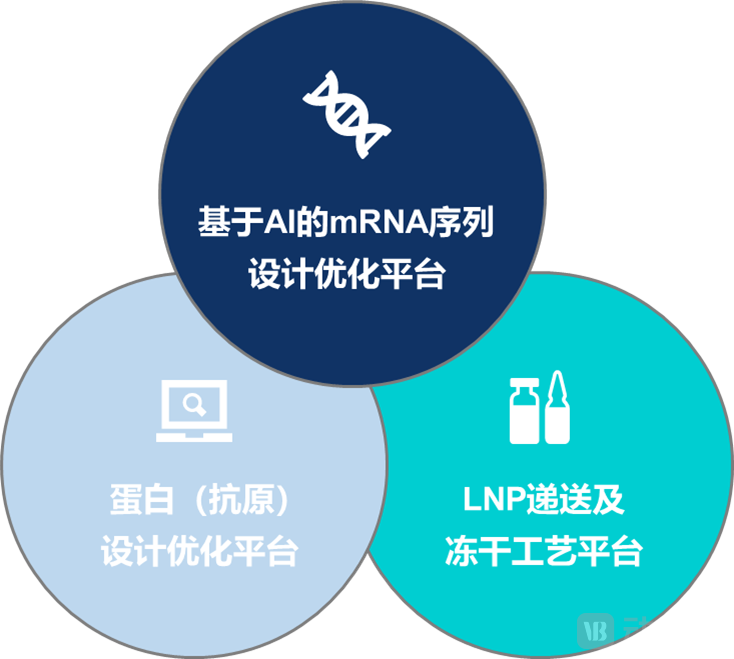
Figure 1: Schematic Diagram of NanoRibo’s mRNA-Related Platform Technology
Focusing on the urgent clinical needs for RSV and HSV, while expanding into therapeutic areas such as metabolic diseases and oncology
NanoRibo adopts a "tiered rolling" model in its pipeline layout.: On one hand, this strategy mitigates the risks associated with reliance on a single pipeline; on the other, it facilitates the continuous accumulation of end-to-end expertise through the advancement of candidates across various development stages. Currently, the RSV (Respiratory Syncytial Virus) vaccine has entered clinical trials, while early-stage projects such as the HSV (Herpes Simplex Virus) vaccine are progressing steadily with platform support. Meanwhile, the company is exploring the application of mRNA technology in combination respiratory vaccines, metabolic diseases, and oncology.
1RSV Vaccine: mRNA Technology Addresses Urgent Clinical Needs, While Lyophilization Breaks the Cold Chain Bottleneck
RSV (Respiratory Syncytial Virus) is a major pathogen causing lower respiratory tract infections in infants and young children. According to WHO data, it results in over 3.6 million hospitalizations among children under five years of age globally each year, leading to approximately 100,000 child deaths, with 97% of these occurring in low- and middle-income countries.
Previously, GSK’s recombinant protein vaccine Arexvy and Moderna’s mRNA vaccine mRESVIA received marketing approval, pioneering the global immunization pathway for RSV vaccines. However, high costs and ultra-cold storage and transportation requirements remain barriers to broad clinical accessibility.
NanoRibo selected RSV as its first clinical pipeline, primarily due to the dual compatibility of mRNA technology with lyophilization processes.: On one hand, mRNA technology can more efficiently induce the production of neutralizing antibodies than traditional recombinant proteins through AI-driven PreF antigen optimization; on the other hand, its independently developed LNP lyophilization process breaks through industry bottlenecks, enabling NR222 (RSV vaccine) to remain stable for over 24 months under standard cold chain conditions at 2–8°C, directly addressing the pain point of grassroots epidemic prevention departments lacking ultra-low temperature equipment.
In animal studies, the vaccine demonstrated robust protective efficacy in the cotton rat model, outperforming certain marketed recombinant protein vaccines. NR222 received approval to enter clinical trials in late 2024 and commenced Phase I trials in 2025.
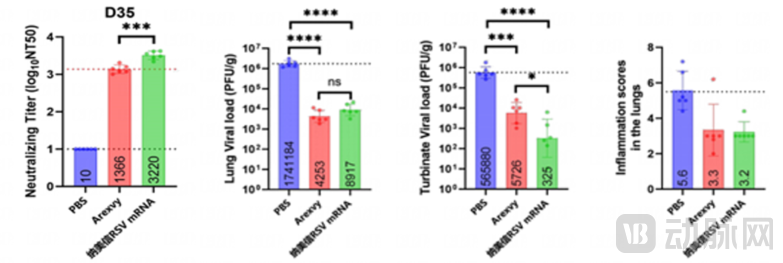
Figure 2: In head-to-head comparative studies, NR222 outperformed GSK’s marketed recombinant protein product
2HSV Vaccines: Academic Foundations Drive Scientific Breakthroughs, Multi-Antibody Strategies Tackle the Challenge of Latency
HSV-2 (Herpes Simplex Virus Type 2) Vaccine Development Poses Greater Challenges. According to WHO statistics, approximately 520 million people worldwide (aged 15–49) are infected with HSV-2. This virus not only causes genital herpes but also increases the risk of HIV infection by approximately threefold. However, because the virus establishes lifelong latency within nerve cells in the sacral ganglia after infection, thereby evading recognition by the host immune system, even multinational pharmaceutical companies such as GSK have failed in Phase III clinical trials. Consequently, this area is regarded as a scientific "no-man's land" for vaccine development.
NanoRibo’s market entry stems from its long-term academic accumulation. Dr. Qian Zhikang, the Chief Scientific Officer (CSO), has dedicated over two decades to herpesvirus research. The team began by establishing animal models of infection and recurrence, while simultaneously developing multi-dimensional immune evaluation methods. Unlike traditional vaccine strategies that rely on a single antigen, the company leveraged AI-driven design and optimization to identify its own solution through the screening of multi-antigen combinations.
Currently, animal model results have demonstrated strong protective potential, and the project is being accelerated into the preclinical stage.
3Therapeutic Vaccines, Metabolic Diseases, and Tumors: The Imagination of mRNA
In addition to the RSV vaccine and the HSV-2 therapeutic vaccine, NanoRibo has consistently centered its pipeline strategy on in-depth considerations of mRNA technology adaptability, focusing on areas that highlight the advantages of mRNA technology for long-term exploration.The team has a clear understanding of the core characteristics of mRNA technology: it functions through in vivo autonomous protein expression, offering unique value in scenarios that require precise regulation of protein expression, rapid response to target changes, or where traditional technologies face limitations.
This strategic layout, which “aligns technical characteristics with clinical needs,” not only demonstrates NanoRibo’s profound understanding of mRNA technology but also ensures that each of its explorations is centered on its technological advantages, thereby avoiding homogeneous competition driven by expansion for expansion’s sake.
Anchoring the Differentiated Path of mRNA Vaccines with Long-Termism
Since its inception, NanoRibo has achieved efficient resource allocation in the mRNA sector through refined operations and team expertise. While ensuring R&D quality and data reliability, the company has efficiently advanced the world’s first lyophilized RSV mRNA vaccine into clinical trials.
At the beginning of the year, NanoRibo Biotechnology solidified its financial foundation through Series A financing and is now seeking further funding., to support the pipeline’s entry into the pivotal clinical validation phase. However, maintaining R&D momentum in the later stages remains a practical challenge. Meanwhile, competition in the RSV sector is intense, with products from Pfizer, GSK, and Moderna already launched. To break through, NanoRibo must establish differentiation in innovation, druggability, and clinical value.
“It is better to be slow than to compromise on scientific rigor.”CEO Deng Ming often uses this phrase to remind his team. According to the team, the RSV vaccine’s lyophilization process scale-up phase once faced technical challenges. Adhering to the principle of not changing the dosage form, the R&D team validated process consistency through multiple rounds of stability testing, ultimately enabling the lyophilized formulation of the vaccine to successfully pass the regulatory authorities’ technical review. Underlying this caution is a steadfast commitment to long-termism.
Looking ahead, NanoRibo plans to advance its RSV vaccine into Phase II clinical trials in 2026 and continue to deepen its development of new pipelines such as HSV. Its longer-term goal is to address clinical challenges associated with undruggable or difficult-to-drug targets by leveraging the advantages of its mRNA technology platform through source innovation rooted in biological mechanisms, thereby truly realizing an innovative platform, innovative R&D, and accessible novel drugs.
As the mRNA industry enters a cycle of rationalization, NanoRibo’s calm and pragmatic practice of long-termism demonstrates that the key to navigating market cycles lies not in the speed of chasing trends, but in the steadfast commitment to continuously refining science and industrialization while advancing steadily.