

Shanghai-Based IVD Firm T透景 Life Sciences Invests RMB 68 Million in Biotech Huhe Bio to Advance 'Dx-Rx' Integration Strategy

Tellgen
In Vitro Diagnostic Reagent Manufacturer

CytoCares
Developer of Novel Tumor Immunotherapy Drugs
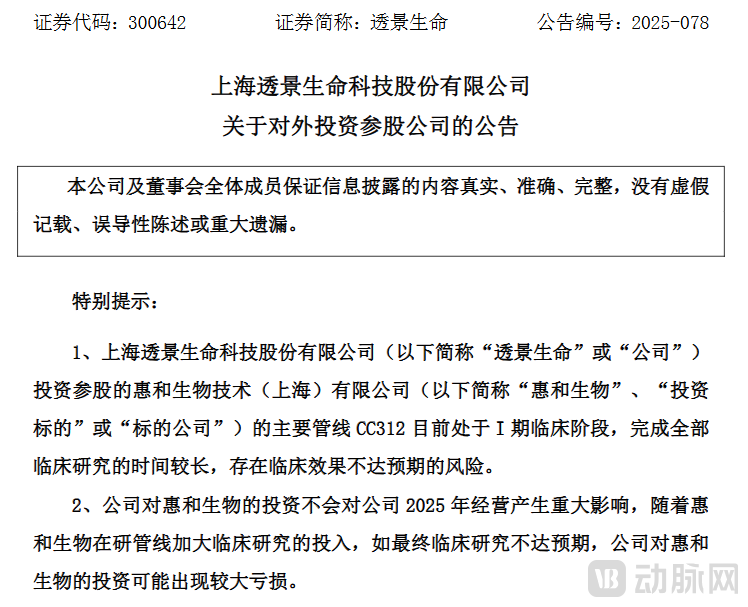
On the evening of October 23, 2025, Shanghai Tellgen Corporation (hereinafter referred to as “Tellgen”), an in vitro diagnostics (IVD) company, issued an announcement stating that it would subscribe to the increased registered capital of CytoCares (Shanghai) Inc. (hereinafter referred to as “CytoCares”) with RMB 68 million of its own funds, resulting in a shareholding ratio of 9.2141% after the completion of the capital increase.
CytoCares: Trispecific Antibody Technology Breaks Through in Autoimmune Disease Treatment
CytoCares, founded in 2015 and located in the Zhangjiang Hi-Tech Park in Shanghai, specializes in the development of novel antibody drugs that activate immune effector cells. Leveraging its three independently developed platforms—TriTE (trispecific T-cell engager), CCNK (NK cell activation), and CCMφ (macrophage activation)—the company has established a robust pipeline of multiple immunotherapy candidates.
The core team members hail from prestigious institutions such as Fudan University and The Chinese University of Hong Kong, bringing nearly two decades of experience in large-molecule drug development. Several members have previously led candidate drugs into clinical stages. The company has completed an A+ round of financing amounting to nearly RMB 100 million, led by Jingxu Venture Capital, Shenzhen Capital Group, and Tailong Investment. The funds will be primarily allocated to clinical research for pipeline candidates such as CC312 and the advancement of new projects.
CC312, a core asset, is a tri-specific T-cell engager (TriTE) antibody targeting CD19, CD3, and CD28. It is the world’s first tri-specific antibody drug to receive IND approval for systemic lupus erythematosus (SLE) while simultaneously targeting three epitopes. The drug is currently being developed for two indications: relapsed/refractory CD19-positive B-cell hematologic malignancies and systemic lupus erythematosus (SLE).
Its mechanism involves simultaneous binding to CD19 on tumor cells and the CD3/CD28 sites on T cells. By providing initial activation (via CD3) and co-stimulatory signals (via CD28), it promotes sustained T-cell expansion and enhances cytotoxic effects. Compared with traditional bispecific antibodies (such as CD3×CD19), CC312 can induce a greater number of memory T cells, potentially reducing tumor recurrence.
To date, CC312 has entered Phase I clinical trials in China. In August 2023, the company announced that the first patient with relapsed/refractory CD19-positive B-cell malignancies had completed dosing, demonstrating a favorable safety profile. Data presented at the 2025 AACR Annual Meeting indicated that the trial had completed dose escalation for most cohorts, showing good tolerability and preliminary antitumor activity, with significant peripheral B-cell depletion achieved even at low doses.
In addition to CC312, CytoCares has also developed a pipeline of T-cell engager antibodies targeting solid tumors, as well as candidate drugs based on NK cell and macrophage platforms, with some projects having entered the CMC and pharmacology/toxicology stages. Financially, the company reported a net loss of approximately RMB 37.01 million in 2024 and a loss of approximately RMB 23.72 million in the first three quarters of 2025, remaining reliant on financing to support its R&D expenditures in the short term.
Tellgen: Building a Bridge for Diagnosis-Treatment Synergy Based on Diagnostic Advantages
Tellgen, established in 2003, is a leading in vitro diagnostics (IVD) company in China, primarily engaged in the research and development, manufacturing, and sales of proprietary diagnostic reagents and supporting instruments. The company operates multiple testing platforms, including flow fluorescence and magnetic bead chemiluminescence, with its products widely applied in areas such as liver cancer biomarkers, human papillomavirus (HPV) testing, and cardiovascular diseases. In recent years, Tellgen’s performance has been under pressure due to industry competition and volume-based procurement policies: in 2024, its revenue amounted to approximately RMB 437 million, a year-on-year decrease of 19.5%, while its net profit stood at RMB 34.53 million, a year-on-year decline of 61.4%. To seek growth, the company is accelerating external mergers and acquisitions as well as strategic investments.
Notably, Tellgen is strategically positioning itself in the fields of molecular pathology and companion diagnostics. In August 2025, the company proposed to acquire an 82% equity stake in Wuhan Kanglu Biology for RMB 328 million in phased transactions. The latter specializes in fluorescence in situ hybridization (FISH) technology, with products used for cancer screening and companion diagnostics. This acquisition will address Tellgen’s shortcomings in molecular pathology, establishing a multi-dimensional testing portfolio comprising “flow fluorescence + PCR + FISH.” This strategy covers the complete chain from early screening to companion diagnostics, thereby enhancing its competitiveness in high-end sectors such as tumor diagnosis, cervical cancer screening, and personalized medication. Furthermore, the company has established a product matrix for autoantibody profile testing in the autoimmune disease field (including anti-double-stranded DNA and anti-Sm antibodies), whose testing channels can achieve technical complementarity with CytoCares’ CC312 pipeline.
Overall, Tellgen is accelerating its integrated “diagnostics + therapeutics” layout through mergers, acquisitions, and equity investments. In its announcement, the company stated that the investment in CytoCares “aligns with its long-term strategy of extending from diagnostics into therapeutics and building a full-lifecycle health service system.”
“Diagnosis + Treatment” Synergy May Become the New Direction for the Pharmaceutical Industry
Tellgen’s investment in CytoCares reflects the emerging trend of synergistic development between “diagnostics and therapeutics” within the pharmaceutical industry.
On one hand, IVD companies are increasingly expanding into the field of innovative therapies to pursue industrial transformation and diversified growth. A notable example is Hotgen Biotech, a leader in in vitro diagnostics, which has strategically entered the antibody drug and nucleic acid drug sectors since 2022 by taking equity stakes in multiple innovative pharmaceutical companies, such as Shunjing Medicine, Yaojing Gene, and Zhiyuan Biology. Following these investments, Hotgen Biotech’s stock price surged by 840% within a year, underscoring the capital market’s enthusiasm for the “diagnostics + innovative drugs” dual-drive strategy.
Similarly, Tellgen has acquired equity stakes in innovative drug projects through investment, aiming to establish a synergistic barrier between diagnostics and therapeutics. According to the announcement, CytoCares’ CC312 is currently in Phase I clinical trials and will require a considerable amount of time to complete all studies, carrying the risk that clinical outcomes may fall short of expectations. This indicates that Tellgen’s investment is strategic in nature, rather than driven by the pursuit of short-term financial returns.
On the other hand, China’s innovative drug industry as a whole remains in a phase characterized by both rapid development and adjustment. In the field of metabolic diseases, glucagon-like peptide-1 (GLP-1) receptor agonists have gained global popularity and are being accelerated into the domestic market. According to a research report by Guanyan, the global GLP-1 market is projected to exceed USD 100 billion by 2030, while the Chinese market is expected to surpass RMB 50 billion. Novel oncology therapies, such as antibody-drug conjugates (ADCs) and immuno-oncology (IO) treatments, are entering a golden age of global development. Industry expectations indicate that more Chinese-originated ADCs, bispecific/multispecific antibodies, and autoimmune disease drugs will enter the global clinical development pipeline.
Meanwhile, regulatory policies have continued to favor innovative drugs. Since 2024, China has introduced a series of policy measures, including accelerated clinical trial approvals, green channels for regulatory review, and dynamic adjustments to the National Reimbursement Drug List (NRDL). In June 2025, the National Healthcare Security Administration and the National Health Commission jointly issued the “Several Measures to Support the High-Quality Development of Innovative Drugs,” removing obstacles to new drug research and development and industrialization. Against this backdrop, domestic and international capital has flowed into the innovative drug sector: according to investment bank Stifel, Chinese pharmaceutical companies completed 98 overseas licensing deals in 2024, with a total transaction value nearing $59.5 billion. The promise of high multiples in market returns and favorable policy expectations has made high-quality early-stage projects highly sought after.
In this specific case, CC312 operates at the intersection of two major investment hotspots: immuno-oncology and autoimmune therapy. Globally, immunotherapies targeting B-cell markers (such as CD19) are highly regarded: while CAR-T cell therapies already have mature products on the market, next-generation bispecific and trispecific antibodies have become focal points of R&D. For Tellgen, investing in such a pipeline not only allows it to leverage cutting-edge biotech technologies to enter high-growth sectors, but also enables it to seek synergies by capitalizing on its strengths in diagnostics, including its comprehensive portfolio of autoantibody assay reagents and extensive distribution network.
In short, this transaction is an example of industrial chain cooperation characterized by “complementary advantages and synergistic efficiency.” Next, CytoCares may accelerate the completion of studies on the remaining dose cohorts and initiate Phase II trials to further validate the efficacy and safety of CC312 in B-cell malignancies and autoimmune diseases.
Overall, this transaction not only marks a step forward for Tellgen in implementing its strategic layout, but also sends a positive signal for the coordinated development of China’s innovative drug industry chain and the practical application of precision medicine. In the future, as CC312 and related pipeline candidates advance, we may witness more innovative cases under the “diagnostics + therapeutics” model, bringing greater benefits to patients.