

Dunwill Medical: Accelerating the Translation of Original Biomarkers through an Integrated 'Clinic-Research-Industry' Ecosystem
DUNWILL
Developer and Producer of Diagnostic Products for Tumors and Metabolic Diseases
In the field of cancer prevention and control, early diagnosis is key to improving cure rates. However, China’s early cancer screening industry has long faced challenges such as a scarcity of original biomarkers and slow updates to diagnostic products.
Taking liver cancer screening as an example, the sensitivity of traditional alpha-fetoprotein (AFP) testing for early-stage liver cancer is only 40%, meaning that nearly two-thirds of early-stage patients may miss the optimal window for treatment due to missed diagnoses. Similar scenarios exist in other types of cancer; many cancers still lack highly sensitive tools for early diagnosis, and clinical needs remain far from being met.
Meanwhile, the uneven distribution of medical resources has further exacerbated challenges in the accessibility of early screening technologies. High-quality medical resources are concentrated in first- and second-tier cities, while primary healthcare institutions often struggle to access the latest diagnostic technologies. This structural contradiction makes it difficult for many innovative products to truly benefit the populations in greatest need, meaning that the path toward “universal access” for cancer early screening remains long and arduous.
Against this backdrop, DUNWILL has carved out an innovative path in the field of early cancer screening by establishing a unique “medical-research-production” closed-loop model.
Focusing on the Translation of Original Research Biomarkers, Launching the World’s First miRNA Kit for Liver Cancer
The story of DUNWILL Medical began in 2006. That year, Wen Dong, a former member of the Chinese national women’s épée fencing team, founded Junshi Biotechnology (Shanghai) Co., Ltd., focusing on the research, development, and manufacturing of Class III IVD reagents and instruments.
Although she lacked a formal medical background, Wen Dong had harbored a strong interest in healthcare since childhood. After retiring from professional sports, she transformed herself from an outsider into an industry insider by auditing classes, self-studying foundational medical school courses, and engaging in in-depth laboratory internships.
At that time, China’s in vitro diagnostics (IVD) industry was still in a phase of slow growth. Through discussions with clinicians, Wen Dong discovered that the lag in diagnostic product updates was widespread. “Physicians reported that the diagnostic products they had used during their medical training a decade earlier remained largely unchanged, highlighting an urgent clinical need for new diagnostic tools.”
“Roche Diagnostics is the global benchmark for IVD,” Wen Dong candidly stated. “However, I have always believed that Chinese enterprises should not remain confined to distribution or imitation; instead, they must pursue original research and innovation. Precisely because I am an outsider, I hold a deeper reverence for professionalism and am more willing to learn from, emulate, and ultimately surpass existing standards by starting with clinical needs.”
With business expansion, the company has progressively refined its industrial layout: In 2008, Minsheng Medical was established to distribute and sell world-renowned in vitro diagnostic products from Roche Diagnostics and other leading brands; in 2013, a R&D subsidiary was set up in San Diego, USA, to accelerate the development of proprietary biomarkers; and in 2016, Puer Testing was founded to provide third-party medical testing services.
In 2014, Shanghai DUNWILL Medical Technology Development Co., Ltd. was officially established, integrating Junshi Biologics, Minsheng Medical, Genovo Inc., and Puen Testing to form a group-based operation, thereby truly building a complete chain system for scientific research translation from R&D and production to clinical application.
In 2018, DUNWILL was the first in the industry to systematically propose the closed-loop model of “Medical-Clinical Practice, R&D, and Production.” Wen Dong elaborated on the connotation of this model: “Medical-Clinical Practice” comes first because all R&D needs stem from unresolved clinical issues; “R&D” is in the middle as it requires support from biotechnology and platforms; “Production” follows last because it must be backed by a stable and reliable production quality system.
Within this closed-loop “medical-research-industry” ecosystem, DUNWILL’s first major translational achievement—the world’s first miRNA detection kit for liver cancer—exemplifies its collaboration with the team led by Academician Fan Jia and President Zhou Jian of the Department of Liver Surgery at Zhongshan Hospital, Fudan University.
Synergistic Multi-Omics Technology Platforms Accelerate the Commercialization of Precision Diagnostic Products
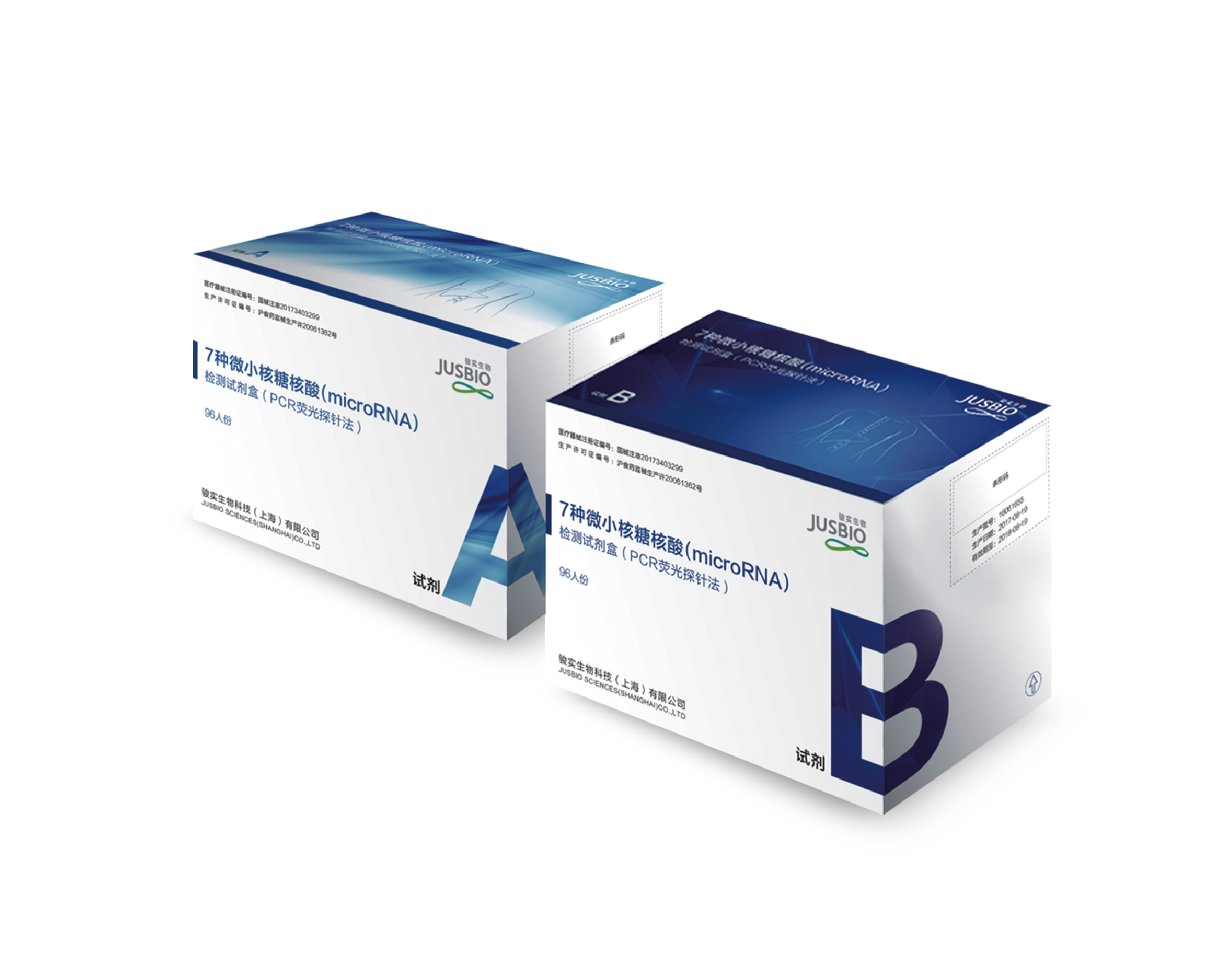
In late 2017, the “7-microRNA (miRNA) Detection Kit” developed by Junshi Biology, a subsidiary of DUNWILL Medical, received market approval, becoming the world first liver cancer molecular diagnostic miRNA product to obtain a Class III medical device registration certificate.
This product originates from a pioneering biomarker study conducted in 2008 by the team led by Academician Fan Jia and President Zhou Jian of the Department of Liver Surgery at Zhongshan Hospital, Fudan University. DUNWILL provided its proprietary patented technology for specific targeted capture, enabling the precise detection of seven miRNA biomarkers from just 0.2 mL of plasma and generating a predicted risk score for hepatocellular carcinoma through logistic regression modeling.
In AFP-negative patients, the product achieves a sensitivity of 77.16% and a specificity of 91.22%, thereby addressing the biological limitations of AFP testing. Currently, this product has been included in the Shanghai Medical Insurance Directory and the National Health Commission’s "Guidelines for the Diagnosis and Treatment of Primary Liver Cancer (2024 Edition)." It is the first tumor marker in China originally developed by domestic surgeons and successfully translated into certified clinical application, with real-world usage accumulating to millions of cases. Leveraging its leading technology in the field of miRNA biomarker detection, the company continues to expand its product portfolio. The current R&D pipeline encompasses multiple projects, including miRNA testing for inflammatory bowel polyps and risk stratification analysis for diffuse large B-cell lymphoma.
Meanwhile, DUNWILL has established a comprehensive multi-omics technology platform system covering the entire process of disease onset and progression, including core technical platforms such as PCR, CTC, NGS, mass spectrometry, single-cell sequencing, spatial omics, and bioinformatics analysis. These platforms form a collaborative and integrated diagnostic product development system, providing full-spectrum technical support for disease diagnosis research at different stages.
“Dual-Engine Drive” of “Introduction” and “Going Global”: Propelling China’s Original Diagnostic Technologies onto the World Stage
In Wen Dong’s view, there is no such thing as “overtaking on a bend” in medical innovation. Just as in fencing, every point relies on a foundation of solid basic training. She emphasizes that although new technologies such as artificial intelligence can accelerate the discovery of biomarkers, gaining clinical acceptance still requires long-term accumulation and rigorous attention to detail. “While we can screen and mine for biomarkers through databases, translating them into viable clinical tests necessitates complex process development, biomarker validation, and refinement through real-world clinical practice.”
As public attention to early cancer screening grows, Wen Dong believes that health science education is particularly important. “People need to learn more about and better understand the application of new technologies in cancer diagnosis.”
Looking ahead, DUNWILL has formulated a clear development plan. In the short term, it will focus on integrating its existing technology platforms, launching comprehensive assessment solutions such as “Liver Health Care” for the healthy population, and promoting the clinical application of miRNA technology in a broader range of diseases.
From a long-term perspective, the company is committed to becoming a globally leading platform for the translational development of proprietary biomarkers. “We maintain an open stance: we can both introduce advanced international technologies into China for registration and manufacturing, and expand our biomarker translation capabilities overseas,” said Wen Dong. The company will adopt a dual-drive strategy of “in-licensing” and “going global” to engage in deep collaboration with top-tier international enterprises, thereby promoting Chinese original diagnostic technologies on the world stage.
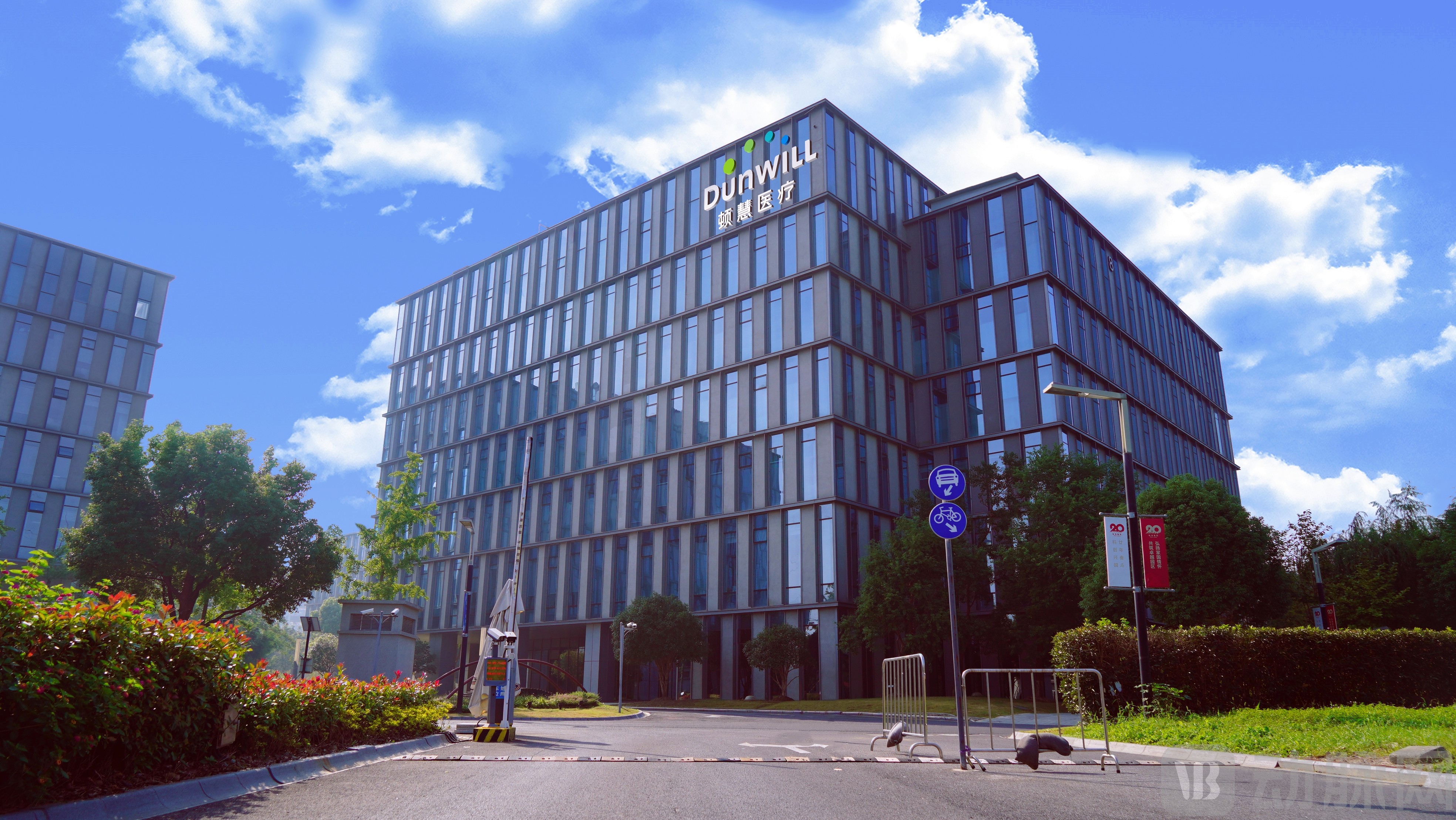
In 2023, the company’s new headquarters was officially inaugurated in the Songjiang Science and Technology City within Shanghai’s Lingang area, marking the enterprise’s entry into a new phase of development. As a key platform for fostering biomedical innovation in the Yangtze River Delta, the park provides comprehensive industrial resources and service support to companies such as DUNWILL.
“Mindfulness means maintaining proper form even in complex environments.” Wen Dong defines the founding mission of DUNWILL with the resilience characteristic of athletes. Transitioning from athlete to entrepreneur, and from follower to innovator, she has led DUNWILL to break down industry barriers through a closed-loop “medical research–production” model and build a product moat using AI-powered multi-omics technologies. In an era when diagnosis and treatment of complex diseases are shifting from luxury to accessibility, she has carved out a path for the translation of China’s original diagnostic biomarkers.
About Shanghai Lingang United Co., Ltd.
Shanghai Lingang United Development Co., Ltd. serves as the integrated service provider and master operator for the park’s innovation ecosystem. It is a subsidiary of Lingang Group, a large state-owned enterprise under the Shanghai State-owned Assets Supervision and Administration Commission (SASAC) with core businesses in park development, supporting services, and related industrial investments, and constitutes an important component of the listed entity “Shanghai Lingang (600848).”As a key platform for fostering biomedical innovation in the Yangtze River Delta, Lingang United Company Industrial Park has consistently adhered to the principles of “specialization, systematic approach, and standardization” to provide enterprises with industrial resource services.
The industrial parks under the Lingang United Company have gathered nearly 150 upstream and downstream enterprises, covering multiple fields such as cell and gene therapy, immunotherapy, and synthetic biology. Industry leaders including Huakan Biotechnology, Starday Therapeutics, and Linkon Times are clustered within the parks. Furthermore, the parks provide a range of industrial resources and service platforms, such as testing and inspection, animal experimentation, CRO, and CDMO services. Through a full-lifecycle service system, the parks deeply support tenant enterprises and empower the development of the biopharmaceutical industry.