

Academician Cao Xuetao Outlines China's Path to Parity in ADC and CAR-T Therapies: From Follower to Peer
“How exactly should the development of innovative drugs in China be implemented? How should it be strategically planned at the national level?”
At the 10th Pharmaceutical Innovation and Investment Conference, co-hosted by the China Association for Promoting Pharmaceutical Innovation and the Hong Kong Stock Exchange, Cao Xuetao—Vice Director of the Committee on Education, Science, Health, and Sports of the 14th National Committee of the Chinese People’s Political Consultative Conference, Academician of the Chinese Academy of Engineering, and Chief Technical Officer of the National Science and Technology Major Project on Innovative Drug Development—posed the above question while systematically reviewing the implementation outcomes of China’s special project on innovative drug research and development.
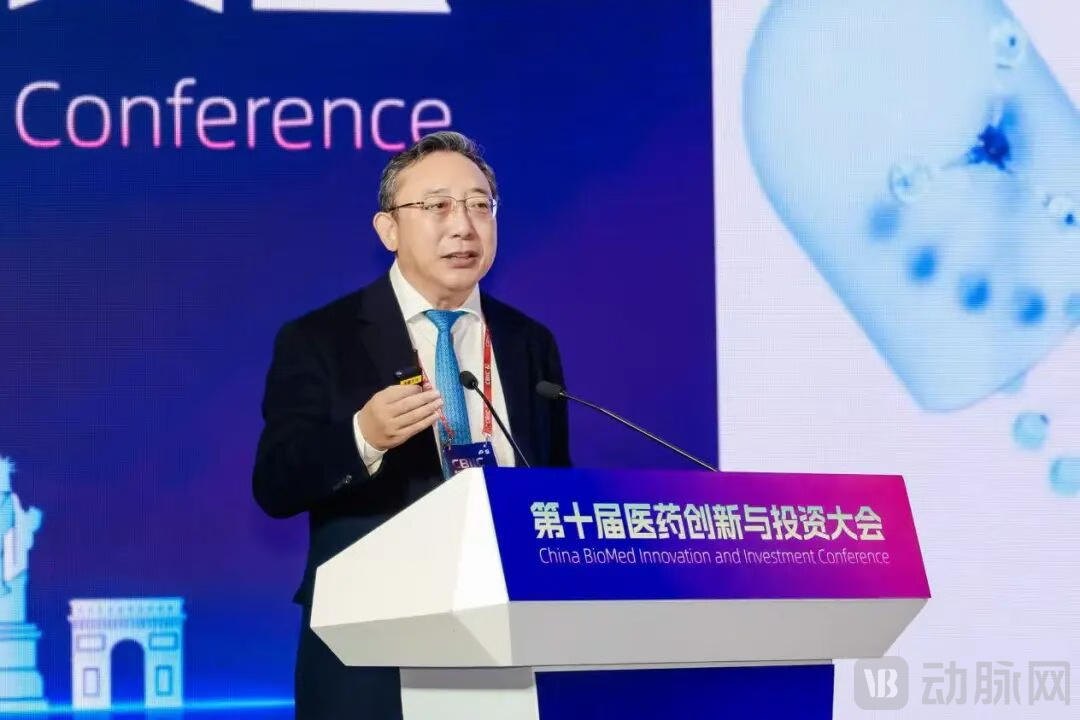
Cao Xuetao, Deputy Director of the Committee on Education, Science, Health, and Sports of the 14th National Committee of the Chinese People's Political Consultative Conference, Academician of the Chinese Academy of Engineering, and Chief Technical Officer of the National Science and Technology Major Project for Innovative Drug Development
From innovative drugs being “within sight but out of reach” to the U.S. Food and Drug Administration (FDA) approving China’s independently developed zanubrutinib and cilta-cel for marketing. Notably, zanubrutinib is poised to achieve nearly $3 billion in annual global sales.
Cao Xuetao concluded,Since the implementation of the National Major Project for New Drug Innovation and Development, 84 Class 1 new drugs and 41 innovative traditional Chinese medicines have been approved for market launch. These achievements represent not merely a numerical increase, but the establishment of a robust system. China has fundamentally transitioned from generic manufacturing to original innovation, gaining international influence and a world-class voice in frontier fields such as antibody-drug conjugates (ADCs) and cell therapy.The social benefits of China’s drug R&D have gained international recognition, with significantly improved accessibility to drugs such as PD-1 inhibitors in the domestic market, benefiting more patients and fulfilling the special program’s original design intent of “benefiting the public and enhancing national health levels.”
“At that time, we always felt that a certain class of innovative drugs was within sight but beyond reach; now, looking back, we have already reached the other side of the mountain.”Cao Xuetao emphasized that China’s drug R&D system has been continuously improving and developing. About 20 years ago, there were relatively few blockbuster drugs in China, and key technologies and platforms were not particularly advanced. Even at the initial stage, the scope was overly broad; after streamlining, the focus has remained on major products, key technologies, and specialized platforms to drive advancements in both drug candidates and technologies.
Under the new circumstances, how should future plans be formulated? Cao Xuetao proposed that the new mission is to focus on the “Two Major and Three Special” areas to address weaknesses in original innovation.
“Two Major”: prevention and treatment of major chronic diseases and major infectious diseases; “Three Special”: pediatric drugs, orphan drugs, and drugs for special scenarios.Among these, major chronic diseases—such as cardiovascular diseases, cancer, and neurodegenerative disorders—have long been widely recognized by the public. In contrast, although many hospitals offer in-house preparations for pediatric use, officially marketed drugs specifically designed for children account for a small proportion, and available dosage forms fail to meet clinical needs.
“In the past, when we spoke of follow-on innovation, we referred to the modification and imitation of major drug products, as well as exploration of novel dosage forms. The same applied to the field of traditional Chinese medicine (TCM), where effective components and new formulations were advanced into clinical use. However, our current focus is on original innovation,” emphasized Cao Xuetao.Original innovation requires a certain foundation. Currently, China faces insufficient discovery of original targets, a lack of first-in-class drugs, relatively low R&D investment by enterprises, and multi-center clinical trial capabilities that need improvement.
Cao Xuetao pointed out that there is a serious "clustering" phenomenon in the domestic R&D of new drugs targeting PD-1, PD-L1, HER-2, and other pathways. In fields characterized by China's disease spectrum, such as liver cancer, nasopharyngeal carcinoma, and pancreatic cancer, China still lacks effective therapeutic agents, and its innovation capacity remains behind that of the United States.
Reality presents both encouraging achievements and troubling dilemmas. What should be the next step?
The new round of the “National Science and Technology Major Project for Innovative Drug Research and Development” was launched in July 2025, with a planned allocation of RMB 1.75 billion in key matching fiscal funds; project applications for 2026 were also initiated this September. This major project represents a key initiative outlined in the “Several Measures to Support the High-Quality Development of Innovative Drugs,” jointly released by the National Healthcare Security Administration and the National Health Commission at the end of June 2025, commonly known in the industry as the “16 Articles.”
During the new round of major special project implementation, Cao Xuetao stated that the primary focus is on inheritance and development—consolidating the framework from the previous round, leveraging strengths while avoiding weaknesses, reinforcing strong points and addressing weak ones, and strategically positioning for new frontiers and high grounds.
Specifically, it is about promoting the “Four Transformations.” Cao Xuetao pointed out that the first transformation is shifting from a focus on drug candidate development to building new drug innovation capabilities that drive product innovation—Committed to Building Integrated Capabilities in “Product Portfolio, Talent, and Platform”; second, shifting the focus from the mid- and downstream industrial chains to the upstream innovation chain (such as major basic and technological research)—The upstream innovation chain and enterprise-side product development form a relay.; third, shifting from supporting the R&D of new drugs, including generics, to prioritizing support for the R&D of original innovative drugs—Encourage innovative approaches to achieve differentiated development; Fourth, shifting from targeting 10 major diseases to a coordinated layout based on changes in China’s disease spectrum and diseases affected by market failures—Strengthen Strategic Deployment in Areas Where Enterprises Lack the Capacity for Breakthroughs。
Overall, it should align with international development trends, ideally with a differentiated approach.
Cao Xuetao revealed that the special project willPriority support will be given to new targets, novel technologies, new therapeutic strategies, and delivery systems, with strengthened strategic layout in areas such as neurodegenerative diseases, hepatitis B cure, drug-resistant tuberculosis, gastrointestinal tumors, universal CAR-T, and artificial regenerative platelet technology.
Meanwhile, organizational coordination and regulatory science are being strengthened. Cao Xuetao introduced that the new round of special projects has established a “Two Chiefs, Two Offices” management system. The Central Science and Technology Office, under the Central Science and Technology Commission, provides macro-level coordination, while the National Health Commission has set up Special Project Offices and Chief Engineer Offices for three major special projects to drive implementation. This approach is shifting project execution from a fragmented, scattered model to one characterized by focused efforts and consolidated resources, thereby forming a synergistic force for tackling key challenges.
In the realm of regulatory science, Cao Xuetao has called for strengthening the development of review concepts and standards, emphasizing “unmet clinical needs,” and drawing on international experience to accelerate the review process for innovative drugs. The recently issued Regulations on the Administration of Clinical Research and Translational Application of New Biomedical Technologies also aim to provide standardized guidance and ensure the healthy development of the industry.
Looking ahead, Cao Xuetao aims to establish a national drug innovation system featuring key core technologies, high-level innovative drugs, and leading international enterprises through the implementation of special projects. This initiative seeks to propel China’s comprehensive R&D capabilities into the world’s first tier, positioning the country as a global hub for novel drug discovery and a highland for the biopharmaceutical industry.