

Dana Bio Successfully Lists on Beijing Stock Exchange, Marking a 'Capital Moment' for Invasive Fungal Disease Diagnostics
Dynamiker
In Vitro Diagnostic Product Development and Manufacturing for Invasive Fungal Diseases
Today, Dynamiker Biotechnology (Tianjin) Co., Ltd. (stock abbreviation: Dynamiker; stock code: 920009) officially listed on the Beijing Stock Exchange.
This “specialized, refined, distinctive, and innovative” enterprise, focused on the diagnosis of invasive fungal diseases, chose the Beijing Stock Exchange—better aligned with the characteristics of small and medium-sized innovative enterprises—as its new starting point, after five years of consolidation and adjustment following its unsuccessful attempt to list on the STAR Market in 2020.
According to the issuance announcement, the company’s offering price is RMB 17.10 per share, with approximately 8 million shares issued, raising a total of around RMB 137 million. The proceeds will be used for new product research and development and the construction of production lines at its headquarters, further strengthening its integrated production and R&D layout.
Within the vast ecosystem of the in vitro diagnostics (IVD) industry, fungal infection testing is a long-neglected “small yet challenging” niche.
According to the National Center Office of the National Fungal Disease Surveillance Network, approximately 300 million people worldwide suffer from severe fungal infections each year, with an average case fatality rate as high as 27.6%. Most patients with invasive fungal diseases are immunocompromised individuals, such as those undergoing chemotherapy for cancer, organ transplant recipients, and patients with AIDS or diabetes. Once infected, the case fatality rate can reach up to 100%.
Over the past few decades, fungal detection technologies have continuously evolved from traditional morphological methods to modern molecular diagnostics. Traditional detection methods, including direct microscopic examination, fungal culture, and identification, remain foundational tools in clinical practice. However, they have significant limitations: a lengthy turnaround time of 3 to 7 days, low sensitivity, and complex operational procedures, making them inadequate for meeting the clinical needs of rapid diagnosis and early intervention for invasive fungal diseases.
In recent years,Serological testing and molecular biology testing technologies represented by PCR and metagenomic next-generation sequencing (mNGS)Bringing a new breakthrough to fungal diagnosis.
By directly detecting the nucleic acid sequences of pathogens, molecular biology assays can achieve highly sensitive and specific quantitative detection within hours, enabling precise identification of bacterial species and even drug-resistance genotypes. However, the application of molecular testing remains constrained by costs, equipment barriers, and laboratory requirements; it is currently concentrated in large general hospitals and research institutions and has not yet achieved widespread clinical coverage.
In contrast, serological testing has become the mainstream technical approach for early screening of invasive fungal diseases due to its high efficiency, stability, and ease of operation. By detecting specific markers in human serum—such as antigens, antibodies, or metabolites including β-D-glucan, galactomannan, and cryptococcal capsular polysaccharide—results can be obtained within two hours, significantly shortening the diagnostic turnaround time.
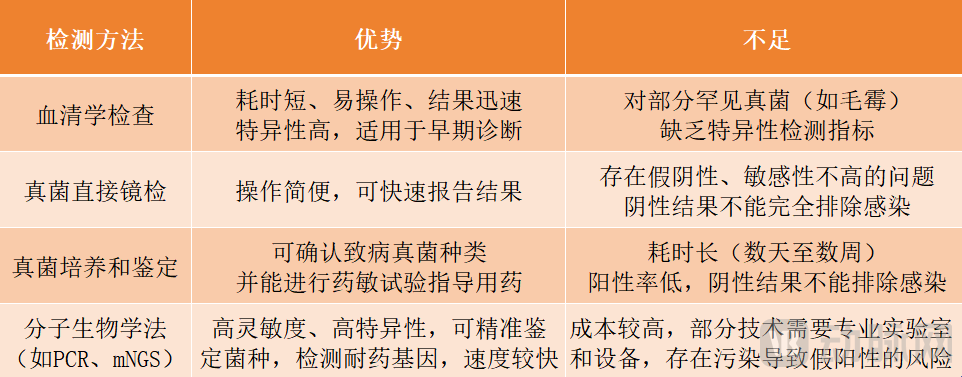
Comparison of Early Diagnostic Techniques for Invasive Fungal Diseases
In June 2021, the National Medical Products Administration (NMPA) officially approved and implemented the industry standard “Kit for Determination of Fungal (1→3)-β-D-Glucan” (YY/T 1729-2020), marking the entry of China’s diagnostic system for invasive fungal diseases into a stage of standardized development. The introduction of this standard filled a regulatory gap in serological testing for fungal diagnosis and promoted the large-scale clinical application of related diagnostic reagents.
In clinical practice, the (1→3)-β-D-glucan assay (G test) is currently the most commonly used indicator for early screening. β-D-glucan is widely present in the cell walls of various fungi (except Zygomycetes), accounting for more than 50% of the cell wall components. When fungi invade the human body and are metabolized and broken down by phagocytes, this component is released into the blood or body fluids. Rapid, quantitative detection of elevated β-D-glucan levels can assist in determining the occurrence of invasive fungal infections, holding significant value for early diagnosis and monitoring treatment efficacy.
Currently, serological testing for fungi primarily comprises two categories: antigen detection (such as the G test, GM test, and GXM test) and antibody detection. The former is used for early infection screening, while the latter is employed for monitoring late-stage infections and recurrences. With increasing automation of testing equipment, fungal diagnostics are evolving from single-marker assays toward a “rapid, quantitative, and systematic” approach.
In this evolutionary process, Chinese enterprises are gradually breaking through bottlenecks in core technologies.
As a leading domestic enterprise in this niche sector, Dynamiker was established in 2014. Centered on immunodiagnostic technologies, the company has built a comprehensive technological chain spanning from antigen and antibody development to enzyme-linked immunoassay systems. Its flagship products include serological diagnostic reagents such as the “G Test,” “GM Test,” and “GXM Test,” which cover major clinical fungal species and have been included in the procurement catalogs of medical institutions across multiple provinces in China.
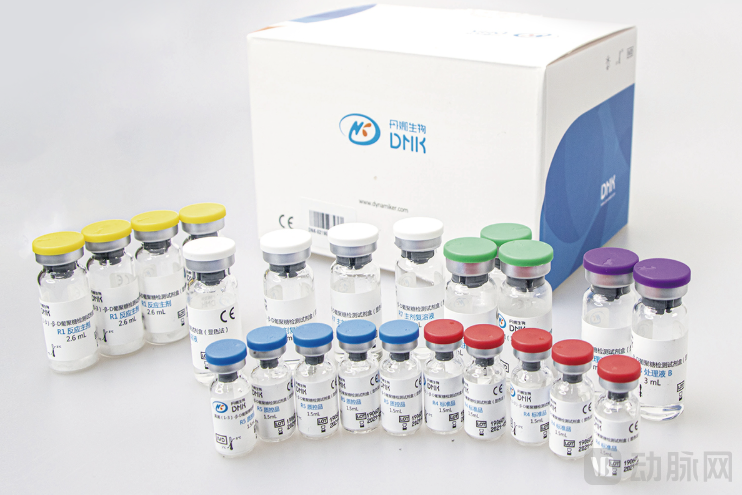
Fungal (1-3)-β-D-Glucan Assay Kit (Chromogenic Method) Source: Dynamiker Official Website
After a decade of dedicated development, Dynamiker has captured approximately 30% of the Chinese market for diagnostic reagents for invasive fungal diseases, emerging as the leading enterprise in this niche sector. The company’s products are used by more than 1,300 medical institutions across all 34 provincial-level administrative regions in China, including over 1,000 tertiary hospitals, and are exported to Southeast Asia, South America, and the Middle East, establishing stable international distribution channels.
Dynamiker’s core competitiveness lies in “Raw Materials—Platform—Products“Full-chain vertical integration.
On the raw material front, the company has established its own R&D system for antigens and antibodies, mastering core technologies in key enzyme and antibody preparation, thereby eliminating dependence on imported raw materials. On the platform front, it has developed multiple technology platforms, including enzyme-linked immunosorbent assay (ELISA), immunochromatography, chemiluminescence, and quantitative fluorescent PCR, to provide testing solutions tailored to diverse clinical needs. On the product front, it has realized an integrated commercial model of “reagents plus compatible instruments.”
Among them, “5G+ Combined Detection Solution"Integrating multi-channel detection with algorithmic interpretation technology, a single test can cover over 90% of clinically relevant fungal species, reaching an internationally advanced level. This solution has been piloted in select provincial-grade tertiary hospitals and is regarded as a potential alternative for fungal testing in the 'post-LAL era'."
As of 2025, the company has accumulated a total of 91 patents, including 48 invention patents, and has obtained 79 domestic medical device registration certificates and 102 EU CE certifications. The proportion of R&D investment to operating revenue has consistently remained above 10%, representing a relatively high level among peer companies listed on the Beijing Stock Exchange.
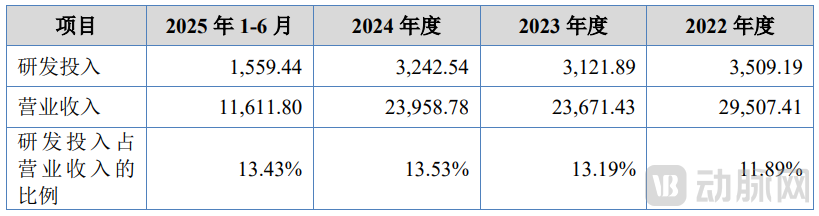
Dynamiker’s R&D Investment Ratio Source: Dynamiker’s Prospectus
Furthermore, within the industry ecosystem, the company is a co-founder of the SCO Countries Health Industry Alliance and an executive director unit of the IVD and Precision Medicine Industry and Investment Alliance. It also collaborates with organizations such as the Global Action Fund for Fungal Infections (GAFFI) and Pfizer China to promote the prevention and control of fungal diseases and the development of clinical diagnostic standards.
High technology brings high barriers, but it does not necessarily mean high growth.
According to the prospectus, Dynamiker generated RMB 240 million in revenue in 2024, a year-on-year increase of 1.21%; net profit for the same period was approximately RMB 87 million, representing a slight year-on-year decline of 0.6%. However, the company’s gross margin reached as high as 85.99%, significantly exceeding the average level of domestic IVD companies (approximately 60%–70%). This combination of figures indicates that the company’s products possess stable pricing power within their niche segment, while also reflecting constraints on market expansion.
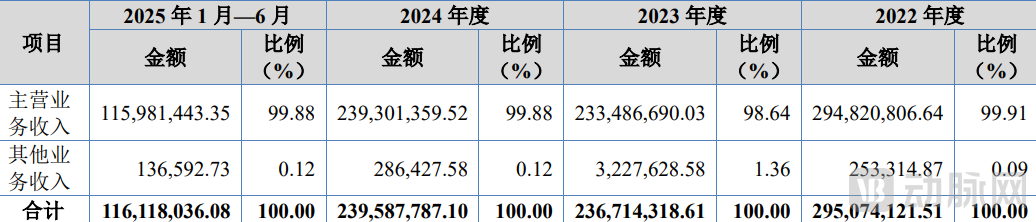
Breakdown of Operating Revenue Source: Dynamiker's Prospectus
During the pandemic, demand for fungal testing saw a temporary surge driven by a sharp increase in severe cases. In the post-pandemic era, clinical testing demand has returned to normal levels, leading to an overall slowdown in industry growth. Meanwhile, policies such as healthcare cost containment and price reductions through centralized procurement have compressed profit margins. Although Dynamiker has maintained a high gross margin structure, it urgently needs to identify new growth drivers.
Dynamiker’s greatest challenge stems from a supply crisis affecting its core raw materials. The key ingredient for the company’s flagship product, the “G Test” reagent, is horseshoe crab hemocytes. Since horseshoe crabs were upgraded to Class II national protected animals in 2021, there have been no new channels available in the domestic market to source additional horseshoe crab blood cells. Although the company states that its current inventory can meet production demands for more than five years, this situation undoubtedly remains a “Sword of Damocles” hanging over its head in the long term.
To mitigate this risk, the company has developed a range of alternative products based on immunodiagnostic methodologies. However, in 2023, the total revenue from these alternative products amounted to only RMB 349,800, representing approximately 0.42% of the revenue generated by the original horseshoe crab blood cell products. Such a low revenue share indicates that it will take considerable time for the new products to gain widespread market acceptance and achieve effective substitution.
Cost pressures are equally significant. The company has attempted to import horseshoe crab hemocytes from Vietnam, but this will lead to an increase in the unit cost of related products, with the gross profit margin expected to decline by 1.81 percentage points. Amid the broader trends of healthcare cost containment and product price reductions, the dual squeeze on costs and selling prices will directly test the company’s profitability.
Another issue worthy of attention is the insufficient capacity utilization rate. Data shows that in 2024, the capacity utilization rates for the company’s three main product categories were 64.82%, 60.78%, and 85.85%, respectively. Given that existing production capacity has not been fully utilized, the necessity of raising funds to expand production naturally comes under scrutiny.
Therefore, Dynamiker proactively adjusted its fundraising strategy for this IPO. The company originally planned to raise RMB 500 million, but voluntarily reduced the target to RMB 137 million during the registration phase, representing a 72.6% decrease, and canceled the RMB 50 million working capital supplement project. This adjustment is viewed as a response to regulatory and market concerns.
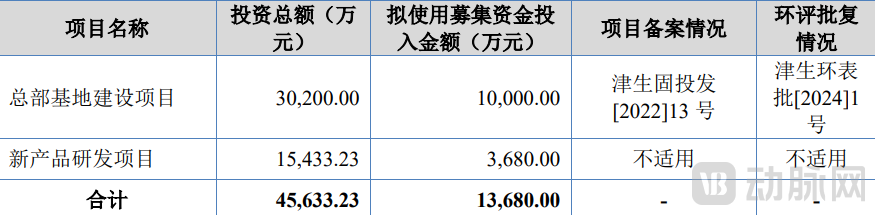
Amount of Funds Raised and Investment Projects Source: Dynamiker’s Prospectus
It is precisely under the multiple pressures of peaking growth, raw material crises, and idle production capacity that Dynamiker’s core objective in this IPO is no longer simple financing for expansion, but rather aims toLeveraging the power of capital markets to provide a critical buffer period and resource support for breaking through technological substitution bottlenecks and exploring new growth curves.。
From the perspective of market trends, testing for invasive fungal diseases is gradually evolving from a niche test into a clinical necessity.According to a Frost & Sullivan report, the market size of diagnostic reagents for invasive fungal diseases in China is expected to grow from RMB 240 million in 2018 to RMB 3.03 billion in 2030, with a compound annual growth rate (CAGR) of 23.5%; during the same period, the global market is projected to increase from USD 780 million to USD 1.5 billion, at a CAGR of 9.9%.
This growth is driven by the rapid expansion of critical care medicine, oncology chemotherapy, and transplantation surgery, as well as the increased frequency of antimicrobial use. With the advancement of national tiered diagnosis and treatment policies and the rising rate of pathogen testing submissions, fungal detection is rapidly extending to more secondary hospitals and primary-care laboratories.
Currently, there are approximately ten companies holding registration certificates for invasive fungal disease diagnostics in the Chinese market, indicating a relatively high level of market concentration. According to data compiled from the official website of the National Medical Products Administration (NMPA), more than 30 medical device products have been approved in this field, covering early diagnostic reagents such as the G test, accompanying calibrators, and dedicated testing instruments. This reflects that this niche sector is attracting increasing corporate participation, with competition gradually intensifying.
From the perspective of participating entities, market competitors can be mainly categorized into the following types:
International brands, represented by Bio-Rad (USA), IMMY, and ACC, have relatively limited product portfolios, primarily offering single-analyte testing products. For instance, Bio-Rad mainly provides GM test products, IMMY focuses on cryptococcal detection (GXM test), and ACC offers G test products; however, some of these products are not registered in China.
Domestic enterprises exhibit a more diversified industrial ecosystem. Among them, companies specializing in fungal diagnostics have formed a complete tiered structure: Dynamiker Biotechnology, a leading enterprise focused on fungal detection, has captured a 30% market share; Tianjin Yirui Biotechnology offers diagnostic products for the G test, GM test, and GXM test; while Zhanjiang Andus Biotechnology specializes in the G test and bacterial endotoxin testing. Additionally, a group of enterprises including Xiamen Tachypleus Bioscience, Zhanjiang Bokang Marine, and Fuzhou Xinbei Biochemical Industry are deeply engaged in the niche segment of the G test, serving as key participants in this field.
Meanwhile, platform-based IVD companies such as Autobio Diagnostics have integrated fungal testing into their “Infectious Disease Testing Ecosystem,” achieving synergistic deployment through comprehensive test menus and automated systems. Rather than focusing exclusively on the fungal diagnostics segment, these companies incorporate it as part of their overall solutions, leveraging their strong distribution channels and brand influence to compete in the market.
From the perspective of technological development pathways, product iteration and innovation are advancing along two directions. In the field of molecular diagnostics, Sansure Biotech’s approved “Nucleic Acid Detection Kit for Pneumocystis jirovecii, Cryptococcus neoformans, and Aspergillus” has achieved simultaneous multi-target detection, reducing diagnostic time from several days to just a few hours. Meanwhile, in the immunodiagnostics platform, Lifeomics’ G-test product, based on chemiluminescence immunoassay (CLIA), represents the upgrade direction of mainstream technology platforms through its fully automated operation and enhanced anti-interference capabilities.
Overall, the focus of industry competition is shifting from product performance benchmarks to comprehensive capabilities encompassing technology integration, clinical validation, and academic promotion.As testing scenarios become more diversified and penetrate deeper into grassroots markets, the industry is entering a period of “hyperbolic” growth driven by both technological innovation and surging market volume.Although Dynamiker enjoys a first-mover advantage, it must continue to exert effort in technological iteration, regulatory approval advancement, and channel deepening to maintain its leading position.
Amidst the fervor, cool-headed reflection is even more necessary. Dynamiker’s path to going public has not been smooth. As early as 2020, the company filed for an IPO on the STAR Market, but voluntarily withdrew its application two months later. After shifting its focus to the Beijing Stock Exchange, it received an oral warning from regulators due to misstatements in its financial data. Although the listing process has been fraught with twists and turns, this round of “self-correction” has enabled the company to establish a clearer strategic positioning—focusing on fungal testing and expanding into multi-pathogen combined testing and molecular diagnostics.
In the face of a new market landscape, Dynamiker’s future growth hinges primarily on three curves:
Product iteration is regarded as the most critical breakthrough. The immunodiagnostic replacement products are currently in the registration phase; although their current revenue contribution stands at only 0.42%, they are expected to generate new growth as clinical acceptance increases. The company plans to launch two next-generation rapid testing products by 2026 to accelerate technological iteration.
International expansion is the second growth curve. In the first half of 2025, the company's overseas operating revenue reached RMB 4.8256 million, a year-on-year increase of 14.84%. Southeast Asia and the Middle East are becoming key markets for strategic deployment, with the company's products now sold to numerous countries and regions worldwide.
Capacity release constitutes the third growth curve. Upon completion of the new headquarters and production lines, annual production capacity will increase from 3 million units to 8 million units, with economies of scale expected to optimize the profit structure. However, this also brings new challenges—how to absorb the nearly threefold increase in capacity.
The liquidity characteristics of the Beijing Stock Exchange (BSE) also amplify the risks and opportunities in this process. Market sentiment reacts more quickly and directly, and companies’ ability to deliver on promises will be tested earlier. In the next three to five years, whether Dynamiker Biotechnology canSuccessfully resolving the raw material crisis, effectively absorbing the newly added production capacity, and translating technological advantages into sustained revenue growth will become the core challenges it faces after listing on the capital market.