

"An AI Healthcare Era That Understands You Better Is Here: How iFLYTEK Health Is Leading the Next Phase"

Xunfei Healthcare
Developer of Intelligent Medical Service Platforms
In recent years, medical artificial intelligence (AI) applications have become increasingly widespread. These diverse intelligent applications not only address the shortage of high-quality medical professionals but also empower physicians with efficient, accurate, and comprehensive medical services. Furthermore, they strengthen the connection between patients and healthcare institutions, serving as a significant force in optimizing the allocation of medical resources and enhancing the accessibility of healthcare services.
However, while these digital-intelligence capabilities can effectively improve physicians’ diagnostic efficiency and accuracy, they do not fully address the common limitation of poor interpretability in medical artificial intelligence, and there remains room for further improvement in accuracy.
To address the aforementioned issues, IFLY TEK unveiled a major upgrade to its digital intelligence healthcare solutions at the recently concluded 2025 iFLYTEK Global 1024 Developer Festival.
Among them, the upgraded IFLY TEKSpark Healthcare Large Language ModelDemonstrating significant improvements across all capability metrics, it has further strengthened the logical correctness, professionalism, and interpretability of its AI solutions in medical reasoning scenarios. Its capabilities in key task scenarios, such as medical diagnostic reasoning and health interactions, have now pulled ahead of internationally leading large language models like GPT-5 (high) and DeepSeek V3.2-Exp.
Even third-party evaluation data indicate that iFlytek Healthcare’s new-generation AI has attained comprehensive diagnostic and therapeutic capabilities in key specialties, equivalent to the level of department directors at tiered hospitals.
Amid a leapfrog improvement in capabilities,IFLY TEK’s strategic goals are also beginning to adjust. Behind the myriad innovations showcased at the Developer Festival, a new wave of medical AI transformation is taking shape.
Before analyzing the transformation of IFLY TEK, let us first deconstruct its primary healthcare solutions.
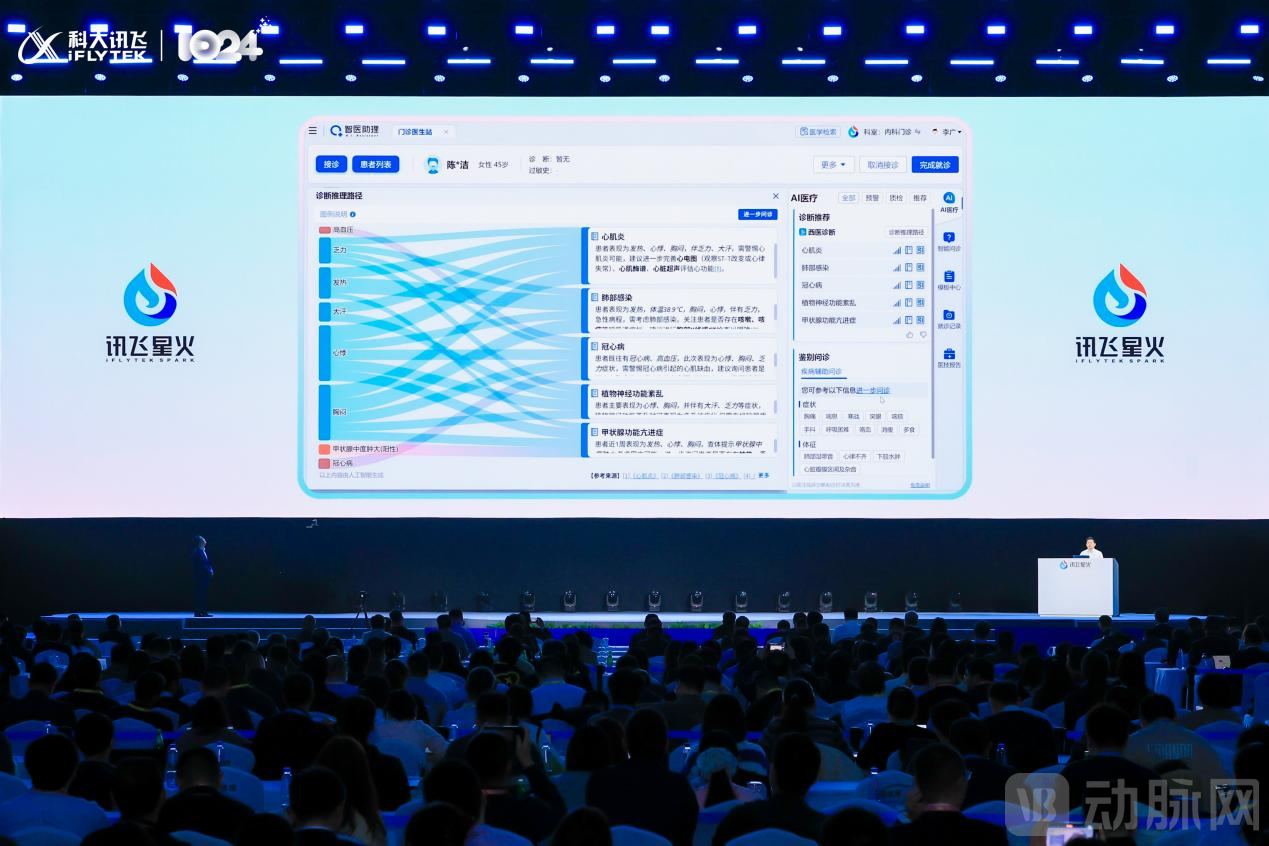
Following the upgrade of the IFLYTEK Spark Medical Large Model, the application scenarios for the “Intelligent Doctor Assistant” have not changed significantly. However, by integrating high-quality data based on expert chain-of-thought reasoning with a refined medical knowledge base, and by overcoming challenges in medical knowledge reflection and long chain-of-thought reinforcement learning, the system has achieved significant improvements in both diagnostic assistance performance and interpretability. Empowered by this large language model, the Intelligent Doctor Assistant can not only accurately identify various symptoms but also maintain a logically ranked list of recommended diagnoses for complex cases, while presenting the chain-of-thought reasoning path behind these recommendations to physicians.
For primary care physicians, this evidence-based approach not only enhances diagnostic accuracy and prevents missed diagnoses during consultations, but also enables them to learn decision-making pathways through the chain-of-thought reasoning of specialist physicians at any time, thereby facilitating continuous improvement in their professional capabilities.
A Further Look at the Upgrade of IFLYTEK Xiaoyi
In daily life, health management faces numerous challenges: examination data and medication records are scattered and fragmented, while doctors’ diagnostic and treatment recommendations are easily forgotten. This fragmentation not only leads to inadequate user awareness of their own health status but also creates communication barriers during medical consultations. Patients often struggle to clearly describe previous symptoms and key milestones in their health changes; meanwhile, faced with incomplete health histories, doctors find it difficult to make comprehensive and accurate judgments within limited time frames, ultimately compromising the precision and efficiency of diagnosis and treatment.
To address this pain point, the new generation of IFLYTEK Xiaoyi further enhances the organization of user health data, thereby creating a truly "living" health record.
Specifically, IFLYTEK Xiaoyi supports manual or voice input for queries, intelligently extracts key information from conversations, and is compatible with the transmission of health data collected via hardware. It can also rapidly identify and structurally extract key indicators from laboratory reports, as well as medical diagnoses and medication records, thereby enabling intelligent archiving and integration of health information to form a continuously refined health profile.
Meanwhile, the app can integrate and analyze health data from different time points to generate personalized health trajectories, supporting cross-temporal comparisons and trend analysis of key disease-related indicators. This helps users clearly understand changes in their health status and disease progression trends, bringing health records to life.
Leveraging dynamic health records, iFlytek Xiaoyi has evolved from a basic Q&A tool into an “AI Family Doctor” with the ability to comprehend health histories. Supported by data, the application provides precise and personalized health assessments and management plans through in-depth analysis of users’ health backgrounds.
Upon completion of the health record establishment, iFLYTEK Xiaoyi naturally possesses the capability to provide in-depth health management.
At this stage, iFlytek Xiaoyi has prioritized launching health management services addressing three high-frequency needs: hypertension, hyperglycemia, and weight management. These services are built upon an upgraded “general practice + specialty” composite capability framework and enhanced health records, underpinned by a robust professional knowledge system comprising over 500 refined management pathways. All pathways have been reviewed by experts from Grade A tertiary hospitals and academic associations, and have undergone large-scale clinical validation in more than 200 tiered hospitals across China.
“Data + Capabilities” Dual Empowerment: IFLY TEK’s Large Model-Driven “Health Management Plan” Precisely Aligns with Users’ Needs. For users, precise health management means they can quickly experience the benefits of such management through changes in their daily habits.
Driven by “user experience,” individuals will shift from passively accepting health management plans to engaging in “proactive management” with clear goals and direction, thereby truly unlocking the value of health management.
Having achieved remarkable results in the digital and intelligent transformation of primary healthcare, IFLY TEK has been exploring whether its enabling framework can be extended to tiered hospitals. After all, the uneven distribution of medical resources is not limited to primary care; tiered hospitals also require AI to enhance the quality and efficiency of diagnosis and treatment.
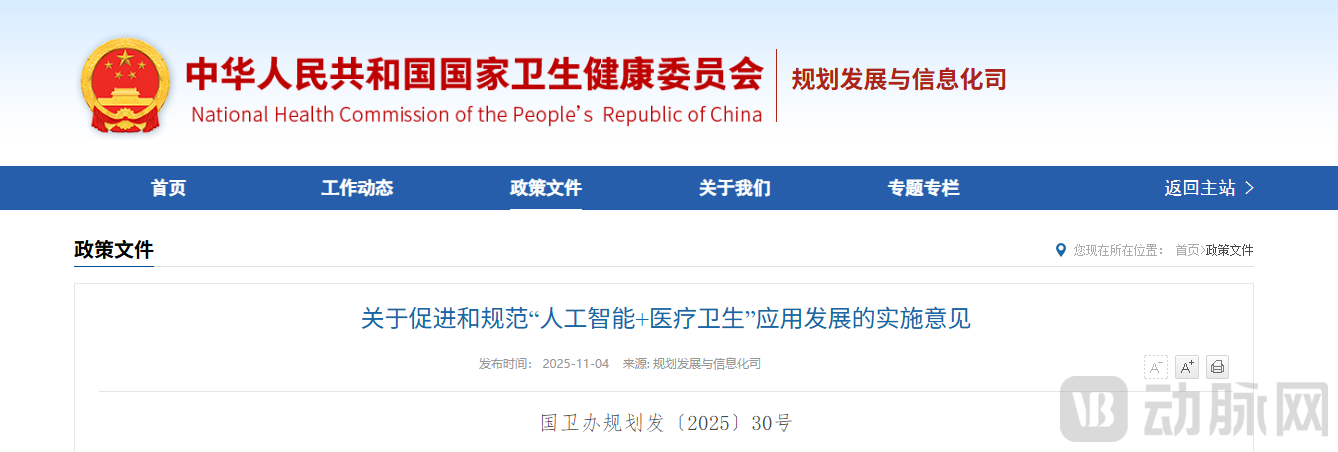
On November 4, the National Health Commission and four other departments jointly issued the “Implementation Opinions on Promoting and Standardizing the Development of ‘AI + Healthcare’ Applications,” clarifying the value of IFLY TEK’s new strategic direction. The document outlines 24 key areas for application development, requiring that by 2027, a number of high-quality datasets and trusted data spaces in the health sector be established; a series of vertical large models and intelligent agents for clinical specialties and specific diseases be developed; intelligent assistance for primary care, intelligent decision support for clinical specialty and disease-specific diagnosis and treatment, and intelligent patient services be widely adopted in healthcare institutions; and a number of national pilot bases for AI applications in healthcare be basically established. These efforts aim to create more high-value application scenarios and drive high-quality development of the health industry.
The public welfare nature of public hospitals is a core positioning repeatedly emphasized by the state, which dictates that they must balance the equity and accessibility of medical services. Furthermore, compared with primary care institutions, tiered hospitals handle more complex cases, thereby multiplying the demands on AI capabilities: these systems must not only provide precise diagnostic support but also enhance efficiency to unlock high-quality medical resources, thus alleviating the supply-demand mismatch inherent in their public welfare mandate.
“Statistical Bulletin on the Development of China’s Health and Healthcare Services in 2023” shows that in 2023, the number of hospital visits nationwide reached 4.26 billion, posing dual challenges to efficiency and quality due to high-frequency patient consultations, massive documentation, and complex clinical decision-making.
In reality, the Clinical Decision Support Systems (CDSS) widely adopted in hospitals are mostly rating-compliant versions designed to meet basic workflow requirements. While such systems can help control costs by ensuring compliance with clinical protocols, their limited diagnostic depth makes it difficult to support precise judgment for complex cases, ultimately constraining the full realization of public welfare benefits.
Clearly, without the support of AI, it would take the country more than ten years to build a medical team capable of serving the vast patient population in China, thereby gradually achieving equity and technological advancement. This is precisely where the opportunity for IFLY TEK’s healthcare transformation lies.
Leveraging the data flywheel generated by over one million daily AI-driven routine applications, along with comprehensive diagnostic and treatment capabilities in key specialties at the level of chief physicians, IFLY TEK has officially released Smart Doctor Assistant Hospital Edition 1.0. Focusing on core functions such as assisted diagnosis and treatment, assisted consultations, medical record generation, and medical record quality control, it aims to facilitate precise and efficient clinical care.
According to reports,Smart Medical Assistant Hospital Edition 1.0When processing long-term, multi-source, and complex medical records from tiered hospitals, it can break through the limitations of single-specialty thinking. By leveraging expert evidence-based reinforcement grounded in high-quality medical knowledge and precise reasoning via long chain-of-thought techniques, it delivers rapid, accurate, comprehensive, and interpretable answers.
This expansion of diagnostic thinking significantly improves the diagnostic accuracy of junior specialists. Taking cough as an example, a patient’s cough may be neurogenic in origin or a respiratory response triggered by gastrointestinal issues. If a patient consults a pulmonologist, the physician might overlook underlying digestive system problems. However, AI can rapidly identify such cross-specialty diagnostic risks through real-time data analysis, effectively providing specialist physicians with auxiliary decision support endowed with a “general practice perspective.”
In terms of traditional efficiency enhancement, the integration of large language models will also optimize the application of AI in medical record generation and quality control. According to IFLY TEK Healthcare, the Intelligent Medical Assistant leverages intelligent speech technology to extract key information from doctor-patient conversations in real time, enabling the generation of electronic medical records and establishing a closed-loop quality control process during diagnosis and treatment. This approach improves the quality and efficiency of medical documentation at its source. Such “process streamlining” allows physicians to devote more energy to core diagnostic decisions and patient communication, thereby further amplifying the public welfare impact of high-quality medical resources.
Currently, the AI Medical Assistant covers 801 districts and counties across 31 provinces in China, serving over 77,000 primary healthcare institutions and more than 250,000 primary care physicians, with a cumulative total of over 1.1 billion AI-assisted diagnostic recommendations provided.
With the dual support of favorable policies and the Xinghuo Medical Large Model, IFLY TEK is clearly capable of replicating its primary care practices in tiered hospitals, helping more physicians achieve more efficient and precise diagnoses within a new human-AI collaborative workflow.
While most enterprises are still testing the waters with isolated technologies, IFLY TEK has leveraged its responsibility as a “national team” player to establish a closed loop spanning data flywheels, model iteration, and real-world scenario implementation, thereby paving a new path for transforming healthcare productivity.
IFLY TEK’s explorations continue to deepen. It is foreseeable that, with the continuous aggregation of high-quality diagnostic and treatment data and the exponential evolution of model capabilities, we may witness IFLY TEK build a comprehensive AI-assisted diagnosis and treatment solution covering entire hospitals within the next few years, enabling more doctors and patients to transform their lives through the advancement of AI.