

Nalong Health Capitalizes on Major Policy Boost for 'AI + Healthcare' with Pioneering Cardiovascular AI Solutions
“AI + Healthcare Applications” See Major Tailwinds.
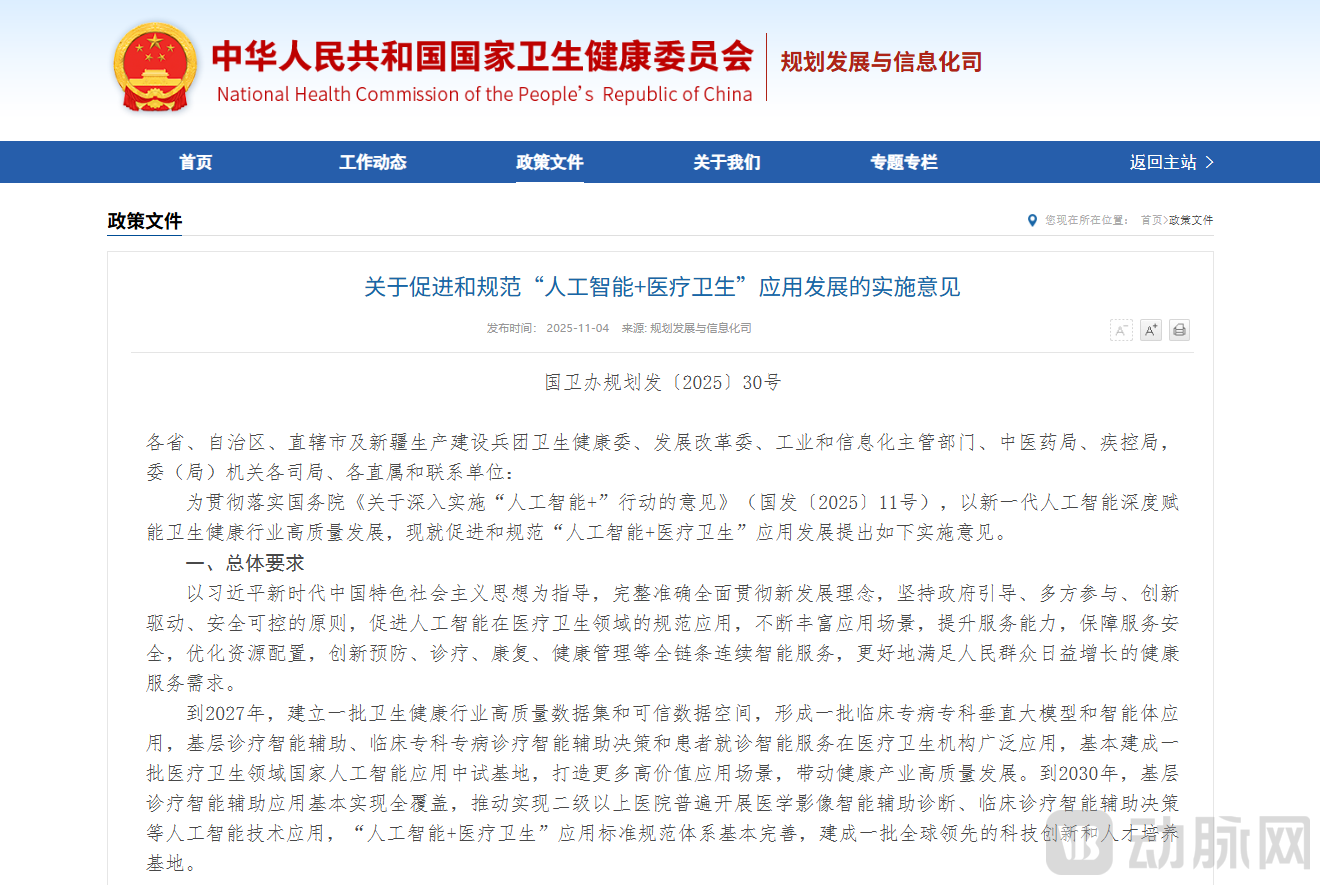
Recently, the National Health Commission, together with four other departments, jointly issued the “Implementation Opinions on Promoting and Standardizing the Development of ‘AI + Healthcare’ Applications” (hereinafter referred to as the “Implementation Opinions”). This document systematically outlines the application scenarios and development pathways for artificial intelligence (AI) in the healthcare sector, providing clear direction in areas such as AI-assisted diagnosis and treatment at the primary care level, comprehensive chronic disease management, and regional collaborative healthcare. As supporting policies are further refined, AI-driven healthcare has entered a period of rapid development and achieved initial successes—with its application in the prevention and management of cardiovascular and cerebrovascular diseases standing out as a typical example.
There is an urgent need and broad prospects for AI empowerment in the field of cardiovascular diseases. The "Report on Cardiovascular Health and Diseases in China 2024" shows that the number of patients with cardiovascular diseases (CVD) in China has reached 330 million, accounting for 48.98% and 47.35% of deaths in rural and urban areas, respectively, which means that approximately 2 out of every 5 deaths are attributed to CVD. Notably, the mortality rate of cardiovascular diseases in rural areas has been consistently higher than that in urban areas since 2009, with CVD mortality rates in rural and urban areas being 364.16 per 100,000 and 305.39 per 100,000, respectively, in 2021. Furthermore, up to 80% of cardiovascular disease-related deaths occur outside hospitals, highlighting the urgent need to strengthen early screening and precise diagnostic capabilities at the grassroots level.
The situation regarding the prevention and control of cardiovascular diseases at the primary care level remains severe, closely linked to the uneven distribution of medical resources and insufficient diagnostic and treatment capabilities in grassroots settings. The continuous advancement of electrocardiogram (ECG) networks and the deployment of diagnostic equipment within medical consortiums have played a positive role in promoting collaboration between tertiary and primary hospitals and enhancing primary care service capacity. However, to systematically address the three major challenges of "low screening rates, low identification rates, and low awareness rates," more efficient technological solutions are still required. The emergence of artificial intelligence-assisted diagnostic tools offers a new pathway for rapidly and precisely empowering primary care physicians, holding the promise of fundamentally accelerating this empowerment, comprehensively improving primary ECG diagnostic services, and addressing critical gaps in the cardiovascular disease prevention and treatment system.
To this end, the “Implementation Opinions” focus on decentralizing medical resources and improving diagnostic and treatment efficiency, explicitly requiring the establishment of intelligent clinical decision support systems for primary care physicians and strengthening the intelligent deployment within close-knit county-level medical consortia. This aligns perfectly with Nalong Health’s business philosophy of “empowering healthcare with technology and safeguarding lives with data.”
As a leading provider of comprehensive AI-powered ECG solutions and full-cycle cardiovascular health management services in China, Nalong Health has independently developed the Cardio AI algorithm. Trained on tens of millions of clinical data points and validated through international standard testing, the algorithm demonstrates high sensitivity in diagnosing over 100 types of cardiac abnormalities. Notably, it achieves a QRS complex recognition accuracy of 99.99%, as well as a sensitivity of 97.7% and specificity of 99.8% for acute myocardial infarction, and a sensitivity of 98.3% and specificity of 99.6% for atrial fibrillation. These performance metrics effectively meet the needs of primary healthcare institutions for precise and efficient ECG diagnostic tools.

As the first product in China to obtain a Class III medical device registration certificate for an AI-powered “resting + dynamic + real-time” all-in-one ECG solution, Cardio AI features eight core capabilities, including lead error correction, critical alert warning, and report quality control. The product has successfully transitioned from technical validation to large-scale clinical application, with its services now covering all 31 provinces in China, over 400 health commissions, and more than 16,000 medical institutions, including over 900 Grade A tertiary hospitals. It is gradually becoming a key tool in primary ECG screening and regional collaborative diagnosis and treatment systems.
For primary healthcare institutions, ECG screening and diagnosis is merely one of the many challenges they face. These institutions also grapple with how to further streamline key nodes across the “pre-hospital–in-hospital–post-hospital” continuum and among families, communities, primary care facilities, and tertiary hospitals. Previously, internal service workflows within primary hospitals were underdeveloped, coordination with tertiary hospitals was inefficient, and mechanisms for tiered diagnosis and treatment as well as remote consultations were not effectively established. This hindered effective patient referral and transfer, resulting in a significant number of patients receiving ECG screenings without subsequent management, which severely compromised overall treatment outcomes.
The “Implementation Opinions” emphasize the innovation of continuous, intelligent services across the entire chain—including prevention, diagnosis and treatment, rehabilitation, and health management—and require strengthening the role of resource-sharing centers, such as those for ECG diagnosis. This direction can be regarded as a policy reflection of the “full-cycle management of cardiovascular diseases” and the “One Network for ECG” model explored by Nalong Health.
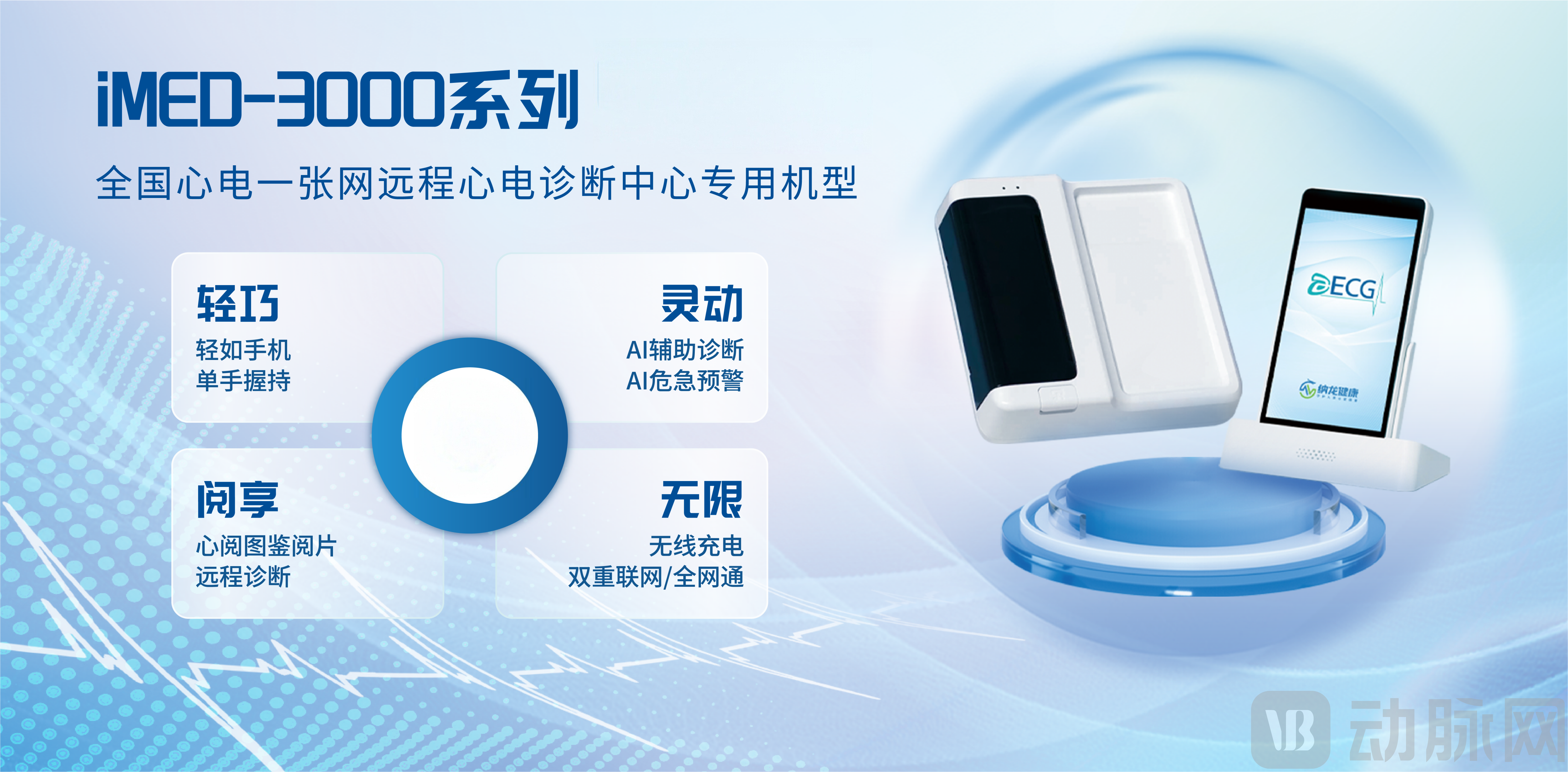
Leveraging the “three pillars” of Cardio AI algorithms, a remote ECG monitoring platform, and smart hardware, Nalong Health has built a comprehensive solution covering screening, monitoring, emergency care, diagnosis, and rehabilitation. At the primary care level, its portable devices break through temporal and spatial constraints for ECG examinations, while AI-assisted diagnosis significantly reduces the diagnostic and treatment burden on primary care physicians. At the regional coordination level, by enabling data interoperability between upper- and lower-tier hospitals and health commissions, it has realized a healthcare model characterized by “distributed testing and centralized diagnosis.” Building on this foundation, the system further extends to patients, utilizing a doctor-patient communication platform to assist medical institutions in the precise identification, classification, and long-term management of high-risk cardiovascular populations. This enhances service quality while completing a closed-loop service from clinical care to health management. The current policy’s explicit support for the development of regional medical informatization and remote service systems will further accelerate the nationwide implementation and promotion of Nalong Health’s “One ECG Network – Full-Cycle Management” solution.
In the face of escalating health demands, innovation in electrocardiogram (ECG) examination equipment must be rooted in a “clinical-driven” model. This requires establishing an efficient clinical-industrial collaborative closed loop, leveraging medical-engineering integration to directly translate frontline needs into core product specifications, ultimately delivering high-quality solutions that truly serve both physicians and patients.
This is precisely where Nalong Health has made its long-term strategic investments.
As a core participating institution in the National Science and Technology Major Project “Research on Monitoring, Early Warning, and Optimized Diagnosis and Treatment Models for Ventricular Arrhythmias,” Nalong Health is currently collaborating closely with top-tier medical institutions such as Beijing Anzhen Hospital, Capital Medical University, to efficiently translate scientific achievements into clinical practice. Nalong Health is actively implementing policy initiatives that emphasize strengthening pilot-scale testing bases and optimizing computational power and algorithmic support. These measures will ultimately provide stronger safeguards for Nalong Health to continuously iterate its AI models and expand multi-scenario applications.
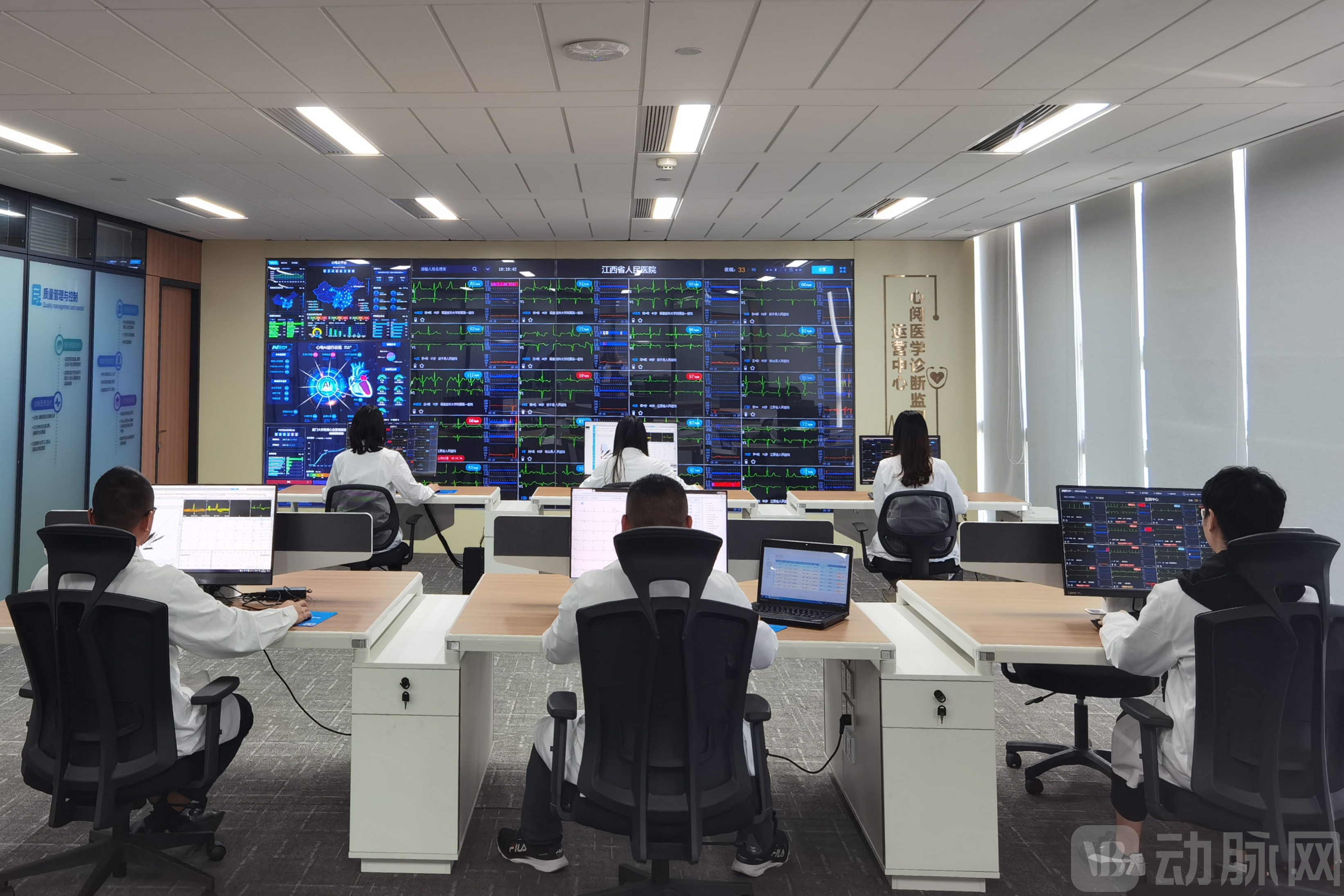
Currently, Nalong Health’s AI-powered ECG solutions have expanded into diverse scenarios, including home-based elderly care and fitness wellness. Its third-party medical diagnostic centers further empower county-level medical consortia to comprehensively enhance their ECG diagnostic capabilities. By providing 24/7 real-time monitoring and professional diagnostics, these centers effectively address the shortage of ECG diagnostic resources in primary healthcare institutions during nights and holidays. This offers a robust service foundation for the policy-driven initiatives of “resource sharing” and “primary care empowerment,” jointly building an intelligent ECG service ecosystem that covers all populations and scenarios.
Undoubtedly, with the “Implementation Opinions” clearly outlining development goals for 2027 and 2030, the AI healthcare industry will enter a fast track toward standardized, systematic, and large-scale development. Leveraging its first-mover advantage in qualifications, mature clinical application cases, and comprehensive solutions, Nalong Health aligns precisely with policy directions. It is poised to continuously expand its market share in areas such as empowering primary healthcare, chronic disease management, and regional medical collaboration, thereby injecting greater intelligent momentum into China’s cardiovascular disease prevention and control efforts. Meanwhile, bolstered by policy dividends, the company will achieve mutual advancement for both itself and the industry by developing more “advanced” forms of products and solutions.