

Saisun Bio: The 'Hidden Champion' Disrupting 60-Year-Old Biobanking Norms with Ice-Controlled Cryopreservation Technology

cellstore
Provider of Biological Sample Cryopreservation Technology Platform
On November 7, the 2024 Beijing Science and Technology Awards were officially announced.Dr. Sun Yuling, CEO of CellStore Biotechnology; Wang Jianjun, Chief Scientist of CellStore Biotechnology and Researcher at the Chinese Academy of Sciences; and their team were awarded the Second Prize for Technological Invention in the 2024 Beijing Science and Technology Awards for their project, “Key Technological Breakthroughs and Applications of Biomimetic ‘Controlled-Rate Freezing Preservation’ for Germ Cells and Complex Tissues.”
As one of the highest honors in Beijing’s science and technology sector, the Beijing Science and Technology Award features high eligibility thresholds, rigorous evaluation criteria, and intense competition. The Technical Invention Award specifically targets major technological inventions that are “first-of-their-kind domestically or internationally.” Nominated projects must achieve breakthroughs in foundational and core technical areas, have been fully implemented and applied for at least one year, and generate significant economic, social, or ecological benefits through the commercialization of results, thereby playing a substantial role in optimizing and upgrading industry technologies. Consequently, although numerous projects have been nominated for the Technical Invention Award in recent years, the number of awards is limited; only 24 projects received the Technical Invention Award in 2024.
As a startup founded just three years ago, why has CellStore Biotechnology managed to stand out among numerous outstanding projects and successfully win awards with its “controlled-rate freezing cryopreservation technology”? Before clarifying the logic behind its technological novelty, breakthroughs, and status of industrial translation, we must first understand the demands of the cryopreservation industry and the limitations of traditional technologies.
In the life sciences industry, the cryopreservation of cells and tissues with maintained viability has long been a common critical technical challenge in fields such as regenerative medicine, reproductive health, and biopharmaceuticals. Taking cell and gene therapy (CGT), a core segment of precision medicine and regenerative medicine, as an example, efficient and safe cell cryopreservation products are required throughout the research, development, and manufacturing of cell-based drugs—whether for establishing master cell banks or preparing final drug formulations—to ensure cell viability and therapeutic efficacy. However, traditional vitrification cryopreservation technology, which has been in use for over 60 years, has consistently failed to fully preserve cell viability and functionality during the freezing process. The significant impairment and loss of cellular function after thawing have remained a pressing pain point urgently requiring resolution within the industry.
This is because the core principle of traditional technology involves adding specific vitrification protectants to water, prompting it to enter a theoretical "glassy state" during cooling. The glassy state is a special physicochemical state intermediate between the liquid and solid phases. An ideal glassy state combines the homogeneity of a liquid with the properties of a solid. In this theoretical state, no ice crystals form, thereby reducing damage to biological samples during cryopreservation.
However, in practical storage processes, this ideal glassy state does not exist; it is nearly impossible to completely suppress ice nucleation and eliminate ice crystal formation. For instance, during low-temperature freezing and rewarming, absolute temperature uniformity cannot be guaranteed. During transportation, the system is subject to oscillation and impact. These real-world conditions promote the formation and growth of ice crystals. Once ice crystals form, traditional vitrification methods fail. During the warming and revival of biological samples for use, ice crystals undergo “explosive growth” in irregular and sharp morphologies. This explosive growth damages cells and tissues, significantly reducing sample revival efficiency and compromising sample functionality.
Furthermore, vitrification cryopreservation relies on the vitrification reagent dimethyl sulfoxide (DMSO), which exhibits certain cytotoxic and genotoxic effects.Therefore, conventional vitrification cryopreservation techniques are only suitable for cells with small volumes and simple structures, failing to meet the emerging demands of the rapidly advancing regenerative medicine sector. These methods cannot achieve effective cryopreservation for specialized cells such as NK cells and iPSCs, nor for complex biological samples like organoids, leaving a significant gap in the industry.
Addressing industry pain points and demands, CellStore has pioneered a novel “controlled-rate freezing cryopreservation technology route” based on over a decade of innovative technological achievements by expert teams from the Chinese Academy of Sciences. This breakthrough significantly enhances cryopreservation efficiency, providing the industry with precise, safe, and efficient cryopreservation products and technical service solutions, and has consequently been awarded the Second Prize for Technological Invention in the Beijing Science and Technology Awards.This honor is not only a high recognition of CellStore’s technological innovation capabilities, but also marks a significant independent breakthrough for China in the field of life cryopreservation. With continuous technological iteration and the expansion of application scenarios, CellStore has established stable collaborations with leading CGT companies, CDMOs, hospitals, academic institutions, and research organizations. It has provided reliable support for numerous biomedical research and clinical application projects, and is poised to deliver value in broader fields such as endangered species conservation, military medicine, and space biology research.

Beijing Science and Technology Award – Technical Invention Award Certificate, image source: CellStore
Pioneering "Controlled-Rate Freezing" Technology:
Breaking Through Traditional Pain Points to Meet Emerging Essential Needs
Behind the rigorous scientific journey of controlled-rate freezing and cryopreservation lies the truth embedded in miraculous natural phenomena.
Dr. Sun Yuling, Founder and CEO of CellStore, recalled, “As early as 1969, scientists discovered ‘antifreeze glycoproteins’ in the blood of Antarctic icefish that protect against low temperatures. Our team has also found that plants and animals living in extremely cold regions, such as the wood frog capable of surviving at -16°C, can freeze during winter and fully recover upon thawing in spring, with their structure and motor functions remaining unaffected. In 2013, when Dr. Wang Jianjun, Chief Scientist at CellStore, led his team on an expedition to Xinjiang, they observed that darkling beetles embedded in blocks of ice rapidly regained vitality after the ice melted in their hands. These seemingly miraculous natural phenomena have provided us with valuable research insights.”
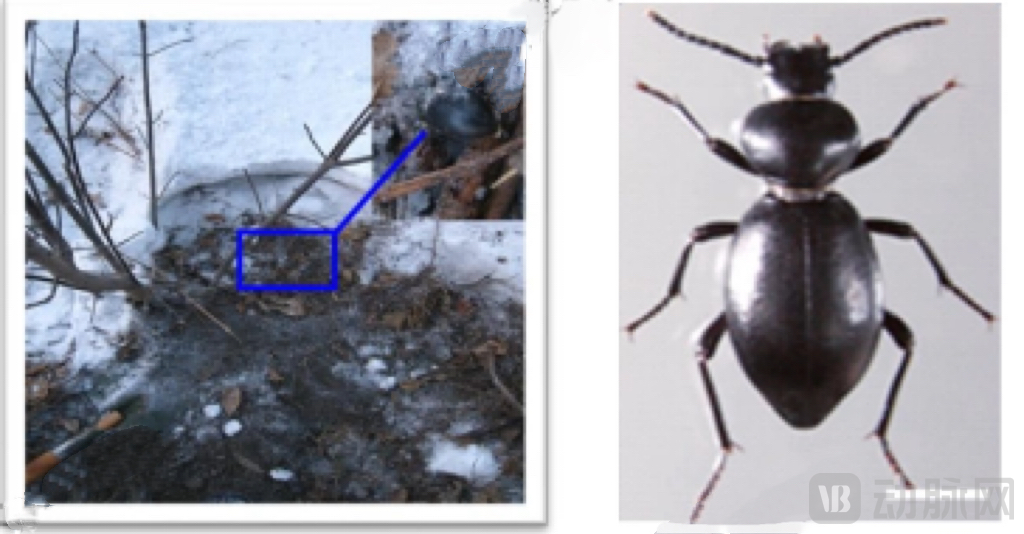
Desert beetles photographed by the team in Xinjiang in 2013. Image source: CellStore
Drawing inspiration from natural phenomena, Researcher Wang Jianjun led his team to delve into the in-depth structural and functional analysis of antifreeze proteins. Since 2009, the team has been engaged in research on the ice-control mechanisms of antifreeze proteins in more than ten species of animals and plants. By studying and simulating the mechanisms by which natural antifreeze proteins regulate the formation and growth of ice crystals, the team proposed design principles for materials capable of efficient ice control, developed biomimetic multi-scale ice-controlling materials, and successfully established the world’s largest “library of ice-controlling materials,” achieving a major breakthrough in understanding ice-control mechanisms. Their related scientific achievements have been consecutively published in top-tier journals such as Proceedings of the National Academy of Sciences (PNAS) and Nature, solving a century-old scientific puzzle and significantly advancing international research in the field of ice science.
From 2009 to 2019, over a decade, Researcher Wang Jianjun led his team in refining controlled-ice cryopreservation technology. After establishing a complete theoretical framework for the technology, they began preparing for commercialization. However, prior to the official market launch of CellStore, the team spent an additional three years laying the industrial foundation, creating the world’s largest library of controlled-ice materials. This effort was driven by two key factors. First, the founder’s personal development: Dr. Sun Yuling, with her background in scientific research and technology, embarked on extensive learning in industry operations and investment after deciding to start a business. She rapidly transformed from a scientist into an industry leader with scientific expertise, committing herself to continuous learning and iterative improvement to evolve into an entrepreneur. Second, production capacity preparation: To ensure stable, high-quality manufacturing of fully pharmacopeial-compliant controlled-ice cryopreservation solutions, the team conducted extensive research and screening to establish a library of controlled-ice materials using only pharmacopeial-grade excipients, along with GMP-compliant facilities meeting the highest industry standards.
Dr. Sun Yuling described the team’s refinement of controlled-rate freezing and cryopreservation technology as “a decade of effort to sharpen a single sword.” She also told VCBeat, “Controlled-rate freezing and cryopreservation is an original technology developed independently in China, possessing disruptive potential on the international stage. Compared with traditional cryopreservation techniques, this does not represent overtaking on a curve, but rather changing lanes to overtake. As a platform technology, controlled-rate freezing and cryopreservation can significantly enhance the post-thaw viability of complex biological samples. It enables the rapid development of ‘precise, efficient, and safe’ cryoprotectant products tailored to diverse biological samples, thereby achieving truly ‘faithful, viable, and functional’ storage for various types of complex cells, tissues, and organs.”
The so-called "overtaking on a new track" refers to two aspects. On one hand, in emerging markets for complex samples with extremely high safety requirements—such as cell therapy, assisted reproduction, and cryopreservation of tissues and organs—ice-control materials can independently perform low-temperature cryoprotective tasks by controlling ice crystal formation. This approach eliminates the need for traditional vitrification cryoprotectants like DMSO, thereby avoiding the toxic side effects of DMSO on biological samples. It ensures the highest level of safety while maintaining cryopreservation efficiency. On the other hand, in fields such as disease treatment and biological sample storage, where traditional technologies can meet some needs but suffer from pain points like inadequate safety and efficiency, CellStore employs a dual-system approach combining "ice-control materials + vitrification cryoprotectants." This synergistic strategy maximizes cryopreservation efficiency while significantly mitigating DMSO-induced cytotoxicity. Such a "superimposed state" technology enables highly efficient cryopreservation that meets stringent safety requirements.
Dr. Sun Yuling explained, “It can be understood that CellStore is not merely competing in the existing market; rather, while addressing the current pain points of the established market, we are meeting the rigid demands of emerging markets. As we raise the entry barriers for the cryopreservation industry, we are also expanding the overall market ‘cake.’ For instance, in blue-ocean sectors such as tissue and organ cryopreservation, only controlled-rate freezing solutions can truly achieve high-efficiency cryopreservation, ensuring faithful, viable, and functional storage to meet the needs of regenerative transplantation.”
Currently, CellStore’s product portfolio encompasses seven major solutions and more than 20 core products, backed by dozens of customized formulation reserves. This enables rapid response to diverse needs by providing tailored cryopreservation solutions for biological samples, helping enterprises address critical cryopreservation challenges during R&D. The company has developed and manufactured multiple cryopreservation media formulations that are fully compliant with pharmacopoeia standards and free of serum, protein, and animal-derived components. These products offer a novel cryopreservation approach for the emerging biopharmaceutical industry, ensuring fidelity, viability, functionality, and safety. CellStore has successfully achieved breakthroughs in the de novo cryopreservation (from 0 to 1) of various challenging sample types, including γδ T cells, induced pluripotent stem cells (iPSCs), neural precursor cells, and fresh adipose tissue, thereby providing reliable support for biomedical research and clinical applications.
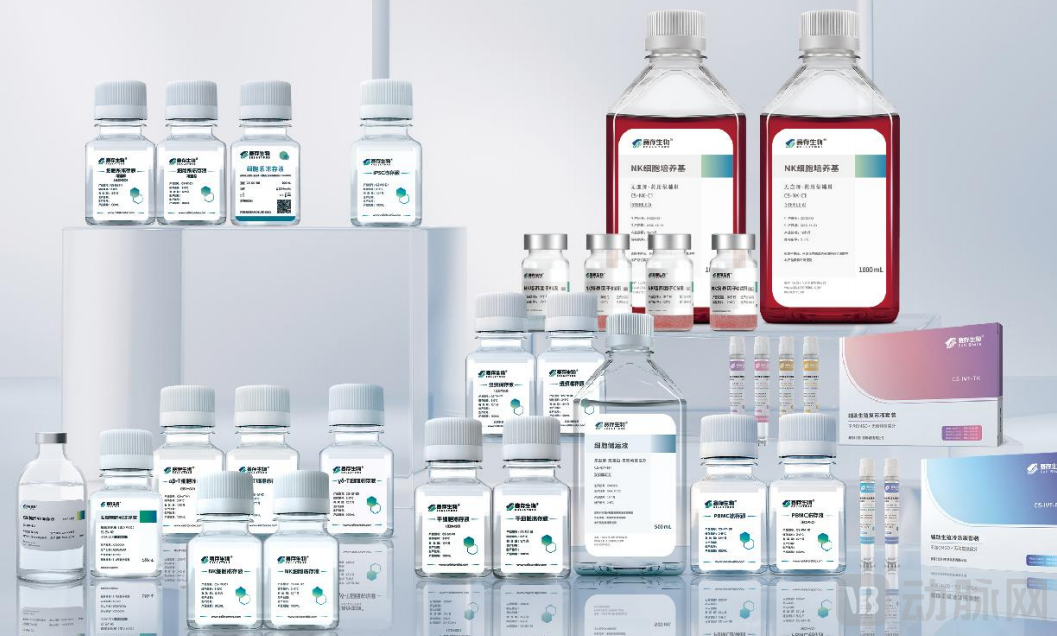
CellStore Product Showcase. Image source: CellStore
Safe and effective products naturally gain regulatory approval. In September 2024, three cell cryopreservation solutions from CellStore successfully obtained registration as pharmaceutical excipients with China’s National Medical Products Administration (NMPA), becomingThe first domestic brand of cryopreservation solution to obtain this filing;In the first half of 2025, CellStore’s two products for cryopreservation of immune cells and stem cells successively obtained filing as pharmaceutical excipients with the National Medical Products Administration (NMPA), achieving comprehensive coverage of mainstream cell therapy samples and enabling domestic substitution for leading international brands.
The market potential for controlled-rate freezing and cryopreservation extends far beyond what was previously discussed. In addition to the approval of cryopreservation solutions related to cell therapy,Leveraging the unique platform capabilities of its controlled-rate freezing technology, CellStore has simultaneously expanded into the fields of assisted reproduction and regenerative medicine, with its related cryopreservation technologies reaching international leading standards.
In the field of assisted reproduction,In July this year, the assisted reproductive technology (ART) cryopreservation solution kit and ART thawing solution kit developed by CellStore entered the priority review channel after examination by the National Medical Products Administration (NMPA). This marks the first product in China’s ART field to receive NMPA priority review. The product is a novel solution jointly developed and commercialized by CellStore, the Technical Institute of Physics and Chemistry of the Chinese Academy of Sciences, and the Reproductive Medicine Center of Peking University Third Hospital. It is a translational outcome of the key special project on “Reproductive Health and Protection of Women’s and Children’s Health” under the 14th Five-Year Plan for National Key Research and Development Programs. The medical device registration certificate is expected to be obtained in 2026.
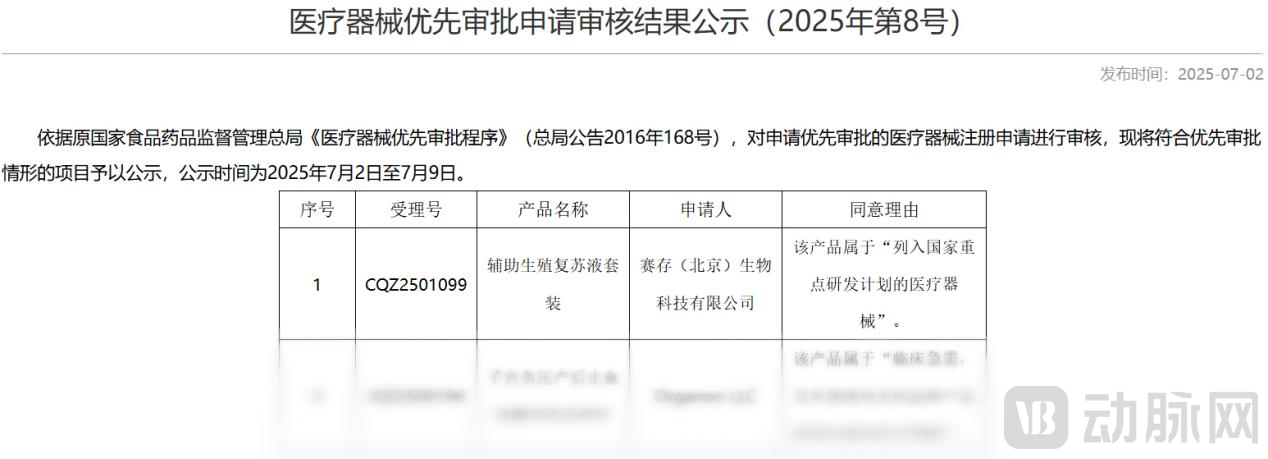
The product has been included in the priority review. Image source: Official website of the Center for Medical Device Technical Evaluation
In the field of regenerative medicine,This year, CellStore achieved a significant breakthrough as its team successfully transplanted rat hearts that had been cryopreserved for one week, with the hearts resuming beating post-transplantation. CellStore has not only achieved a leap forward in cryopreservation technology but also provided substantial impetus to the field of organ transplantation. Currently, there is a global shortage of donors for organ transplantation. According to WHO data, over 90% of patients requiring organ transplants worldwide endure prolonged waits due to organ scarcity. In China, only 5% of patients in need of organ transplantation successfully receive one. The difficulties in organ transplantation stem partly from limited donor sources and partly from the strict control required over cold ischemia time for transplanted organs, which restricts the range of donor acquisition.
Organs that are particularly difficult to preserve, have stringent matching requirements, and are limited by short transport radii—such as the heart and lungs—exhibit higher discard rates. CellStore’s independently developed “supercooling preservation” technology enables organs with high transport difficulty, such as the heart and lungs, to maintain a supercooled, ice-free state at temperatures between -10°C and 20°C, while extending preservation time by three to four folds. This significantly increases organ transport duration and expands the transport radius, ensuring that organs previously discarded due to limitations in transportation distance, modes of transport, and preservation conditions are no longer wasted, thereby offering renewed hope for more patients. Currently, CellStore’s “supercooling preservation” technology is accelerating its transition from scientific research to industrial application. If successful organ cryopreservation can be achieved, its application scenarios will expand substantially, including the establishment of more comprehensive organ banks and improved matching rates. This will greatly increase the cure rates for diseases such as organ failure, directly influencing the breadth and depth of life science exploration, and helping to mitigate related social issues.
Regarding the company’s strategic development, Dr. Sun Yuling told VCBeat, “Currently, the domestic high-end cryopreservation medium market remains monopolized by overseas brands, while the mid- to low-end segments are primarily served by domestic players or downstream companies that formulate their own solutions; no clear industry leader has yet emerged. Before the industry reached its current inflection point, CellStore Biotechnology entered the market through high-barrier fields such as cell and gene therapy (CGT) and assisted reproduction. This approach not only enabled rapid financial recovery by establishing a closed-loop commercial model for our products but also accelerated our expansion into untapped areas like tissue and organ cryopreservation, driven by downstream customers’ recognition of our technology and products. Furthermore, beyond the direct market for cryopreservation media, we have strategically expanded into integrated solutions, culture media, liquid formulations for assisted reproduction, and core consumables, thereby accessing a broader market.”
Since its commercial launch in 2024, CellStore has expanded its sales network to cover more than 30 provinces and municipalities across China. The company has established stable collaborations with a diverse range of clients, including leading CGT enterprises, CDMOs, hospitals, academic institutions, and research organizations. By working synergistically with industry leaders such as Porton Biopharma, Imcyte, and Xiji Biologics, CellStore is helping to accelerate the development of the pharmaceutical industry.Public information indicates that multiple leading enterprises that have partnered with CellStore Biotechnology have stated, “The core of emerging drugs, such as cell therapies, lies in their ‘viability’ and ‘efficacy.’ CellStore’s cryopreservation technology serves as a key enabler for the industrialization of emerging therapies and represents a significant step toward advancing the domestic substitution of these treatments. The collaboration between CellStore and the industry is not merely an integration of technologies, but also a profound response to patient needs.””
CellStore’s technologies and products have also gained recognition from top-tier funds.At the end of 2024, two Beijing-based mega-funds with a scale of tens of billions of yuan each—the “Beijing Pharmaceutical and Health Industry Investment Fund” and the “Beijing New Materials Industry Investment Fund”—jointly invested in CellStore.The former has a registered capital of RMB 20 billion and was established in 2023, with the Beijing Municipal Government Investment Guidance Fund contributing 99% of the capital. The latter has an overall scale of RMB 10 billion and received approval from the Beijing Municipal Government for its establishment in 2024. The addition of these two multi-billion-yuan funds represents a significant initiative by the government and market forces to jointly promote innovation in the cryopreservation field, injecting strong momentum into the sustainable development of CellStore.
Looking to the future, Dr. Sun Yuling candidly stated, “Due to the high entry barriers for cryopreservation solutions in fields such as Cell and Gene Therapy (CGT) and assisted reproductive technology (ART), the current domestic market is not overly saturated. Furthermore, downstream customers prioritize product performance over price. Therefore, CellStore has the opportunity to become a hidden champion in its niche and expand globally by leveraging its world-leading innovative technologies and product performance that surpasses imported alternatives.” We look forward to CellStore using its cryopreservation products as a starting point to provide precise, efficient, and safe solutions for various sub-sectors, including cell therapy, cell storage, ART, and regenerative medicine. This will truly achieve “fidelity, viability, functionality, and safety” in the storage of diverse and complex biological samples, gradually developing into a life sciences upstream platform company rooted in China and serving the world.