

Roche Showcases Digital Health Innovations at CIIE to Empower Patients with AI-Driven Solutions

Roche Pharma China
Pharmaceutical Manufacturer
In the field of medical innovation, the iteration of algorithms and computing power is propelling AI in healthcare into a practical era characterized by “finer granularity, more specific scenarios, and broader population coverage.” As key participants in AI-driven healthcare, multinational pharmaceutical companies’ efforts to delve into specific medical scenarios and conduct localized digital-intelligence explorations have become a focal point of industry attention.
On November 7 at the China International Import Expo (CIIE), Roche Pharma provided its answer with a “New Horizons” Digital Intelligence Panorama Cooperation Launch Event. During the event, Roche Pharma’s Digital Innovation Team unveiled two implemented digital intelligence projects—“Healing Insight Agent” and “AI-Powered Health Education”—alongside the future-oriented “Digital Intelligence Renowned Physicians” initiative. These efforts precisely target three core areas: whole-course patient management, doctor-patient collaboration, and health science popularization. By leveraging AI technology, Roche aims to integrate the digital intelligence management chain across “in-hospital and out-of-hospital” settings, delivering a comprehensive, integrated matrix of medical services for patients using Roche medications throughout their entire care journey.

The “YuJian Agent” Innovative Patient Management Service Network, Built by Technical Partners with Support from Roche PharmaServed tens of thousands of patients using Roche medicationsIn addition, Roche Pharma China partnered with the China Academy of Information and Communications Technology (CAICT) to jointly establish industry standards for digital and intelligent healthcare, collaborating with 41 medical institutions; it also engaged 260 leading experts across various therapeutic areas to deliver educational content on public health and disease awareness.
This also reflects the core logic of multinational pharmaceutical companies’ localized digital innovation in China—Anchored in scenarios, pivoted on populations, and leveraged by ecosystems, we are building a digital-intelligent value network deeply integrated with China’s healthcare system, ultimately implemented in applications for healthcare professionals, patients, and the general public.
1Deepening Scenario-Based Practice: Serving Tens of Thousands of Patients, the Healing AI Agent Upgrades Digital Management Models
AI+ Full-Course-of-Disease Solution: Essentially Reconstructing the End-to-End Service Chain of Patient Management, it is essential not only to enhance management quality and optimize service experience but also to reduce management costs and aggregate data value. Specifically, the solution must eliminate service discontinuities and establish continuous health management scenarios to meet patients’ demands for more attentive and timely medical services. On the hospital side, there is a need to integrate fragmented data, improve the efficiency and precision of case management, and transform generic, ineffective medical orders into personalized disease course guidance, thereby transcending the limitations of traditional management models.
Based on precise insights into the core demands of multiple stakeholders, including patients and healthcare providers, Roche and its technology partners have jointly explored and validated the significant potential of AI Agents in digital patient management. This innovative solution, known as the “Yu Jian Agent,” assumes four key roles in the whole-course management of patients using Roche medications, striving to become an efficient, end-to-end patient care assistant:
By reserving standard platform interfaces, this system enables patients and healthcare providers to access it directly via familiar channels such as WeChat or computers. Leveraging intelligent clinical pathways and smart Q&A capabilities, it covers the entire disease management continuum—from data collection and intelligent follow-up to symptom management and medication guidance—truly integrating diagnostic and therapeutic services into a cohesive workflow.Personalized, Automated, and Intelligent Service Loop。
YuJian Intelligent Agent Concept Video
From a technical core perspective, the efficient operation of the YuJian Agent is built upon the tight integration of GenAI and AI Agent technologies, particularly evident in its three core driving functions:
· Cognitive Ingestion and Semantic Parsing Engine:Rapidly transform multi-source heterogeneous data into standardized data assets, effectively eliminating manual errors and laying a solid data foundation for subsequent intelligent applications.
· Proactive Inquiry:The core highlights technological advancement, namely breaking throughTraditional Passive TypeManual follow-up model, based on patient care pathways and data changes,InitiativeProactive care and early warning inquiries enable intervention at critical junctures, achieving a seamless transition in treatment from “reactive response” to “proactive intervention.”
· Automated Data Insights:Automatically extract core metrics from disease-specific data and generate reports to provide decision support, empower clinical practice and research, and maximize data value.
These three core functions are closely interlinked, establishing a complete closed loop that spans from high-quality data integration to intelligent service applications, ultimately empowering clinical decision-making.
Roche Pharma China supports industry partners in driving the practical application of YuJian Intelligent Agents by providing complementary treatment solutions and innovative collaboration models. As of 2025, patient management solutions co-developed with partnersServed over 12,000 patients using Roche medications。
Looking ahead, Roche Pharma will continue to collaborate with technology partners, placing patient care at the core, to build a new paradigm of healthcare services in the AI era and support the digital transformation and upgrading of China’s healthcare system. By 2026, this innovative solution’sThe market application scale and the number of benefiting patients are expected to double again.。
2Reaching Beyond Core Audiences: Multi-channel, Multi-format, and Multi-themed AI-Powered Science Popularization Enriches Patient Education Methods and Enhances Efficiency
Another key to localized digital innovation lies in the breadth and depth of population coverage.
In 2024, the total number of visits to medical and health institutions across China reached 10.11 billion, an increase of 550 million from the previous year. With accelerating population aging, the trend of chronic diseases affecting younger demographics, and growing attention to sub-health conditions, market demand is undergoing structural changes. The demand for medical resources has shown significant growth, prompting a shift in consumer-side logic from disease treatment toward health management, while public habits of engaging with popular science education are gradually taking shape.
From the consumer perspective, traditional channels for acquiring health information are fragmented and lack authority, leading to cognitive blind spots in key areas such as disease prevention, daily care, and lifestyle. The R&D team pointed out that it is not enough to simply ensure professional science popularization content reaches an audience; it is also essential to build scientific trust and establish expert authority during the dissemination process, making science popularization a daily routine with content that deeply resonates with people. Therefore, the AI science popularization projectInvite 260 leading experts to join the platform, gradually establish“Expert Endorsement + Scientific Review” Dual-Insurance Certification System, ensuring that each piece of science communication delivers the triple value of scientific rigor, innovation, and practical effectiveness.
The AI science popularization project features three major highlights, enriching patient education formats and improving its efficiency:
Currently, the AI science popularization project has achieved integration withDingdang Express Pharmacycollaborated with multiple internet health platforms to establish the Oncology and Influenza Care Center, gradually building a model characterized by broad channels and high-quality content, thereby achieving efficient and accurate content delivery.
The project employs diverse formats—including animations, comic strips, and short popular-science videos—to precisely cater to the content consumption preferences of different user segments. The animated works maintain scientific rigor while incorporating creative expression, making professional knowledge accessible and engaging. Comic strips adopt a lighthearted narrative style suited for fragmented reading scenarios. Meanwhile, short popular-science videos feature on-camera experts to enhance user trust.
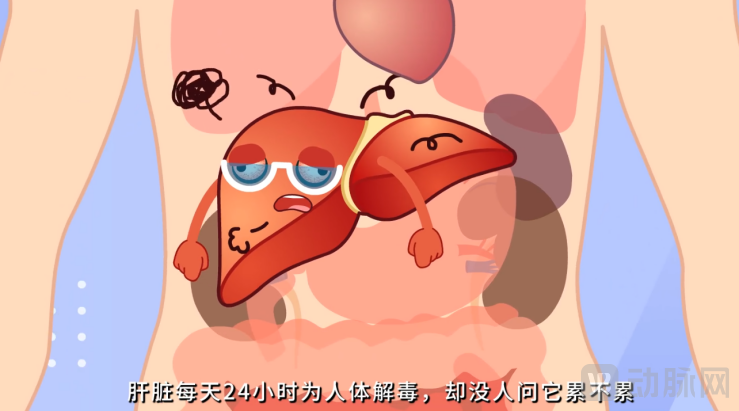
Engaging Animated/Strip Comic Science Popularization
Communication nodes are anchored to year-round disease awareness days, science popularization months, and other themed events, creating a continuous annual timeline for health education. This approach enables “precise reach at key moments and pre-positioned content,” fostering long-term reading habits among users. In terms of content, themes such as cutting-edge therapeutic breakthroughs, disease awareness days, and practical lifestyle tips are leveraged to achieve precise dissemination with high topical relevance and scientific rigor.
On the supply side, AI-driven science popularization initiatives will enhance efficiency for healthcare professionals and medical institutions.—As an efficient assistant, AI-driven science popularization enables healthcare professionals to devote more energy to managing complex cases and enhances the efficiency of patient education, evolving from “no time for science communication” to “effortlessly producing high-quality content.” Meanwhile, medical institutions establish themselves as hubs for health science communication, build their brand image, and proactively assume the roles of health advocates and ecosystem builders, thereby creating a virtuous cycle of “knowledge output – brand building – public recognition.”
Looking ahead, AI-driven science popularization will continue to adopt a multi-dimensional operational strategy featuring diverse channels, formats, and themes, gradually building a healthy science communication ecosystem community. In 2026, the project team willContinue to deepen and upgrade the "Oncology and Influenza Care Center," consistently delivering high-quality science popularization content in areas such as liver cancer, lymphoma, influenza, lung cancer, and breast cancer, while launching targeted public health education campaigns aligned with key annual health awareness milestones.。
3Ecosystem Co-Creation: Enhancing the Human Touch in Medical Care and Patient Education Efficiency—From Point Breakthroughs to Industry Synergy for Innovative Win-Win Outcomes
Through direct engagement with frontline healthcare providers and patients, the Roche Pharma digital team has identified key insights: The root cause of operational pressure in clinical departments lies in the lack of digital tools to align resource allocation with patient needs. Behind the repetitive tasks performed by medical staff are efficiency barriers resulting from poor data flow and a shortage of intelligent tools. Meanwhile, patients struggle with the predicament of “waiting three hours for a three-minute consultation,” making it difficult for them to fully express their concerns or understand medical instructions within the limited consultation time. Consequently, the depth and quality of doctor-patient communication have been significantly compromised.
The essence of the dilemma lies in the deep-seated contradiction among efficiency, manpower, and demand, which concerns not only technological implementation but alsoDirectly reflects the nuanced perception of differences in the warmth and experience of humanistic care in medical settings.Thus, the future solution known as “AI-Enabled Renowned Physicians” has emerged, creating intelligent interactive applications featuring doctors’ digital twins available 24/7. This innovation breaks away from the traditional one-way output model, achieving a revolutionary upgrade in interactive dialogue and emotional care:
· During the pre-consultation phase, Mingyi Zhiwen automatically, accurately, and continuously provides online responses to patients’ basic questions about various diseases, thereby enhancing disease awareness.
· In the post-diagnosis phase, Mingyi Zhi'ai integrates emotional interaction with rehabilitation companionship, offering online guidance, follow-up appointment scheduling, and psychological counseling services.
· In out-of-hospital settings, Mingyi Zhijian continues to provide scientifically accurate and easily understandable health knowledge, enhancing patients’ self-management efficacy and further strengthening the continuity of medical services and humanized care.
Looking Ahead: What Will Define the Second Half of Medical AI?
Technology will recede into the background, serving as the foundation for application scenarios. Meanwhile, the genuine user needs and deep-seated emotional needs of healthcare providers and patients will take center stage.
The highlight of the press conference was three representative use cases: the “Healing Intelligence Agent,” which transforms disease course management into personalized services; AI-driven science communication, which translates complex clinical guidelines into everyday language; and the future “Digital Intelligent Master Physicians,” which will extend physicians’ expertise beyond hospital walls. From deconstructing needs to achieving population-wide coverage, Roche Pharma China’s digital team has integrated a progressively layered AI medical service product line spanning “pre-diagnosis – hospital admission – follow-up visits – out-of-hospital management – health education.”
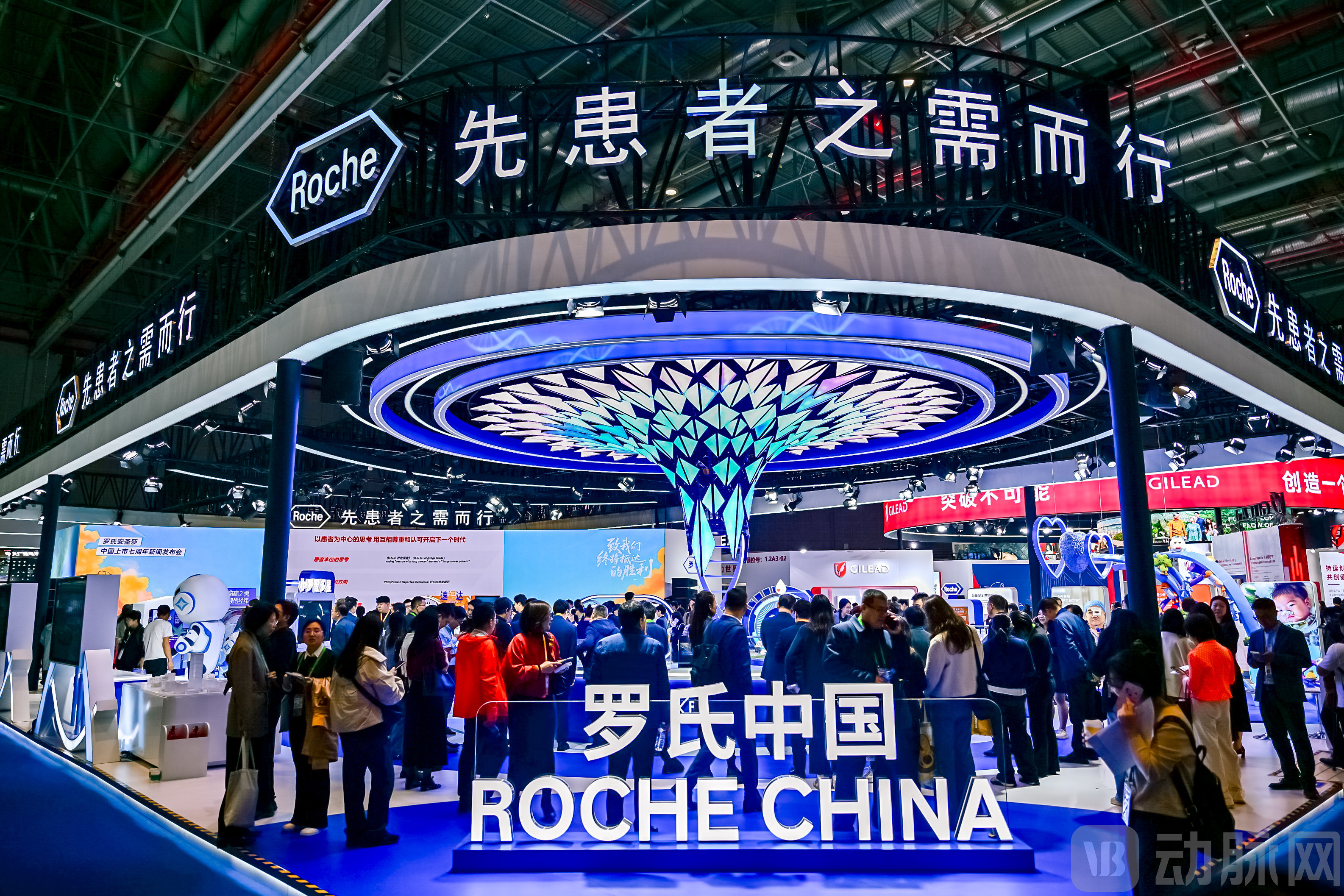 Roche Pharma China’s Booth at the 8th CIIE
What merits greater industry attention is the untapped market space and potential for collaboration. At the press conference, it was announced that Roche Pharma China’s 2026 goal for its digital-intelligence ecosystem partnerships is to benefit three times as many patients with specialized diseases. The broader vision lies in treating the three major systems as modular building blocks: they can be developed independently or, through standardized interfaces, be replicated and integrated to extend across multiple therapeutic areas and full-spectrum treatment scenarios, thereby unlocking end-to-end value.
Returning to the opening question: How can multinational pharmaceutical companies effectively conduct localized digital-intelligence exploration in China?
Roche Pharma’s answer is to no longer build a closed ecosystem, but instead become the “first piece of the puzzle” within an open ecosystem. Through multi-party co-creation, fostering the collision of needs and ideas, more new scenarios and applications will emerge from collaboration and practice. What remains unchanged is Roche Pharma’s steadfast commitment to its philosophy of “acting in accordance with patients’ needs.”
How to Write the Next Chapter of the Story: The Scene Offered No Answers, But Handed the Pen to More People.