

61-Day Survival of Genetically Modified Pig Kidney in Brain-Dead Human Recipient: A Day-by-Day Immune Response Roadmap
On July 14, 2023, a special surgery was underway in an operating room at NYU Langone Health. Maurice Miller, a 57-year-old man who had been declared brain-dead due to a brain tumor, was about to undertake an unprecedented scientific mission—receiving a kidney and thymus from a genetically modified pig. Miller had always wished to donate his organs, but this desire remained unfulfilled due to his cancer diagnosis. Ultimately, his family decided to donate his entire body to science, allowing him to extend the meaning of life in another way.
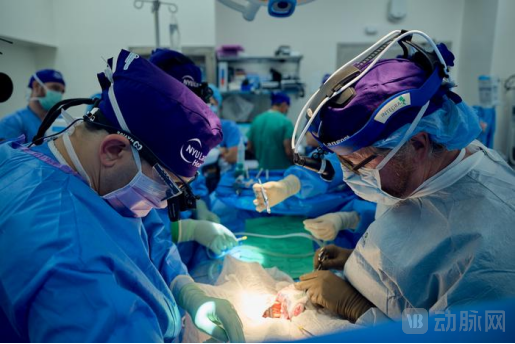
Figure: Pig kidney transplant surgery in 2023 (Source: Joe Carrotta for NYU Langone Health)
Over the next 61 days, the deceased became"One of the most extensively studied humans in history". Research TeamThe pig kidney in his body was monitored on an almost daily basis., documenting every immune response to this cross-species organ. This not only set a new record for the longest survival time of a genetically modified pig organ in a brain-dead human body, but more importantly, researchers demonstrated for the first time a proposition previously considered extremely difficult: that rejection in xenotransplantation can be reversed.
On November 13, 2025, Nature simultaneously published two landmark research papers, detailing the complete findings of this study. These papers not only delivered encouraging news to the transplant medicine community but also pointed to a potential pathway for addressing the global crisis of organ shortage.
To understand the significance of this study, we must first recognize the severity of the organ shortage crisis. According to data from the International Registry of Organ Donation and Transplantation,Worldwide, more than 340,000 patients are waiting for organ transplants, with at least 23,000 patients on the kidney transplant waiting list dying without receiving an organ.Even more alarming is that, globally, there are over 2.66 million patients with end-stage renal disease (ESRD) undergoing dialysis treatment, yet only 5.65% of these patients have access to organ transplantation.
This figure continues to rise. Taking kidney transplantation as an example, the aging population and the prevalence of conditions such as diabetes, hypertension, and obesity have led to a sustained increase in patients with end-stage renal disease (ESRD). For these patients, dialysis is the only life-sustaining option. Even more harshly,Dialysis extends life by an average of only about 5 years.
It is against this backdrop thatXenotransplantation—Transplanting an organ from one species into another—Held in high expectation. Over the past three years, the medical community has conducted more than a dozen attempts to transplant pig organs into humans, involving hearts, kidneys, livers, and thymuses. However, the reality is that most of these organs were eventually removed due to loss of function, and some recipients died shortly after transplantation. Organ rejection remains an invisible barrier, consistently obstructing the path of xenotransplantation toward clinical application.
The findings of this study were published simultaneously in two papers in Nature, offering in-depth analyses of the same experiment from different perspectives.
The first paper, led by Brendan J. Keating and involving more than 70 researchers, employed large-scale multi-omics approaches—including transcriptomics, proteomics, immunoprofiling, and spatial transcriptomics—to comprehensively monitor xenografts and host blood over a 61-day period.

(Source: Nature)
The second paper, with Robert A. Montgomery and Megan Sykes as corresponding authors, brings together more than 50 researchers to provide the first long-term monitoring of physiology, immunity, and infectious diseases in pig-to-human kidney transplantation from physiological and immunological perspectives.
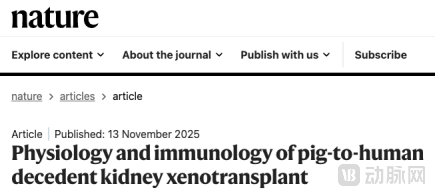
(Source: Nature)
The two papers complement each other, with one focusing on detailed mechanisms at the molecular level and the other addressing physiological manifestations and immune dynamics at the clinical level.Collectively constructing a panoramic understanding of this 61-day xenotransplantation experiment.
A Key Choice: The Minimal Modification Strategy
Unlike many researchers who attempt to “engineer” pig organs through extensive gene editing, the Montgomery team made a bold decision: they adopted a minimal genetic modification strategy. The transplanted pig kidney onlySingle-gene modification—knockout of the GGTA1 gene, this gene is responsible for producing a carbohydrate antigen called alpha-gal, which is the primary culprit triggering hyperacute rejection in humans.
Many previous studies have employed multiple genetic modifications and aggressive immunosuppressive regimens. Although these approaches extended organ survival to some extent, the complexity of the modifications made the results difficult to interpret and regulatory approval exceptionally challenging. The Montgomery team sought to evaluate whether minimal genetic modification, combined with clinically approved immunosuppressive drugs, would be sufficient to enable pig kidneys to function in human recipients.
The answer is yes, and it’s better than they expected.
In addition to the kidney itself, the research team made another critical decision:Simultaneous transplantation of porcine thymus. This small gland plays the role of a "teacher" in the immune system, capable of training immune cells to recognize what is "self" and what constitutes an "external threat." Researchers speculate that the porcine thymus may help the human immune system learn to regard pig organs as part of the self rather than as foreign invaders requiring attack.
Initial Surprise: The Pig Kidney Started Working Immediately
In the initial days following the surgery, the transplanted pig kidney demonstrated encouraging performance. It immediately began producing urine, maintained stable blood pressure and blood flow, and kept electrolyte levels within normal balance. More importantly, Miller’s body was completely freed from dependence on dialysis. Behind this seemingly simple fact lies significant scientific implication:An organ from a completely different species can actually perform the basic life-sustaining functions within the human body.
However, the true test has only just begun. The human immune system is an extraordinarily complex and sophisticated defense network that does not readily accept any “outsider,” even if that “outsider” is helping to sustain life.
The biopsy results on postoperative day 10 revealed some intriguing findings. Researchers detected IgM and IgA antibody deposition in the glomeruli, activation of early complement components, and even mesangiolysis—an immune response pattern never previously observed in conventional human-to-human kidney transplantation.
However, despite these seemingly ominous early changes, renal function remained stable, with no signs of proteinuria. This unique immunological profile suggests:Xenotransplantation from pigs to humans may follow immunological principles entirely distinct from those of conventional transplantation.
Day 33: Crisis and Opportunity
On postoperative day 33, the anticipated challenges finally arose.Sudden Spike in Serum Creatinine Levels—This is a clear signal of a sharp decline in renal function. The biopsy confirmed the clinicians’ concerns: antibodies are attacking the allograft, with a marked increase in donor-specific IgG antibodies, indicating that typical antibody-mediated rejection (AbMR) is occurring.
If this rejection episode cannot be controlled, the study may be terminated. However, this crisis also presents an excellent opportunity to validate the therapeutic strategy. The research team promptly initiated a combination treatment regimen: plasmapheresis to remove circulating antibodies, corticosteroids to suppress the inflammatory response, pegcetacoplan (a C3/C3b complement inhibitor) to block complement-mediated attack on porcine cells, and rabbit anti-thymocyte globulin (rATG) to further suppress the immune response.
Exciting results have emerged:Renal function fully restored to normalIt can be said that this is the first time in medical history that rejection following xenotransplantation has been proven to be reversible. As Dr. Muhammad Mohiuddin of the University of Maryland School of Medicine commented, “In my view, this is the first evidence demonstrating how rejection can be reversed.”
Day 49: Another Test
However, the immune system did not rest there. By day 49, biopsy revealed a completely different pattern of rejection: this time, it was no longer antibody-mediated, but ratherMassive infiltration of inflammatory cells into the renal surface. This is a cell-mediated rejection reaction that occurs concurrently with antibody-mediated rejection; histological examination reveals diversification of T-cell receptors, with expansion of a restricted TRBV2/J1 clonotype.
Faced with this new challenge, the research team employed aT Cell–Depleting Immunosuppressants. Once again, the treatment was successful, and renal function fully recovered once more.
On day 61, the research team decided to terminate the experiment, although the pig kidney was still functioning well, continuously producing urine and sustaining Miller’s life-support functions.

Figure: On day 61, researchers surgically removed the transplanted pig kidney (Source: Joe Carrotta for NYU Langone Health)

Figure: Porcine kidney retrieved after 61 days of observation (Source: Joe Carrotta for NYU Langone Health)
The 61-day survival period not only set a record, but more importantly, each of these 61 days was meticulously documented and thoroughly analyzed, leaving the scientific community with a detailed map of immune responses in xenotransplantation.
Unveiling the "Battle Map" of the Immune System
This 61-day period of intensive monitoring has enabled the research team to gain an unprecedented, comprehensive view of the human immune system’s response to xenogeneic organs. By mapping the expression profiles of 5,100 porcine and human genes and precisely localizing every immune cell within the body, the researchers have delineatedA highly detailed, "almost day-by-day" dynamic portrait of the immune response.
Postoperative Day 10, plasmablasts, natural killer cells, and dendritic cells in the blood begin to increase subtly, while B-cell clones of the IgG and IgA isotypes start to expand.
These changes persisted until day 28, laying the groundwork for the rejection reaction on day 33. Meanwhile,Starting from Day 21, the frequency of T cells also began to rise, and early signs of pro-fibrotic tubular and interstitial injury appeared in the graft tissue.
By Day 33At the peak of rejection, researchers found that the most abundant human immune cells in the graft were CXCL9-positive macrophages, which triggered a type 1 immune response driven by IFN-γ (a key inflammatory cytokine). More intriguingly, the researchers observed for the first time complex interactions between activated porcine resident macrophages and infiltrating human immune cells.
During Days 21 to 33, the researchers also identified three important molecular markers of tissue injury: S100A6, SPP1, and COLEC11. The presence of these molecules indicates that pro-fibrotic injury is occurring, providing potential targets for the development of early intervention strategies in the future.
Proteomic analysis revealed an intriguing phenomenon: the complement systems of both humans and pigs were simultaneously activated, akin to two distinct defense systems operating independently on the same battlefield. Following complement inhibition therapy with pegcetacoplan, human complement components were significantly reduced, which explains why the combination therapy successfully reversed rejection.
Perhaps the most critical finding concerned T cells. In-depth immunological monitoring revealed that Miller’s body already harbored certain T-cell clones reactive to pig cells. Following transplantation, these “dormant” clones were gradually activated, expanded, and acquired an effector phenotype—transforming into “warriors” that attacked the graft. By the time rejection occurred on day 33, these T cells had already infiltrated the graft.
This finding reveals a major challenge: even with the use of potent immunosuppressive drugs, these pre-existing xenoreactive T cells remain difficult to fully control.
However, the value of research lies not only in identifying problems but also in providing solutions. By identifying early biomarkers in the blood, researchers have charted a course for the future development of early warning systems—if signs of rejection can be detected before renal function declines, clinical interventions will have a greater chance of success.
This study has sparked widespread attention in the medical community. Dr. Minnie Sarwal, co-director of the Kidney and Pancreas Transplant Program at the University of California, San Francisco, who was not involved in the study, spoke highly of the results. “Sixty-one days of stable renal function represents a novel proof of concept, confirming that genetically engineered pig kidneys can maintain physiological function within human circulation.”
She also specifically emphasized the translational value of this study: "It bridges the gap between our previous work on short-lived preclinical models and true clinical feasibility,"Although this is clearly not a long-term solution, 61 days is far better than just a few hours or days."
As an expert in the field of immunosuppressive drug design, Dr. Sarwal also pointed out another important finding:Existing clinical treatment regimens are equally effective in xenotransplantation models.“That part was not groundbreaking, but I find it very reassuring that our current treatments work in this model,” she said.
Dr. Robert Montgomery, the principal investigator, remains confident about the future. “We are continuing to improve in this area, which is the message I wish to convey. There will be ups and downs; nothing worthwhile comes without some complications. But they are all manageable.”
It is worth noting that just before the publication of this research finding, Tim Andrews from New Hampshire set an even more encouraging record. As the fourth living patient in the United States to receive a genetically modified pig kidney, his body’sPig Kidney Maintained Continuous Function for 271 DaysAlthough the organ ultimately had to be removed due to declining function, Andrews’ quality of life improved significantly in the interim; he was able to walk long distances and even threw out the first pitch at a Boston Red Sox game.
This case further demonstrates that xenotransplantation is not only technically feasible but also tangibly improves patients' quality of life.
Of course, the scientific community is also acutely aware of the limitations of this study. After all, this was only a single case; although 61 days set a record, it still falls short of true long-term transplantation. More importantly, the pre-existing xenoreactive T cells and antibodies against unknown epitopes revealed by the study remain significant challenges ahead.
But the Montgomery team is already prepared for their next move. They have just secured funding,A similar study is planned in another 20 patients., to verify the consistency of the immune response and optimize the treatment regimen. This is not only a replication and validation of the research findings, but also a critical step toward clinical application.
More excitingly, this study identifiedMultiple Potential Immunomodulatory TargetsThe CXCL9-positive macrophage pathway, IFN-γ-driven inflammatory pathways, specific complement activation pathways, T-cell receptor diversification mechanisms, and molecular markers associated with pro-fibrotic injury (S100A6, SPP1, COLEC11) may each serve as "druggable molecular checkpoints" for the development of novel immunosuppressive agents.
This means that future treatments will no longer need to rely on broad-spectrum immunosuppression, but can instead precisely target immune pathways specific to xenotransplantation.
The significance of this study extends far beyond kidney transplantation. It can be said to have opened a new door for the entire field of organ transplantation,Heart, Liver, Pancreas, Lung, all these organ systems facing donor shortages could benefit from the findings of this study.
Certainly, this path is not smooth. Scientifically, it remains necessary to identify and eliminate unknown immunogenic epitopes and to develop methods for controlling pre-existing xenoreactive T cells; ethically, a comprehensive ethical framework for xenotransplantation must be established to ensure infection safety and formulate strict patient selection criteria; socially, public acceptance needs to be enhanced, and practical issues such as health insurance coverage and cost-effectiveness must be addressed.
But as Dr. Montgomery stated, these are all solvable. The key is that now weWith a clear direction, robust scientific data, feasible treatment strategies, and an encouraging proof of concept.: Pig organs can indeed function within the human body, and rejection responses can indeed be reversed.
It can be said that this study not only leaves valuable data and insights for the scientific community but also ignites hope for tens of thousands of patients worldwide awaiting organ transplantation.