

Exclusive interview with Gu Hongchen, founder of HealzoneBio: not blindly following the trend to obtain early screening certification, redefining early screening value with a 100,000-person cohort
The early screening industry is undergoing a profound clearance.
According to Frost & Sullivan, the market size of China's oncology molecular diagnostics and testing is expected to reach 22.8 billion RMB by 2026 and further increase to 66.4 billion RMB by 2030. On the other hand, the overall industry ecosystem is under pressure, with New Horizon Health delisting from the Hong Kong stock market and several high-profile companies struggling after their IPOs.
The booming market and tough survival: the most distinct contradiction in the current early screening industry.
In the view of Professor Gu Hongchen, founder and chief scientist of HealzoneBio, this dilemma is not unsolvable. He summarized the challenges faced by the industry with the "three big mountains" — appropriate technology, registration pathways, and payment models, with payment being the core issue. What HealzoneBio is currently doing is leveraging fundamental technological innovation to carve out a breakthrough, paving a new path that addresses clinical pain points while also establishing a viable business model.
HealzoneBio chose colorectal cancer as the starting point of this journey. On January 29, 2026, it obtained the world's first registration certificate for an enzyme-based colorectal cancer methylation product without the need for conversion, and also established an ultra-sensitive p-tau217 detection platform for blood tests in Alzheimer's disease.
At a time when uncertainty fills the early screening track, VCBeat specially interviewed Professor Gu Hongchen. Through an in-depth conversation, we explored together how HealzoneBio uses underlying technological innovation to combat this uncertainty.
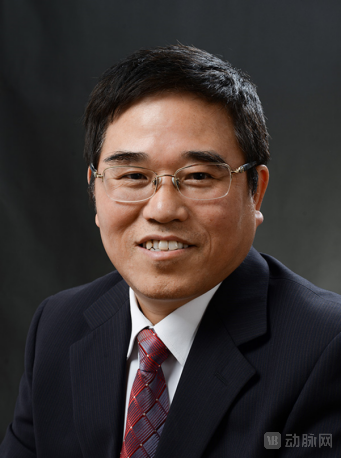
Founder and Chief Scientist of HealzoneBio, Professor Gu Hongchen
1From "Paper-First" to "Demand-Driven": A Team's Paradigm Shift
The birth and growth of HealzoneBio largely stemmed from the profound shift in the early scientific research philosophy of the Gu Hongchen team.
Gu Hongchen, who holds a Ph.D. in Chemical Engineering, is one of the earliest scholars in China to engage in nanotechnology research. His doctoral thesis focused on nanoparticles. However, unlike other academic teams, Gu Hongchen established a demand-oriented research philosophy early on, blocking out the external noise that prioritized "publishing papers first." "All scientific research should focus on significant unmet needs," he emphasized.
The emergence of this concept can be traced back to 1992. At that time, Gu Hongchen participated in the first National College Student Invention Competition. His achievement was sold for 2 million RMB through the country's first auction of scientific and technological achievements, winning the only special prize nationwide. As a result, he became one of the top ten news figures in China that year. "This experience guided us onto the path of innovation and translation," Gu Hongchen recalled.
In the early stages, Gu Hongchen's team consistently pursued two paths: "empowering traditional industries with nanotechnology" and "nanobiomedicine." By the late 1990s, they had fully focused their direction on the field of nanobiomedicine. In 2001, Shanghai Jiao Tong University planned to establish a National Nanotechnology Engineering Center and brought in Gu Hongchen's entire team.
At present, the founding team of HealzoneBio consists of three core members: Professor Gu Hongchen, Professor Xu Hong, and Hou Liying. They have accumulated nearly 30 years of close collaboration experience in the fields of research and development and commercialization, forming a long-term stable and tightly-knit entrepreneurial core.
"Our team places great emphasis on innovation research driven by demand, which is different from many academic teams," said Gu Hongchen.
Against the backdrop of a pure scientific research atmosphere and clear R&D philosophy, as well as the innovative ecosystem of a full lifecycle service system built by Shanghai Lingang United Company's subsidiary park, HealzoneBio has chosen to apply its technology platform in two major usage scenarios: early cancer screening and early detection and diagnosis of Alzheimer's disease.
2The "Three Big Mountains" of Early Screening: Technology, Registration, and Payment
"On the current state of the early cancer screening industry, Gu Hongchen's description is straightforward: 'Three big mountains.'"
"Our country, compared with developed countries, has a huge gap in the degree of demand satisfaction. The penetration rate of early screening is far behind the actual demand, which is an objective fact. But in terms of our regulatory environment, payment environment, as well as product and technology levels, we still have a very tough road ahead," he said.
The first major challenge is appropriate technology. Screening targets asymptomatic individuals who appear healthy and do not actively seek medical attention. Therefore, the testing technology must be convenient, accessible to the target population, and significantly lower in cost, while diagnostic performance, especially sensitivity, needs to be extremely high. "It must be low-cost, convenient, and highly effective, which requires tremendous effort at the foundational technological level," said Gu Hongchen.
The second major challenge is the registration pathway. Gu Hongchen pointed out that the majority of early screening companies obtain auxiliary diagnostic certificates rather than early screening certificates. The few companies that do obtain early screening certificates invest heavily. "Given that payment issues remain unresolved, the substantial costs incurred by companies in obtaining early screening certificates will be difficult to recoup financially over a considerable period," he said.
The third major challenge is the payment model, which is also the most core issue. Without a mature payment system to support it, even the best products will struggle to scale.
These three major challenges constituted the entire background for HealzoneBio's decision to "pave a new path."
3100,000-Person Cohort: An Unconventional Registration Pathway
The problem-solving approach of HealzoneBio can be glimpsed from "Chang Huikang."
Chang Huikang is a home self-test product based on the colloidal gold method for dual indicators of fecal hemoglobin and transferrin. It is easy to operate, low-cost, and suitable for large-scale community screening. Chang Huikang can detect positive results when the human hemoglobin content in fecal samples is no less than 0.1 μg/mL and can detect positive results when the transferrin content is no less than 0.04 μg/mL. Its detection performance is higher than most other similar products on the market.
But the area where Gu Hongchen's team truly exerts effort is the underlying logic behind the product: what level of sensitivity and what performance parameters genuinely offer early screening value?
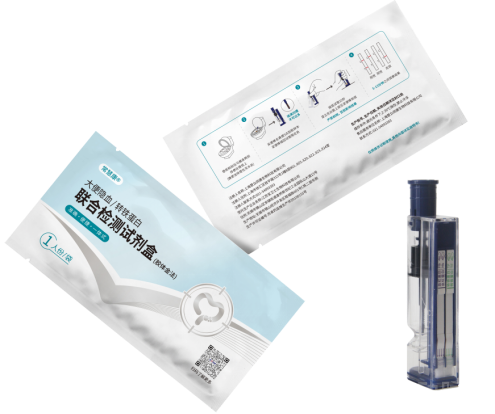
Chang Huikang Product Image
The team chose a real-world study with a cohort of 100,000 people as the validation pathway. This study covered multiple regions including Anhui, Henan, Xinjiang, and Shanghai, and was conducted in collaboration with the Anhui Provincial Cancer Center, local Centers for Disease Control and Prevention, and community health centers. It was designed according to the real-world research model of screening cohorts, utilizing a high-risk factor questionnaire combined with at-home self-testing using the dual-indicator FIT/TF stool test and accessible stool methylation testing technology at the grassroots level (an innovative technology developed by the Shanghai Jiao Tong University team). In total, the screening included over 100,000 people, with nearly 5,000 individuals undergoing colonoscopy screening due to positive results, identifying 1,618 cases of colorectal cancer and severe precancerous lesions. The number of beneficiaries is countless. "This data is also very unique internationally," said Gu Hongchen.
The significance of this research goes far beyond verifying product performance. It has pioneered a new registration pathway, not directly obtaining an early screening certificate but using real-world cohorts to validate screening value. Currently, both Chang Huikang and another SDC2 gene methylation test kit, Chang Huining, have obtained auxiliary diagnosis certificates, supported by real-world cohort data involving 100,000 people.
"Most companies, when obtaining auxiliary diagnostic certificates, their enrolled samples can't fully represent the effect of screening. A lot of data is only limited to the scope of clinical research and cannot be used to evaluate early screening performance," said Gu Hongchen. Meanwhile, HealzoneBio's cohort of 100,000 people happens to fill this gap.
The feasibility of this approach is being validated. In 2026, Chang Huikang was listed as a key livelihood project in Henan Province, with plans to conduct cancer screenings for 1 million people. Within less than a year of obtaining certification, HealzoneBio's colorectal cancer screening product has been used for over 1.5 million people.
4Chang Huining: The World's First Enzymatic Methylation Product Without Conversion
If Chang Huikang solves the problem of "scale accessibility," Chang Huining addresses the issue of "performance breakthrough."
On January 29, 2026, HealzoneBio's "Human SDC2 Gene Methylation Detection Kit (Fluorescence PCR Method)" was approved for marketing. This is the world's first methylation product using a direct enzymatic digestion method without conversion.
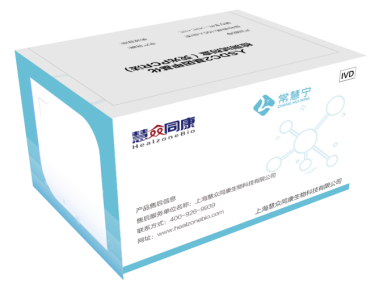
Chang Huining Product Image
Current methylation detection technologies almost invariably rely on bisulfite conversion, transforming methylation information into sequence differences. However, this process involves issues such as DNA damage and incomplete conversion, leading to performance degradation and cumbersome operation. The Gu Hongchen team has taken a different approach by using specific enzymes to perform site-specific enzymatic cleavage at methylation sites, followed by efficient amplification using the cleavage endpoints as specific sequences, achieving "what is cut is what is measured," with the entire process being fully compatible with standard qPCR.
"The enzyme digestion process and qPCR process are completely integrated, turning into a one-step operation. The original half-day workflow is reduced to three or four hours to complete the entire test," said Gu Hongchen.
The reduction in operation time significantly lowers the threshold for automation. The instrumentation required for automating existing methylation detection is costly; however, HealzoneBio's enzymatic technology is fully compatible with the qPCR automation systems used during the COVID-19 testing era.
The most intuitive way to verify whether a technology works is clinical data. According to publicly available data, the detection sensitivity of Chang Huining can reach 93.53%, with a specificity of 90.67%. The detection rate for treatable advanced adenomas (late precancerous lesions) can reach 66.67%, and the detection sensitivity for Stage I colorectal cancer is as high as 90.91%, aiding in the realization of "early detection and early intervention."
From the clinical data, Chang Huining has improved detection sensitivity while simplifying the process, increasing throughput, and reducing operational costs. After proving successful in colorectal cancer as a single-cancer type, this platform technology will expand to other cancer types and broader multi-cancer screening applications.
5Alzheimer's Disease: The Next Battlefield for Ultra-Sensitive Blood Tests
Beyond early cancer screening, HealzoneBio's other product line targets early diagnosis of Alzheimer's disease.
In the field of early AD diagnosis, human phosphorylated Tau-217 protein (p-tau217) has been widely recognized both in and outside China as one of the most valuable blood biomarkers for early screening. p-tau217 can significantly increase during the preclinical stage, with sensitivity and specificity reaching around 90%, making it more convenient and safer than traditional cerebrospinal fluid testing. A study published by Huashan Hospital in February 2026 also showed that plasma p-tau217 achieved a sensitivity of 0.88 and specificity of 0.84 in identifying Alzheimer's disease, which can significantly improve diagnostic efficiency in real-world settings.
Based on the p-tau217 ultra-sensitive flow detection platform, HealzoneBio has developed an ultra-sensitive flow fluorescence method - p-Tau 217 immunoassay kit, which enables precise detection of blood-based p-tau217 (with a detection limit as low as ~10fg/mL), demonstrating a diagnostic capability with an AUC of up to 0.92 for differentiating AD from cognitively normal individuals.
The long-term accumulation of Gu Hongchen's team in the field of nanotechnology has provided the underlying support for this platform. Single-molecule capture and signal amplification are achieved based on nano-microspheres, followed by detection through a flow platform. More crucially, the microspheres developed by the team possess coding capabilities, enabling the simultaneous detection of multiple biomarkers in a single tube, making it possible to jointly detect AD markers.
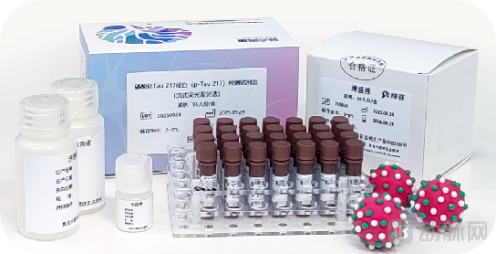
Ultra-Sensitive Flow Fluorescence Method - p-Tau 217 Immunoassay Kit Product Image
"Previously, detection could only rely on cerebrospinal fluid or expensive PET/CT scans, but now we can detect early-stage diseases using blood samples. This will have a tremendous impact on the industry," said Gu Hongchen.
It can be seen that from early tumor screening to early diagnosis of neurodegenerative diseases, HealzoneBio's underlying technical logic has been consistent, using innovative technical means to address significant unmet clinical needs.
6The Next Three Years: A Critical Window Before Industry Transformation
For the future three-year trend of the early screening industry, Gu Hongchen's judgment is "an important period of transformation."
"The existing business models are not yet able to fully meet industry demands, and the policy environment also needs breakthroughs. The industry itself must build a stronger foundation in its underlying logic. If one merely follows trends and engages in superficial activities, they will be eliminated within the next three years," he said.
Colorectal cancer is the most definitive type of cancer that benefits patients through single-cancer screening, and it is also the field in early screening industry where a business model is most likely to be successfully established first. However, even though several companies in the market have obtained certifications, this does not equate to the underlying technology and commercial logic being fully validated and accepted by the market. The fundamental logic of early Alzheimer's screening is consistent with that of cancer screening. But after screening, what are the intervention methods? Is there a logical basis for establishing early screening? These questions also need to be gradually clarified by the industry.
Facing this volatile market, HealzoneBio's strategy is to "adhere to long-termism." "As long as we can persevere and continue to deeply cultivate in technology and the registration pathway, I believe we can make our due contributions in this field," Gu Hongchen responded.
About Shanghai Lingang United Development Co., Ltd.
Shanghai Lingang United Development Co., Ltd. is an integrated service provider and general operator of innovative park ecosystems, focusing on park investment promotion and operation, professional enterprise services, and science and technology industry investment. It belongs to the Shanghai-owned urban security state-owned enterprise Lingang Group and is an important component of the listed entity "Shanghai Lingang (600848)."
The parks under Lingang United Company have gathered more than 100 upstream and downstream enterprises in the medical device industry, covering well-known companies in the fields of high-value consumables, medical equipment, and in vitro diagnostics. The park has introduced the Shanghai Yangtze River Delta Medical Device Industry Development Promotion Association, providing one-stop services for policy interpretation and registration application consultation; it also integrates resources inside and outside the group and the park, such as Bureau Veritas and Eurofins, to provide enterprises with convenient testing channels, addressing various testing needs during the R&D and registration application stages.