

Huazhong University of Science and Technology Union Hospital Licenses Novel IBD Therapeutic Patent Targeting Omentin to Zhejiang BioRay Pharma for RMB 200,000
Recently, Union Hospital, Tongji Medical College of Huazhong University of Science and Technology, released a public notice on the transformation of scientific and technological achievements, proposing to transfer a technology developed by Professor Fu Yu’s team in the Department of Gastroenterology."Application of Omentin in the Preparation of Therapeutic Drugs for Inflammatory Bowel Disease"Patent achievements, subject to agreementPriced at 200,000 yuanSuccessfully transferred to Zhejiang Borui Biopharmaceutical Co., Ltd.
Professor Fu Yu’s team has long been dedicated to researching the pathogenesis of inflammatory bowel disease (IBD) and novel therapeutic strategies, committed toOvercoming the bottleneck in current clinical IBD treatment, where nearly half of patients fail to achieve mucosal healing.As a core research member of the team, Dr. Tao Meihui possesses extensive research expertise in gastrointestinal immunology and gut microbiota, demonstrates a profound understanding of the pathogenesis of inflammatory bowel disease (IBD), and has accumulated substantial practical experience in exploring novel diagnostic and therapeutic approaches for this condition.
The assignee of this patented technology, Zhejiang Borui Biopharmaceutical Co., Ltd., focuses on the research, development, and commercialization of innovative drugs in the fields of autoimmunity and oncology. According to the company’s official website, the company currently hasSix Marketed Autoimmune Disease DrugsandTwo Oncology Therapeutics。
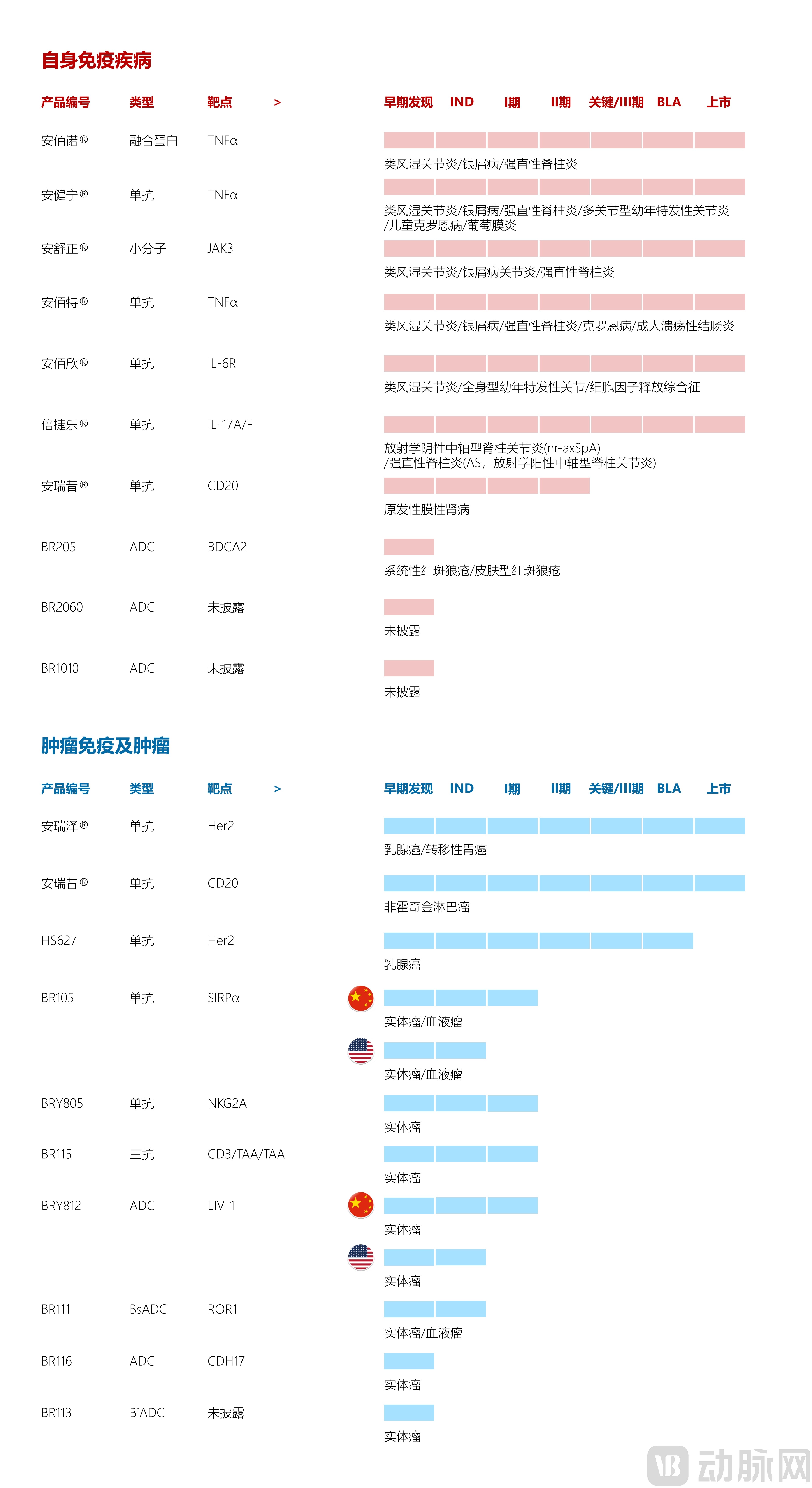
Image from the company's official website
IBD is a group of chronic, relapsing inflammatory bowel diseases closely associated with genetic, environmental, and immune dysfunction, primarily includingUlcerative Colitis and Crohn's DiseaseTwo Major Types. Patients typically present with classic symptoms such as diarrhea, abdominal pain, mucopurulent bloody stools, and weight loss, which not only severely impair quality of life but are also difficult to cure completely. Furthermore, the disease may lead to serious complications, including intestinal perforation, hemorrhage, strictures, and malignant transformation. Chronic, recurrent episodes can result in malnutrition, anemia, and further decline in immunity, and may even involve extra-intestinal organs, causing various issues such as arthralgia, rash, and ocular inflammation, thereby inflicting multifaceted harm on patients' physical and mental health.
Currently, emerging industrialized countries including ChinaThe Incidence of IBD Is Continuously Rising, imposing a significant burden on society and the nation.
The main treatment measures for IBD include anti-inflammatory drugs, corticosteroids, immunosuppressants, and biologics; however, even with aggressive treatment, there remainsApproximately 50% of patients with moderate-to-severe IBDDifficult to achieve“Complete Mucosal Healing”the goal. Specifically, the formulation of current clinical treatment plans is mainly based on“Step-up Therapy”Strategy: For patients with mild-to-moderate disease, 5-aminosalicylates (such as mesalazine) are the first-line foundational therapy; for those with moderate-to-severe disease, treatment intensity should be escalated stepwise, employing corticosteroids to rapidly control acute flares, or utilizing immunosuppressants (such as azathioprine) and biologics (such as anti-tumor necrosis factor-alpha monoclonal antibodies) to maintain long-term remission.
This underscores the urgent market need to identify novel therapeutic targets to overcome the current bottlenecks in IBD treatment.
However, these mainstream approaches all have significant limitations. Although glucocorticoids can effectively suppress inflammation, long-term use leads to a series of intolerable side effects, such as central obesity, hyperglycemia, and osteoporosis. Furthermore, they are not suitable for maintaining remission, which strictly limits their clinical application.
More critically, even with the adoption of the most advanced currentBiologics or Small-Molecule Targeted Drugs, stillApproximately halfPatients with moderate-to-severe disease face challenges such as primary non-response, secondary loss of response, or poor drug tolerance, making it difficult to achieve the desired therapeutic goal of mucosal healing. This leads to recurrent and persistent disease activity, with some patients ultimately requiring intestinal resection, which severely impacts their quality of life.
This clinical bottleneck profoundly revealsThe Dilemma of Existing Therapies: Relatively Single-Target Mechanisms and the Difficulty in Fundamentally Regulating the Complex Immune Network of DiseasesTherefore, the medical community urgently seeks to identify innovative therapeutic targets, such as omentin, that act via novel pathways, exhibit enhanced anti-inflammatory efficacy, and potentially promote mucosal repair, so as to break through the current therapeutic impasse.
Professor Fu Yu's Team for the First TimeUnveiling the Adipokine "Omentin" as a Novel Drug Target and Therapeutic Direction for Inflammatory Bowel Disease (IBD)。
The patent indicates that omentin is a newly discovered adipokine whose levels are significantly reduced in the serum of patients with inflammatory bowel disease (IBD). Exogenous supplementation of omentin has been proven to effectively reduce the secretion of multiple key pro-inflammatory cytokines, including IL-1β, TNF-α, and IL-6, in dextran sulfate sodium (DSS)-induced colitis models, thereby ameliorating intestinal inflammation, mitigating weight loss, and preventing colon shortening. Animal studies have demonstrated the clear therapeutic potential of omentin.
This invention not only pioneered the proposal ofPreparation of IBD Therapeutic Agents Using Omentinnew avenues, but also further expands its applications in the fields of disease detection and target regulation. This breakthrough provides an important original solution to the bottlenecks currently facing IBD treatment, demonstrating significant potential for clinical translation and broad market prospects.

Amino Acid Sequence of Omentin
The advancement of this protocol lies in its being the firstApplication of Omentin in the Treatment of Inflammatory Bowel Disease, paving a new path to break through the bottlenecks of existing therapies. Compared with current hormones or biologics that primarily work by strongly suppressing immune responses, omentin demonstratesA more intelligent and potentially safer pleiotropic mode of action.
The experimental data clearly show that,Exogenous Omentin SupplementationIt can significantly reduce the mRNA expression levels of multiple key pro-inflammatory cytokines, including IL-1β, TNF-α, and IL-6, in a mouse model of dextran sulfate sodium (DSS)-induced colitis. This indicates that omentin can broadly and synergistically inhibit multiple inflammatory pathways at the source level of gene transcription, rather than merely blocking a single inflammatory signaling molecule, thereby holding promise for achieving more fundamental regulation of the complex immune network imbalance in inflammatory bowel disease (IBD). Theoretically, this multi-target anti-inflammatory property can overcome drug tolerance issues arising from the failure of single-target therapies.
Furthermore, patent research has revealed that omentin effectively ameliorates key pathological indicators in disease models, such as weight loss and colon shortening. This suggests that omentin not only suppresses inflammation but may also exert direct protective effects by promoting mucosal repair and maintaining intestinal barrier integrity—capabilities that are urgently needed to achieve the golden therapeutic goal of mucosal healing. Meanwhile, as an endogenous factor naturally present in the human body, omentin theoretically possesses superior biocompatibility, offering the potential to circumvent safety concerns associated with traditional immunosuppressants or biologics, such as an increased risk of infection.
In summary, this patent not only fills the global gap in the therapeutic application of omentin for inflammatory bowel disease (IBD), but also lays a solid scientific foundation for the development of next-generation IBD therapeutics, thanks to its innovative mechanism of action, pleiotropic therapeutic potential, and potentially high safety profile, thereby demonstrating significant clinical translation value and strong market competitiveness.
As a category of diseases with extensive impact and a large affected population, the industry has long been engaged in research on inflammatory bowel disease (IBD) and the development of therapeutic drugs. In addition to marketed agents such as infliximab, adalimumab, and prednisolone sodium phosphate from Kissei Pharmaceutical of Japan, there are multiple products under investigation worldwide.
Among them, Pfizer’s humanized monoclonal antibody Anrukinzumab is in Phase II clinical trials, while Eli Lilly’s Mirikizumab is in Phase III. Notably,Both companies had entered the respective clinical trial phases before 2020.
In China, established players and emerging innovators such as Hengrui Medicine, Humanwell Healthcare, Zhixiang Jintai Bio, and Yanming Bio have all made strategic moves.
Shengdi Medicine, a wholly-owned subsidiary of Hengrui Medicine, is leading the clinical study titled “A Phase II Clinical Study to Evaluate the Efficacy, Safety, and Pharmacokinetics of HRS-7085 Tablets in Patients with Inflammatory Bowel Disease.” The primary clinical site is West China Hospital of Sichuan University, with more than 30 other institutions participating in the study, including Zhongnan Hospital of Wuhan University and Shengjing Hospital of China Medical University.
Humanwell Healthcare is advancing the Phase I clinical trial of HW201877 capsules, aiming to explore the drug’s potential for treating inflammatory bowel disease (including ulcerative colitis and Crohn’s disease). Currently, the study is being conducted with the First Hospital of Jilin University serving as the lead clinical site.
Chongqing Zhixiang Jintai’s investigational product, GR2303 Injection, is currently undergoing Phase I clinical trials, with Beijing Friendship Hospital, Capital Medical University, serving as the primary clinical site.
Yanming Biopharma has laid out two Phase I clinical trials centered on inflammatory bowel disease (IBD), with its core investigational product being PTT-621 tablets. Both trials target adult indications for IBD, and the primary clinical trial site for both is Peking University Third Hospital.
Overall,Most new drug pipelines targeting novel mechanisms for inflammatory bowel disease, both domestically and internationally, remain in relatively early clinical stages.In the future, we may be fortunate enough to witness the emergence of innovative solutions; however, the research and development of new drug molecules remains indispensable and offers broad opportunities for growth.