

Lilly's Tirzepatide Receives Regulatory Notice in China for New Indication, Market Speculates Rejection
On November 17, the notification delivery information released by the National Medical Products Administration (NMPA) listed Eli Lilly’s tirzepatide injection. The four application numbers involved are JXHS2400108, JXHS2400109, JXHS2400110, and JXHS2400111. The indicated issuance date is November 14, 2025.
Under China’s current new drug approval process, if a drug is successfully approved, the applicant will receive a “Notification of Delivery of Drug Approval Documents.” If instead a “Drug Notification Letter” is received, it indicates that the application has not been approved at this stage. However, receipt of a “Drug Notification Letter” does not necessarily mean complete failure in bringing the drug to market; theoretically, there remains the possibility of continuing the submission process after supplementing and refining the required data.
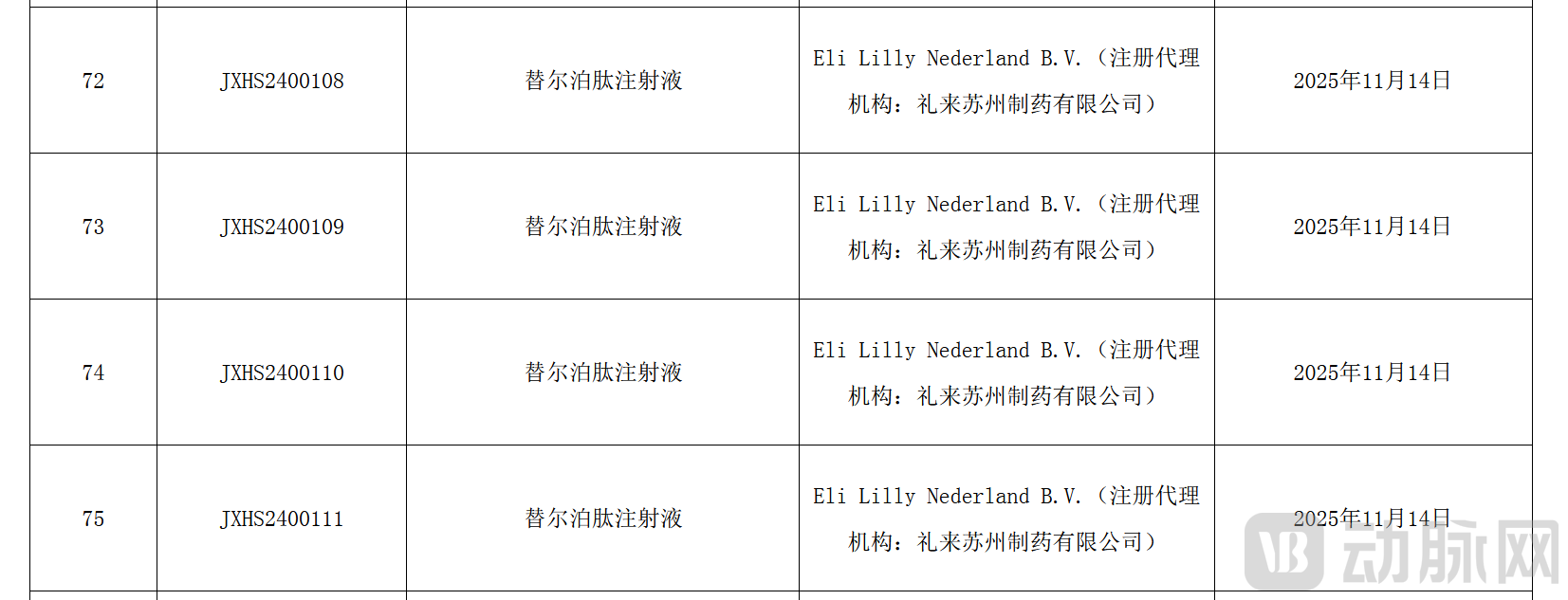
Source: National Medical Products Administration
Industry speculation suggests that the indication under application is “heart failure with preserved ejection fraction (HFpEF) combined with obesity,” an indication that is still undergoing regulatory review in the United States. In China, tirzepatide has been approved for three indications: (1) to improve glycemic control in adults with type 2 diabetes mellitus whose blood glucose remains inadequately controlled despite treatment with metformin and/or sulfonylureas, alongside diet and exercise; (2) to improve glycemic control in adults with type 2 diabetes mellitus when used in combination with insulin (with or without oral glucose-lowering agents), alongside diet and exercise; (3) for long-term weight management in adults who, on the basis of dietary control and increased physical activity, have an initial body mass index (BMI) of ≥28 kg/m² (obesity), or ≥24 kg/m² (overweight) with at least one weight-related comorbidity (e.g., hypertension, dyslipidemia, hyperglycemia, obstructive sleep apnea, cardiovascular disease, etc.); and (4) for the treatment of moderate-to-severe obstructive sleep apnea (OSA) in adult patients with obesity, alongside dietary control and increased physical activity.