

Gameto Raises $127M to Advance Stem Cell-Based Fertility Therapy Fertilo into Phase III Trials and Expand Women’s Health Pipeline

Gametogen
Developer of Women's Health Technology
Recently,U.S. clinical-stage biotechnology company Gameto announced the completion of a $44 million Series C financing round, bringing its total funding to approximately $127 million.Meanwhile, the company disclosed a significant development—Its flagship product, Fertilo, has launched Phase III clinical trial recruitment in the United States., targeting a critical link in the global assisted reproductive technology (IVF, In Vitro Fertilization) industry—namely, the in vitro maturation of oocytes.
In Vitro Fertilization Is Regarded as One of the Most Iconic Breakthroughs in Modern Medicine; Since the Birth of the World’s First “Test-Tube Baby” in 1978, More Than 10 Million Lives Have Been Brought into the World Thanks to This Technology[1]. According to Business Research Insights, the global IVF market was valued at $26.427 billion in 2024.
However, the success of this technology has always come at a heavy cost. For many women, it is not merely a medical procedure but more akin to a marathon: two weeks of high-dose hormone injections can cause bloating, mood swings, and even pose a risk of ovarian hyperstimulation syndrome (OHSS). The financial burden and psychological stress also deter many patients seeking fertility treatment.
Against this backdrop, Gameto has proposed a disruptive hypothesis: If the “ovarian environment” required for oocyte maturation can be reconstructed in vitro, could dependence on prolonged hormonal stimulation be eliminated?They attempted to use stem cell-derived ovarian support cells (OSCs) to assume this role., aiming to condense the original marathon-like process into a sprint, thereby reducing risks while enabling more patients to access this fertility option.
From a longer-term perspective, Gameto not only has the potential to offer an alternative pathway to traditional assisted reproductive technology (ART) for certain populations, but is also poised to expand its business from ART to comprehensive lifecycle management of women’s reproductive health, serving a population far broader than just patients with infertility.
Harvard Lab Launches, Supported by a Multidisciplinary Team and Backed by Diverse Capital
Gameto’s story began in the renowned George Church Laboratory at Harvard Medical School. There, the research team explored the application of induced pluripotent stem cells (iPSCs) in reproductive medicine. Traditional IVF relies on the natural development of follicles in vivo, a process that necessitates high-dose exogenous hormonal stimulation. Gameto’s technological approach bypasses this step by differentiating iPSCs into functional ovarian somatic cells (OSCs), enabling oocyte maturation in vitro and simulating an ovarian microenvironment that closely mimics the natural physiological state in the human body.
Early breakthroughs in this technology attracted several seasoned experts in reproductive health and life sciences to join the team. CEO Dina Radenkovic, who holds an M.D., previously served as a partner at SALT Bio Fund, an investment fund focused on regenerative medicine and early-stage life sciences. She specializes in translating cutting-edge life science research into clinically viable medical products. Co-founder Martin Varsavsky is the founder of Prelude Fertility, a fertility services provider, and brings extensive experience in the commercialization of reproductive healthcare. Chief Scientific Officer Christian Kramme has long studied the mechanisms of oogenesis and is a key driver in advancing iPSC differentiation technologies. Chief Medical Officer Gus Haddad oversees clinical trial design and multi-center coordination. This combination of scientific expertise and industrial operational talent has endowed Gameto with a dual DNA of “academic breakthroughs and commercial implementation” from its inception.

Figure 1: Overview of the Gameto Team Profile
Fueled by capital, Gameto has been advancing at a rapid pace.Since its inception, Gameto has completed three rounds of financing, totaling approximately $127 million. Investors include influential firms in the fields of regenerative medicine and women’s health, such as RA Capital, Future Ventures, and Bold Capital Partners.In terms of clinical network development, Gameto has established partnerships with 20 leading fertility centers, including Shady Grove Fertility in the United States, Columbia University, and Prelude Fertility. Meanwhile, it has also gained commercial access in multiple countries such as Peru, Mexico, Australia, Japan, India, Singapore, and Argentina.
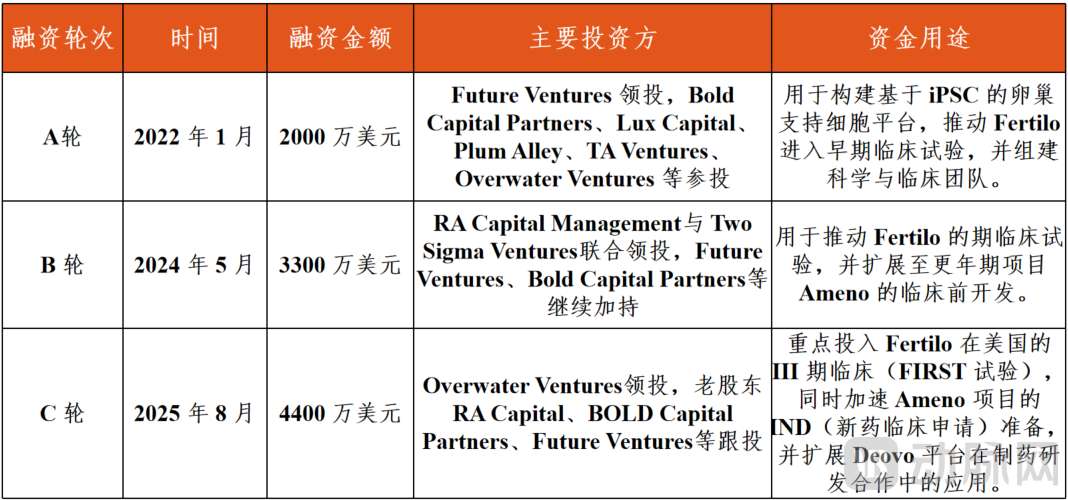
Table 1: Overview of Gameto's Financing and Investment Information
OSCs Shorten Hormone Cycles, Full-Chain Technology Expands Women's Health Scenarios
In conventional IVF protocols, oocyte maturation relies on the synchronized development of follicles within the patient’s body.To obtain multiple viable eggs, patients typically need to receive high-dose ovulation-inducing hormone injections for 10–14 consecutive days. This process not only causes discomfort such as bloating and mood swings but may also lead to complications like OHSS.
Under the Gametogen model, oocytes can be immediately transferred into a co-culture system with stem cell-derived ovarian support cells (OSCs) after retrieval to complete maturation in vitro, thereby shortening the in vivo hormonal stimulation cycle to 2–3 days.The potential significance of this shift lies not only in reducing medication dosage and the risk of side effects, but also in decreasing the frequency of patient visits and overall treatment costs.
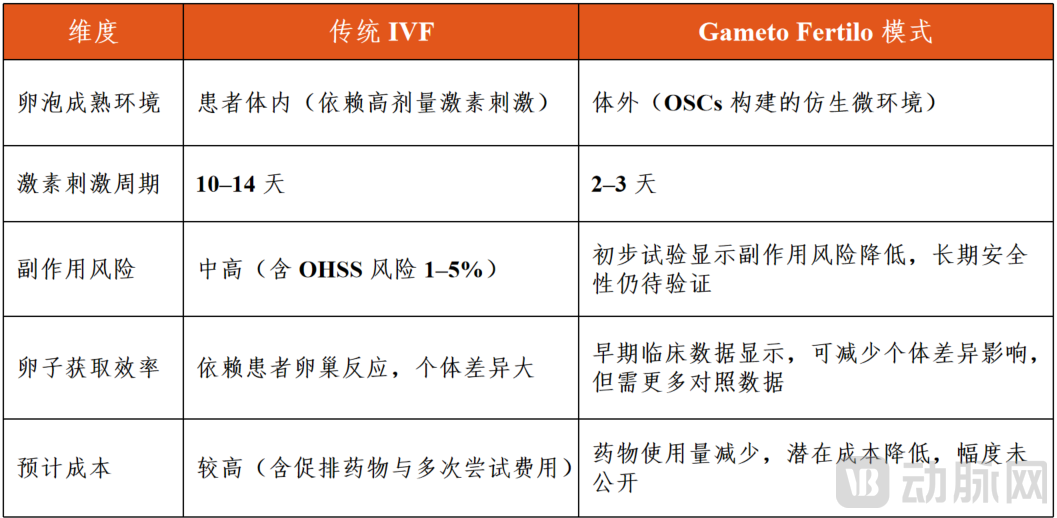
Table 2: Key Differences Between Traditional IVF and the Gameto Fertilo Model
The value of this model lies not only in “reducing the burden” but also in “improving quality.” In traditional IVF, high-dose hormones may lead to an increased rate of chromosomal abnormalities in oocytes, whereas the stable environment created by OSCs enables oocytes to mature in a “healthier” manner.
In the completed Phase II clinical trial, Gameto’s flagship project Fertilo demonstrated an oocyte maturation rate of 70%., comparable to conventional IVF and significantly higher than the 52% observed with standard in vitro maturation techniques. This suggests that the stable microenvironment provided by OSCs holds promise for improving oocyte quality, thereby yielding further benefits in pregnancy outcomes.
Certainly, Gameto’s ambitions extend far beyond IVF. Leveraging its OSCs technology, the company is building an “end-to-end technology platform” centered on these cells—spanning from foundational breakthroughs in iPSC differentiation and the commercialization of its Fertilo product for assisted reproduction, to menopause treatment and drug development—thereby establishing a product pipeline that covers the entire spectrum of women’s reproductive health.
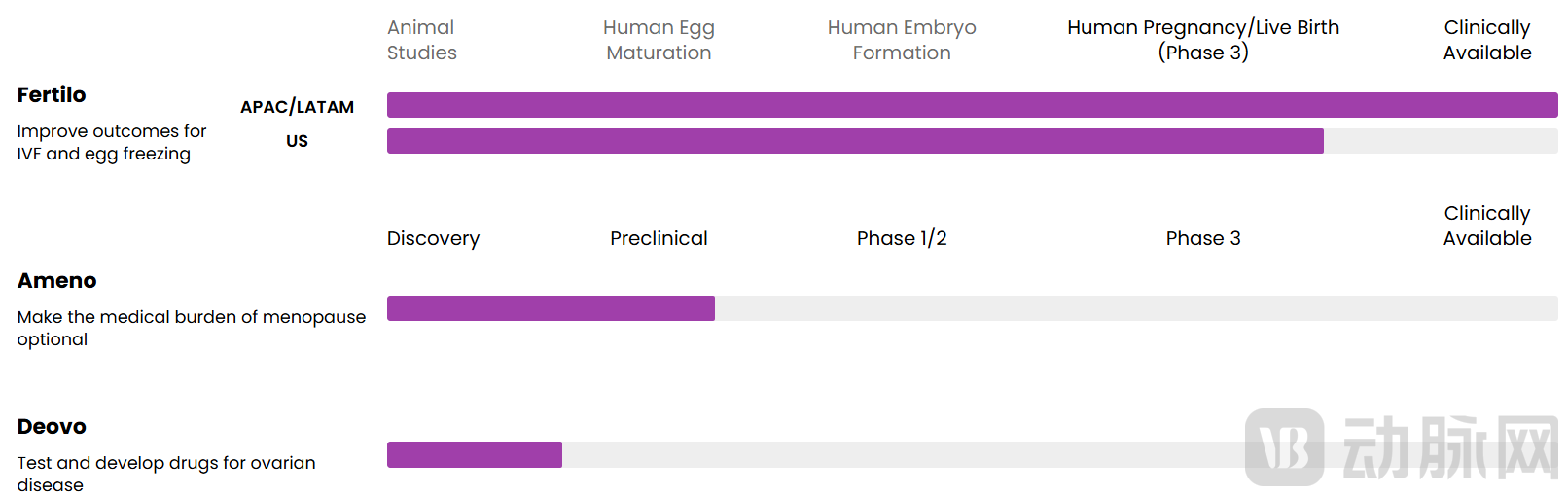
Figure 2: Overview of Gameto’s Pipeline Progress
1Fertilo: An “In Vitro Follicle Maturation” Protocol That Has Already Led to the Birth of Five Babies
Fertilo is Gameto’s most mature product and the one closest to large-scale clinical translation—it has already been commercialized in multiple countries, facilitating over 20 pregnancies, with five babies successfully born.In the United States, Fertilo is conducting the Phase III FIRST clinical trial across 20 fertility centers, with interim results expected to be released by the end of 2026 to evaluate its safety and efficacy and pave the way for potential product launch.
2Ameno: Exploring Menopause Treatment Based on OSCs
The R&D project Ameno in the menopause field aims to restore ovarian hormone secretion function to alleviate symptoms such as hot flashes, insomnia, and mood swings. Its approach consists of two parts: first, achieving stable endogenous secretion of estrogen and progesterone using encapsulated OSCs; second, enabling cyclical hormone release via a novel vaginal ring, thereby reducing the risks of breast cancer and thrombosis associated with traditional hormone replacement therapy (HRT).
Up to 80% of women experience some degree of symptoms during menopause, such as hot flashes, mood swings, or sleep disturbances.[2], and existing treatment options still involve a trade-off between efficacy and safety. The Ameno project has received $10 million in funding from the Advanced Research Projects Agency for Health (ARPA-H), which will be used to accelerate research under its Menopause Initiative.
3Deovo Platform: Accelerating New Drug Discovery with “Ovarian Organoids + AI”
In addition to its direct-to-clinic products, Gameto is developing the Deovo platform, which combines iPSC-derived ovarian organoids with artificial intelligence (AI) algorithms to provide disease modeling, drug screening, and toxicology assessment tools for pharmaceutical companies and research institutions. This platform can simulate ovarian function across different ages and disease states, offering in vitro experimental models with higher physiological relevance for new drug development.
Deovo has currently established collaborations with two international pharmaceutical companies and is in the early validation phase. In the future, if it can be applied in larger-scale partnerships, it may become an “accelerator” for drug development in reproductive health and broader fields.
From “Reproduction” to “Full-Cycle Health”: Pioneering the New Frontier of Stem Cell-Based Reproductive Health
The National Medical Products Administration’s “Technical Guidelines for Clinical Trials of Stem Cells (Trial)”, released in 2023, opened a policy window for domestic stem cell research and industrial translation. In January this year, Amemietosel, developed by Bosheng Excellence for the treatment of acute graft-versus-host disease, was approved for marketing, becoming the first stem cell therapy approved for commercialization in China. This demonstrates that policy-level support for stem cell regulation and industrialization is being realized.
Gameto’s exploration of the cross-disciplinary integration of iPSC technology with reproductive medicine offers multiple insights for innovation in China’s reproductive healthcare sector. Domestic enterprises can draw on this approach—for instance, by leveraging mesenchymal stem cells (MSCs) to improve endometrial receptivity, or by optimizing the in vitro culture environment for oocytes and sperm using stem cell-derived cells.
Currently,China has become one of the most important markets for assisted reproductive technology services globally.According to Caixin Global, China sees approximately 13,000 assisted reproductive technology (ART) cycles annually—including in vitro fertilization (IVF) and other techniques—yet the technical approach remains predominantly based on conventional hormonal stimulation combined with in vitro culture.
In fact, Chinese research teams have achieved significant breakthroughs in basic research on the induction of germ cells from stem cells. For instance, Academician Zhou Qi’s team successfully accomplished the complete differentiation of stem cells into germ cells in a mouse model and produced healthy offspring. Meanwhile, a team from the Institute of Zoology, Chinese Academy of Sciences, made the first attempt to use stem cells to delay reproductive aging in non-human primate models (rhesus macaques), pioneering a new “cell + reproduction” research paradigm.
Meanwhile, full-cycle management of women's reproductive health represents a blue-ocean market with low penetration.Products and services in the fields of menopause management and treatment of premature ovarian insufficiency are limited. A study on Chinese women showed that 82.4% of women aged 40–60 reported experiencing menopausal symptoms, but less than half (approximately 47%) actively sought medical attention, among whom only 5.7% received menopausal hormone therapy (MHT).[3]. This reflects that, despite the high prevalence of symptoms, the proportion of patients receiving standardized treatment remains significantly low.
Gameto’s development trajectory reveals three critical milestones: first, the Phase III clinical trial results of Fertilo will directly determine whether this technology can enter the mainstream of the industry; second, Ameno’s advancement in menopause management—if its clinical studies yield positive outcomes, the “non-hormonal therapy” based on cell technology could become a new breakthrough in reproductive health management; and third, although the application of the Deovo platform remains in the early validation stage, it demonstrates long-term potential in the CRO and drug R&D auxiliary tools market.
Overall, the significance of Gameto extends beyond a single product; it represents a new technological paradigm:The integration of stem cells and reproductive medicine is gradually transitioning from the laboratory to clinical practice.For the Chinese market, this trend offers at least three noteworthy directions: cross-disciplinary technological integration, full-lifecycle market expansion, and leveraging policy dividends. If research institutions and enterprises can seize this window of opportunity over the next 5–10 years, China is well-positioned to achieve parity with global leaders in this sector, and even emerge as a frontrunner in certain areas.
References:
[1] ScienceAlert. (2025, January 23). Study reveals how many IVF babies have been born worldwide. ScienceAlert.
[2] Makara-Studzińśka MT, Kryś-Noszczyk KM, Jakiel G. Epidemiology of the symptoms of menopause - an intercontinental review. Prz Menopauzalny. 2014 Jun;13(3):203-11. doi: 10.5114/pm.2014.43827. Epub 2014 Jun 30. PMID: 26327856; PMCID: PMC4520365.
[3] You Y, Lin L, Yu Q. Exploring menopausal symptoms, attitudes, and behaviors among menopausal women in China: an online research perspective. Menopause. 2024 Nov 1;31(11):1006-1013. doi: 10.1097/GME.0000000000002428. Epub 2024 Sep 3. PMID: 39226413.