

Lab-Grown 'Mini-Brains': Breakthroughs and Ethical Frontiers in Organoid Technology
When human stem cells are placed in a culture medium and provided with appropriate molecular signals, a miniature structure mimicking the cerebral cortex or cerebellum will grow in the culture fluid. These are known as“Neural organoids” or “brain organoids”three-dimensional cell clusters, typically only a few millimeters in size. Although they are not true “brains in a dish,” they are becoming increasingly complex and realistic, capable of capturing more of the brain’s cellular and structural features.
“It’s surprising how much progress has been made in this field over the past year,” said John Evans, a sociologist at the University of California, San Diego, in an interview with Science magazine. “It’s really striking.”
In November 2025, at the historic Asilomar Conference Center near Monterey, California—where a famous conference was held 50 years ago to establish the first guidelines for genetic engineering—a group of scientists, ethicists, and patient advocates gathered once again to discuss the scientific breakthroughs and ethical challenges posed by neural organoid technology.
Neural organoid technology is based on the self-organizing capacity of stem cells.By precisely controlling growth factors and signaling molecules, researchers are able to induce human pluripotent stem cells to differentiate and self-organize into three-dimensional structures resembling specific regions of the brain. These organoids can mimic the cellular composition and laminar architecture of various brain regions, such as the cerebral cortex, cerebellum, and hippocampus.
One of the latest advances in organoid technology is the development of “assembloids.”By combining multiple organoids representing different brain regions, scientists can significantly enhance their complexity.
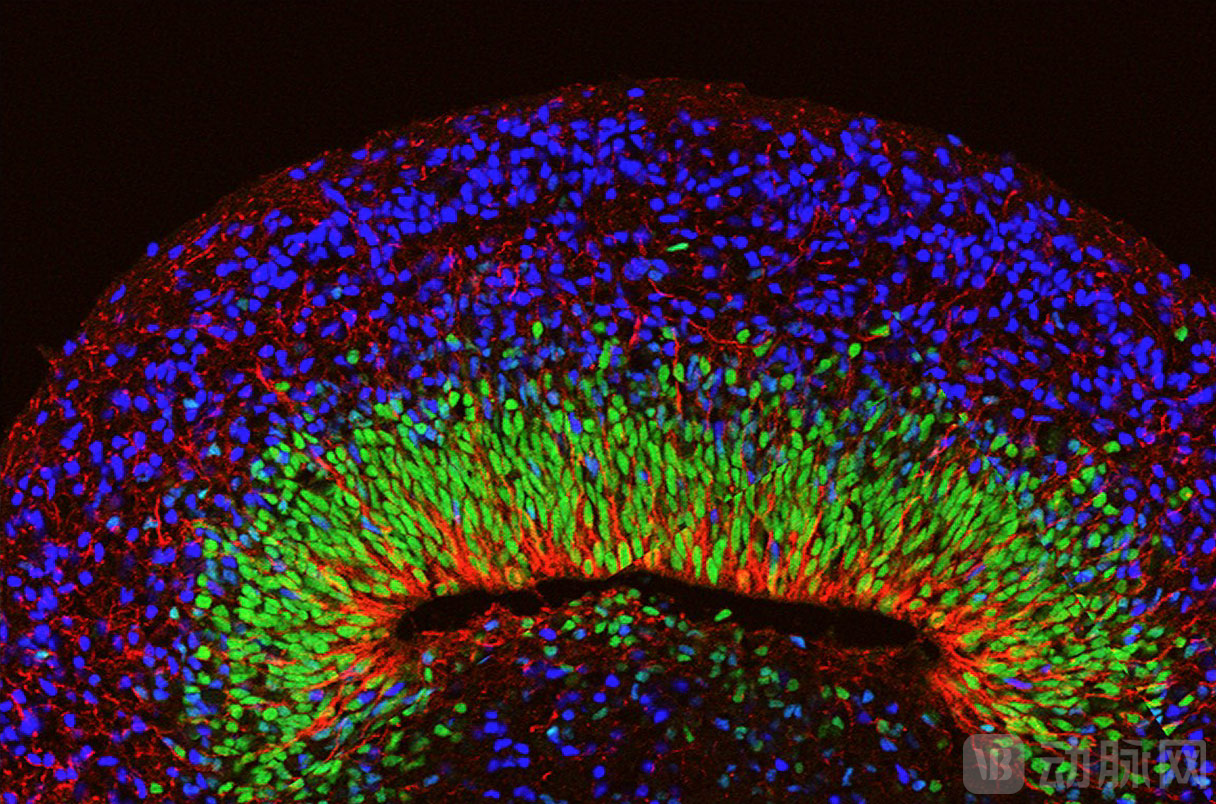
Figure: Research from the UCLA Stem Cell Center demonstrates that neural organoids can recapitulate the natural lamination of the human brain, providing a powerful tool for disease modeling (Source: University of California/Nature Neuroscience)
In a study published in Nature in 2024, the team led by Stanford University neuroscientist Sergiu Pașca created four neural organoids representing different parts of the brain and spinal cord and connected them in sequence. When researchers chemically stimulated one end, the organoid at the other end of the chain responded, indicating that these structures had formed sensory pathways capable of detecting stimuli and sharing information.
This finding raises a critical ethical question:Do these assembled organoids experience pain?Studies have shown that they do respond to the pungent chemical compounds in chili powder. However, Pasca points out that pain perception requires two pathways: one to detect noxious stimuli and another to generate the unpleasant sensation, and the current assembloid organoids lack the second pathway.
University of Pennsylvania NeuroscientistGuo-Li MingUsing Organoid Technology to Explore How Viruses Damage the Brain. Her team’s previous research showed that the Zika virus invades progenitor cells in organoids and inhibits their division, explaining why some infants born to mothers infected with the virus present with abnormally small heads.
In 2024, the team reported in a preprint paper that the Oropouche virus, which is rapidly spreading in Latin America, also targets neural progenitor cells and has similar effects on infant head circumference. These studies demonstrate the significant potential of organoids in understanding neurodevelopmental disorders.
One of the most exciting applications of organoid technology is in the research and development of treatments for rare diseases.Timothy syndrome is a rare genetic disorder characterized by life-threatening arrhythmias and neurological symptoms such as autism and epilepsy. The condition is caused by defects in the proteins that form calcium channels.
Due to the lack of animal models for Timothy syndrome to test potential therapies, Pasca’s team adopted an innovative strategy by transplanting human brain organoids derived from patient-induced pluripotent stem cells carrying the pathogenic mutation into rat brains, thereby creating a chimeric model.
In a paper published in Nature in 2024, the research team reported that they had identified antisense oligonucleotides (short nucleotide chains) capable of reducing levels of defective proteins in disease-mimicking neural organoids. These antisense oligonucleotides were also effective in rats.
Pasca stated that his team is preparing to submit an investigational new drug application to test whether the antisense oligonucleotide, validated in rats, can improve cognitive symptoms in Timothy syndrome. This would be the first potential therapy for a psychiatric disorder developed through research using brain organoids.
As neural organoids become increasingly complex, a series of profound ethical issues have emerged,Do these spherical structures, composed of human neurons and other cell types, experience pain, exhibit intelligence, develop consciousness, or even dream? How can we determine whether they possess such capabilities?
In fact, experiments involving the transplantation of human brain organoids into animal brains have previously raised concerns. Evans’ survey research indicates that a significant portion of the public considers it unacceptable to implant organoids into other species, as this blurs the boundary between humans and animals.
Yet, the desire for new medical treatments may outweigh such concerns. Alta Charo, Emeritus Professor of Law and Bioethics at the University of Wisconsin–Madison, believes that researchers still have time to develop the right approaches. “I cannot say that there is anything we need to do differently right now,” she said.
Alison Singer, President of the Autism Science Foundation, voiced the expectations of patients and their families for organoid research: “I want to ignite a fire in scientists.” She hopes that researchers can quickly establish some fundamental guidelines.“Such dialogues are important, but they must lead to concrete action.”
In a *Science* magazine article earlier in 2024, Arizona State University bioethicist Ben Hurlbut criticized the Asilomar-style conference model of “science first, ethics later.” He argued that after assessing the risks of specific technologies, experts typically formulate standards on their own and present them to the public as fait accompli, thereby precluding debate.
Although Hurlbut attended the meeting and believed that the participants “asked the right questions,” he also stated that they had fallen into the same trap. “It is a bad habit,” he said.
However, Evans considered the conference to be both enlightening and practical. Yet he acknowledged that ensuring neural organoids do not cross ethical boundaries remains an ongoing endeavor. He stated that the biggest issue is“It is not yet clear what we will do next.”
Neural organoid technology is advancing toward greater complexity and functionality. Future research directions may include:
Enhanced Structural Complexity:Develop organoids that incorporate a greater diversity of cell types and more accurately simulate the connectivity of brain regions;
Functional Maturation:Prolong the culture duration to allow organoids to reach a more mature developmental stage;
Vascularization:Integrate the vascular system to provide better nutrient supply and metabolic support;
Electrophysiological Monitoring:Develop more sophisticated technologies for real-time monitoring of neural activity in organoids.
However, with the rapid development of technology, how to ensure that these advances proceed within an ethical framework,became a central topic of interest among attendees. Conference participants discussed whether these developments should be tracked, and guidance and oversight provided when necessary, by a new organization or by existing bodies such as the International Society for Stem Cell Research (ISSCR). The ISSCR has previously issued recommendations on issues such as the editing of human embryos, offering a reference model for the governance of similar technologies.
Meanwhile, participants unanimously agreed that public engagement in ethical discussions surrounding organoids is essential. Such engagement not only helps build social consensus but also ensures that the direction of scientific advancement aligns with public values and expectations.
Henry Greely, Professor of Law and Bioethicist at Stanford University, stated thatThe purpose of this conference is not to establish new rules, but to examine the rapidly expanding field of organoid science and consider governance options.This cautious attitude reflects the scientific community’s recognition of the need to balance innovation with responsibility. Just as the Asilomar Conference 50 years ago established early guidelines for genetic engineering, today’s discussions may lay the foundation for the future development of brain organoid research.
Overall, neural organoid technology represents a significant leap forward in biomedical research, opening up unprecedented possibilities for understanding brain development, disease mechanisms, and developing new therapies. From revealing how viruses damage the developing brain to pioneering the first potential treatments for rare diseases, this technology has already demonstrated immense value.
However, as these “mini-brains” become increasingly complex, we must take seriously the ethical issues that arise. The boundaries of consciousness, the perception of pain, and the distinction between humans and animals—these are not merely scientific questions but also philosophical and ethical ones, requiring the joint engagement of scientists, ethicists, patient communities, and the public.
As Evans stated, the key issue is"What are we going to do next?"Balancing ethical prudence with the pursuit of scientific breakthroughs, while respecting societal values alongside meeting patients’ therapeutic needs, will remain an ongoing challenge in the field of brain organoid research.