

Sun Yat-sen University Third Affiliated Hospital Announces $28,500 Technology Package Transfer for Precision Diagnosis and Management of Ankylosing Spondylitis
Recently, The Third Affiliated Hospital of Sun Yat-sen University plans to“A Detection Method for Ankylosing Spondylitis-Associated Specific Single Nucleotide Polymorphism and Its Kit”Public notice regarding the cash awards for the transfer of ownership of four patented technologies. This batch of patented technologies is intended to achieve result conversion through the transfer of ownership, with a total agreed amount ofRMB 200,000, among which the patents for three testing methods and kits are proposed to be transferred to Shenzhen Yinyan Sci-Tech Innovation Co., Ltd., and the patent for a disease monitoring and management system is proposed to be transferred to Guangzhou Huishan Investment Center (Limited Partnership).
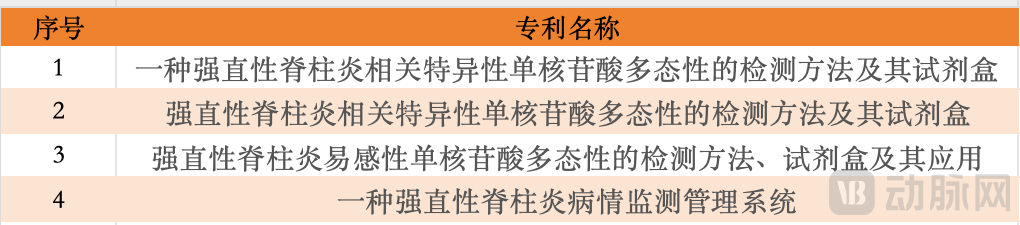
Names of Four Patented Technologies
The core inventor of this batch of patented technologies is the Third Affiliated Hospital of Sun Yat-sen University.Research Team Led by Professor Gu Jieruo, with core members including Du Yuhe and Huang Shangchun. The team has long been dedicated to researching the genetic mechanisms, early diagnosis, and disease management of ankylosing spondylitis, accumulating extensive expertise in the field of precision medicine for rheumatic and immune diseases.
Guo Jieruo:Discipline Leader of Rheumatology and Immunology, Director of the Guangdong Provincial Clinical Medical Research Center for Immune Diseases, Director of the Guangdong Provincial Quality Control Center for Rheumatology and Immunology, and Doctoral Supervisor.Expert with Special Government Allowance for Outstanding Contributions; Recipient of the National Science Fund for Distinguished Young Scholars; Sun Yat-sen University's Inaugural Renowned Physicians;Recipient of the inaugural National Renowned Physician “National Renowned Physician • Outstanding Achievements” Honorary Title; Currently serves as a member of the International Expert Committee on Ankylosing Spondylitis; Chair of the Rheumatology and Immunology Professional Committee of the Guangdong Health Science Popularization Promotion Association; Chair of the Rheumatology and Immunology Professional Committee of the Guangdong Medical Education Association; and Chair of the Rheumatology and Immunology Professional Committee of the Guangdong Female Physicians Association. Has published more than 320 SCI papers in related fields, and has served as editor-in-chief for 32 textbooks, monographs, and popular science books. Her clinical and basic research on spondyloarthritis/ankylosing spondylitis and hyperuricemia/gout has reached international frontiers and leading domestic levels. She is one of the key researchers and developers of the new global classification criteria for spondyloarthritis.
The four patents involved in this instance were undertaken by two institutions respectively:
Among them,Three testing-related patents, including “Detection Method for Ankylosing Spondylitis-Associated Specific Single Nucleotide Polymorphism and Kit Therefor”The assignee is Shenzhen Yin Yan Sci-Tech Innovation Co., Ltd. The company specializes in technology development and commercialization in the life sciences sector, with technical expertise accumulated in genetic testing, R&D of in vitro diagnostic reagents, and bioinformatics analysis. It is committed to bringing cutting-edge scientific research achievements to market and end-user applications.
Another“Patent for a Disease Monitoring and Management System for Ankylosing Spondylitis”shall be transferred to Guangzhou Huishan Investment Center (Limited Partnership). This institution is an investment platform focused on the healthcare sector, with a particular interest in innovative medical technologies, digital health, and medical devices. It aims to promote the industrialization of medically valuable projects through capital and resource integration.
Overall, these four patented technologies form a complete technical loop centered on the precision diagnosis and disease management of ankylosing spondylitis (AS). The first three are genetic testing technologies for early diagnosis and susceptibility assessment, which assist in evaluating individual disease risk or providing auxiliary diagnosis by detecting specific genetic loci. The fourth is a digital system for daily disease monitoring and management, which leverages tools such as mobile apps to facilitate collaborative disease management between patients and physicians, enabling home-based monitoring and standardized treatment.
Ankylosing spondylitis is a chronic inflammatory rheumatic disease that predominantly affects young adults. Its pathological hallmark is abnormal inflammation of the spine and sacroiliac joints. In advanced stages, the disease may lead to spinal fusion, joint ankylosis, and severe disability, with the characteristic “bamboo spine” appearance.
This disease exhibits a significant tendency for familial aggregation.Approximately 90% of the pathogenic causes are associated with intrinsic susceptibility genes. Genetic factors play a pivotal role, yet the complete molecular pathways underlying pathogenesis have not been fully elucidated. This poses significant challenges for precision prevention and early diagnosis.
Currently, there is no specific curative medication available for this disease.Mainstream treatment relies on two classes of medications. One class is nonsteroidal anti-inflammatory drugs (NSAIDs), which alleviate pain and stiffness by inhibiting cyclooxygenase activity and reducing the production of pro-inflammatory mediators. However, their significant side effects, commonly including gastrointestinal mucosal injury and impaired renal function, result in poor long-term tolerability among patients, with symptoms often recurring after discontinuation.
Another class is tumor necrosis factor-alpha (TNF-α) antagonists.It specifically blocks TNF-α, a cytokine that plays a central role in inflammation, thereby effectively suppressing pathological inflammation. Despite its significant efficacy, its high cost and limited insurance coverage impose a heavy financial burden on most patients, resulting in inadequate drug accessibility.
Clinical management of this disease also faces the dual challenge of diagnosis and monitoring. Approximately 20% to 45% of patients initially present only with swelling and pain in peripheral joints, while typical low back pain may not appear until several years later. The insidious onset often leads to misdiagnosis and delayed diagnosis, causing patients to miss the optimal window for intervention.
For diagnosed patients, long-term standardized disease monitoring is crucial. The international community advocates the use ofQuantitative assessment using the Ankylosing Spondylitis Disease Activity Score (ASDAS). This index integrates back pain, morning stiffness, peripheral symptoms, patient global assessment, and C-reactive protein levels.
In reality, patients often remain in a passive state of “seeking medical care only when in pain and ignoring the condition when asymptomatic,” lacking systematic tools for daily monitoring. With fewer than 8,000 rheumatology and immunology specialists in China, the capacity is far insufficient to meet the regular follow-up needs of the vast patient population. Over 80% of patients fail to receive standardized monitoring and treatment adjustments, which constitutes a significant systemic cause of high disability rates.
Addressing the clinical pain points of ankylosing spondylitis, including unclear genetic mechanisms, difficulties in early diagnosis, significant treatment side effects, heavy medication burden, and lack of long-term monitoring, there is an urgent need in the medical community for a precision medicine technology system capable of providing full-process intervention from genetic roots to disease management.
The series of patent technologies proposed for transfer herein constitute a comprehensive solution spanning from molecular diagnostics to disease management, demonstrating significant advancement and clinical advantages.
In the fields of early diagnosis and genetic risk prediction, Professor Gu Jieruo’s three patented gene testing technologies have achieved critical breakthroughs. These patentsPrecise Targeting of Three Specific Single Nucleotide Polymorphism Loci:rs17095830, rs4552569, and rs13198903. The nucleotide types at these loci are highly correlated with disease risk and status. For instance, the presence of G at rs17095830, C at rs4552569, and T at rs13198903 is associated with a significantly elevated risk of disease.
Diagnostic methods and kits developed based on these molecular targets can shift the diagnostic window earlier. They provide objective molecular evidence for early auxiliary diagnosis and risk warning, thereby gaining valuable time for clinical intervention, even before patients develop irreversible imaging features such as "bamboo spine" or when they present only with atypical symptoms like peripheral joint pain.
In addressing the management challenge of long-term standardized monitoring,“Ankylosing Spondylitis Disease Monitoring and Management System” Patent Establishes an Innovative Digital Management Ecosystem. This system transforms the internationally recognized disease activity score for ankylosing spondylitis into an actionable home monitoring tool.
This score comprehensively quantifies patients' subjective perceptions and objective inflammatory markers using a specific formula:
Severity of Low Back Pain
Duration of Morning Stiffness
Overall Patient Evaluation
Peripheral Pain/Swelling Severity
C-reactive protein level
The system guides patients to regularly input parameters via the patient client, automatically completing calculations, storage, and comparisons. Its core advantage lies inEstablish a Dynamic and Continuous Evaluation System:Automatically generate personalized health reminders or management recommendations based on the score range, and create trend charts from historical scores to visually illustrate disease progression.
This not only partially substitutes for the basic follow-up work of specialists, alleviating the pressure caused by the shortage of rheumatologists in China, but also transforms the passive model of “seeking medical attention only when in pain and ignoring it when pain-free,”Transition to a Proactive Management Model of “Regular Monitoring, Dynamic Assessment, and Timely Early Warning”, ensuring that treatment plans are adjusted in a timely manner based on objective data, which is expected to significantly reduce the incidence of severe complications such as joint disability.
In summary, this patented technology portfolio of “genetic testing–digital management” establishes a complete closed loop spanning risk prediction, early diagnosis, and long-term disease course management. By directly addressing clinical pain points and integrating molecular biology discoveries with intelligent information technologies, it drives a profound transformation in diagnostic and therapeutic paradigms—from vague, passive, and experience-based approaches to precise, proactive, and data-driven models—demonstrating substantial clinical value and promising application prospects.
Currently, the systemic clinical challenges in the diagnosis and treatment of ankylosing spondylitis—namely, delayed early diagnosis and inadequate long-term management—not only underscore the breakthrough value of the patented technology being transferred but also drive global biopharmaceutical companies to intensify their R&D investments, competing to explore new therapeutic pathways and solutions. Amid this wave of innovation, in addition to the precise closed-loop system of “from genetic warning to digital management” established by this series of patents, pharmaceutical giants are focusing their R&D efforts on core immune-mediated inflammatory pathways, creating a fiercely competitive market landscape.
In the international market,NovartisThe core product in the field of ankylosing spondylitis treatment isSecukinumab(Generic name: Secukinumab, brand name: Cosentyx®).
From the perspective of its mechanism of action, the core target of secukinumab is interleukin-17A (IL-17A). Studies have confirmed that,IL-17A Is a Key Mediator in the Pathological Progression of Ankylosing Spondylitis: On one hand, as a core mediator of the inflammatory cascade, it promotes the onset and exacerbation of enthesitis (a hallmark pathological feature of AS, characterized by recurrent inflammation at the sites where spinal ligaments attach to bone), thereby triggering typical symptoms such as low back pain, morning stiffness, and fatigue.
On the other hand, IL-17A is also involved in bone remodeling, driving pathological new bone formation. In patients with ankylosing spondylitis (AS), enthesitis stimulates ligament ossification and osteophyte formation, ultimately leading to spinal fusion and ankylosis, with IL-17A serving as a key “driver” of this “new bone formation” process. As the world’s first and only fully human IL-17A inhibitor, secukinumab specifically binds to and blocks IL-17A from any source, cutting off inflammatory signaling at its origin. This not only effectively controls enthesitis for rapid symptom relief but also inhibits new bone formation to prevent the progression of structural spinal damage, thereby achieving multi-level regulation of the pathological process in AS.
in the domestic market,Janssen Pharmaceutical Ltd. (Xi'an)It is an important subsidiary of Johnson & Johnson in China, focusing on the research, development, and commercialization of drugs in the fields of immunology and inflammatory diseases. In the field of ankylosing spondylitis treatment, Janssen Pharmaceuticals leverages its global R&D advantages.
Currently, the company’s key investigational pipeline in the field of ankylosing spondylitis (AS) treatment includes biologics targeting the interleukin-23 (IL-23) pathway, such as guselkumab. Guselkumab is a fully human monoclonal antibody that specifically inhibits the IL-23 cytokine, thereby modulating inflammatory responses. IL-23 plays a pivotal role in the pathogenesis of spondyloarthritis, and therapies targeting this pathway are designed to alleviate symptoms and slow disease progression in patients with AS.
GuselkumabThe drug has entered the clinical development stage, with multiple Phase II and Phase III clinical trials underway in China and globally for the indication of axial spondyloarthritis, aiming to evaluate its efficacy, safety, and long-term benefits. In addition, the company is exploring other potential targets, such as next-generation inhibitors of tumor necrosis factor-alpha (TNF-α) and novel small-molecule drugs, to expand treatment options for ankylosing spondylitis (AS).
Hengrui MedicineR&D efforts in the field of ankylosing spondylitis (AS) are primarily focused on the target of small-molecule JAK inhibitors. The core product in development is Ivarmacitinib. Ivarmacitinib is a highly selective JAK1 inhibitor administered orally, designed to inhibit cytokine signaling pathways associated with AS inflammation. The drug is currently in Phase III clinical trials for the indication of active ankylosing spondylitis.
In 2025, its independently developedFunakizhumab Injection(Trade name: Andajing®) The indication “for adult patients with active ankylosing spondylitis (AS) who have had an inadequate response to conventional therapy” has been added, marking a significant breakthrough for this China-developed recombinant humanized monoclonal antibody against IL-17A in the treatment of AS.
Funakizumab, as a humanized IgG1 anti-IL-17A monoclonal antibody, exhibits high affinity for IL-17A. It selectively binds to IL-17A, thereby blocking its interaction with receptors and inhibiting downstream inflammatory signaling pathways to achieve precise targeted therapy.
Furthermore, this drug offers advantages in terms of administration convenience, requiring only three injections during the intensive treatment phase and 14 injections annually, thereby significantly improving patient adherence. Notably, funakizumab was previously approved in August 2024 for the treatment of moderate-to-severe plaque psoriasis, breaking the long-standing monopoly held by similar imported drugs.
Currently, in addition to the indications for AS and psoriasis, Phase III clinical trials are also underway for psoriatic arthritis and moderate-to-severe chronic plaque psoriasis in children and adolescents, continuously expanding its application boundaries in the field of autoimmune diseases.
Currently, the clinical challenges facing the diagnosis and treatment of ankylosing spondylitis clearly indicate the core direction for future technological development. Against this backdrop, comprehensive innovation—from enhancing early diagnostic capabilities to optimizing long-term management models—has become a focal point of industry exploration. Examining the global R&D landscape, in addition to the solutions represented by the patented technologies being transferred, research in this field is exhibiting diverse evolutionary pathways, offering broader possibilities for future therapeutic options.