

HepaCure, China's First Bioartificial Liver, Demonstrates Improved Liver and Coagulation Function in Phase I Trial for ACLF
On November 10, Shanghai Weizhizhuo Biotechnology Co., Ltd. (hereinafter referred to as “Weizhizhuo”) was invited to present oral data from its Phase I clinical trial of the novel bioartificial liver (HepaCure) in subjects with acute-on-chronic liver failure at the 2025 Annual Meeting of the American Association for the Study of Liver Diseases (AASLD), and received the AASLD 2025 “Young Investigator Award in Clinical/Translational Science.”
In this 8-month, multicenter, open-label Phase I clinical trial, HepaCure met expectations for both primary and secondary endpoints:The treatment success rate among subjects was 100%;All treatment-emergent adverse events (TEAEs) were Grade <3 according to the CTCAE criteria; no serious adverse events (SAEs) related to HepaCure were observed. No device defects leading to discontinuation of treatment occurred throughout the trial.The subjects overall demonstrated a trend of improved liver function and coagulation function.
The results indicate that HepaCure demonstrates favorable safety and tolerability, with potential benefits in improving liver function, positioning it as a promising novel therapeutic approach for acute-on-chronic liver failure.This is also China’s first clinical trial of a bioartificial liver, which has now successfully entered Phase II clinical trials.
1CAS Technology Transfer: The World’s First Direct Transdifferentiation Technology for Generating Functional Hepatocytes
Globally, approximately 2 million people die from liver disease each year, accounting for 4% of all deaths, with the vast majority succumbing to chronic liver disease and its complications. China bears a heavy burden of liver disease, with an estimated 340 to 480 million patients suffering from chronic liver conditions. Among these, there are more than 500,000 new cases of liver failure annually, with a 90-day mortality rate of approximately 50%. Liver failure is the most rapidly progressive, most severe, and poorest-prognosis clinical syndrome among common liver diseases.
In clinical practice, the management of acute-on-chronic liver failure (ACLF) primarily relies on comprehensive medical therapy, supplemented when necessary by non-bioartificial liver support systems and liver transplantation. However, due to constraints such as scarcity of donor livers, post-transplant immune rejection, and prohibitive medical costs, only approximately 5,000 to 6,000 patients per year are able to receive liver transplantation. Consequently, a large number of patients unfortunately die while awaiting suitable donor organs.
In terms of therapeutic approaches, artificial liver technology temporarily substitutes for partial functions of the failing liver through extracorporeal dialysis, providing hepatic support to facilitate the recovery of the patient’s own liver. This buys patients valuable survival time and waiting period for liver transplantation, ultimately helping them achieve liver regeneration.
Currently, non-bioartificial liver systems have been widely used in clinical practice and have been proven to effectively remove harmful substances, but they lack the function of protein synthesis. In contrast, bioartificial liver systems construct a liver function support system that more closely approximates physiological conditions. Early bioartificial liver systems were limited by the source of hepatocytes, predominantly utilizing animal hepatocytes or human hepatoma cells as seed cells.
HepaCure, a novel bioartificial liver independently developed by Weizhizhuo Biotechnology, is a plasma bio-purification column system centered on human-induced hepatocyte-like cells (hiHep).
Functional hepatocytes (hiHep cells) provide biosynthetic and metabolic detoxification capabilities. As plasma flows through the hiHep cells, various endogenous and exogenous toxins are cleared, and liver-specific proteins (such as ALB, AAT, TRF, etc.) are secreted, thereby reducing inflammatory responses, decreasing cell death, and promoting cellular regeneration.
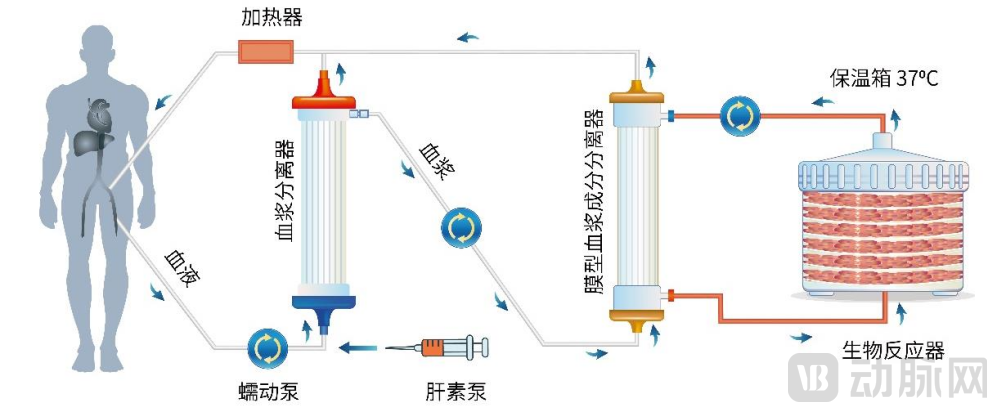
Conceptual Diagram of the Plasma Bio-purification Column System
The core of the successful industrialization of bioartificial livers lies in how to obtainSafe, effective, and scalable seed cells.
The technological foundation of Weizhizhuo is a celebrated scientific breakthrough—the hepatocyte transdifferentiation technology, which was honored as one of the “Top Ten Scientific Advances in China” in 2011. At the core of this milestone achievement is the groundbreaking work published by founder Professor Hui Lijian in Nature, which demonstrated for the first time the direct reprogramming of mouse fibroblasts into functional hepatocytes, thereby resolving the critical challenge of hepatocyte sourcing.
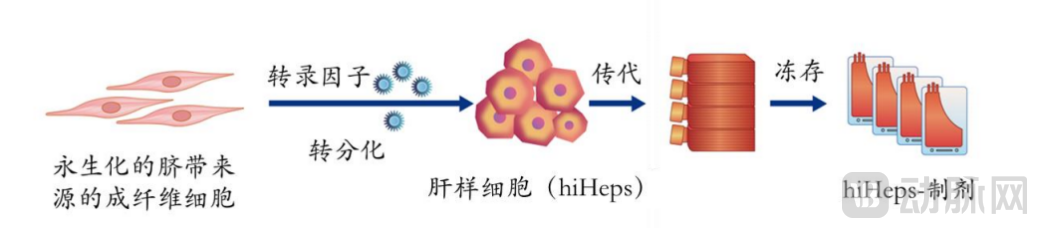
hiHep Cell Preparation Flowchart
In 2014, Professor Huili Jian’s team achieved the first direct transdifferentiation of human fibroblasts into human-induced hepatocyte-like cells (hiHep cells). These cells simultaneously exhibit expression of multiple liver-specific proteins and metabolic detoxification functions, and can be expanded on a large scale.“Derivation via direct transdifferentiation from somatic cells ensures a fully human origin and safety; stable hepatocyte functionality enables effective application; and large-scale expansion achieves the cell quantities required for clinical therapy, laying the foundation for product commercialization.”Dr. Pan Guoyu, Chairman of Weizhizhuo Bio, mentioned in an interview with VCBeat.
2100% Treatment Success Rate Points to Urgent Clinical Need for Liver Failure Therapy
The indication for this Phase I clinical trial—acute-on-chronic liver failure (ACLF)—is an acute decompensation of liver function occurring on the basis of chronic liver disease. It is associated with high short-term mortality and represents one of the leading causes of death among patients with chronic liver disease. Previous studies have reported 28-day mortality rates ranging from 24.8% to 58.3%.
Dr. Pan Guoyu emphasized, “I hope the industry will not view bioartificial livers as something overly unique,It is a drug-device combination cell therapy product, and it is a First-in-Class novel drug that follows the approval standards for innovative drugs."The challenges encountered in the development of innovative drugs are part of the team’s journey; however, there may be differences in focus during clinical trial design and review processes, depending on the characteristics of the product."
In the multicenter, open-label Phase I clinical trial, primary endpoint data showed that subjectsTreatment Completion Success Rate: 100%, HepaCure treatment was safe and well-tolerated; all treatment-emergent adverse events (TEAEs) were graded < Grade 3 according to the Common Terminology Criteria for Adverse Events (CTCAE), and no serious adverse events (SAEs) related to HepaCure were observed; no device deficiencies leading to treatment discontinuation occurred throughout the trial. Regarding secondary endpoints, subjects overall demonstratedImproved liver function and a trend toward improved coagulation function.Specifically, 14 days after treatment, AST, ALT, and TBIL levels decreased, while PTA and ALB levels increased.
As China’s first bioartificial liver clinical trial, Weizhizhuo is currently conducting Phase II clinical trials to further expand the exploratory and confirmatory clinical data for HepaCure.
Meanwhile, Weizhizhuo is also actively exploring new indications for HepaCure in the postoperative rehabilitation of liver cancer patients undergoing major hepatectomy. Investigator-Initiated Trials (IITs) have demonstrated favorable safety profiles, with improvements in liver function and promotion of liver regeneration.
3Clinical Applications of In Vitro Hepatocyte Expansion Technology: In Vivo Hepatocyte Transplantation and In Vitro Drug Screening
In 2018, Professor Huijian Wei’s team established a novel theory and culture system (using specialized media) for the in vitro expansion of human hepatocytes, thereby generating proliferating human primary hepatocytes (ProliHH) and achieving large-scale in vitro expansion of human primary hepatocytes by more than 10,000-fold.
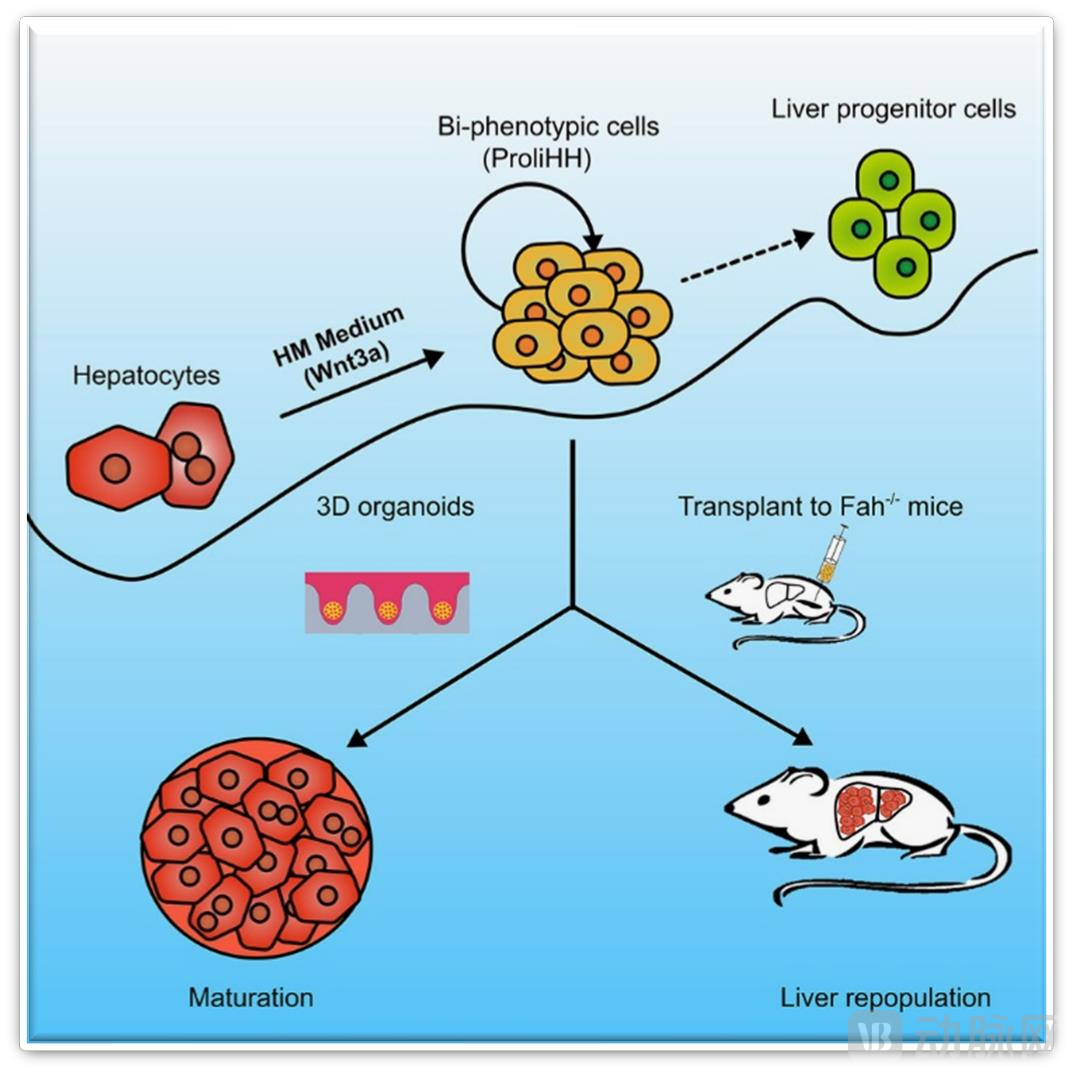
This technology was published in *Cell Stem Cell* in 2018.Animal experimental data indicate that transplanted ProliHH cells exhibit therapeutic effects comparable to those of primary hepatocytes in reducing liver injury and improving survival rates in mice.
In July 2025, Professor Huijian Wei’s team published a paper in *Nature Protocols* detailing a comprehensive experimental protocol: inducing primary human hepatocytes (PHHs) into proliferative human hepatocytes (ProliHHs), achieving their large-scale expansion through an optimized culture medium system, and exploring their potential in disease modeling and therapy by combining three-dimensional culture with CRISPR gene editing.
Studies have shown that transplanting ProliHHs into FRG immunodeficient mice via intrasplenic injection simulates hepatocyte replacement therapy.Detection at 5 months post-transplantation showed stable expression of human GAPDH by the transplanted cells in mouse livers, demonstrating their robust in vivo engraftment and long-term survival, thereby validating their potential for application in cell therapy.
This suggests that the industrialization of ProliHH technology holds promise for application in hepatocyte transplantation for the treatment of severe liver diseases, including liver cirrhosis and inherited metabolic liver disorders. Fundamentally, Weizhizhuo’s proprietary ProliHH technology enables large-scale in vitro expansion, addressing the challenge of insufficient hepatocyte supply while delivering superior batch-to-batch stability and consistency. Currently, related pipeline programs are undergoing investigator-initiated trials (IITs).
On another level, primary hepatocytes possess intact cellular characteristics and physiological levels of enzymes and cofactors, harboring all metabolic pathways present in the liver. Consequently, they are widely regarded as the gold standard for constructing in vitro liver models and are favored by researchers in studies of drug-drug interactions, drug metabolism, and drug toxicity.ProliHH cells from different donor sources can rapidly mature in vitro, exhibiting hepatic gene expression and functional profiles similar to those of human primary hepatocytes, making them suitable for basic research and various drug development applications.In response, Weizhi Zhuo is expanding the application of ProliHH in R&D services such as drug screening.
Dr. Pan Guoyu stated, “If we place liver cancer cells into a microfluidic system, they cannot self-assemble into multilayered vascular structures. However, by applyingEx vivo-expanded (e.g., ProliHH) or in vivo-induced neonatal hepatocytes, we can observe that the cells are heterogeneous in all directions, with significant polarization evident on both the vascular and biliary surfaces, which indicates that theirCellular spheroids with certain biological functions have been formed through self-assembly, representing the most basic form of organoids.Furthermore, through approaches such as microfluidics and multilayer cell sheets, they can be assembled into more complex structures and physiological systems.
In 2007, Dr. Pan Guoyu joined Novartis, where he worked on hepatic drug metabolism and safety assessment. In 2008, he was appointed Vice Chair of the Novartis Global Drug Transporter Committee and Head of the Translational Mechanisms Laboratory. He noted that the successful implementation of technologies such as high-throughput screening and organoids hinges on accurately identifying the real-world needs of frontline R&D personnel and translating these insights into result-oriented solutions, thereby delivering tangible practical value to the industry.
In the foreseeable future, Weizhizhuo will continue to explore.Bioengineered Organ Transplantation, In Vivo Hepatocyte InductionDirection. Previously, Professor Hui Lijian stated in an interview that the next step in their research direction is to efficiently induce a sufficient number of new liver cells directly within the bodies of patients with liver injury.