

Sun Yat-sen University Licenses Portfolio of Four RNA Editing Patents for RMB 399,560 to Advance Next-Generation Genetic Therapies
Recently, Sun Yat-sen University released a public notice on the transformation of scientific and technological achievements, proposing to transfer via listed trading through the Guangzhou Property Rights Exchange.Four RNA Editing-Related Patentsthe equity interest held by Zhongda, transferred to the co-owners, with a transfer amount ofRMB 399,560。
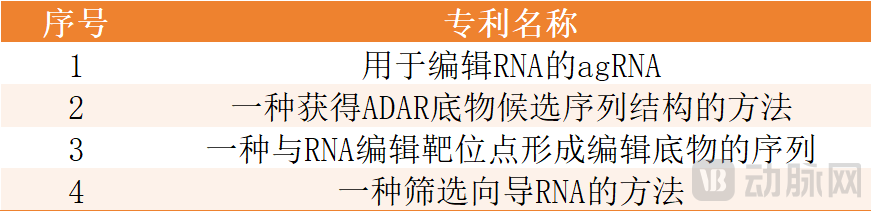 Names of Four RNA Editing Patents
The primary inventors of the patent undergoing technology transfer are:Research Team of Sun Yat-sen University and Partner Enterprise Teams. The collaborative teams from both parties possess extensive research expertise in the fields of RNA editing and gene therapy, with a long-standing commitment to developing novel RNA editing systems and their therapeutic applications. The teams have achieved multiple innovative breakthroughs in nucleic acid design, optimization of editing tools, and high-throughput screening methodologies.
The assignee of this patented technology is an innovative biopharmaceutical company focused on the research and development of small nucleic acid drugs. Currently in the early stages of R&D and platform construction, the company is actively building its patent pool for RNA editing technologies and advancing preclinical studies of its core pipeline.
In terms of its product pipeline, the assignee company is leveraging its RNA editing platform to develop multiple innovative therapeutic solutions aimed at addressing unmet clinical needs in areas such as cardiovascular diseases, neurodegenerative disorders, and anti-aging.
The core application scenario targeted by this patent is the use of RNA editing technology to treat a broad spectrum of genetic disorders caused by specific point mutations.Such diseases typically arise from single-base errors in the gene sequence, leading to protein dysfunction or deficiency. Their applications cover conditions such as cystic fibrosis, Duchenne muscular dystrophy, and hereditary transthyretin amyloidosis.
In recent years, gene editing technology has brought hope for the radical cure of genetic diseases, among whichCRISPR-Cas System-Based DNA Editing TechnologyParticularly striking. However, this DNA editing method itself has insurmountable flaws. It achieves editing by making permanent cuts to the genome, and these changes are irreversible. Once off-target editing occurs at non-target sites, it may cause irreparable genomic damage, such as carcinogenic risks.
Meanwhile, exogenous Cas proteins may trigger immune responses in the human body, and the efficient delivery of the bulky protein-RNA complex into the nucleus poses significant technical challenges. These safety concerns severely limit its widespread clinical application. Existing clinical treatment options have notable limitations. Traditional small-molecule drugs or protein replacement therapies often only alleviate symptoms and cannot fundamentally correct errors in the genetic code, representing a palliative rather than curative strategy.
Compared to DNA editing, RNA editing corrects RNA sequences without altering the genome, offering significant safety advantages due to its reversibility and controllability. However, existing RNA editing methods mentioned in the background of the patent, such as RESTORE or LEAPER, have fundamental flaws in their design strategies. They design guide RNAs to form nearly perfectly paired double-stranded structures with target sites, which is not the optimal working environment for endogenous human ADAR proteins (the key enzymes responsible for catalyzing A-to-I editing). This results in these methods being effective only for a few “UAN” motifs that are strongly preferred by ADAR naturally, while exhibiting extremely low editing efficiency for other types of motifs (such as AAN, CAN, GAN) that may be involved in the majority of genetic diseases. Consequently, they fail to reach the levels required for therapeutic efficacy, greatly limiting their clinical application scope.
This invention is preciselyTo overcome the core bottleneck of low efficiency in existing RNA editing tools,By innovatively mining vast amounts of human data to identify the most preferred and efficient substrate structures for ADAR proteins in their native environment, and subsequently designing guide RNAs based on these findings, this invention successfully circumvents the pitfalls of traditional manual design strategies. It provides a powerful core tool and platform for developing next-generation RNA therapeutics capable of efficiently and precisely treating various genetic disorders caused by point mutations.
Against the backdrop of existing targeted RNA editing technologies, particularly single-molecule systems, which are plagued by crude guide RNA design, low editing efficiency, and a heavy reliance on specific motifs, this invention provides a novel solution. Its core advancements lie in, it abandons the traditional mindset of “manual design and perfect pairing,”Instead, we drew inspiration from natural double-stranded RNA structures that have undergone hundreds of millions of years of evolution and are efficiently edited by ADAR proteins, thereby pioneering a data-driven biomimetic design approach.
This invention systematically analyzes large-scale transcriptomic databases, such as GTEx and RADAR, to precisely identify high-editing-level sites located within natural double-stranded structures (e.g., inverted repeat Alu elements, lncRNAs) from a vast array of endogenous human RNA editing events, therebyConstructed a vast "ADAR Preference Substrate Structure Library."This means that every candidate structure we obtain is a “template” on which the ADAR protein has genuinely and efficiently acted within the human body, fundamentally ensuring its biological activity and efficacy.
Furthermore, the invention implements a motif-based classification and optimization strategy, achieving "motif-specific intervention."ADAR proteins exhibit substantial variability in editing efficiency across different sequence contexts (i.e., motifs, such as UAG, AAC, GAA, etc.). Conventional methods are effective only for a limited number of motifs, such as UAN. In contrast, the present invention pioneers the refined classification of highly efficient substrate structures identified through screening, based on the triplet motif (NAN) at their editing sites.
Building on this, motifs within each category are further ranked by editing efficiency, thereby enabling the identification of a set of empirically validated, high-efficiency structural references matched to any given target motif. Experimental data robustly demonstrate the power of this strategy: even for the traditionally refractory GAG motif, employing the preferred structures identified through simulation in accordance with the present invention achieves a dramatic increase in editing levels, from nearly zero to as high as 40%.
More importantly,By incorporating the aforementioned preferred structural features into the design of guide RNA (referred to as mcRNA in this text), this invention significantly enhances editing efficiency and specificity.Rather than simply replicating the entire sequence, this approach abstracts and mimics its key structural features—such as specific base mismatches (M), wobble pairs (W), bulges, and internal loops—and integrates them into regions complementary to the target sequence. This design, which captures both the form and function of the native structure, enables the guide RNA not only to recruit endogenous ADAR proteins more efficiently but also to direct their precise action onto the target adenosine site.
The experimental results confirmed this: mcRNA designed based on the structural framework of the present invention exhibited significantly higher target-site editing levels than structureless controls, regardless of the specific motif sites within the APC or GAPDH genes. Furthermore, in most cases, it effectively constrained editing activity to the target site, thereby reducing off-target editing in upstream and downstream regions.
Ultimately, all these advantages converge on one point:This invention lays a solid foundation for the development of highly efficient RNA editing therapies with broad applicability. It overcomes the reliance of existing technologies on “friendly” motifs, significantly expanding the range of disease-associated sites amenable to targeted editing.
Meanwhile, as this approach relies on recruiting endogenous ADAR proteins and does not require the introduction of exogenous editing enzymes, it avoids concerns regarding immunogenicity and long-term safety, demonstrating significant potential for clinical translation and drug developability.
Currently, although targeted RNA editing technology based on endogenous ADAR demonstrates significant therapeutic potential, it continues to face core bottlenecks, including low editing efficiency, a heavy reliance of target design on specific “favorable” motifs, and the difficulty of achieving precise regulation within the complex human physiological environment. This global technical challenge has prompted biotechnology companies both in China and abroad to actively strategize and explore diverse, distinctive solutions.
Wave Life Sciencesis one of the most prominent companies in this field. Its developed WVE-006 is a short, chemically modified oligonucleotide (AIMer) that precisely guides intracellular adenosine deaminase acting on RNA (ADAR) to perform A-to-I RNA editing on mismatched bases in specific mRNA, thereby correcting genetic errors that lead to protein dysfunction. WVE-006 is an innovative RNA-editing oligonucleotide therapy administered via subcutaneous injection using a GalNAc delivery vehicle. Its exclusive global license is held byGlaxoSmithKlineHold.
AIRNAis an emerging star in the field, with its core editing platform named RESTORE. This platform optimizes the delivery of chemical substances, sequences, and oligonucleotides, ensuring precise binding to target RNA sites upon cellular delivery, aiming to achieve precise, efficient, and safe RNA editing. AIRNA has cumulatively secured$90 millionof financing, with the first round led by a well-known venture capital firmARCH VentureLead investor.
ProQR Therapeutics, a company from the Netherlands/United States, is also focused on clinical drug research targeting endogenous ADAR. In 2022, the company targetedLeber Congenital Amaurosis Type 10The Phase II clinical trial unfortunately failed, causing the company’s stock price to plummet by 75% at one point.
However, just last month, the company announced more good news, revealing its development based on the Axiomer™ RNA editing technology platform for the treatment ofCongenital Biliary Atresia and Primary Sclerosing Cholangitisthe investigational drug AX-0810, which has received approval from EU regulatory authoritiesApproval of Clinical Trial Application, and is about to be inThe Netherlands LaunchesPhase I clinical study in healthy volunteers. Perhaps this company is poised for new development opportunities.
Turning our attention to the domestic market, competition is equally fierce. As the assignee of this patent, the company’s pipeline directly demonstrates the translational outcomes of the patented technology. Its independently developed candidate drug, RC001, targeting specific neurological disorders, has successfully obtained FDAOrphan Drug Designation.
EdiGeneWe have established a therapeutic platform centered on gene-editing technology, encompassing a range of advanced therapies, including ex vivo therapies based on the hematopoietic stem cell platform, ex vivo therapies using the universal CAR-T platform, and in vivo therapies leveraging the RNA base-editing platform. In particular, the in vivo therapy based on the RNA base-editing platform utilizes the innovative LEAPER™ RNA single-base editing technology and is dedicated to developing treatments forOphthalmic diseases, neuromuscular disorders, and other hereditary conditionsPrecision Treatment Plans for Non-Genetic Diseases.
Huida GeneFounded in 2018 by Yang Hui, Yao Xuan, and others, the company is dedicated to the discovery, design, and development of gene-editing tools and gene therapies, with the aim of reshaping the future of genomic medicine. Its long-term goal is to treat genetic disorders and chronic diseases that threaten human health through gene-editing technologies.
The company has built a comprehensive CRISPR toolkit encompassing technologies such as DNA cleavage, RNA interference, base editing, and epigenetic regulation. It can select appropriate technical pathways based on the specific characteristics of different diseases to advance the applied research of multiple gene-editing therapies. In this process,Ophthalmic Drug HG004Successfully completed the international multi-center Phase I/II clinical trialFirst Subject Dosed。
RayGeneEstablished in 2021, focusing on based onNon-viral vectorsthe research and development, industrialization, and commercialization of in vivo gene editing therapeutics. The company has established an industry-grade, end-to-end in vivo gene editing technology platform and successfully developed a series of core patented technologies for gene editing and delivery, including those that have obtainedU.S. Patented Base Editors。
In August 2025, RayGene successfully completedSeries AFinancing, amounting to$75 million,Kangzhethereby becoming the controlling shareholder.
Overall, research on ADAR-mediated RNA editing solutions worldwide is characterized by significant diversification of targets and broadening of indications. Global giants and emerging domestic players are advancing in tandem; although their technical approaches all center on recruiting endogenous ADAR enzymes, they have developed distinct, differentiated strategies in terms of specific disease areas, target selection, and delivery platforms.