

Navigating the Value Battle: Chuanglian Medical's Strategic Transformation Amid China's 60% Dental Implant Price Drop Post-Procurement Reform
As the price of a single dental implant falls from the high of over 10,000 yuan to the range of several thousand yuan, China’s oral healthcare industry is undergoing profound transformation three years after the implementation of centralized procurement policies.Amid pricing pressures, companies across the dental implant industry chain are repositioning themselves.
“Following the implementation of centralized procurement, the most urgent need for dental institutions has shifted from mere ‘cost reduction’ to ‘customer acquisition.’” Zhang Jie, CEO of Chuanglian Medical, summarized the profound changes in the industry over the three years since the introduction of centralized procurement for dental implants.
Shanghai Chuanglian Medical Device Co., Ltd. (hereinafter referred to as “Chuanglian Medical”), founded by him, is a dental high-value consumables supply chain company dedicated to serving dental medical institutions. Established in 2020 and located in the Lingang Kangqiao Business Oasis in Pudong, Shanghai, the company serves a client base that is 99% composed of private medical institutions, predominantly leading nationwide chains in China. Amid the impact of centralized procurement, Chuanglian Medical’s transformation path exemplifies the innovative explorations undertaken by many participants in the current dental implant industry chain when facing challenges.
1The VBP Watershed: Dental Implants Enter an Era of Stock Competition and Efficiency Supremacy
In 2023, China’s oral healthcare industry reached a turning point. The full implementation of the “Notice on Launching Special Governance over Service Fees and Consumable Prices for Dental Implant Services” marked the formal entry of the dental implant sector into the “volume-based procurement era.”
According to data released by the National Healthcare Security Administration, the overall cost of a single dental implant has dropped from approximately RMB 15,000 to around RMB 6,000, representing a decrease of about 60%. This sharp decline in prices has triggered a drastic restructuring of the industry chain.
Dental implants have long been regarded as a major revenue driver for dental hospitals, and the significant price reductions have directly impacted the profitability of medical institutions. Data from the Yiyai Stomatology Data and Policy Center shows that between 2023 and 2024, more than 10,000 dental medical institutions closed nationwide in China, with small and medium-sized private institutions with weaker risk resistance accounting for a large proportion.
Meanwhile, the upstream dental implant market is also undergoing a price reshaping. Data from Zheshang Securities Research Institute shows that the median procurement price for high-end implants from brands such as Straumann and Nobel Biocare has dropped from approximately RMB 5,000 to around RMB 1,850; mainstream South Korean products, including those from Osstem and Dentium, have seen their median procurement prices fall from roughly RMB 1,500 to about RMB 770. These changes are prompting industry participants to rethink their market positioning and development strategies.
Faced with profit pressures brought by centralized procurement, supply chain enterprises of different scales have demonstrated markedly divergent response strategies. Some large distribution companies with state-owned enterprise backgrounds have leveraged their financial advantages to maintain market share by extending payment terms and expanding credit lines; vertically integrated firms have accelerated their acquisition of downstream outpatient clinics in an attempt to create a closed-loop industry chain; meanwhile, many small and medium-sized distributors, squeezed by limited brand resources and heightened financial pressure, have had no choice but to scale back their business operations or seek opportunities for mergers and acquisitions.
This round of industry consolidation has had a particularly direct impact on Chuanglian Medical. Zhang Jie illustrated this with a set of straightforward figures: in 2022, the company’s dental implant sales volume reached 200,000 units, accounting for 3% of the total national consumption of 6 million units; by 2024, although total national market consumption rose to 10 million units, the company’s sales volume adjusted to 150,000 units, and its market share dropped to 1.5%.
“This is not a market contraction, but an inevitable outcome of increased industry consolidation,” said Zhang Jie. Centralized procurement has accelerated industry differentiation, forcing small and medium-sized supply chain enterprises out of the market due to their single-brand portfolios and weak service capabilities. Meanwhile, top-tier chain clients focused on by Chuanglian Medical—such as Taikang Bybo, Meiao Dental, and Dingzhi Dental—have raised higher demands on the supply chain during this period of industry transformation—Not only is it necessary to achieve cost reduction through scaling, but systematic adaptation is even more critical.. This escalation in demand has also compelled the company to accelerate its transformation, leveraging a more efficient service system to address the new competitive landscape.
2From Product Distribution to Value Breakthrough via “Product + Supply Chain + Service”
In response to market shifts driven by centralized procurement policies, Chuanglian Medical has implemented a series of strategic adjustments: expanding from single-brand distribution to a multi-brand product portfolio, extending beyond mere consumables supply to offer comprehensive solutions for dental implantation and restoration, and optimizing inventory management processes through digital management systems. These initiatives have facilitated its transformation from a “consumables supplier” to a “comprehensive value-added service provider.”
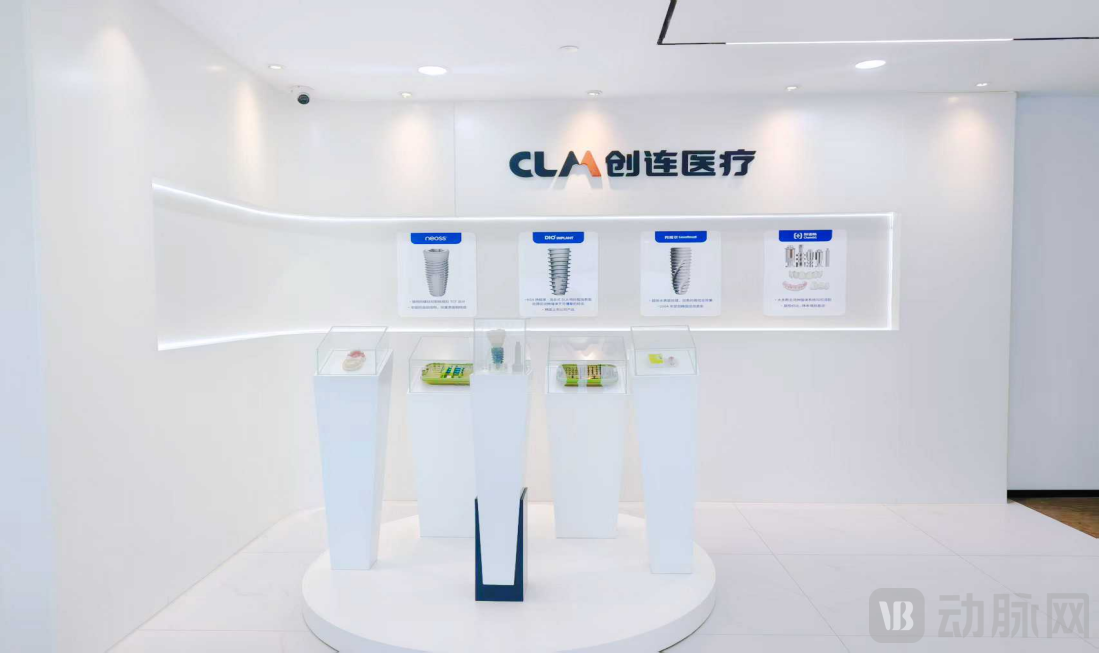
Actual View of the Chuanglian Medical Product Display Area Source: Chuanglian Medical
Product Portfolio: 8 Major Brand Systems, Precisely Tailored to Stratified Needs
Prior to the implementation of the centralized procurement policy, Chuanglian Medical primarily distributed products under the South Korean brand Dentium. As the market environment evolved, the company gradually established a product distribution portfolio encompassing eight brands, including Chinese-made, South Korean, and European brands.
In the product portfolio, Korean brands maintain a high share of sales volume. Among them, the DIO brand enjoys strong market acceptance due to its price advantage within the Korean segment and its backing by a publicly listed company. Regarding European brands, the company has established a partnership with Sweden’s Nobel Biocare to meet certain customers’ demand for high-end products. In the domestic brand sector, the company has partnered with Shenzhen Anta; this product obtained its registration certificate in 2018 and has received favorable clinical feedback.
Regarding the development of domestically produced alternatives, the company is focusing on two directions: first, continuing to identify promising domestic brands; and second, monitoring the trend of international brands establishing production bases in China. Leading international brands such as Straumann and Nobel Biocare have already set up factories in China, introducing complete production lines and core technologies. “These products maintain quality consistent with that of the original manufacturers, potentially at a lower cost, making them an important option for our future procurement.”
Supply Chain Management: Digital VMI Addresses Operational Pain Points
As private chain institutions raise their requirements for cost control, large-scale organizations are increasingly adopting a consignment-based cooperation model similar to that of public hospitals. This model requires supply chain enterprises to possess precise inventory management capabilities to avoid inventory imbalances across various stores.
Chuanglian Medical has enhanced supply chain operational efficiency by upgrading its Vendor-Managed Inventory (VMI) management system. This system integrates inventory data from all stores within the chain, establishes safety stock alert mechanisms, and automatically triggers replenishment processes when inventory levels fall below predefined thresholds. The company has established warehousing centers in key regions to stock commonly used product models, enabling rapid delivery through coordinated stocking arrangements with suppliers.
Service Expansion: Building an Integrated Implant and Prosthetic Restoration Service
In 2023, Chuanglian Medical extended its service scope into the restorative dentistry sector by establishing its subsidiary, Chuangshiji Medical, thereby forming an integrated “implantation + restoration” service model.
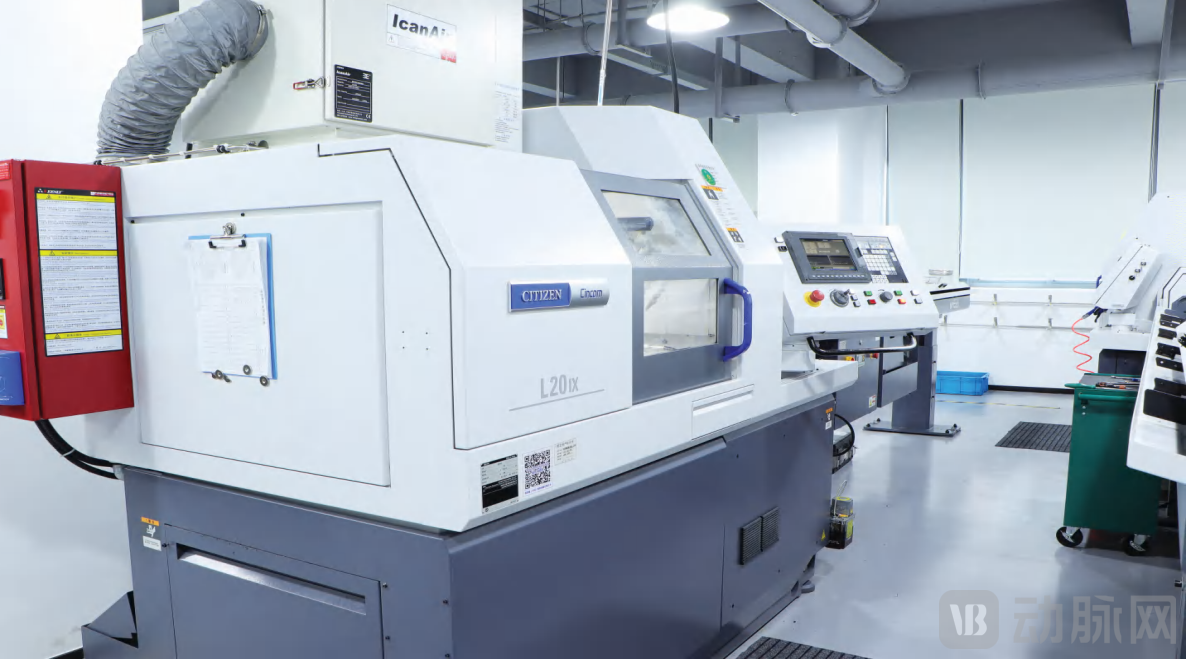
Real View of Chuangshiji Medical's Factory Building Source: Chuanglian Medical
During the implant restoration process, the abutment serves as a critical component connecting the dental implant and the crown, with its quality directly impacting the restorative outcome. Chuangshiji Medical has obtained the Class III medical device registration certificate for customized abutments, enabling the company to tailor abutment products to individual patient needs and provide accompanying crown services.
This integrated service model bridges the supply of implant consumables with the production of restorative products, helping to optimize clinical workflows. Currently, the company produces approximately 12,000 dental crowns per month, most of which require matching custom abutments, with its business primarily covering the Jiangsu, Zhejiang, and Shanghai regions.
This series of transformative initiatives reflects Chuanglian Medical’s profound insight into industry development trends:In a market environment characterized by price transparency, the core competitiveness of supply chain enterprises is shifting from “what products they have” to “what value they can deliver.”By building a multi-tiered service system, Chuanglian Medical is redefining the value boundaries of private dental supply chain enterprises, offering new perspectives for the industry’s sustainable development.
3The Second Half of Centralized Procurement for Dental Implants: Chuanglian Medical Accelerates Breakthroughs with Comprehensive Solutions
As the second round of centralized procurement for dental implant consumables approaches in late 2025, the industry continues to closely monitor policy developments. Zhang Jie stated that in response to changes in the policy environment, Chuanglian Medical is shifting its focus from passive adaptation to capability building, establishing new competitive barriers through service upgrades and technological breakthroughs.
“While breakthroughs in the core technologies of dental implants are challenging, there is still significant room for improvement in the restorative phase,” pointed out Zhang Jie. The company is shortening patients’ treatment cycles through AI-assisted design and optimization of digital equipment. It is reported that Chuanglian Medical has examined advanced technologies in the South Korean and Japanese markets and plans to introduce AI-assisted restorative solutions into its partner medical institutions, thereby promoting greater precision and efficiency in clinical procedures.
In Zhang Jie’s view, the industry transformation driven by centralized procurement is prompting supply chain companies to redefine their value. Future core competitiveness will no longer be limited to the ability to offer price-competitive products, but rather hinge on the capacity to provide comprehensive solutions.
Specifically, Chuanglian Medical builds value pillars across three dimensions: feeding back real-world clinical needs to upstream partners to drive product innovation; leveraging resource coordination to provide customers with more competitive products and support; and delivering comprehensive downstream services that go beyond products, including physician training and technical certification through brand resources, enhancing the professional capabilities of medical teams, and helping outpatient clinics improve operational efficiency and healthcare quality.
In the long term, China’s dental implant market still holds significant growth potential. Data from Zhongyan Puhua Research Institute shows that in 2024, China’s dental implant penetration rate was approximately 28 implants per 10,000 people, far lower than South Korea’s 632 implants per 10,000 people. As population aging intensifies and residents’ awareness of oral health improves, market demand will continue to grow. LeadLeo Research Institute predicts that the number of dental implants in China will reach 28.149 million by 2030, providing broad development opportunities for enterprises across the industry chain.
However, how to maintain sustainable development amid the downward price trend remains a critical challenge for the industry.
In the future, with further policy improvements and continuous technological innovation, the supply chain for dental implant consumables will move toward a moreSpecialization, Digitalization, Integrationdirection. In this process, enterprises that can rapidly adapt to changes and continuously innovate will gain greater room for development.
And this is precisely the core objective of Chuanglian Medical.
About Shanghai Lingang United Development Co., Ltd.
Shanghai Lingang United Development Co., Ltd. is a leading provider and master operator of integrated park innovation ecosystems, specializing in park investment promotion and operations, professional corporate services, and sci-tech industrial investment. It is a subsidiary of Lingang Group, a Shanghai municipal state-owned enterprise focused on urban support services, and constitutes a key component of the listed entity “Shanghai Lingang (600848).”
The Lingang United subsidiary industrial parks have gathered over 250 enterprises in the fields of medical devices and biopharmaceuticals, covering multiple sectors such as high-value consumables, medical equipment, cell and gene therapy, and synthetic biology, thereby attracting a number of industry-leading companies. Furthermore, the parks provide a range of resource and service platforms, including inspection and testing, animal experimentation, and CRO/CDMO services, and have introduced the Shanghai Yangtze River Delta Medical Device Industry Development Promotion Association to empower the development of the healthcare industry through a full-lifecycle enterprise service system.