

From Technological Breakthrough to Ecosystem Building: The Chinese Pathway to BCI Commercialization – Roundtable Session VI

VCBeat
Internet Medical Health Media
Brain-computer interfaces are transitioning from frontier exploration to a phase of accelerated industrialization. On the policy front, the Action Plan for the Development of the Brain-Computer Interface Industry has officially designated it as a key track in future industries, explicitly calling for the improvement of the clinical translation system. Health insurance policies are also beginning to favor innovative technologies, laying the institutional groundwork for the adoption of BCI devices in hospitals and among patients. As a result, the direction and pace of industry development have become increasingly clear.
Global technological advancements are simultaneously accelerating industry maturation. Neuralink is advancing human clinical trials, China has completed its first invasive prospective study, non-invasive technologies have made progress in the field of mental health, and flexible electrodes along with brain signal decoding continue to achieve breakthroughs; capital remains highly focused on early-stage projects.
During this critical window, the sixth session of the “China Innovative Medical Asset Lounge” Deal-Making Roundtable, co-hosted by VCBeat, Heying Capital, and Weijieyao, convened key voices from technology, clinical practice, industry, and capital to jointly explore the practical pathway for brain-computer interfaces from technological breakthroughs to commercial implementation.The Chinese Path for Brain-Computer Interfaces: From Technological Breakthroughs to Engineering and Commercial Implementation, outlining a highly informative picture of the current landscape of China's brain-computer interface industry.
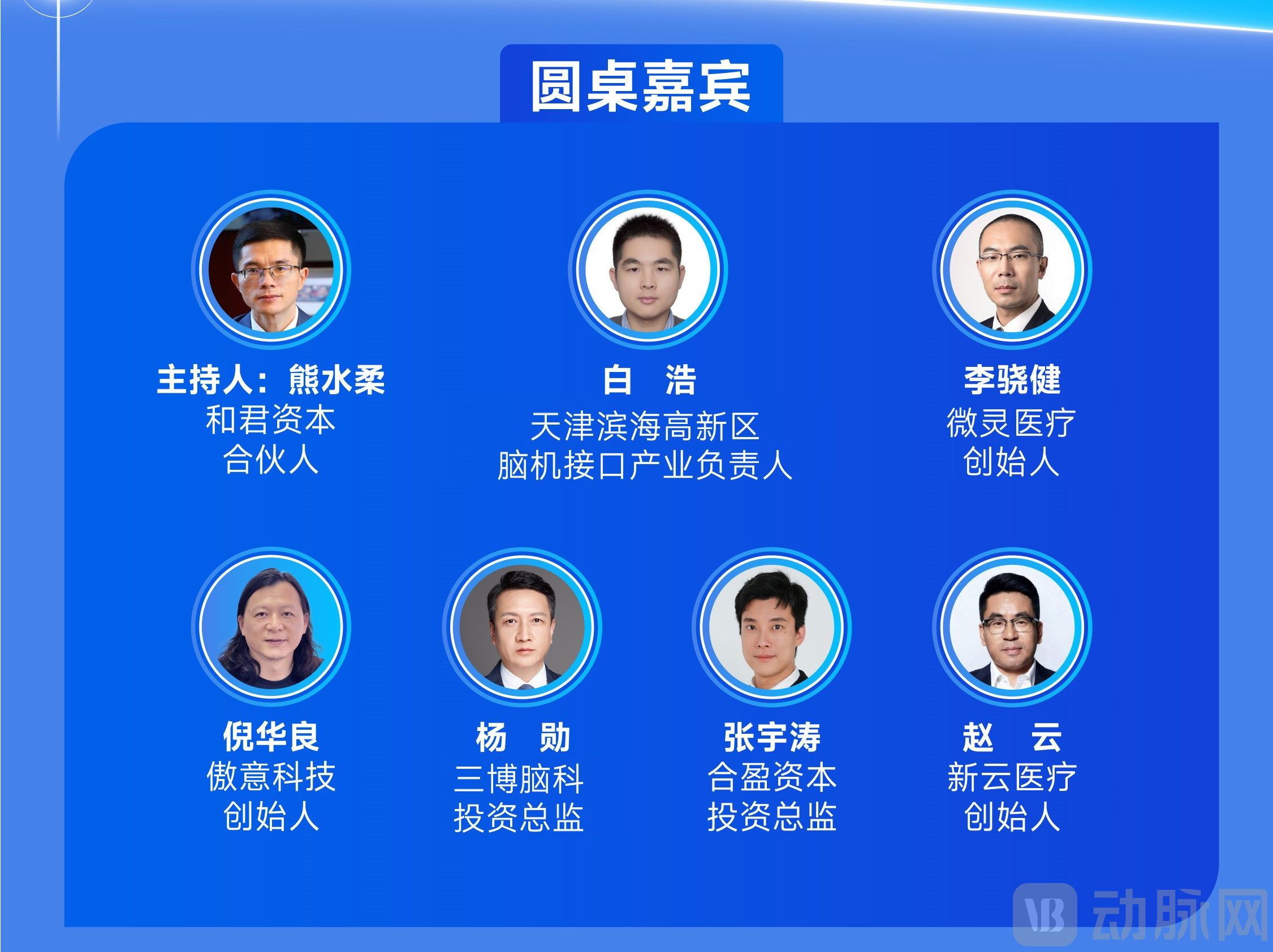
Brain-computer interfaces are not a single technology, but rather a complex system with multiple parallel development pathways. Determining the prioritization of technological approaches, overcoming key technical challenges, and identifying commercial windows are the most critical issues for enterprises and investment institutions.
From an industry perspective, non-invasive brain-computer interfaces (BCIs), due to their high safety profile, low cost, and absence of surgical risks, are better positioned as the earliest viable pathway for commercialization. Ni Hualiang, founder of Aoyi Technology, pointed out thatThe Core Challenge of Non-Invasive Technology Is Not Hardware, but “Software Capabilities Under Weak Signal Conditions”. Scalp EEG and EMG signals are inherently noisy and low in amplitude; achieving practical usability requires robust noise reduction algorithms, feature extraction, and real-time AI decoding. In addressing engineering system challenges, Aoyi Technology has deeply integrated EMG signals with AI, pioneering the commercialization of bionic prosthetics both domestically and internationally, and extending its applications to long-term medical scenarios such as stroke rehabilitation and wearable neurorehabilitation devices.
In contrast, invasive neuromodulation technologies follow a different path. Zhao Yun, founder of Xinyun Medical, cited the implantable closed-loop spinal cord stimulator for chronic pain management as an example, emphasizing that its core value lies inClosed-loop Control and Real-time Feedback CapabilityBy reading and decoding central nervous system signals associated with pain states, such as evoked compound action potentials (ECAPs), in real time and dynamically adjusting stimulation parameters, implantable devices can deliver more stable and precise clinical outcomes. To enhance patient comfort and personalization within this framework, hardware innovations—including extended battery life, multi-contact electrodes, and remote management systems—have become critical. Zhao Yun emphasizes that although these innovations entail lengthy development cycles, they offer irreplaceable advantages in therapeutic depth, precision, and long-term controllability, representing a vital pathway for treating patients with refractory chronic pain.
At the other end of the technological spectrum, Li Xiaojian, founder of Neuracle Medical, has positioned implantable brain-computer interfaces (BCIs) as core tools with both scientific research and clinical value, building upon fundamental research in brain science. He pointed out that BCIs are not merely tools, but alsoTools for Understanding Brain Information, Decoding Brain Function, and Exploring Mechanisms of Neural PlasticityIn terms of technical approach, he clearly distinguished between the two concepts of “functional repair” and “functional replacement,” with his team firmly choosing the former—namely, restoring function by promoting the self-repair of the nervous system. This not only reflects traditional medical values but also constitutes the core characteristic of their focus on brain information acquisition and analysis technologies to advance the treatment of brain diseases.
The choice of technical pathway determines “which route” a brain-computer interface (BCI) company can take, while commercial implementation determines “whether this route is truly viable.” From laboratory prototypes to reliable products in clinical wards, BCI technology must withstand the dual tests of clinical validation and capital investment.
From the perspective of capital and industry evaluation criteria, Zhang Yutao, Investment Director at Heying Capital, emphasized that brain-computer interface projects must possessWell-defined scientific mechanisms, clear commercial pathways, and a robust R&D teamHe pointed out that investment evaluation requires balancing the technological frontier with implementation cycles, precision with safety, and regulatory alignment with clinical needs. Regarding investment strategy, he emphasized avoiding a blind pursuit of cutting-edge sophistication, instead focusing on application scenarios with clear business logic and rapid verifiability. This is particularly important in the healthcare market, where social recognition is driven by reputation and data, while also taking into account the distinct characteristics of consumer and industrial markets.
Mirroring investors’ value judgments are the real-world needs of hospitals and patients. Yang Xun, Investment Director at Sanbo Brain Hospital, pointed out that, as a hospital, Sanbo Brain Hospital places great emphasis on ensuring that the price and efficacy of brain-computer interface (BCI) products align with patients’ expected outcomes, while also guaranteeing product safety. Meanwhile, the clinical application of new technologies must consider whether they might increase physicians’ medical liability risks. He stated bluntly, “The implicit criterion in our project evaluation is: Would Sanbo’s doctors themselves be willing to use it?”
Secondly, as an investor, Sanbo Brain Hospital also pays close attention to the implementation capabilities and product iteration capabilities of the brain-computer interface (BCI) products currently under development by enterprises. This is because the commercial value of a competitive BCI product is closely related to the depth and accuracy of the R&D team’s understanding of the corresponding clinical indications. A more precise understanding of clinical indications ensures accurate identification of product needs, thereby enabling the formulation of correct R&D objectives. Furthermore, when valuing domestic BCI companies, it is essential to take into account the significant differences in medical pricing between China and the United States, rather than simply referencing the valuations of comparable U.S. companies.
Capital and clinical stakeholders do not pursue “the most advanced technology,” but rather seek a “triple closed loop of technology, clinical application, and commercialization.” Only companies that successfully navigate this closed loop can translate technological innovation into genuine market value, becoming the leading force driving the initial surge of China’s brain-computer interface industry.
Only after successfully navigating the trifecta of technological, clinical, and capital hurdles can companies truly unlock their industrial potential. Nevertheless, China’s brain-computer interface (BCI) sector still faces a gap with the United States in terms of technological maturity, industrial ecosystem, and systemic capabilities within the global market. These disparities present not only challenges but also a unique perspective for Chinese enterprises to identify structural opportunities.
From a technical perspective, Ni Hualiang pointed out that the United States entered the clinical validation phase earlier in areas such as implantable electrodes, manufacturing processes, and high-density chips, resulting in a higher level of maturity. While China started slightly later in electrode manufacturing, material innovation, and the domestic production of chips, its pace has accelerated significantly in recent years, narrowing the gap.
Zhao Yun added from the perspectives of industrialization and application strategy that China’s healthcare system, cost structure, and market size enable Chinese companies to adopt“Dual-Track China-US” Strategy—Achieving Rapid Iteration and Cost Advantages Domestically, While Leveraging International Markets for Product Validation.In particular, the “niche” indication strategy helps companies rapidly accumulate clinical data and expand the real-world beneficiary population, while also exploring more viable application scenarios in the fields of chronic pain and neurological disorders.
However, from the perspective of more fundamental capabilities, Li Xiaojian emphasizes that the most essential gap between China and the United States lies not in materials, nor in chips, but in"Systems Thinking and Talent"Insufficient interdisciplinary comprehensive understanding and a lack of complete productization and clinical implementation experience constitute key obstacles to long-term breakthroughs in high-end brain-computer interfaces.
From an investor’s perspective, Zhang Yutao believesChina and the US to Exhibit Complementary Development in the Future: The United States leads in technology and enjoys ample financing, while China drives market adoption through cost advantages, a strong industrial base, and inclusive healthcare. Bottleneck issues are primarily concentrated in high-precision sensors, micro-nano fabrication, and neural decoding chips, where the localization rate still needs to be improved.
At the supply chain level, Yang Xun further pointed out that,Global processing and manufacturing capabilities are continuing to concentrate in China, the United States currently maintains a certain technological lead in the conceptualization and R&D phases; however, to translate this into real-world, large-scale applications, China’s supply chain capabilities and manufacturing systems represent one of the most significant structural competitive advantages over the next decade.
Technical roadmaps determine industry structure, capital and clinical applications dictate technological trajectories, and the industrial ecosystem determines whether China’s brain-computer interface (BCI) sector can establish truly systematic competitiveness. Based on a clear understanding of the gap between China and the United States, China’s BCI industry is forging a unique path toward systemic development.
Bai Hao, the head of the brain-computer interface (BCI) industry at Tianjin Binhai High-Tech Zone, elaborated on the concrete implementation of this pathway from a practical perspective. He believes that BCI is not a standalone technology, but rather a systems engineering endeavor that requires joint support from material platforms, clinical centers, regulatory pathways, engineering capabilities, and talent systems. Therefore,The government’s role is not to make choices on behalf of enterprises, but to build an ecological foundation that accommodates the concurrent development of diverse technological pathways.
According to Bai Hao, the Tianjin Binhai High-Tech Industrial Development Zone, leveraging the Haihe Laboratory of Brain-Computer Interaction and Human-Machine Integration, has established a fully domestic, independent industrial chain encompassing core electronic devices, high-end general-purpose chips, basic software products, and key foundational systems. In terms of talent development, Tianjin University has launched China’s first major in brain-computer interfaces, systematically cultivating interdisciplinary students to provide a continuous stream of talent for the Haihe Laboratory and the brain-computer interface industry. Meanwhile, the Tianjin Binhai High-Tech Industrial Development Zone has built a comprehensive support system to serve industrial development, including the establishment of special industrial funds, the construction of dedicated testing platforms, and the creation of streamlined regulatory approval channels to accelerate enterprise growth.
Overall, the gap between China and the United States persists but is narrowing. China’s concurrent advantages in industrial chains, cost efficiency, application scenarios, and policy support, coupled with its ongoing development of a systematic ecosystem, constitute a solid foundation for Chinese enterprises to build future competitiveness.
In the face of opportunities and challenges, attendees unanimously agreed that the future of brain-computer interfaces hinges on whether government, capital, enterprises, and clinical practitioners can join forces and each play their key roles effectively.
The government sector needs to shift its focus from traditional management toward ecosystem building and innovative services.Bai Hao pointed out that its core functions are to provide a comprehensive ecosystem, innovate service measures, and coordinate all parties to create a favorable environment for the high-quality development of the industry. For example, it focuses on helping universities and research teams complete the critical step of "proof of concept," thereby reducing uncertainty and costs in the early stages of innovation.
Capital should serve as the nexus for industrial connectivity, facilitating the deep integration of technology and clinical practice.. Zhang Yutao stated that capital needs to proactively bridge the gap between technological R&D and clinical validation, by deeply engaging in the industry to integrate upstream and downstream resources, thereby providing deeper value empowerment to portfolio companies.
Clinical settings must provide real-world application scenarios to drive continuous technological optimization.. Yang Xun pledged that Sanbo Brain Hospital, as the most influential listed neurosurgical hospital group in China, can provide brain-computer interface (BCI) innovation enterprises with “real-world clinical demand scenarios primarily oriented toward clinical applications,” and help enterprise R&D teams correctly understand patient diseases and diagnostic and treatment standards, optimize product definition and iteration directions, improve R&D capital efficiency, and facilitate product commercialization.
Enterprises, on the other hand, must maintain strategic focus and concentrate on their core strengths.Ni Hualiang called on government regulators to strengthen “education” alongside “oversight,” guiding teams without medical backgrounds to understand regulatory pathways; Zhao Yun emphasized that enterprises should focus their resources and build closed-loop business models in niche sectors; Li Xiaojian firmly asserted that technology development must return to the essence of clinical needs, rather than chasing unrealistic science-fiction concepts.
These voices from the forefront of the industry clearly indicate that brain-computer interfaces are undergoing a profound industrial leap: technology is becoming engineerable, clinical validation is becoming systematic, products are achieving scalability, and the ecosystem is gradually becoming sustainable. This is no longer just conceptual hype, but an industrial reality currently unfolding.
The future of brain-computer interfaces belongs to long-termists, and China’s advantage lies precisely in its long-term patience and capacity for industrial synergy. Perhaps for this very reason, China’s brain-computer interface sector is transitioning from technological exploration to systematic engineering and industrial implementation, poised to become a new engine driving global competition in medical technology.