

UC Riverside Study Reveals Microplastics Directly Accelerate Atherosclerosis in Males, Highlighting Gender-Specific Cardiovascular Risk
From food packaging to clothing fibers, from daily necessities to industrial materials, plastic has permeated every corner of modern life. However, these plastic products break down into tiny particles during use and degradation—Microplastics: They Are Threatening Human Health in Ways We Never Expected.
A new study from the University of California, Riverside, found thatMicroplastics, Ubiquitous in Daily Life, May Accelerate the Development of AtherosclerosisThis process ultimately leads to heart disease and stroke. More surprisingly, these adverse effects appear to occur only in male laboratory mice, providing new insights into how microplastics affect human cardiovascular health.
This study, led by Changcheng Zhou, Professor of Biomedical Sciences at the University of California, Riverside School of Medicine, was published in the journal Environment International on November 18, 2025.

(Source: Environment International)
Professor Zhou stated in the press release, “Our findings align with a broader pattern in cardiovascular research—Males and females often exhibit different responses."Although the exact mechanism remains unclear, factors such as sex chromosomes and hormones, particularly the protective effects of estrogen, may play a role."
Microplastics are now virtually ubiquitous in food, water, and air, and have even penetrated the human body. Recent human studies have detected microplastics in atherosclerotic plaques and found that higher levels of microplastics are associated with an increased risk of cardiovascular disease. However, scientists have long remained uncertain whether and how microplastics directly cause arterial damage.
To thoroughly investigate the impact of microplastics on the cardiovascular system, Professor Zhou’s team designed an ingenious experiment. They utilized low-density lipoprotein receptor-deficient mice, a classic experimental model prone to atherosclerosis. The researchers fed both male and female mice a low-fat, low-cholesterol diet, mimicking the dietary patterns of lean, healthy individuals. Subsequently, the mice were administered microplastics orally at a dose of 10 mg per kilogram of body weight daily for nine weeks. This dosage level is considered environmentally relevant, comparable to the exposure levels humans might encounter through contaminated food and water.
The experimental results were shocking. Researchers found that,Microplastics Significantly Exacerbate Atherosclerosis.In male mice, microplastic exposure increased plaque accumulation in the aortic root by 63%, while plaque burden in the brachiocephalic artery surged by 624%. In contrast, female mice did not exhibit significant worsening of plaque formation under the same microplastic exposure conditions.
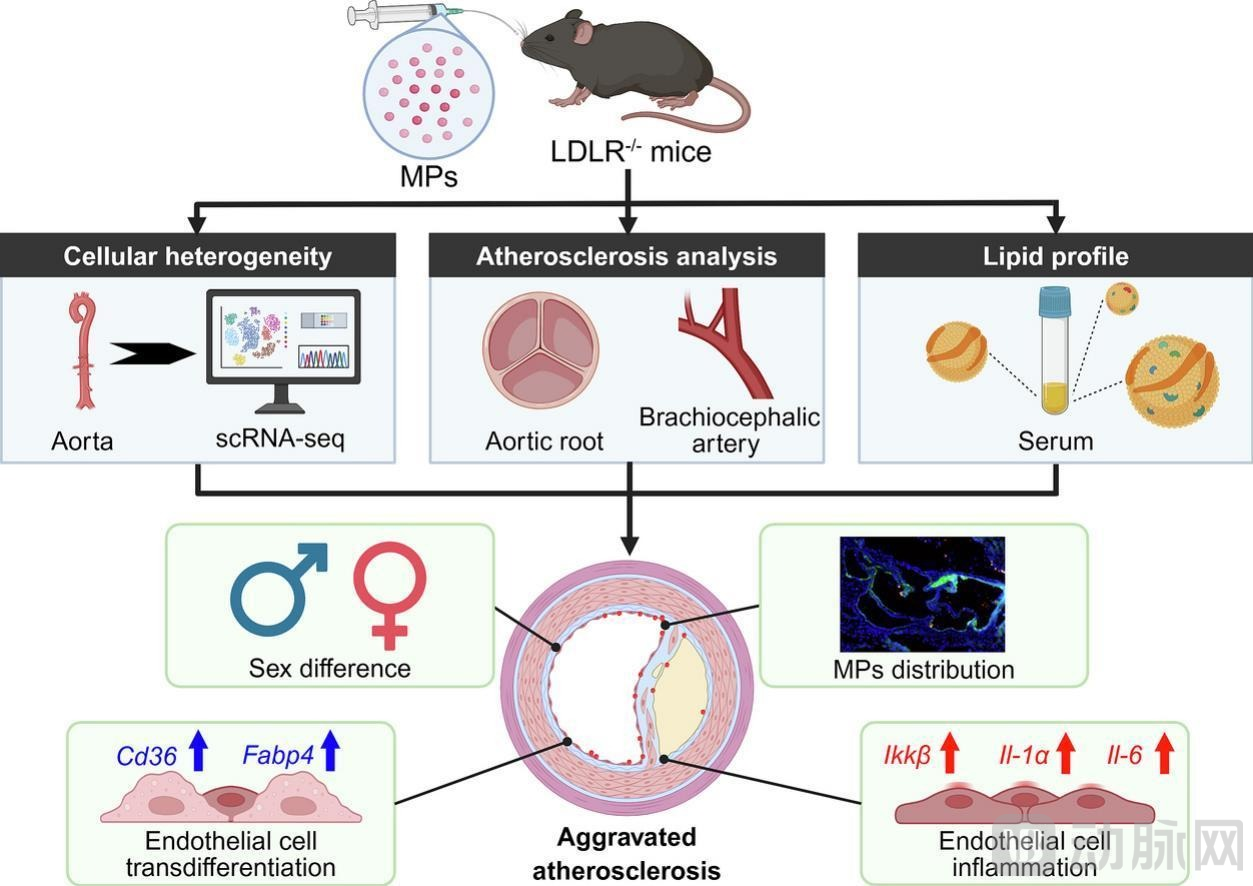
Figure: Microplastic exposure can lead to sex-specific atherosclerosis in mice (Source: Environment International)
More importantly, the study found that microplastics did not cause obesity or elevate cholesterol levels in mice. The mice remained lean, and their blood lipid levels remained unchanged, indicating that the increased arterial damage was not caused by traditional risk factors such as weight gain or high cholesterol. This finding suggests that microplastics may directly damage blood vessels through a unique mechanism.
To unravel this mechanism, the research team employed single-cell RNA sequencing technology. This cutting-edge technique enables the identification of which genes are expressed in each cell and to what extent. The analysis revealed thatMicroplastics alter the activity and proportion of key cells in the arterial intima.Especially endothelial cells—these cells line the inner walls of blood vessels and are responsible for regulating inflammation and blood flow.
Professor Zhou explained, “We found that endothelial cells are most significantly affected by microplastic exposure. As the first cells to encounter circulating microplastics, their dysfunction may trigger inflammation and plaque formation.” In the team’s experiments, fluorescently labeled microplastics were observed entering plaques and localizing within the endothelial layer, a finding consistent with recent human studies demonstrating the presence of microplastics in arterial lesions.
Researchers also reported another important finding:Microplastics Trigger Harmful Gene Activity in Mouse and Human Endothelial Cells.Microplastic exposure has been found to activate pro-atherosclerotic genes in endothelial cells of both mice and humans, indicating a shared biological response between the two.
Specifically,Microplastic exposure leads to increased expression of the CD36 and FABP4 genes,These genes are involved in lipid metabolism and transport; meanwhile,The expression of pro-inflammatory genes, such as IL-1α, IL-6, and NLRP3, was also significantly elevated.; Furthermore,Microplastics also increased the expression levels of IKKβ.This is a central coordinating factor for immunity and inflammation that plays a critical role in the formation of atherosclerosis; more notably,Microplastic exposure also leads to increased production of reactive oxygen species in these cells,Reactive oxygen species are important markers of cellular damage and inflammation.
Professor Zhou emphasized, “Our study provides some of the strongest evidence to date that microplastics may directly cause cardiovascular disease, rather than merely being associated with it. This surprising sex-specific effect, which harms males but not females, could help researchers identify different protective factors or mechanisms in men and women.”

Figure: Changcheng Zhou, Professor of Biomedical Sciences at the University of California, Riverside School of Medicine (Source: University of California - Riverside)
“It is virtually impossible to completely avoid microplastics.“However, the best strategy is to reduce exposure by limiting the use of plastics in food and water containers, reducing the use of single-use plastics, and avoiding highly processed foods. Currently, there are no effective methods for removing microplastics from the body; therefore, it remains crucial to minimize exposure and maintain overall cardiovascular health through diet, exercise, and risk factor management,” Professor Zhou also admitted.
Regarding the reasons for this gender disparity, the research team proposed several possible explanations.
First, the well-established protective effect of estrogen against atherosclerosis in both animals and humans suggests that endogenous estrogen may confer resistance to microplastic-induced atherosclerosis in female mice. Second, sex chromosomes may influence the development of atherosclerosis through sex-specific gene regulation. Furthermore, numerous other genetic and epigenetic factors may contribute to sex differences in cardiovascular disease. Notably, significant sex disparities have also been observed in human cardiovascular disease research, and the findings from this murine study may provide important insights for understanding the human condition.
This study is innovative in multiple aspects.
First, it is the first study to investigate the atherogenic effects of microplastics in low-density lipoprotein receptor-deficient mice. Most previous studies utilized apolipoprotein E-deficient mice under high-fat diet conditions, which induce obesity and diabetic phenotypes in mice and may indirectly influence the development of atherosclerosis. Professor Zhou’s team opted for a low-fat, low-cholesterol diet, successfully avoiding these confounding factors.
Second, this is the first animal study to reveal sex-specific effects of microplastic exposure. Previous studies predominantly used only male mice, whereas this study included both male and female mice, thereby enabling the identification of significant sex differences.
Third, this is the first study to deeply elucidate the cellular mechanisms underlying the effects of microplastics using single-cell RNA sequencing technology. The research team identified 17 types of aortic cells and revealed the specific impact of microplastics on endothelial cell subpopulations. Finally, the dosage of microplastics used in the study was close to environmentally relevant levels, enhancing the relevance of the findings to human health.
Although this study was conducted in mice, its findings hold significant implications for understanding human health risks. Atherosclerotic cardiovascular disease remains the leading cause of death globally, despite advances in diagnostic and therapeutic technologies. If microplastics do indeed directly promote the development of atherosclerosis, reducing exposure to microplastics could emerge as a novel strategy for preventing cardiovascular disease. Furthermore, this study suggests that males may be more susceptible to microplastic-induced cardiovascular damage, which may partially explain the sex differences observed in cardiovascular disease.
Professor Zhou and his team acknowledged that further research is needed to understand why males are more susceptible. The researchers plan to conduct studies to determine whether similar effects occur in humans. Professor Zhou stated, “We aim to investigate how different types or sizes of microplastics affect vascular cells. We will also delve into the molecular mechanisms underlying endothelial cell dysfunction and explore how microplastics impact male and female arteries differently.”As global microplastic pollution continues to rise, understanding its impact on human health, including heart disease, has become more urgent than ever.”
The research team also highlighted the limitations of the study. First, they used only a single dose of microplastics for the exposure study, which limited the ability to assess dose-dependent effects. Second, the 9-week exposure period was relatively short, and the lean mice fed a low-fat diet did not develop large, complex lesions; therefore, the impact of long-term microplastic exposure on the complexity and vulnerability of atherosclerotic plaques could not be evaluated. Future animal studies should consider using multiple doses and longer exposure durations to further investigate the effects of microplastic exposure on the development of atherosclerosis.
This study was conducted jointly by researchers from the University of California, Riverside; Boston Children’s Hospital; Harvard Medical School; and the University of New Mexico Health Sciences Center, with partial funding from the National Institutes of Health. The research highlights an increasingly urgent environmental health concern: due to its durability, versatility, and low cost, plastic has become an integral part of modern society, with global plastic production rising rapidly over the past century. Human exposure to small plastic particles is widespread, and growing evidence suggests that such exposure may influence the development of chronic diseases, including atherosclerotic cardiovascular disease.
In summary,This groundbreaking study provides some of the strongest evidence to date that microplastics may directly cause cardiovascular disease.The study also reveals, for the first time, sex-specific effects of microplastic exposure and elucidates its pathogenic mechanisms at the molecular and cellular levels. As global microplastic pollution continues to intensify, understanding its impact on human health has become more urgent than ever. This work not only provides important scientific findings for the research community but also serves as a reminder to the public that environmental pollution resulting from modern lifestyles may affect health in ways we do not yet fully understand.