

National Pilot Program on High-Quality Workplace Health Management (Jiangsu) Launch Seminar Successfully Held in Nanjing
Recently, the promotional conference for the pilot work of high-quality workplace health management under the “National Pilot Project on Innovative Integration for the Prevention and Control of Major Chronic Diseases” (Jiangsu) was held in Nanjing. The event was hosted by the Management Committee of the National Pilot Project on Innovative Integration for the Prevention and Control of Major Chronic Diseases and the Working Committee for the Pilot Work of High-Quality Workplace Health Management, with support from Ping An Health Internet Co., Ltd. and Jiangsu Branch of Ping An Property & Casualty Insurance Company of China, Ltd. The conference aimed to facilitate the implementation of the “Pilot Work of High-Quality Workplace Health Management” in Jiangsu, focusing on enhancing proactive health capabilities in the workplace, comprehensively strengthening the health defense line for the working population, and creating a practical, sustainable, and scalable pilot model.
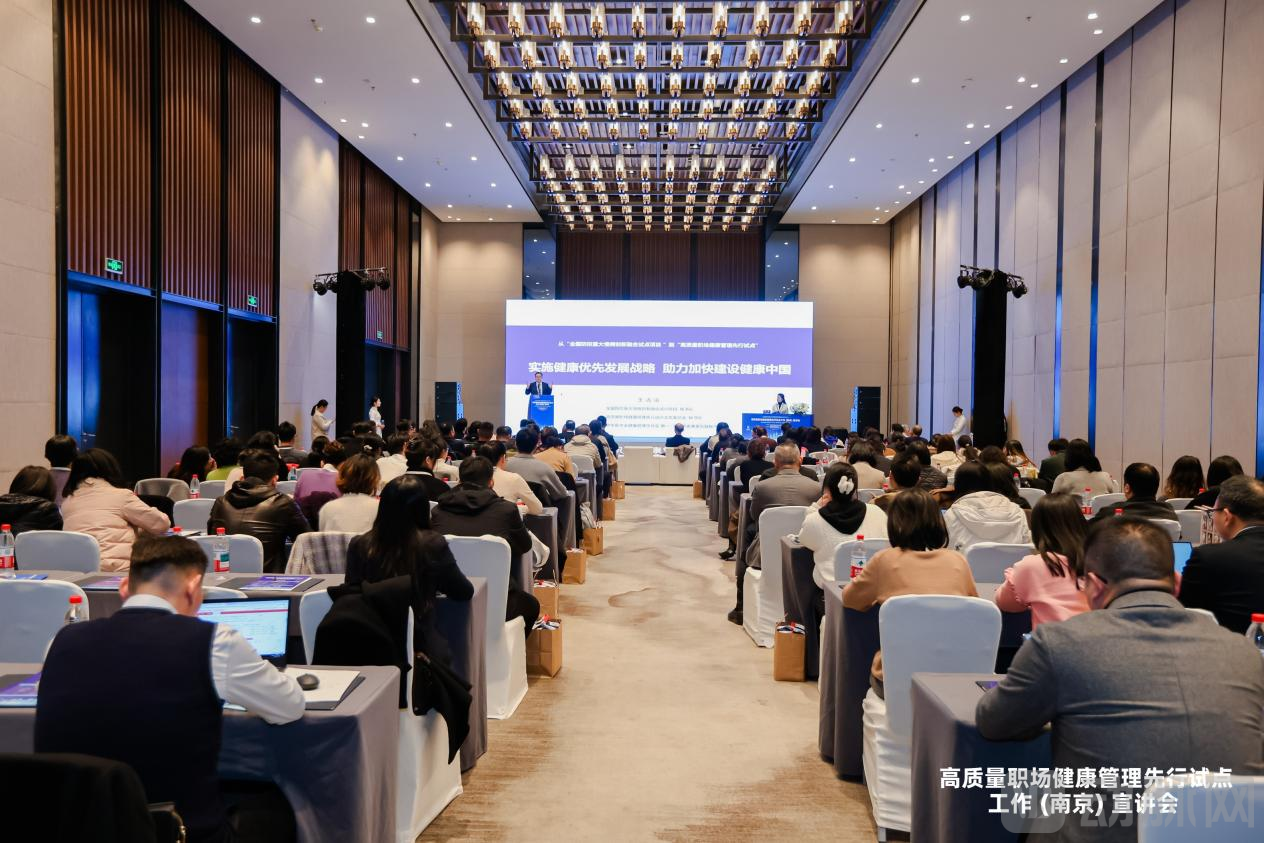
The conference invited Professor Wang Zhanshan, Secretary-General of the Management Committee for the National Pilot Project on Innovative Integration in the Prevention and Control of Major Chronic Diseases, and Secretary-General of the Steering Committee for the Pilot Program on High-Quality Workplace Health Management; Professor Ma Jing’an, Deputy Secretary-General of the Jiangsu Medical Doctor Association; Ms. Yang Xiaoyan, General Manager of Ping An Good Doctor Investment Management Co., Ltd.; Mr. Chen Zhaohui, General Manager of the Jiangsu Branch of Ping An Property & Casualty Insurance Company of China, Ltd.; Director Xu Ye, Head of the Executive Group of the Management Committee for the National Pilot Project on Innovative Integration in the Prevention and Control of Major Chronic Diseases, and Leader of the Executive Group of the Steering Committee for the Pilot Program on High-Quality Workplace Health Management; Professor Yuan Yuan, Director of the Health Management Center at the Second Affiliated Hospital of Nanjing Medical University; Professor Wang Jun, Director of the Department of Health Management at Nanjing First Hospital; Professor Shen Peipu, Deputy Director of the Health Management Center at the Affiliated Hospital of Xuzhou Medical University; Teacher Yan Jiafang, Member of the Executive Group of the Management Committee for the National Pilot Project on Innovative Integration in the Prevention and Control of Major Chronic Diseases, and Member of the Executive Group of the Steering Committee for the Pilot Program on High-Quality Workplace Health Management; Director Xiao Xiong from the Labor and Personnel Section (Party Committee Organization Section) of the Nanjing Locomotive and Rolling Stock Depot; Mr. Song Jun, Deputy General Manager of the Jiangsu Branch of Ping An Property & Casualty Insurance Company of China, Ltd.; Mr. Huang Ji, Deputy General Manager of Ping An Good Doctor Investment Management Co., Ltd.; Mr. Gu Guojiang, General Manager of the Jiangsu Branch of Ping An Health Internet Technology Co., Ltd.; as well as industry representatives from medical institutions, health management organizations, and enterprises and public institutions at all levels within Jiangsu Province.
Address by Leadership

Professor Ma Jing’an, Deputy Secretary-General of the Jiangsu Medical Doctor Association, Delivered an Address
In his opening remarks, Professor Ma Jing’an pointed out that chronic diseases have become a major public health challenge affecting the well-being of society and the workforce. Advancing high-quality pilot initiatives for workplace health management and facilitating a shift in public mindset from passive medical treatment to proactive health are inevitable trends in chronic disease prevention and control. As a major economic contributor in China, Jiangsu Province boasts a vast workforce of over 26 million employees and enjoys the advantage of a concentrated medical industry cluster. Under the framework of the “Healthy China” strategy for proactive health, Jiangsu should take the lead in exploring new models of workplace health management. He also pledged, on behalf of healthcare professionals in Jiangsu Province, to provide full support for the project through conceptual upgrades, model innovation, and resource integration. By actively addressing challenges related to awareness, resource allocation, and participation, and by rallying multi-stakeholder efforts, they aim to create a demonstrative “Jiangsu Model” that will continuously empower and contribute to the construction of “Healthy China.”
Interpretation of the Pilot Implementation Plan for High-Quality Workplace Health Management
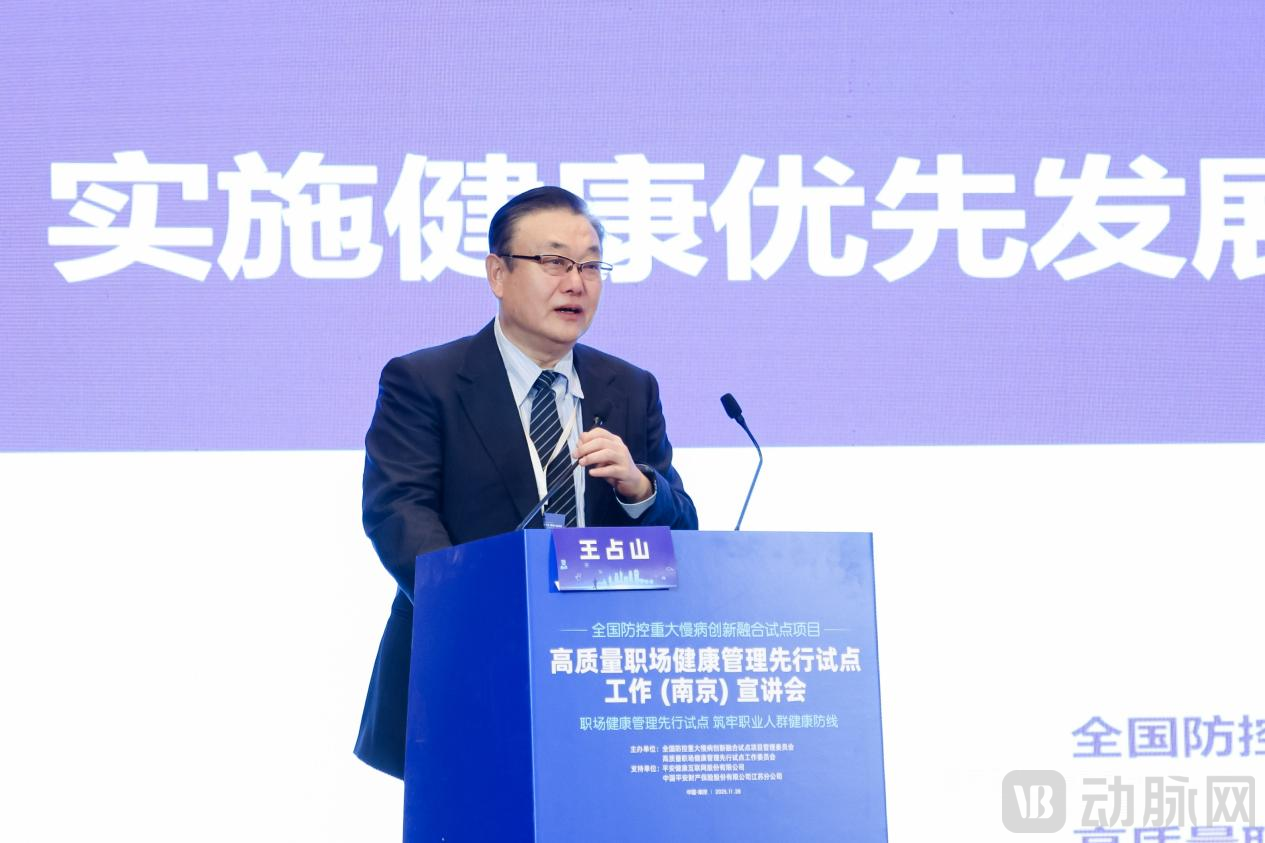 Professor Wang Zhanshan, Secretary-General of the Project Management Committee for the National Pilot Program on Innovative Integration in the Prevention and Control of Major Chronic Diseases, and Secretary-General of the Steering Committee for the Pilot Program on High-Quality Workplace Health Management, delivered a report titled “Work Plan for the Pilot Program on High-Quality Workplace Health Management.”
In his report interpreting current initiatives, Professor Wang Zhanshan emphasized that workplace health management is a key scenario for implementing the Healthy China Action strategy, which prioritizes health development. Enterprises must assume primary responsibility for health management and drive the transformation of medical care models from being “disease-centered” to “health-centered.” Through science-based education and real-world case studies, Professor Wang highlighted the widespread nature of health risks among the workforce and the urgent need to shift chronic disease prevention and control efforts upstream. He proposed a systematic management framework comprising ten proactive personal health indicators and a four-tier structure, strengthening early screening and intervention for key chronic diseases among employees above specified age thresholds, promoting collaboration between healthcare providers and enterprises, and popularizing healthy lifestyles. He also called on enterprises at all levels to actively apply to participate in pilot programs for high-quality workplace health management, thereby contributing solidly to the construction of a “Healthy China.”
Introduction to the Implementation Plan for the Pilot Launch of High-Quality Workplace Health Management
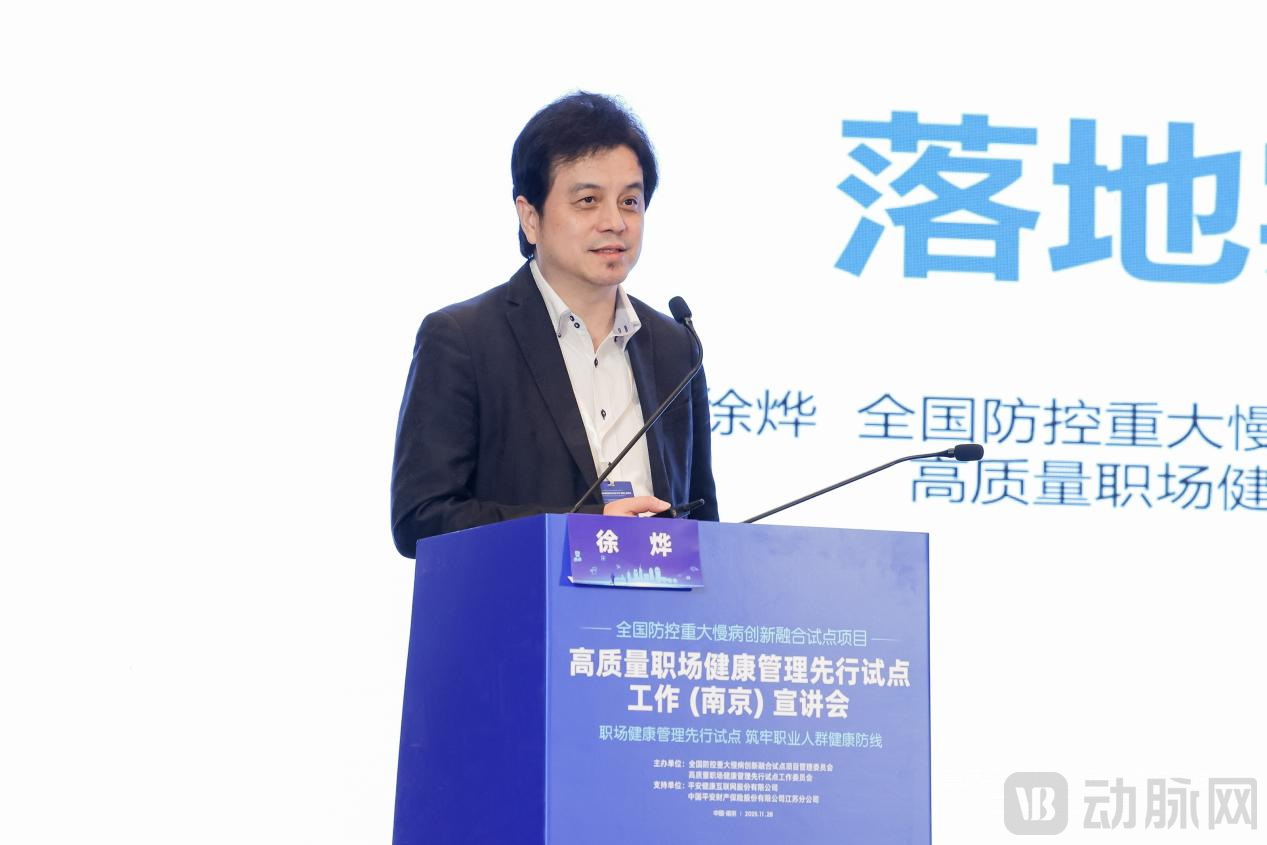 Xu Ye, Director, Head of the Executive Group of the Project Management Committee for the National Pilot Program on Innovative Integration in the Prevention and Control of Major Chronic Diseases, and Head of the Executive Group of the Pilot Work Committee on Pioneering High-Quality Workplace Health Management, delivered a report titled “Implementation Plan for the Pilot Launch of High-Quality Workplace Health Management.”
Director Xu Ye conducted an in-depth analysis of the “Implementation Plan for the Pilot Launch of High-Quality Workplace Health Management.” He pointed out that the plan leverages the national health-first strategy and related policy support, integrating resources from the “Corporate Supplementary Medical Security Management Fund + Health Management” model. To address key pain points such as the lack of industry standards and difficulties in data statistics, expert teams have been organized to develop specialized management standards and establish a digital-intelligent service platform connecting employees, enterprises, and medical institutions. Director Xu emphasized that the four-tier architectural framework is the core metric for the plan’s implementation, aiming to provide employees with more precise and personalized health management services. Guided by the three principles of data-driven decision-making, standard-led development, and multi-party collaboration, the project will systematically advance workplace health management toward standardization and sustainability through measures such as creating a supportive health service environment, improving electronic health records, and promoting intelligent risk assessment and personalized interventions.
Case Studies on Workplace Health Management Practices

Mr. Xiao Xiong from the Labor and Personnel Department (Party Committee Organization Department) of the Nanjing East Locomotive and Rolling Stock Depot, China Railway Shanghai Group Co., Ltd., delivered a presentation titled “Dedicated Care to Safeguard Health and Stimulate Vitality: Workplace Health Management Practices at the Nanjing East Locomotive and Rolling Stock Depot.”
Mr. Xiao Xiong shared the achievements of workplace health management practices at the Nanjing East Locomotive and Rolling Stock Depot of China Railway Shanghai Group Co., Ltd. As a core railway unit serving multiple regions across Jiangsu and Anhui provinces, the depot currently employs 4,707 staff members, with train drivers accounting for more than half. To address health challenges associated with high-intensity work, the depot has established a tripartite management model integrating “policies, services, and activities.” The company actively responded to and applied for the pilot project on high-quality health management. By implementing standardized procedures within a four-tier management framework, it has adopted measures such as establishing a “1+3+N” policy system, launching specialized sports and psychological care programs, upgrading healthy canteens, innovating integrated multi-item health examinations, co-establishing medical clinics, and implementing tiered management of chronic diseases. These efforts have significantly improved the rate of employee health compliance, increased the proportion of employees engaging in regular exercise from 45% to 68%, and continuously reduced the prevalence of hypertension, hyperglycemia, hyperlipidemia, overweight, and obesity, thereby creating a virtuous cycle where “health promotes safety, and safety fosters development.” Moving forward, the depot will focus on intelligent and precise initiatives to continuously optimize health management services, contributing to the construction of a Healthy China and a leading transportation powerhouse.
Ping An of China: Insights and Practices for High-Quality Healthy Workplaces

Mr. Huang Ji, Deputy General Manager of Ping An Good Doctor Investment Management Co., Ltd., Delivered a Presentation on “Insights and Practices of China Ping An’s High-Quality Healthy Workplace”
Mr. Huang Ji shared Ping An’s cutting-edge insights and practical achievements in implementation. Grounded in the realities of corporate operations, he precisely identified the core pain points in employee health management, further pointing out that building a healthy workplace has long moved beyond the traditional framework of “employee physical examinations + medical insurance.” It requires collaborative efforts from multiple stakeholders to unify industry standards and integrate high-quality resources, thereby creating a synergistic force to truly establish high-quality benchmarks for healthy workplaces tailored to the needs of Chinese enterprises. In recent years, Ping An has fully leveraged its industry-leading strengths in deep demand insight, service operations, and compliance assurance. Through innovative exploration, it launched the “Ping An Corporate Health Management Service Program,” helping a wide range of corporate employers build a “professional and convenient” medical and health service system, continuously enhancing employees’ welfare experience and sustainable health outcomes. To date, Ping An has established in-depth collaborations with over 4,500 enterprises in China, turning the concept of high-quality healthy workplace construction into tangible results.
Mr. Su Dong, Deputy General Manager of Ping An Good Doctor, also stated in a previous interview that healthy workplaces are a crucial pillar of the “Healthy China 2030” strategy. Leveraging its strengths in intelligent healthcare and health management, Ping An will collaborate with stakeholders across sectors to develop precise, end-to-end healthy workplace solutions, safeguarding employee well-being through professional expertise and injecting healthy momentum into high-quality corporate development.
On-site Q&A


Q&A Session
An interactive Q&A session was held at the conference, during which representatives from numerous enterprises and public institutions actively raised questions regarding the application for the “Pilot Program for High-Quality Workplace Health Management.” In response, Director Xu Ye clarified that the program is entirely non-profit and incurs no costs for applicant enterprises. Applications can be submitted through a dedicated channel by scanning the designated QR code to complete the process online. The entire application procedure is fully digitalized. The working group will provide electronic application forms and maintain real-time communication to promptly address any specific issues enterprises may encounter during the application process.
Meeting Summary
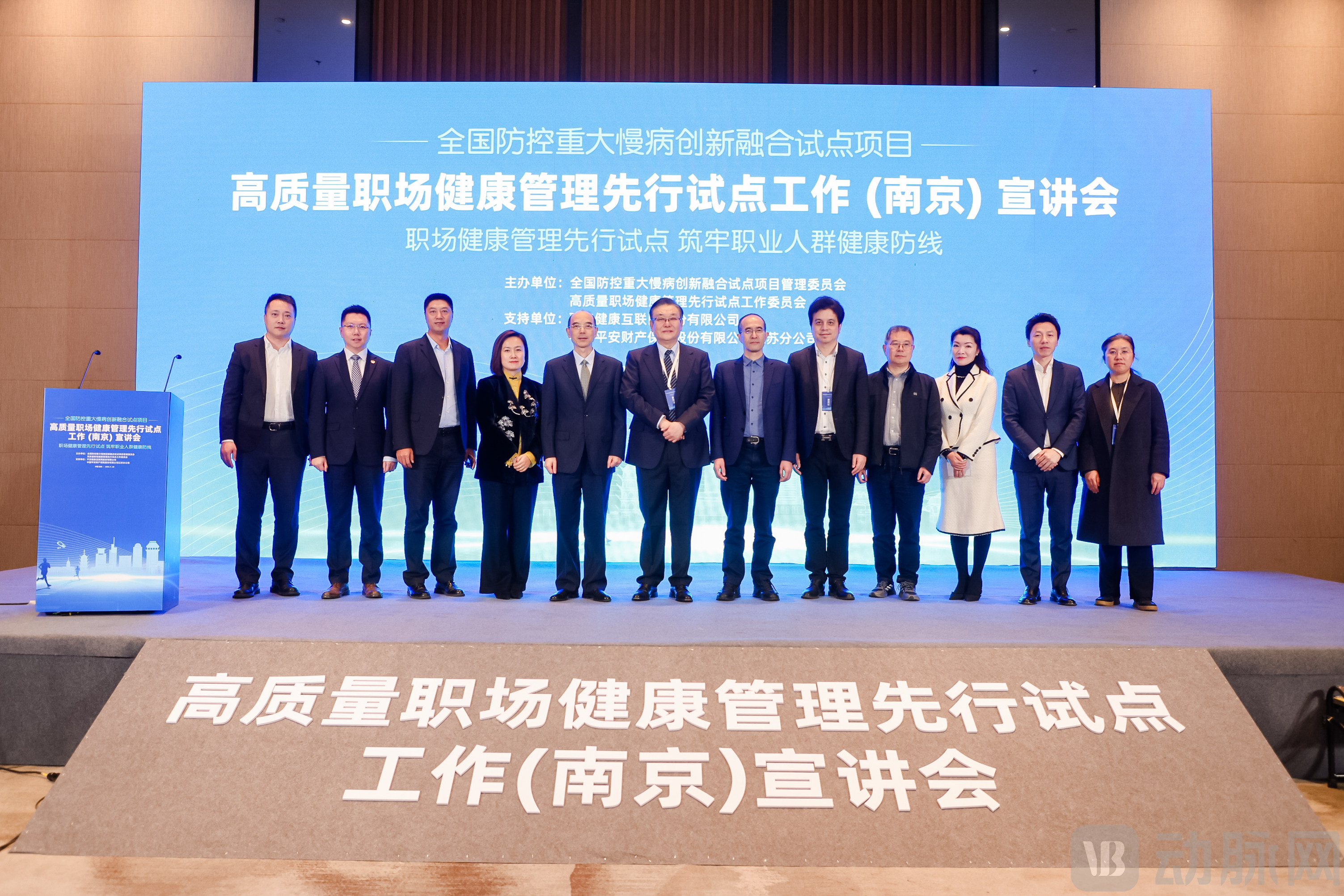
At the conclusion of the conference, Secretary-General Wang Zhanshan delivered the closing remarks. Drawing on his personal experience with the misuse of hotel mosquito repellent and health management practices at the University of Michigan, he emphasized the importance of health safety and management. He pointed out that a key takeaway from the conference was the clarification of the responsibility to provide high-quality health services to employees, substantiated by relevant award-winning cases and practices of central state-owned enterprises. He noted that employees’ perception of insurance has shifted from “coverage” to “health,” with a growing desire for professional guidance in health promotion and risk prevention and control. In the future, it is necessary to leverage the distinctive features of employee health examinations in China, promote multi-party collaboration and team building in health management, and implement the concept of prevention first. Secretary-General Wang expressed his hope that more pilot units would emerge in Jiangsu Province, and invited attendees to gather in Beijing on December 12, 2025, to participate in the “National Pilot Project on Innovative Integration for Major Chronic Disease Prevention and Control and Experience Exchange Conference on Pioneer Practices in High-Quality Workplace Health Management,” jointly promoting the efficient expansion of high-quality workplace health management.