

Tapping into the Microneedle Technology Blue Ocean: Transdermal Hyaluronic Acid Unlocks Growth Potential

Baheal Medical
Health Brand Commercialization Platform
Microneedle Technology Continues to Gain Momentum.
In terms of financing, the microneedle technology sector witnessed multiple funding rounds in 2025. Zhonghui Medicine, a developer of hollow microneedles, completed nearly RMB 50 million in financing in June, while Mingche Technology, an innovative ophthalmic device company with a microneedle technology platform, secured tens of millions of yuan in its Series A financing round in November. Regarding corporate development, listed companies are accelerating the implementation and deployment of microneedle technologies. In November, Sailong Pharmaceutical entered into a strategic partnership with Zhongke Microneedle to establish a joint laboratory. In terms of product approvals, more innovative products are being launched both domestically and internationally. In June this year, MICROEPAD™, a new product in the same series as the soluble microneedle OTC drug developed by Aidivixin (Suzhou) Biopharmaceuticals, a wholly-owned subsidiary of Aidivixin Bio, received FDA certification and was registered for market launch in the United States.
The accelerated commercialization of microneedle technology has further driven continuous growth in market size. Current market statistics vary slightly; for instance, a market research report by Beijing Boyan Consulting indicates that the global market size for microneedle transdermal drug delivery systems reached approximately USD 1.58 billion in 2024, while the Chinese market size was around USD 130 million, representing a year-on-year increase of 22.5%. Looking ahead to 2025, the global market size for microneedle transdermal drug delivery systems is projected to reach approximately USD 1.92 billion, with the Chinese market expected to grow to USD 170 million, a year-on-year increase of 30.8%.
As more and more companies begin to focus on this emerging sector, VCBeat has also noted that Baheal Medical has launched a cactus-based transdermal hyaluronic acid microneedle product. After two years of development, it has become a dark horse in the field of periocular care. With an average transaction value exceeding RMB 1,000 and a 30% repurchase rate, the product has demonstrated strong growth momentum, ranking among the top 10 brands in the eye mask category on Tmall, Douyin, and Xiaohongshu.
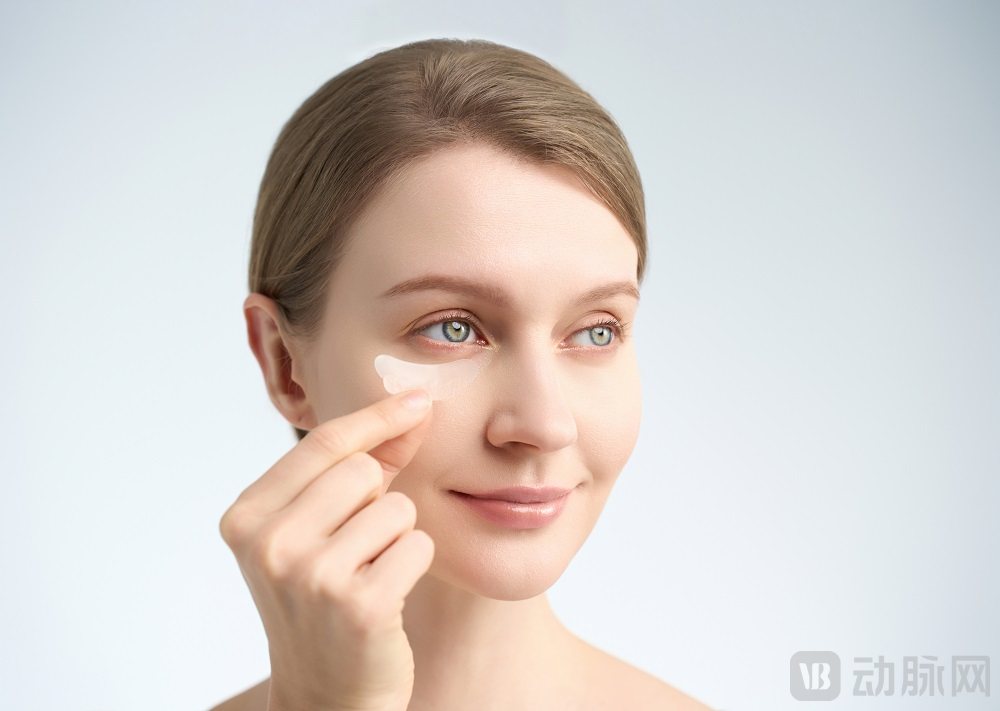
Microneedles, typically defined as needles with a height of 10–2000 μm and a width of 10–50 μm, are utilized in drug delivery primarily in the form of microneedle arrays, wherein numerous microneedles are arranged in an array pattern on a drug delivery carrier. The length of microneedles ranges from hundreds of micrometers to several millimeters. They are designed to penetrate the stratum corneum without reaching pain-sensing nerves, thereby creating channels for drug administration on the skin surface. This allows drugs to reach specified depths within the skin and enter the subcutaneous capillary network for absorption, thus enhancing drug permeation while avoiding pain and skin damage.
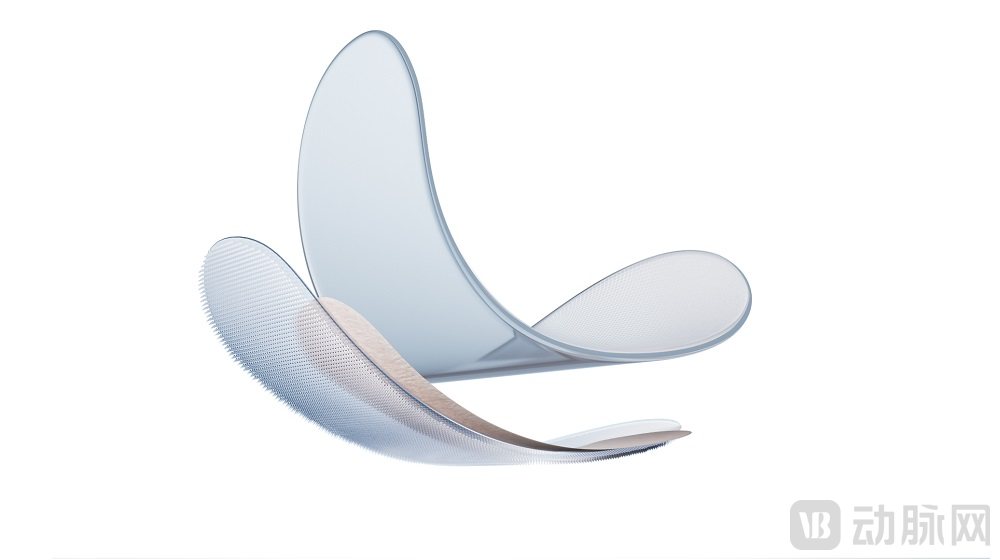
Schematic Diagram of Microneedle Technology
Microneedle technology has garnered external attention due to its technological innovations in efficient drug delivery.
In traditional drug administration, injection often causes significant pain and trauma, which not only reduces compliance among long-term users but also requires professional operation, thereby limiting its application scenarios. Oral administration is often constrained by the complex environment of the patient’s gastrointestinal tract, where a substantial loss of active pharmaceutical ingredients may occur, resulting in low bioavailability. Although transdermal patches offer non-invasive, long-acting treatment and are effective for local therapy, their efficiency in transdermal drug penetration is limited by barriers such as the skin barrier.
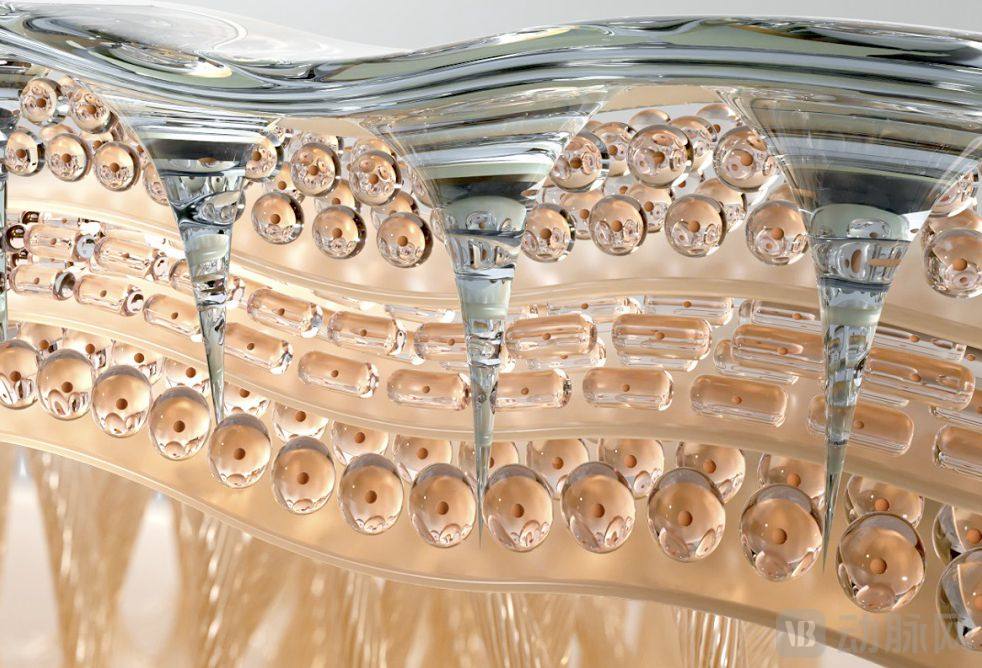
Schematic Diagram of 3D Modeling for Microneedle Technology
Soluble microneedle transdermal drug delivery technology holds promise for overcoming the skin barrier, enhancing drug absorption efficiency, and enabling high-efficacy administration at low doses. Meanwhile, by bypassing gastrointestinal and hepatic metabolism, it avoids the first-pass effect and improves drug stability. Furthermore, in local drug delivery scenarios, it facilitates more precise targeted therapy.
In short, microneedle technology offers higher user compliance and greater bioavailability.
Due to the inherent characteristics of microneedle technology, the industry is currently applying it in areas such as vaccination, diabetes management, and medical aesthetics. Furthermore, practitioners are further expanding its highly promising application scenarios in oncology, ophthalmic diseases, and anesthesia.
It is worth noting that the development of microneedle technology has not been smooth. In its early stages, microneedle technology faced challenges in transitioning from the laboratory to the market: at that time, the industry generally lacked dedicated production equipment and process systems tailored for microneedles, failing to meet the mass production requirements for technology commercialization, let alone achieving industrial-scale implementation. However, Baheal Medical, guided by its mission to “optimize healthcare scenarios through technological innovation,” recognized the application value and potential of this highly innovative, high-barrier technology in the early days of microneedle development and chose to rapidly establish a presence in this field.
Good technology needs to be combined with good application scenarios.
The medical aesthetics sector is undoubtedly one of the most promising application scenarios. According to Roland Berger’s “2025 White Paper on the Medical Aesthetics Industry,” since 2020, China’s medical aesthetics market has expanded rapidly at a compound annual growth rate (CAGR) of 17.4%, reaching nearly RMB 370 billion in 2025, as the industry gradually transitions from “niche consumption” to “mainstream health-oriented consumption.” After 2025, the growth rate is expected to moderate slightly but still maintain an annual growth rate of 13.2%, with the market size projected to reach nearly RMB 700 billion by 2030, representing a near doubling compared to 2025.
Behind the rapid market growth lies a structural transformation. Roland Berger points out that “non-surgical, minimally invasive aesthetic procedures are the core force driving industry change. Structurally, the market share of minimally invasive aesthetics is expected to rise steadily from 50% in 2020 to 64% by 2030, fully validating that, amid the wave of ‘self-pleasing’ consumer spending, low-trauma, natural-looking minimally invasive aesthetic treatments are becoming consumers’ preferred choice for beauty enhancement.”
Baheal Medical, which has long been deeply engaged in the field of efficacy-based skincare, is undoubtedly aware of this trend. Baheal Medical pointed out: “At-home light medical aesthetics are becoming mainstream, attracting a large number of beauty-conscious consumers, with periocular care emerging as the primary driver of growth in the medical aesthetics market.” According to the “Insights and Product Trends in the Eye Care Market from January to August 2025” released by Rihua Zhiyun, the market share of eye creams in the eye care segment has declined to 46.25%, shaking their dominant position; meanwhile, the share of eye masks has increased significantly, making them the second-largest subcategory.

In March this year, Baheal Medical’s “Cactus Transdermal Hyaluronic Acid” successfully received a market position certification from Euromonitor International, a leading global market research firm, thanks to its China-first patented technology of soluble microneedle transdermal delivery. Beyond this proprietary technology, the product also leverages the world’s best technical supply chain for manufacturing. Through the innovative integration of a China-first innovation and the globe’s premier technical supply chain, “Cactus Transdermal Hyaluronic Acid” has been perfectly presented to consumers.
During this year’s “Double 11” shopping festival, the Cactus series once again achieved remarkable results, with sales revenue increasing by 82% year-on-year. This outstanding performance is closely tied to its superior product efficacy, as demonstrated in collaborative research conducted by multiple hospitals, including Peking University People’s Hospital, Huashan Hospital Affiliated to Fudan University, and Shanghai Ninth People’s Hospital Affiliated to Shanghai Jiao Tong University School of Medicine.1Results show that the Cactus Transdermal Hyaluronic Acid product improves periorbital concerns within 28 days—reducing under-eye wrinkles by 44.20%, tear trough lines by 44.20%, crow's feet by 37.40%, and periorbital dullness by 13.31%. Another trial on transdermal hyaluronic acid promoting collagen increase demonstrated that among 1,500 female volunteers, wrinkles became shallower and dermal density increased (indicating an increase in dermal collagen).
Baheal Medical is leveraging its deep insights and rigorous product selection capabilities to continuously identify and incubate products that optimize application scenarios. Through its replicable brand operation expertise, the company is helping innovative brands achieve breakthroughs in the hundreds of millions.
※Note: The data in Reference 1 is sourced from a third-party human efficacy test, with report number CH2508-128N. Individual results may vary.