

CellSoft (Tianen Cells) Submits IPO Prospectus: Empowering CGT with Cellsuite for Traceable and Scalable 'Living Drugs'
In May 2025, Emily Whitehead, the world’s first beneficiary of CAR-T therapy, celebrated the 13th anniversary of her cancer-free survival as well as her 20th birthday. Once a pediatric patient driven to desperation by acute lymphoblastic leukemia, she was reborn through innovative cell therapy. Today, she has not only been admitted to the University of Pennsylvania but also actively engages in public welfare initiatives for cancer patients, serving as an anti-cancer advocate who inspires hope through her personal journey. Her story vividly demonstrates the long-term clinical value of cell and gene therapy (CGT). In recent years,China's CGT Market Is Also Expanding Rapidly: According to Frost & Sullivan’s forecast, the Chinese market will reach RMB 17.89 billion in 2025, with a CAGR of 276.0% from 2020 to 2025, demonstrating strong momentum in industry development.
As more and more companies move towards clinical applications and industrialization, the core contradictions of CGT are gradually becoming apparent:Cellular products are “live drugs,” and their entire lifecycle—from donor collection, cell processing, quality control and release, to clinical infusion and follow-up—relies heavily on extensive real-time, granular data.However, under traditional management models, such data are often scattered across paper records, Excel spreadsheets, or incompatible systems, making traceability difficult and failing to meet regulatory, quality control, and large-scale manufacturing requirements. This fragmentation of information has become the “last mile” challenge hindering the clinical implementation of CGT.
Against this backdrop, an increasing number of enterprises are seeking digital systems capable of supporting the full lifecycle management of cell and gene therapies (CGT). A prime example is Cellsuite, launched by Tianen Cell (Beijing) Software Co., Ltd. (hereinafter referred to as “Tianen Cell”). As a digital foundation built around the entire cell lifecycle, Cellsuite establishes verifiable data trails for every cell processing step, ensuring that every change in cell products is “visible, traceable, and reproducible.”
Builder of Digital Infrastructure in the CGT Sector
CellSoft, established in December 2021, focuses on software platforms, intelligent hardware, and data services for cell and gene therapy (CGT) applications., with the aim of building a digital system for cell therapy that spans donor management, manufacturing, quality control, compliance, and follow-up. The company positions itself as a “provider of end-to-end digital infrastructure for CGT,” emphasizing that its core value extends beyond laboratory management to encompass the entire process from R&D and production to clinical application.
This strategic focus was no accident. During its early research, Tianen Cell discovered that while many companies had attempted to adopt Laboratory Information Management Systems (LIMS) and Manufacturing Execution Systems (MES) derived from the chemical pharmaceutical industry, these systems often failed to support real-world operational scenarios. This is due to the unique characteristics of cell and gene therapy (CGT), including sample uniqueness, highly heterogeneous processes, and long traceability chains. As summarized by the Tianen Cell team in an interview, “The CGT sector suffers from a weak informatics foundation, with companies frequently grappling with inconsistent processes and fragmented data. We have collaborated closely with our clients to refine our product, gradually incorporating the challenges encountered in actual production environments into the system architecture.”
From the perspective of its R&D journey, Cellsuite was not built in a single instance but gradually took shape through long-term industry collaborations.As early as 2018, the Tianen team began collaborating with multiple domestic biological laboratories to explore digital pathways for CGT...., and launched projects named after academicians to pay tribute to the pioneering spirit of early industry exploration. After several years of iteration, Cellsuite was officially launched in 2021. Tian’en Cell subsequently expanded from its software products to offer CellGuard maintenance services and Cellcare customized services, gradually forming a parallel business system of “products + services.”
In terms of market applications,Tianen Cell has currently provided digital solutions to over 30 enterprises and institutions, covering R&D-focused companies, manufacturing enterprises, CDMOs, and research institutes.. The company also plans to deepen its collaboration with institutions such as CDMOs and CROs, thereby further reaching a broader range of clinical and industrialization needs by serving upstream partners.
Cellsuite: A Cell-Therapist-Mindset-Driven, End-to-End Traceability System for CGT
As cell and gene therapy (CGT) companies enter the industrialization phase, there is a widespread recognition within the industry that achieving scalable and compliant manufacturing of cellular “live drugs” requires a digital infrastructure capable of spanning the entire workflow—from donor management and manufacturing to quality control and patient follow-up. At this critical industry juncture, the role of Cellsuite has become increasingly clear: it is not merely an information technology tool, but a digital operating system built around the full lifecycle of cells, designed to address the most complex data logic challenges faced by CGT enterprises.
Cellsuite’s design logic is rooted in real-world production practices.: The system does not require enterprises to adapt to the software; rather, it structures and digitizes the operational expertise accumulated by cell therapists over many years, enabling processes to proceed as usual and data to be automatically recorded.Tianen Cell’s R&D team has long been rooted in cell laboratories, working alongside frontline cell specialists to map out critical steps and digitally re-model the processes most prone to errors and discontinuities in daily operations., enabling the system to be seamlessly integrated into existing workflows without requiring enterprises to modify their processes or incur additional documentation burdens.
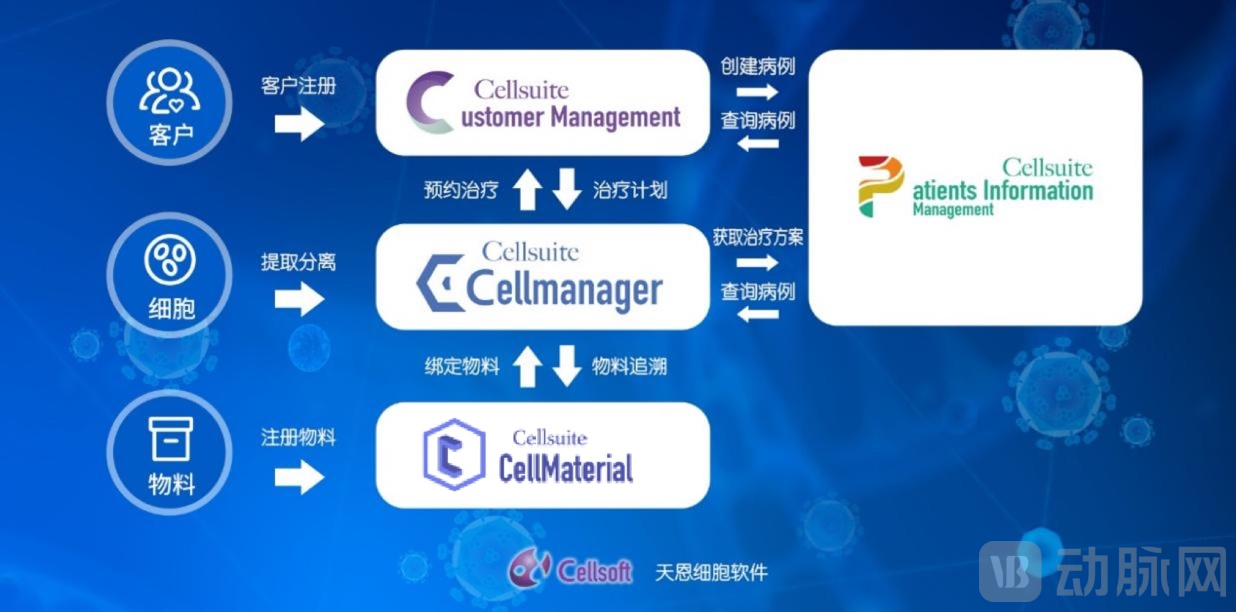
Cellsuite Product Architecture
Under this architecture,Cellmanager assumes the core function of end-to-end traceability.It covers common testing items such as cell production records, SOP execution, quality control management, and flow cytometry. It automatically links information such as donors, batches, materials, and labels, creating a verifiable data footprint for every cell transfer. Long-term data preservation meets regulatory requirements for traceability and audit trails. Feedback from Yihua Biology, a client of Tianen Cell, indicates that previously tracing a single batch required multiple people to spend an entire day. After implementing Cellmanager, queries can be completed within seconds using batch numbers, improving internal quality control efficiency and facilitating smoother regulatory inspections.
Covering the full value chain of CGT companies from R&D to clinical trials,Cellsuite supports more business scenarios through a modular structure.Cellmaterial manages the digital tracking of material inbound storage, requisition, and consumption, thereby integrating the material supply chain with the cell therapy workflow. The Customer Management module helps establish unified profiles for partner institutions and clients. The PIM (Patient Information Management) module converts quantitative metrics from pre- and post-treatment into visualized curves, providing physicians with intuitive and reproducible evidence of therapeutic efficacy. Follow-up data from a patient with a neurological disorder showed a gradual improvement in muscle strength scores across multiple post-treatment follow-ups. These data were utilized not only for patient communication but also for the preparation of scientific publications.
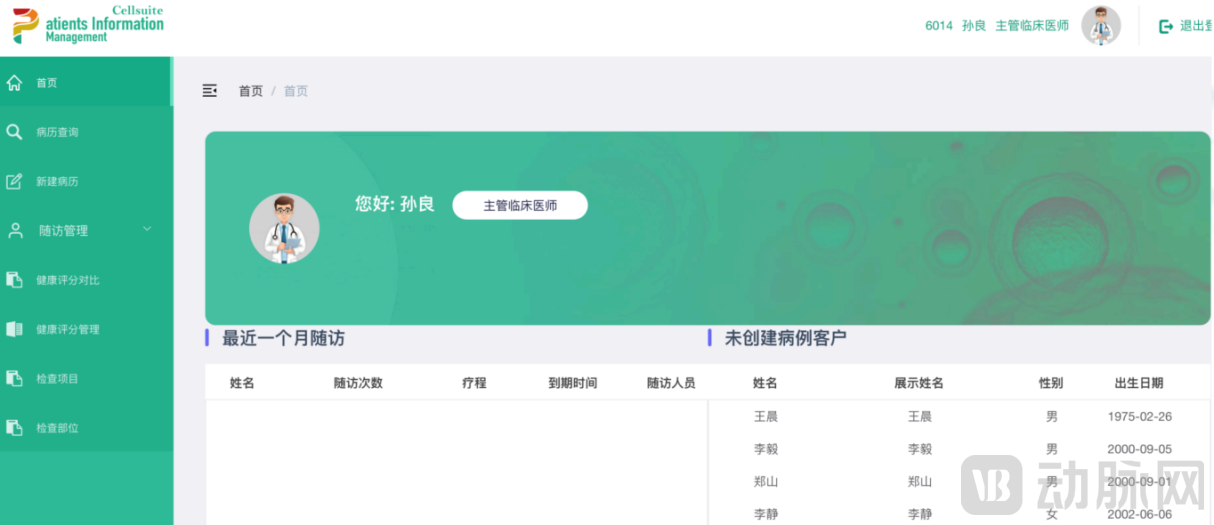
CellSuite Page Display
On the compliance front, which is of utmost concern to enterprises,CellSuite makes the organization of IND submission materials, which originally required extensive manual integration, more efficient.Under traditional models, collecting production, quality control, and logistics records across departments often takes months; whereas in Cellsuite, this information is already structured as data during daily operations, allowing companies to simply generate reports using the system’s built-in standardized templates. Some CDMOs have reported that the submission cycle has been shortened to approximately two weeks, with a significant reduction in manpower input. At the operational level,Real-time data dashboard displays production capacity, personnel progress, and material consumption.Consumption, enabling managers to gain real-time visibility into production status and reducing the manual effort previously required for compiling monthly reports.
The system employs an event-driven data structure to accommodate the uniqueness of personalized products and enable chain-of-custody traceability. In terms of recording strategy, it adheres to the principle of “recording outcomes, not process details,” thereby ensuring regulatory compliance while safeguarding proprietary manufacturing know-how. Its distributed architecture also supports multi-center collaboration, allowing enterprises to maintain consistent process records and quality systems during capacity expansion or cross-regional operations.
In terms of deployment and usage costs,CellSuite has a relatively low barrier to entryCompared with the high construction investment and long-term maintenance costs required for enterprises to develop their own systems, Cellsuite meets the digitalization needs of small and medium-sized enterprises with a shorter deployment cycle and lower overall cost.Complemented by CellGuard operations and maintenance services, providing enterprises with 24-hour response and remote support., reducing the risk of downtime caused by system anomalies. For institutions with more complex workflows or specific requirements, Cellsuite can also be customized and extended through Cellcare to align the system with the enterprise’s actual operational practices.
As CGT Moves Toward Scale, Digitalization Is the Industry’s Ballast Stone
As cell and gene therapy (CGT) transitions from early-stage exploration to clinical application and commercialization, industry competition is shifting from isolated process breakthroughs to a comprehensive contest of systemic capabilities. Key determinants for companies advancing to the next stage now include standardized production processes, traceable data, efficient regulatory reviews, and stable patient services—all of which hinge on a single foundational capability: digitalization.
Regulatory authorities are also reinforcing this trend. Policies such as the Good Manufacturing Practice Guidelines for Cell Therapy Products (Trial) explicitly set forth requirements for “standardization and traceability,”Digital systems are no longer an optional choice for CGT companies, but rather essential infrastructure in the industrialization process.The industry has also transitioned from a “rapid construction phase” to a “standardization phase,” with digital capabilities gradually becoming a key indicator for measuring corporate core competitiveness.
This trend has been clearly reflected in the market.. Li Hao, Sales Director at Tianen Cell, stated, “In the past, we proactively introduced digital solutions to enterprises; now, many clients actively seek our advice on leveraging systems to address traceability and compliance management challenges.”
andFrom the perspective of global and industry status, digital management of CGT worldwide is still in its early exploratory stage.Although overseas markets already feature players such as L7 Informatics (which offers modular solutions centered on its L7|ESP unified platform, covering production execution, quality control management, and compliance traceability, deeply tailored to the data collaboration needs across the entire CGT workflow) and Vineti (which focuses on end-to-end logistics and supply chain coordination for CGT products—from patient enrollment and cell collection to final product delivery—through its Personalized Therapy Management [PTM] platform), these systems are largely built around regulatory frameworks such as those of the FDA and EMA and are adapted to mature commercialization processes abroad. Consequently, they often encounter two major obstacles when entering the Chinese market: first, their system audit trail logic does not fully align with NMPA regulations; second, domestic manufacturers’ processes are still undergoing rapid iteration with significant procedural variations, necessitating higher configurability, whereas overseas systems tend to be highly rigid and costly to customize. The domestic market is likewise in transition from fragmented record-keeping to systematic digitalization, with many companies still relying on Excel spreadsheets, paper documents, or disparate tools. Truly comprehensive lifecycle systems that cover every stage—from donor management, manufacturing, and quality control to infusion and follow-up—remain scarce.
Against this industrial backdrop, digital systems that can evolve from local practices and adapt to Chinese regulatory requirements and domestic production models have become an urgent industry need. Tianen Cell’s Cellsuite is a representative example that has emerged as a standout during this critical window of opportunity.
Looking ahead, Tianen Cell plans to deepen its efforts in two directions:1. Introducing AI, such as using algorithms to predict cell culture risks or enabling system operations through natural language commands;Second, accelerate overseas adaptation., building on its existing Chinese-English bilingual capabilities, it progressively meets regulatory requirements in Europe and the United States, supporting the global expansion of domestic clients.
From the landmark case of Emily, the world’s first CAR-T therapy survivor, to the rapid expansion of China’s cell and gene therapy (CGT) industry, cell-based therapies are continuously broadening the possibilities for combating disease. Digital infrastructure platforms like Cellsuite provide “regulatable, verifiable, and scalable” support for this cutting-edge treatment modality, enhancing transparency in the manufacturing process of each batch of cell products, enabling more quantifiable evidence for clinical outcomes, and helping companies navigate a steadier path toward commercialization. AndAs more cell and gene therapy (CGT) companies establish end-to-end data closed-loop systems, “living drugs” will clearly enter clinical practice in a more accessible and stable manner, benefiting a greater number of patients.