CDH VGC's Gao Jieliang Outlines Three Core Investment Logics in Biomanufacturing under Technological Democratization
Editor's Note:China Biomanufacturing100Human,Witnessing the “Power of 100” in China’s Biomanufacturing
At this moment, biomanufacturing is unleashing a wave that is profoundly reshaping the global industrial landscape. China, leveraging its robust innovation momentum and strategic ambition, is striving to take the lead in this future-oriented competition. To clearly document this historic process, we have specially curated“China's Biomanufacturing100“People” Series Reports。
Our focus on “100people” are the core force driving the development of China’s biomanufacturing sector:They are scientists and pioneers at the forefront, illuminating key technologies such as synthetic biology and gene editing with their wisdom; they are also entrepreneurial and managerial trailblazers who translate laboratory breakthroughs into industrial transformation; furthermore, they include investors and policymakers with keen insights into trends, injecting critical resources and strategic direction into the industrial ecosystem. They are the backbone of technological innovation, the driving force behind industrial implementation, and the shapers of a thriving ecosystem.
This series aims to provide an in-depth portrayal of the vision, breakthroughs, and practices of these key figures, analyzing the trajectory of China’s biomanufacturing sector as it transitions from technological catch-up to innovation leadership, while revealing its immense potential to drive industrial upgrading, safeguard public health, and achieve green development.We believe that this “100The stories and insights of these individuals are not only a tribute to current achievements but also serve as important coordinates for understanding the future landscape of China’s bioeconomy.Stay tuned. (Zhu Ping)
Click to read the series:
Academician Chen Jian of the Chinese Academy of Engineering: Synthetic Biology Reconstructs the $66 Billion Cosmetics Ingredient Supply Chain, Offering Domestic Brands New Opportunities for Breakthrough
Fang Shuguang of Weikang Bio: “I Just Want to Earn One Cent Through the Power of Technology, So That 100 Million Chinese People Can Access Probiotics for Two Yuan”
Zhuang Yingping of East China University of Science and Technology: The Biomanufacturing Industry Has Become “Tripartite”—How to Bridge the Pilot-Scale “Chasm”?
Xia Jianye from the Tianjin Institute of Industrial Biotechnology, Chinese Academy of Sciences: Pilot-Scale Testing Is a “Critical Battle” That China’s Bio-Manufacturing Industry Must Win
Over the past decade, the spotlight of China’s capital markets was once firmly fixed on the turbulent trajectory of the innovative drug sector. That realm has been replete with wealth legends spanning from laboratory benches to public listings, while also bearing witness to the waxing and waning of industry cycles.
However, as frontier technologies advance into a new phase, domestic industrial policies undergo precise adjustments, and the global supply chain and competitive landscape experience profound restructuring, a quiet yet solid shift in investment is taking place among professional investment institutions.
Capital’s keen sense of smell is turning toward a field that carries the weight of heavy industrial heritage while radiating the light of frontier technologies such as synthetic biology—biomanufacturing.This marks a shift in investment logic from chasing “from0To1” of disruptive discoveries, empowering “from1To100” the evolution of scaled manufacturing.
Against the grand backdrop of China explicitly designating biomanufacturing as a key future industry for priority development and including it in the strategic emerging industries catalog of the 15th Five-Year Plan, an industry transformation driven by foundational technologies and aimed at reshaping traditional production methods is quietly unfolding.
In this historic process,CDH InvestmentsAs a comprehensive investment institution deeply rooted for many years in China’s healthcare and hard-tech sectors, it has not only witnessed the full lifecycle of innovative drugs but also leveraged its unique industry perspective,Achieved a Critical Leap from Cognition to Practice in the Field of Biomanufacturing. CDH Innovation and Growth Fund (CDHVGC) The biomedical team, with its systematic layout, has become a representative case study in this transformation.
Unlike capital chasing trends, CDH’s strategy in this field appears calm and pragmatic. They adhere to innovation while“Successful process scale-up validation; commercialization just getting underway”focusing on the enterprise’s development stage as the core entry point, strategically positioning in relative value depressions within the industry, and steadfastly accompanying companies through the protracted journey from R&D and process scale-up to commercialization.
Their practices provide a rigorous and profound footnote to our understanding of the true landscape and future trajectory of China’s biomanufacturing industry.
01
From Technological Equity to Systemic Competitiveness
Biomanufacturing is not a suddenly emerging new concept, but rather an “industrial upgrade” built upon decades of foundation in the fermentation industry.
CDHVGCSenior Partner Gao Jieliang pointed out that long before investors and the industrial sector began to re-examine this field, biomanufacturing had already existed for many years in the form of traditional fermentation industries.At its core, it leverages living organisms as micro-factories to mass-produce target products through biological processes such as fermentation and enzymatic catalysis.

CDHVGCSenior Partner Gao Jieliang
“Approximately seven to eight years ago, the field witnessed its first wave of capital enthusiasm, giving rise to product-oriented companies represented by various high-value chemicals, as well as platform-oriented companies with high-throughput automation as their core technology.”
However, after the hype subsided, the actual development of many companies fell short of market expectations. CDHVGCThe team conducted in-depth research during that period but did not make any moves. Looking back on this experience, Gao Jieliang candidly stated,The caution exercised at the time now appears justified, as inflated valuations and immature capabilities in process scale-up and commercialization were prevalent issues then. This experience has since become a crucial foundation for their current understanding of the industry.
After reflection and reconsideration, CDHVGCThe team has developed a clearer and more resolute understanding of the value of biomanufacturing.
In their view, the primary prerequisite for understanding biomanufacturing is to move beyond the romanticized notion of it as a purely emerging technology and return to its industrial essence. Its scope is extremely broad, ranging from basic amino acids and organic acids to high-value-added pharmaceutical ingredients,Functional Food Additives, and even bio-based materials that may potentially replace petrochemical routes in the future, constitute a vast industrial spectrum.
The core engine currently driving this industrial upgrade is undoubtedly the breakthrough advancements in synthetic biology and gene-editing technologies, particularlyCRISPRThe maturation and widespread adoption of gene-editing tools have increased the efficiency of targeted microbial engineering by orders of magnitude.
CDHVGCinvestment team keenly pointed out that,This has ushered in a profound revolution of “technological equity.”
A decade ago, high-efficiency gene-editing capabilities were likely exclusive barriers confined to a few top-tier laboratories. Today, however, the widespread availability of related tools and knowledge has enabled numerous research teams and startups worldwide to relatively easily conduct targeted modification and design of microorganisms.
This means that, in the initial “from0To1” strain engineering phase, the absolute and insurmountable technological chasm is narrowing.
However, technological democratization by no means implies a lowering of the barriers to competition.On the contrary, it marks a shift in the primary battlefield of competition.
When everyone has mastered the basic tools, the focus of the competition shifts completely from “who can do it” to “who can do it better, more stably, and more economically.”
In this new dimension of competition, China’s systemic advantages are beginning to stand out, namely the so-called “engineer dividend” and “industrialization dividend.”
China boasts the world’s largest, relatively cost-effective, and well-trained workforce of bioengineering professionals. These experts excel not only in gene editing within laboratory settings but also demonstrate strong engineering mindsets and practical capabilities in process development, process optimization, equipment understanding, and workshop management.
This capability to translate laboratory achievements into stable industrial production constitutes one of the core advantages for Chinese biomanufacturing enterprises in participating in global competition.
Gao Jieliang believes that this advantage does not exist in isolation; rather, it is resonating in sync with the continuously optimizing policy environment.
From the inclusion of biomanufacturing as a strategic emerging industry in China’s 15th Five-Year Plan to the specific industrial support policies issued by governments at all levels, it is clearly evident that top-level design prioritizes this field.
Policy support is reflected not only in R&D funding but, more critically, in systematic assistance for key stages of industrialization—such as the establishment of pilot-scale production platforms, land-use guarantees, green-channel environmental approval processes, and market access for products.
This provides crucial external infrastructure and institutional safeguards for biomanufacturing enterprises to navigate the “Valley of Death” from “samples” to “products” and then to “commodities.”
From a Global Perspective: CDH InvestmentsVGCA strategically significant shift in the landscape has been observed.
Overseas synthetic biology star companies, which were heavily favored by capital in recent years, have generally faced challenges including valuation corrections and commercialization progress falling short of expectations.
This serves as a vivid global open lesson, revealing the unique dynamics of the biomanufacturing sector: between flashy laboratory technologies and sustainable profitability lie the formidable challenges of process scale-up, cost control, and commercialization.
Meanwhile, a cohort of Chinese biomanufacturing enterprises, focusing on specific products and deepening their expertise in processes and cost efficiency, is steadily emerging.
This global industrial realignment has objectively created market and capital space for Chinese enterprises, while also providing valuable lessons: only by integrating technology with industrialization can a true competitive moat be established.
Gao Jieliang and his team’s series of insights into the industry are by no means theoretical deductions confined to the ivory tower; rather, they have directly shaped an investment thesis that is highly focused and eschews a scattergun approach.
They clearly recognize that, in this field, investing in an industrialized solution that has been engineering-validated is currently the preferred approach, built upon a solid foundation of technological innovation.
Therefore, their focus has always been on companies that have already crossed or are about to cross the most critical barrier from laboratory to factory.
02
Betting at the Inflection Point of Industrialization by Crossing Three Major Thresholds
Based on a profound understanding of the dynamics of the biomanufacturing industry, CDHVGCThe team has developed a clear, coherent, and rigorous investment logic strategy.
Gao Jieliang summarized it as: systematically focusing on the critical stage of “successful process scale-up validation and nascent commercialization.”This strategic choice reflects a precise balance achieved through multiple considerations.
He explained that choosing this stage is primarily about balancing risk and reward.The stage of “validated process scale-up and nascent commercialization” signifies that one of the greatest uncertainties in the technological pathway has been eliminated. At this juncture, companies require capital to expand production capacity and penetrate markets, while valuations remain relatively reasonable. With future growth in revenue and profits, coupled with deepening recognition from the capital markets, substantial returns are expected.
Secondly, this strategy represents a proactive response to the industry cycle. After experiencing a bubble and subsequent trough a few years ago, the biomanufacturing sector currently enjoys far less capital market enthusiasm than fields such as innovative drugs. However, this very situation implies that the price-to-value ratio of high-quality companies is relatively reasonable, thereby creating fertile ground for value investing.
Gao Jieliang believes that as national policy support intensifies and a number of companies successfully achieve industrialization, the capital market’s understanding and valuation framework for biomanufacturing will be reshaped, with early movers poised to benefit from this cognitive gap.
He summarized the core of this logic as the “three major thresholds” that must be successfully crossed:R&D barriers, process scale-up barriers, and commercialization barriers.
These three major thresholds are progressively sequential, collectively forming a complete pathway to industrialization; the absence or weakness of any single link will lead to the failure of final commercialization.
The R&D threshold serves as the starting point, requiring companies to possess a solid foundation in basic sciences and efficient research and development capabilities.
This involves not only proficient use of gene-editing tools, but also a deep understanding of microbial metabolic pathways, expertise in enzymology, and the ability to efficiently construct and screen microbial strains.
CDHVGCWhat matters is whether the team possesses a validated, reproducible R&D methodology.
In terms of project sourcing and industry coverage, they have adopted a relatively open yet focused approach, paying attention to both scientist-led startups and technology commercialization projects by entrepreneurs with deep industrial backgrounds.
Gao Jieliang pointed out that these two types of teams each have their own strengths and weaknesses: scientist-led teams excel in R&D depth and technological foresight, but may fall short in process scale-up and commercial operations; industry-oriented teams, on the other hand, bring greater experience in engineering, cost control, and market development, but may need to continuously secure or introduce cutting-edge R&D capabilities. CDHVGCinvestment involves selecting companies with relatively balanced team capabilities or with clear pathways to address their weaknesses, following a comprehensive assessment.
However, in his view, the true “point of no return” lies at the second hurdle—process scale-up.
This represents a daring leap in transforming “star strains” that perform exceptionally well at the liter scale in the laboratory into “workhorse strains” capable of stable, efficient, and low-cost production in industrial fermentation tanks ranging from tens to hundreds of tons.
This process involves complex engineering challenges: how to maintain the strain inHigh-Density Fermentationactivity and productivity? How to control oxygen transfer, heat transfer, and pH? How to design downstream separation and purification processes to control costs? Every early-stage biomanufacturing company must undergo the test of process scale-up.
Therefore, CDHVGCPlaces extreme emphasis on whether the team includes core members with both biological expertise and practical engineering experience, as well as whether the company has accumulated pilot-scale data and established mature process development workflows.
Meanwhile, they have developed a detailed evaluation framework in practice: rather than merely checking whether companies have built pilot-scale or production-scale fermenters, they conduct in-depth verification of multi-batch production data, the stability of key performance indicators, and the actual costs calculated based on large-scale production.
Even with successful mass production, the third commercialization hurdle remains formidable.
Does the product address genuine, sustainable market demand? Does its cost structure offer a decisive advantage over traditional chemical synthesis or extraction methods?
Can the product’s quality and specifications consistently meet the stringent requirements of downstream customers (often large chemical, food, or pharmaceutical companies)? How long will it take to educate the market on bio-based products?
These have nothing to do with laboratory techniques, yet they directly determine the life or death of a company. CDHVGCDuring the assessment, an in-depth analysis is conducted of the target market size, competitive landscape, customer stickiness, and switching costs, requiring companies to have a clear and viable market entry strategy.
From a product perspective, CDHVGCThe investment portfolio is characterized by a diversified layout across agriculture, food nutrition, consumer personal care, biopharmaceuticals, and bioenergy, with a preference for high-gross-margin products. Gao Jieliang explained that this does not mean excluding categories with relatively lower gross margins, such as bulk chemicals, but is rather based on considerations of return on investment (ROI). High-value single products (such as specialty additives and high-end cosmetic ingredients) command high values and offer substantial gross margin potential. Even if the total addressable market for substitutes is not necessarily the largest, companies can readily establish significant revenue and profits within a relatively short period.
It is precisely out of reverence for these three major thresholds that CDHVGCClearly target the “sweet spot” for investment at the stage where “process scale-up validation has been successfully completed and commercialization is just getting underway.”
Companies at this stage have typically completed laboratory-scale and pilot-scale trials, demonstrating the feasibility of industrialization with concrete data. They may have secured initial orders or obtained validation from benchmark customers, but have not yet entered a period of explosive revenue growth.
Entering at this stage, on the one hand, avoids the high risks and significant uncertainties associated with early-stage pure technology R&D; on the other hand, the company’s valuation has not yet been fully exhausted, and capital injection can greatly facilitate rapid production scale-up and market expansion, supporting the enterprise through the final stretch from “proof of concept” to “commercial success.”
This investment logic at CDHVGCis fully reflected in the landmark cases.
After years of accumulation, CDH Investments has systematically laid out its portfolio in the biomanufacturing sector, investing in multiple high-quality enterprises including Kangweijian, Rongrui Biotech, Ruijiakang, Zhiyu Biosciences, Yinjia Biotech, and Jinhe Biotech.
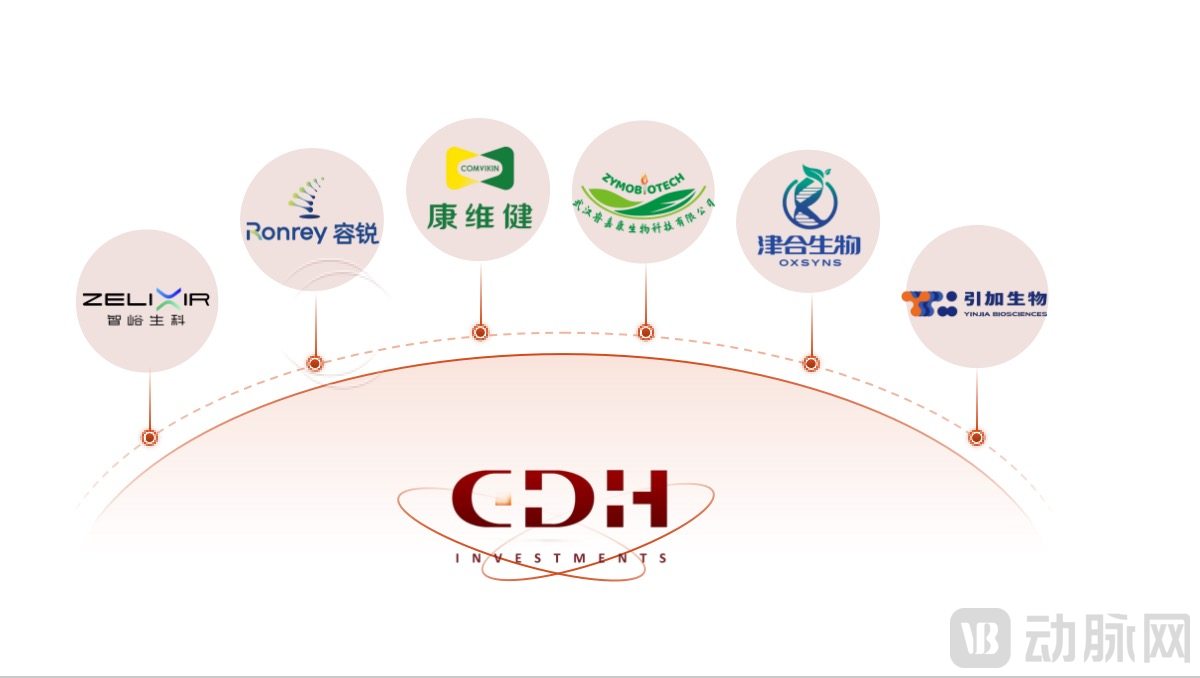
Selected Biomanufacturing Companies in CDH VGC’s Portfolio
The products span multiple sectors, including food, biopharmaceuticals, consumer daily chemicals, agriculture, and bioenergy. The company’s development stage focuses primarily on projects in process scale-up and early commercialization, while also strategically positioning itself in high-potential ventures founded by scientists at the early stage.
Through these cases, Gao Jieliang has summarized several common elements of success in biomanufacturing enterprises:First, they possess core products with validated significant cost or performance advantages; second, they have overcome critical barriers in process scale-up and established scalable production capabilities; third, they demonstrate a profound understanding of downstream markets and application scenarios, with clear commercialization pathways; and fourth, they often engage in positive interactions with local resources and industrial policies.
From another perspective, it can also be seen that CDHVGCInvestment is by no means about chasing technological hype; rather, it is a prudent decision made after in-depth evaluation of the core proposition: “Can the team systematically address the three major threshold challenges?”
They are investing not only in technology, but also in the feasibility and certainty of its industrialization.
03
Growing with the Industry, Building a Long-Term Ecosystem
Gao Jieliang holds a sober judgment on the future landscape of the biomanufacturing industry, grounded in its inherent characteristics.
He believes that it may be difficult for the biomanufacturing sector to develop highly concentrated industrial clusters akin to those in the innovative drug industry, a challenge dictated by the high diversity of products and the high specificity of manufacturing processes.
An anticancer drug and a food additive may have vastly different production pathways, equipment requirements, and regulatory standards.
However, this does not mean that the industry will become completely fragmented.A more likely scenario is the formation of synergistic clusters at specific stages of the industrial chain, particularly in R&D and pilot-scale testing.
For example, shared infrastructure such as gene editing platforms, high-throughput screening platforms, analytical testing centers, and pilot-scale fermentation facilities can significantly reduce the R&D costs and entry barriers for startups.
Currently, this trend is beginning to emerge within some advanced biopharmaceutical industrial parks in China. By providing shared technical services, these parks have attracted and nurtured a large number of startups, creating an ecosystem effect.
The healthy development of the industry ultimately depends on rational recognition from the capital markets. Gao Jieliang candidly admitted that the overall capital market’s positioning in biomanufacturing is currently at a relatively early stage.
The valuation framework has yet to establish a relatively clear structure, unlike that of innovative drugs, leading to the potential undervaluation of some outstanding enterprises and the presence of valuation bubbles in certain projects.
He firmly believes that the law of value discovery remains effective over the long term. As time goes on, when an increasing number of biomanufacturing companies prove themselves through robust products, controllable costs, and solid income statements, the capital market will ultimately accord them fair valuation.
“Capital markets will ultimately return to their essence, and technological innovation will ultimately generate profits.”This conviction has enabled Gao Jieliang and his team to maintain their own valuation discipline and investment pace amid the market noise.
Facing such a track that combines enormous potential with long-term challenges, CDHVGCIts strategic positioning and layout framework have been clearly defined.
Their strategy is a dual-track approach:On the one hand, continue to prioritize the identification and investment in projects that have crossed or are about to cross the threshold of process scale-up and are at the starting point of commercialization.
This is the cornerstone of its current layout, pursuing growth within certainty.
On the other hand, they also maintain focus on and engagement with projects involving earlier-stage, platform-based, or disruptive technologies; however, this requires more stringent screening criteria, with particular emphasis on whether the team possesses a strong orientation toward industrialization and an engineering-driven mindset.
Gao Jieliang and his team have long transcended the role of mere financial investors. They are committed to building a robust post-investment value-creation system tailored to the unique needs of biomanufacturing enterprises.
This includes: helping scientist-founders bridge gaps in their business and management acumen, and supporting their transition toCEOTransformation; Leveraging CDH InvestmentsVGCnetwork, connecting portfolio companies with strategic customers, suppliers, and potential M&A opportunities in the industrial sector.
Provide professional support in capital operations, including subsequent financing rounds and IPO planning. Their goal is to become the “most trusted long-term industrial partner” for entrepreneurs in the biomanufacturing sector.
Gao Jieliang believes that the rise of China’s biomanufacturing industry will follow a longer and more solid path, distinct from those of consumer internet or innovative drugs.
Its core driving forces will stem from continuous innovation in foundational technologies, meticulous refinement of manufacturing processes, precise cost control, and a deep understanding of global market demands.
In this process, capital needs to demonstrate greater patience, deeper industry insights, and stronger empowerment capabilities. CDHVGCDemonstrating its thinking and actions in the face of this industrial transformation, with a clear cognitive framework, rigorous investment logic, and long-term strategic resolve.
Their practice reveals a simple yet solid truth: in the world of biomanufacturing, true certainty does not come from the titles of cutting-edge papers,Rather, it stems from the stable operational data curves in the fermentation tank, from meticulous cost control down to the smallest fraction, and from customer orders won by the final product in a fiercely competitive market.
This investment in the industry's future is a precise negotiation over certainty.
VCBeat Biofabrication: Call for Submissions
Focusing on Frontier Areas Such as Biopharmaceuticals, Synthetic Biology, and Cell Factories
Sharing Technological Breakthroughs, Industry Insights, and Case Studies
Manuscripts must be original, professional, and highly readable, with a word count of 1,500–5,000 words.
Please also send your submission to the email address:
【zhu.p@vcbeat.net】 and 【wu.yg@vcbeat.net】
Or +V:wsmercury
Subject: [Submission] + Article Title + Author Name
Accepted manuscripts will be promoted across all platforms.
Authors can receive professional endorsements, resource matchmaking, and other benefits.
Call for Papers: Advancing Industry Development Together
If your company/institution has completedKey Developments
Including the latest financing, business development (BD), and major project milestones.
WelcomeScan the QR code at the end of the articleContact Us for YouFree [Premiere]