

China Tobacco Dominates with 41 Patents as Moutai, Novartis Enter the Squalane/Squalene Race: 519 Patents Signal Cross-Industry Green Revolution
China Tobacco, Kweichow Moutai, Proya, multinational pharmaceutical giants Takeda and Novartis, along with various biotechnology companies—what has brought these seemingly disparate enterprises onto the same track is, surprisingly,Squalaneand Squalene。
VCBeat’s analysis of data from the China National Intellectual Property Administration reveals that,From1988To date, China has a total of519Squalane/Squalene-Related Patents.
The patent list also features the aforementioned companies, and even includes squalane from China Tobacco./Number of Squalene Patents Reaches41units, with a断层式 lead. Specifically:
China’s tobacco giant has built a complete technological chain from the field to the cigarette filter tip;
Multinational pharmaceutical companies Novartis and Takeda have respectively applied them in vaccine adjuvants andLipid-Lowering Drugsaspect;
Jiangnan University and other research institutions are committed to building efficient microbial “cell factories”;
Kweichow Moutai’s patent portfolio is precisely tailored to support its baijiu brewing processes.
It is understood that squalane is a high-quality oil, mostly extracted from the livers of deep-sea sharks. It is very stable and has an excellent user experience, widely used in skincare products. However, traditional squalane is derived from the livers of blue whales and sharks.1Tons of squalane required3000sharks, posing a threat to shark populations, and it is costly. Therefore, the European Union has banned the use of animal-derived squalane as a cosmetic ingredient.
Leveraging synthetic biology technologies, laboratories can produce products that are identical to natural squalene (squalane is produced by the hydrogenation of squalene), thereby protecting the ecological environment and achieving sustainable production.
This natural ingredient, once controversial for its ecological threats, is now quietly sparking a “green revolution” across multiple industries. It is evolving from a mere skincare ingredient into a raw material that connects traditional sectors such as cosmetics, pharmaceuticals, food, and even tobacco.
01
From Sporadic Cases to Outbreak: Currently Entering a High-Level Plateau Phase
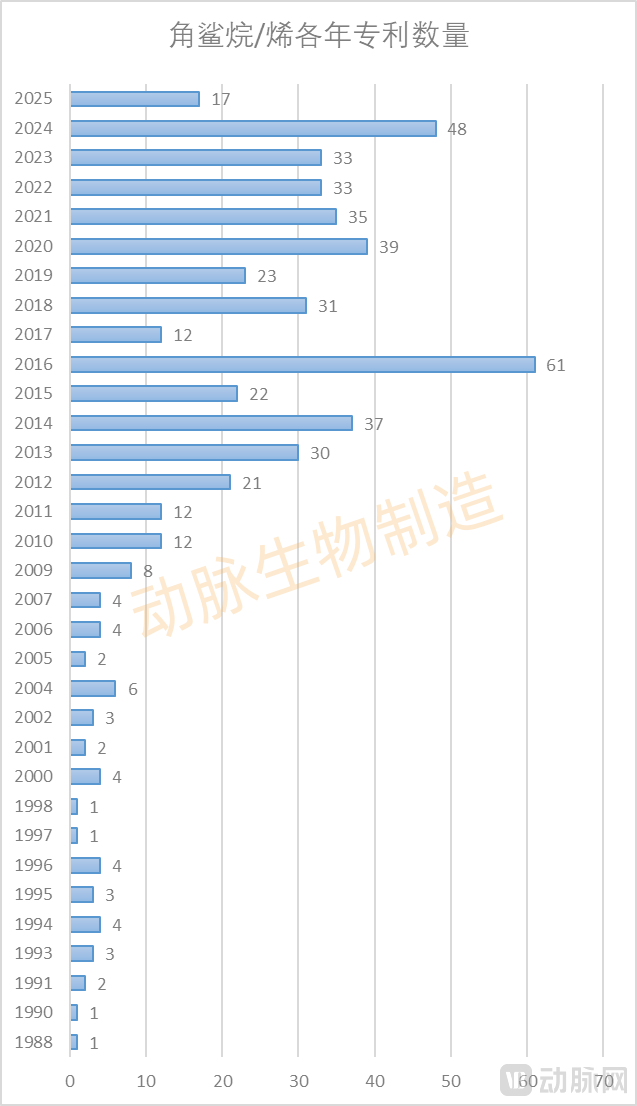
An analysis of patent filing dates reveals that squalane/Patent activities related to alkenes have undergone changes over the past fifteen years.From Dormancy to Outbreak, Then to a Mature High-Level Plateauthe typical technology life cycle curve.
Squalane/The development of alkenes is driven by the dual forces of the booming cosmetics market and the revolution in biosynthesis technology. While the technology in this field has become relatively mature, innovation continues, with patent activity remaining robust. Future competition will increasingly focus on process advancement, cost control, and the exploration of new applications.
Early Exploration Phase (1988-2009Year):The number of patents is extremely low, with an annual average of only about2.4items; sporadic activity, indicating that squalane during this period/Graphene is still in the stage of basic research and preliminary application exploration, with low market and technological attention.
Accelerated Growth Period (2010-2016Year):The number of patents began to grow significantly, especially in2010Year (12件) after the speed increased significantly;2016reached a historical peak in the year (61cases), forming a prominent climax.
This phase may be associated with star enterprises in synthetic biologyAmyrisis related to its comprehensive transformation and market explosion.AmyrisDeveloped a farnesene-based squalane production process, with the potential to move away from traditional biological extraction methods, andAmyrisYu2016formally exited the biofuel business in [Year], fully focusing on the high-value cosmetic ingredients market (such as squalane); in the same year, a skincare brand incubated based on this technology Biossance Established (brand materials state that its parent companyAmyristechnology began with2003year, but the brand itself was established in2015years later).
Fluctuations and Plateaus (2017to date):2017The sharp decline in the number of annual patents may indicate a brief adjustment following the previous wave of technological enthusiasm or cyclical fluctuations in patent filings.2018Post-holiday volumes rebounded and remained at the annual average30-50of the upper range (excluding2025(with the exception of incomplete annual data), this suggests to some extent that the technology may have entered a stage of mature application and continuous iteration, with R&D activities remaining stable and active.
From the perspective of key time points:
2010Year: The Turning Point for Initiating Growth (12item).
2016Year: Absolute Peak (61case), is a landmark year for technological or market enthusiasm.
2020-2024Year: In2020Year (39pieces), the quantity stabilized at30-48between items, indicating continued investment in the industry.
2025Although the year only has17items, but this data does not represent the annual total, and typically after a patent application is filed, it requires18...was only made public after about a month.
02
Research areas cover cosmetics, pharmaceuticals, tobacco, agriculture, and more.
From2010Based on patent research conducted in recent years, squalane and squalene are primarily applied in7Major Field:
1Extraction and Purification Technology
Major institutions include Tianjin University, South China Agricultural University, COFCO Nutrition and Health Research Institute, Chinese Academy of Forestry, and Zhejiang Medicine.
The research content includes the extraction of squalene from raw materials such as vegetable oil deodorizer distillate, microalgae, yeast, tobacco, wine lees, and red jujube waste; molecular distillation, supercriticalCO₂Optimization of processes such as extraction, column chromatography, enzymatic extraction, and complexation extraction; development of environmentally friendly, high-efficiency, and low-cost industrial-scale extraction methods.
2Biosynthesis and Microbial Fermentation
Key institutions include Roquette Frères, Nuscience Group, the Institute of Microbiology of the Chinese Academy of Sciences, Xiamen University, and Jiangnan University.
The research content includes utilizing genetic engineering techniques to modify yeast and microalgae (such as *Schizochytrium* and *Thraustochytrium*) to enhance squalene production; developing novel strains (such as marine-like yeasts and engineered *Schizochytrium* strains); and optimizing fermentation media and culture conditions.
3、Applications in Cosmetics
Key institutions include multiple cosmetics companies and research entities.
The research scope includes its application as a moisturizing, reparative, and anti-aging ingredient in products such as face creams, eye creams, serums, and facial masks; development of sustained-release systems such as squalane microcapsules and liposomes./Stable formulation; emulsification and water-soluble modification technologies for squalane.
4. Applications in Pharmaceuticals and Health Supplements
Key institutions include Novartis, Takeda, China National Pharmaceutical Industry Institute, Shanghai Institute of Pharmaceutical Industry, and By-Health.
Research content includes serving as vaccine adjuvants (such asMF59analogs) applied to influenza vaccines, rabies vaccines, etc.; developmentSqualene Soft Capsules, compound preparations are used to enhance immunity, lower blood lipids, and provide antioxidant effects; squalene synthase inhibitors are used in the development of cholesterol-lowering drugs.
5. Applications in the Tobacco Industry
Major institutions include China National Tobacco Corporation Guangdong Provincial Company, South China Agricultural University, and Guangxi China Tobacco.
The research content includes squalene with tea polyphenols, β-Formulations containing carotene and other compounds to reduce free radicals in cigarette smoke; development of dosage forms such as squalene precursor liposomes and multivesicular liposomes for use in cigarette filters; fertilizers and cultivation techniques to increase the squalene content in tobacco leaves.
6. Applications in Pesticides and Animal Feed
Key institutions include Beijing University of Agriculture, Shandong Qiaopai Group, and Anhui Future Agriculture.
The research content includes the use of squalene as a botanical acaricide and fungicide, and as a feed additive to enhance animal disease resistance and improve meat quality.
7. Research on Testing Methods and Standards
Major institutions include China National Tobacco Corporation, Kweichow Moutai Co., Ltd., and Shandong Institute for Food and Drug Control.
Research content includes squalene/Rapid detection method for squalane; development of methods for determining its content in products such as baijiu, vegetable oils, and tobacco.
03
Patent Portfolio Analysis of Key Enterprises
519Among the patent data, the primary research institutions mainly include:
Research Universities and Research Institutes:such as Tianjin University, South China Agricultural University, Chinese Academy of Forestry Sciences, COFCO Nutrition and Health Research Institute, and Chinese Academy of Sciences;
Biology/Chemical Enterprises:such as Novartis, Roquette Frères, NuCelis, COFCO Group, and Zhejiang NHU;
Cosmetics/Daily Chemical Companies:such as Guangzhou Yachun, Proya, Anjieyu, and Unilever;
Tobacco Companies:such as China National Tobacco Corporation Guangdong Provincial Company and Guangxi China Tobacco Industrial Co., Ltd.;
Pharmaceuticals/Health Supplement Companies:such as By-Health and Shandong Shenghai Health Products Co., Ltd.
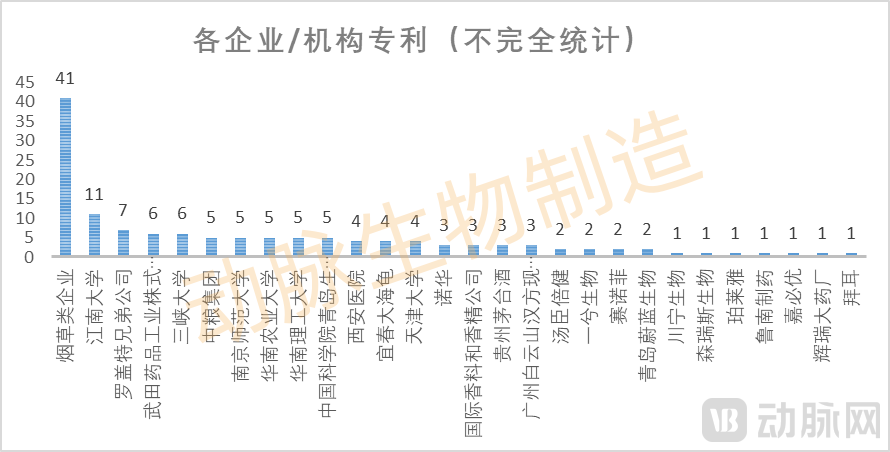
According to patent statistics, squalene/The Squalane Sector Exhibits a Multi-Industry Competitive Landscape:
Tobacco companies with41Patents significantly lead, constituting the dominant force in R&D.
Jiangnan University (11件)As a representative of universities, it boasts outstanding scientific research capabilities.
Multinational corporations such as Roquette (7item), Takeda (6pieces) and companies such as Novartis and Sanofi indicate that this ingredient holds high value in international markets, including food and pharmaceuticals.
COFCO (5item), Moutai (3pieces), among other domestic giants’ strategic moves, demonstrating its application potential in the health food and premium consumer goods sectors.
This data further shows that squalene/The R&D landscape for squalane is highly diversified, encompassing universities (such as South China University of Technology), research institutes (such as the Qingdao Institute of the Chinese Academy of Sciences), hospitals (Xi’an Hospital), biotechnology companies (such as Yixi Biotech and Senrui Si), and cosmetics enterprises (Proya).
This confirms squalene/As a functional ingredient, squalane technology has permeated multiple high-value-added industries, including healthcare, nutrition, and skincare, fostering a composite innovation ecosystem led by tobacco enterprises and driven by collaborative efforts among industry, academia, research institutions, and medical practitioners. The strategic layouts of representative enterprises are detailed below.
(1) The Squalene Technology Chain of Tobacco Companies
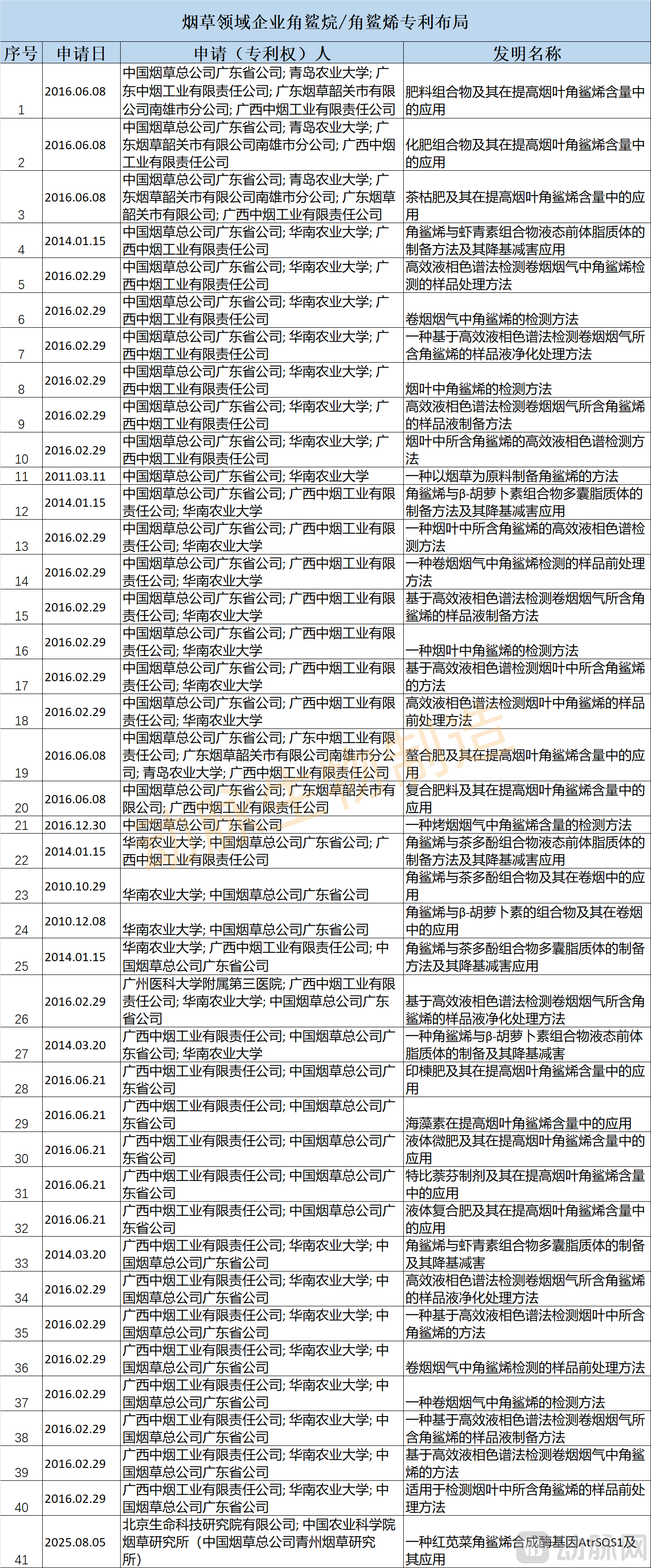
1• Establishing a system for the extraction and detection of squalene using tobacco as the raw material
Tobacco enterprises such as China National Tobacco Corporation Guangdong Provincial Company and Guangxi China Tobacco Industrial Co., Ltd. conduct systematic research and development centered on tobacco raw materials.
As early as2011In that year, China National Tobacco Corporation Guangdong Company collaborated with South China Agricultural University to file a patent for “A Method for Preparing Squalene Using Tobacco as Raw Material,” laying the material foundation for extracting squalene from tobacco leaves. Subsequently, focusing on the quantitative analysis of squalene, the company established a series of patents on detection methods covering different matrices such as tobacco leaves (e.g., “Method for Detecting Squalene in Tobacco Leaves”) and cigarette smoke (e.g., “Method for Detecting Squalene in Cigarette Smoke”). These efforts concentrated on specific technical aspects including sample pretreatment and high-performance liquid chromatography (HPLC), thereby forming a complete analytical testing chain.
2, Enhancing the squalene content in tobacco leaves through agricultural technology interventions
Tobacco companies also prioritize enhancing squalene accumulation in tobacco leaves through cultivation and fertilization practices. Since2016Since [year], multiple institutions have jointly filed numerous fertilizer-related patents, such as “Fertilizer Composition and Its Application in Increasing Squalene Content in Tobacco Leaves” and “Compound Fertilizer and Its Application in Increasing Squalene Content in Tobacco Leaves.” These patents specifically involve various forms and components, including tea seed cake fertilizer, chelated fertilizer, alginic acid, and neem fertilizer, aiming to proactively enhance the content of functional ingredients in raw materials through agronomic measures.
3- Development of squalene compositions and exploration of their application in "reducing base levels and harm" in cigarette products
Tobacco companies are actively exploring the application value of squalene in cigarette products, with a focus on its combination with astaxanthin and β-Natural ingredients such as carotene and tea polyphenols are compounded and further formulated into liposomes (e.g., “Preparation Method of Liquid Precursor Liposomes of Squalene and Astaxanthin Compositions and Their Application in Reducing Base and Harm”). Such patented technologies have clear objectives, aiming to achieve the function of “reducing base and harm” through specific compositional forms, possibly representing a research and development pathway that seeks to address health concerns via functional additives.
In summary, from the perspective of patent layout, tobacco companies have established a complete technological chain in the field of squalene, spanning raw material acquisition (extraction and enrichment) → quality control (precise detection) → product application (development of functional compositions). Their R&D focus is clearly directed toward increasing the squalene content in tobacco leaves and applying it to cigarette products.
(2) Jiangnan University: Centered on Synthetic Biology and Metabolic Engineering
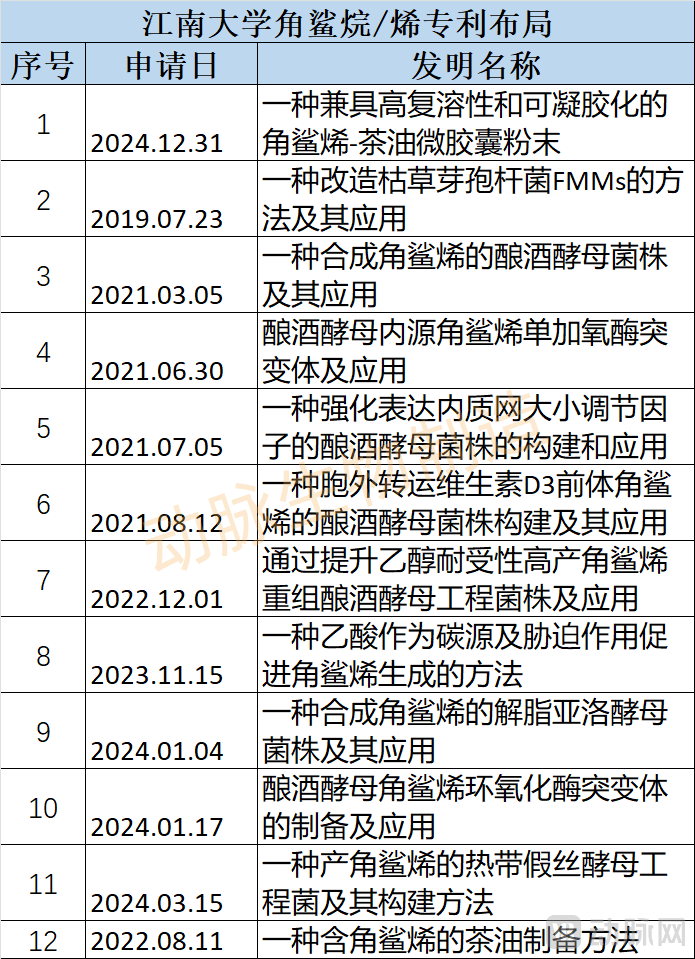
Jiangnan University’s patent layout in the field of squalene demonstrates a highly systematic R&D strategy centered on synthetic biology and metabolic engineering, which can be summarized across three levels.
1、Focusing on microbial synthesis to build efficient cell factories:The core of the patent layout is to engineer various yeast strains (Saccharomyces cerevisiae, Yarrowia lipolytica, Candida tropicalis, Candida glycerinogenes, etc.) through genetic engineering to construct high-yield squalene-producing engineered strains. The technical approaches include enhancing biosynthetic pathways and optimizing organelles and metabolic flux.
2, integrated "strain-Process-“Product” Full-Chain Innovation:R&D efforts are not limited to strain construction but extend further to process intensification (such as enhancing ethanol tolerance and leveraging acetate stress) and product application. Patents cover the spectrum from laboratory shake flasks to5LScale-up of Fermentation Tank Process, Target Yield Has Reached Kilogram Level/Upgrade (up to51.2 g/L), demonstrating a clear industrial orientation. The sole end-product patent (microencapsulated powder) reflects the intention to expand into the high-value-added food sector.
3, Derive High-Value Products and Expand Application Boundaries:Some patents utilize squalene as an intermediate for the targeted development of high-value downstream products. For example, enhancing lanosterol, ergosterol, or vitamin production through squalene engineeringD3Precursor yield, or using squalene as a productionN-N-AcetylglucosamineThe “substrate channeling” enhancement strategy demonstrates that its R&D vision has expanded from the production of single compounds to broader areas of biomanufacturing, including steroids and vitamins.
(3) Roquette Frères: Microalgae-Centric Biomanufacturing
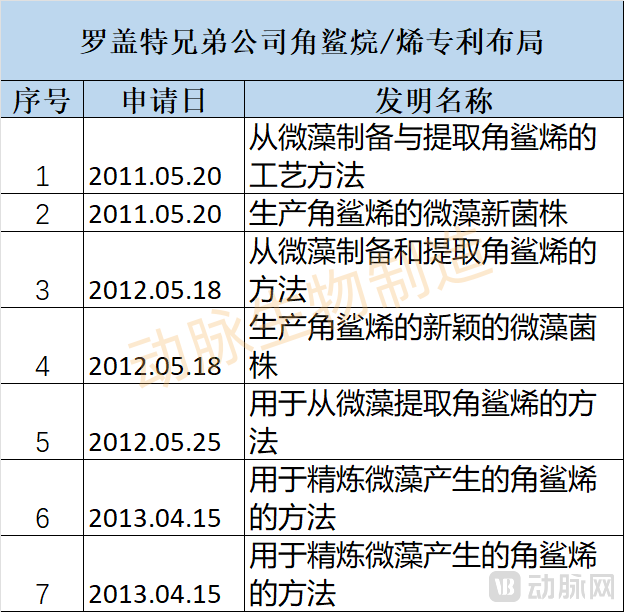
Roquette Frères has established a closed-loop technological barrier in the field of squalene by building a full-chain biomanufacturing system centered on microalgae. Its patent layout strategy is clearly divided into three closely interconnected stages:
Upstream Cell Line and Process Development:Prioritize the screening and cultivation of specific microalgal strains with high squalene yields (such as *Schizochytrium* and *Thraustochytrium*), and optimize their fermentation culture processes, with core parameters including precise temperature control (approximately30°C) and vitamin additionB12, aiming to enhance the biosynthetic efficiency of squalene at the source.
Midstream Green Extraction Technology:Developed a solvent-free method for cell wall disruption and extraction, which employs protease treatment to break algal cell walls combined with centrifugal separation to obtain crude squalene oil in an environmentally friendly manner, reflecting considerations for production safety and sustainability.
Downstream High-Efficiency Purification and Refining:Deployed advanced refining and purification technologies, primarily utilizing supercriticalCO2Extraction and short-path molecular distillation, among other methods, are employed to efficiently prepare high-purity, high-concentration squalene product compositions from crude oil.
(4) Takeda: Exploring R&D of Squalene-Based Pharmaceutical Therapies
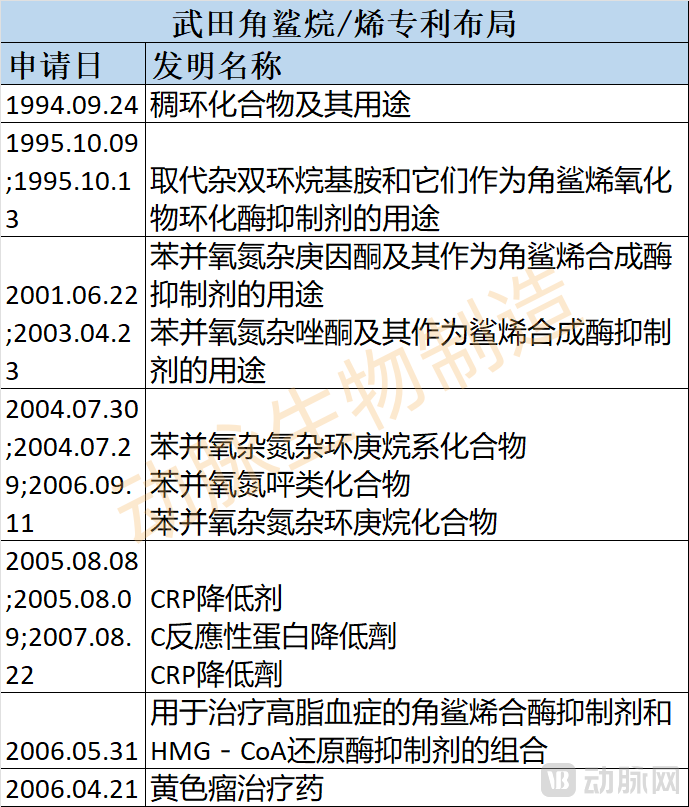
Takeda Pharmaceutical Company Limited’s patent portfolio in the squalene field reflects its core strategy in therapeutic applications, focusing on the development of novel small-molecule inhibitors targeting squalene synthase, including:
Clearly Defined Therapeutic Targets:All patents focus on design, synthesis, and applications, with the core objective of developing compounds that effectively inhibit squalene synthase, thereby blocking the cholesterol biosynthesis pathway.
Therapeutic Areas of Focus:Its technological applications are highly unified, aiming to prevent and treat diseases related to lipid and cholesterol metabolism, primarily including hyperlipidemia, hypercholesterolemia, atherosclerosis, and their associated complications (such as xanthomas).
Drug Development Mindset:Its layout follows the typical drug development pathway, starting from early-stage single compounds (1994years), evolving into a series of structurally optimized derivatives, and later to combination therapy strategies (such as withHMG-CoAcombination with reductase inhibitors to enhance efficacy and reduce toxicity), demonstrating a complete logic from target discovery to product development.
(5) Novartis: Application of Squalene as a Vaccine Adjuvant
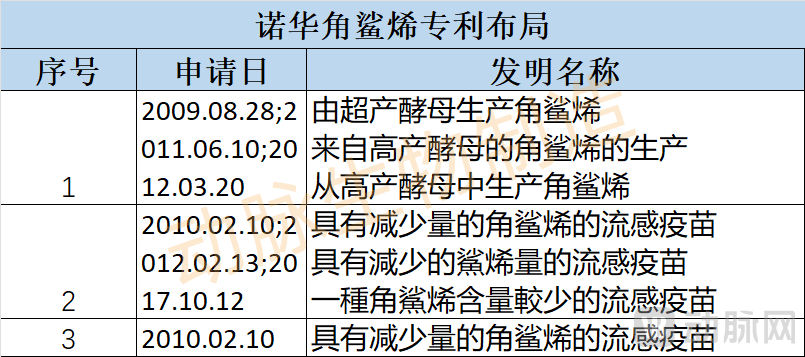
Novartis’s strategy in the squalene sector is highly focused on its pharmaceutical application as a vaccine adjuvant. The company has established a vertical chain from raw materials to finished products, creating a closed-loop system that supports its vaccine business: production of squalene raw materials → formulation of specific adjuvants → application in influenza vaccines.
(6) Kweichow Moutai: Closely Centered on Baijiu Brewing
Kweichow Moutai Co., Ltd.’s patent layout in the field of squalene is closely aligned with its core business of baijiu brewing, exhibiting distinct characteristics ranging from traceability analysis to process control, specifically as follows:
A Method for Determining Squalene Content in Baijiu:The present invention relates to the technical field of component detection in Baijiu (Chinese liquor), and particularly to a method for determining the squalene content in Baijiu. By optimizing conditions such as the number of extraction stages, the dilution ratio of the liquor sample, the type of organic solvent, and the selection of chromatographic column, a multi-stage liquid-liquid microextraction method is established.(Multistage-LLME)Combined with Gas Chromatography-Mass Spectrometry(GC-MS)Method for the Determination of Trace Squalene in Baijiu. This method offers the advantages of simplicity, accuracy, sensitivity, and rapidity.
A Method for Determining Squalene Content in Sorghum:The invention discloses a method for determining the squalene content in sorghum, which establishes liquid-liquid microextraction coupled with gas chromatography through grinding, extraction, and partitioning.‑Mass Spectrometry Coupling Technology(GC‑MS)Method for Determining Squalene Content in Sorghum.
A Method for Targeted Screening of Squalene-Producing Strains Based on Whole-Genome Informatics Analysis:The present invention belongs to the field of bioengineering technology and relates to a method for targeted screening of strains producing a target product based on whole-genome analysis combined with bioinformatics, in particular to a method for targeted screening of squalene-producing strains based on whole-genome analysis combined with bioinformatics.

Welcome to add WeChat to join the industry exchange group