

Sun Yat-sen University Licenses Real-Time, Label-Free Protein Detection Technology Suite for RMB 300,000
Recently, the Academy of Advanced Technology at Sun Yat-sen University released a public notice on the conversion of scientific and technological achievements, indicating that the university intends to transfer patent rights throughFive Invention Patent Technologies, Including “Real-Time Label-Free Detection Device and Method for Protein Molecules”Successfully transferred to Guangdong Anjia Yijian Health Management Co., Ltd., transferTotal Amount: 300,000 Yuan, of which 105,000 yuan was awarded as a cash bonus to Wang Kai, the lead researcher.
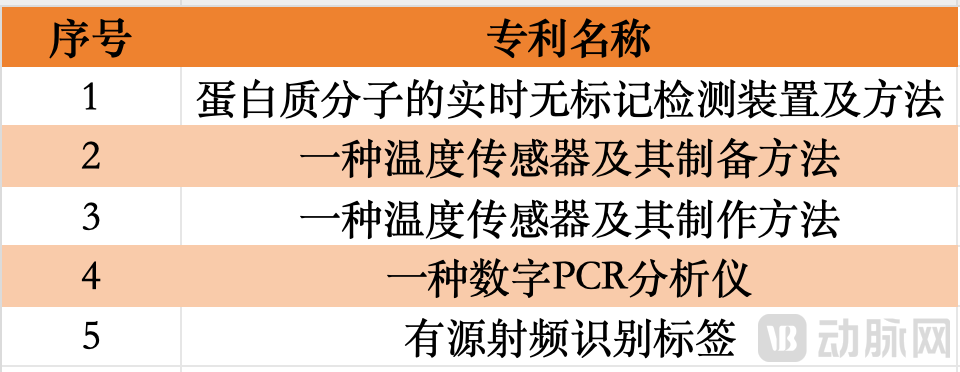
Names of Five Successfully Granted Invention Patents
The inventor of the patented technology is the School of Electronics and Information Technology, Sun Yat-sen University.Professor Wang Kai and his team。
Wang Kai:Professor and Doctoral Supervisor, School of Electronics and Information Engineering, Sun Yat-sen University; Adjunct Professor, Department of Electrical and Computer Engineering, Carnegie Mellon University, USA,Sun Yat-sen University “Hundred Talents Program” Recruited Talent.
Dr. Kai Wang received his Ph.D. from the University of Waterloo, Canada, in 2008. His research interests encompass flat-panel X-ray imaging, sensing and imaging technologies, field-coupled thin-film transistors, and their applications in biomedical sensing, optical fingerprint recognition, wearable electronics, and energy harvesting, as well as neuromorphic synaptic devices and memristors. He has served as the principal investigator for projects under the National Key R&D Program of the Ministry of Science and Technology, General Programs of the National Natural Science Foundation of China, and Major Science and Technology Special Projects of Guangzhou. Dr. Wang has published more than 60 journal and conference papers and co-authored 20 patents. From 2011 to 2013, he worked as a Senior Hardware R&D Engineer at Apple Inc. in Cupertino, California, where he led the development of human-machine interface technologies and touch sensors for the iPad and Apple Watch. In 2015, he was appointed as an Adjunct Professor at his alma mater. He served as an Associate Editor for the Journal of Display Technology (IEEE/OSA) from 2011 to 2016 and is currently a member of IEEE, SPIE, and SID.The “Robotic Electronic Skin” research project, which I led, won the First Prize at the 2017 China Robotics and Artificial Intelligence Competition.
Transferee of This Patent TechnologyGuangdong Anjia Medical Health Management Co., Ltd., is an innovative enterprise focused on health management and medical technology services. Patent holders include institutions such as the Sun Yat-sen University-Carnegie Mellon University International Joint Research Institute in Shunde, Guangdong, and the Sun Yat-sen University Research Institute in Shunde District, Foshan City.
Among these, the Sun Yat-sen University–Carnegie Mellon University International Joint Research Institute in Shunde, Guangdong, is a high-level international research and development platform co-established by Sun Yat-sen University and Carnegie Mellon University (USA), focusing on fields such as intelligent manufacturing, information technology, and health technologies. The Sun Yat-sen University Research Institute in Shunde District, Foshan City, is rooted in local industrial needs and committed to the transformation of scientific and technological achievements and industrialization services, providing strong support for regional innovation. Both institutes serve as joint assignees of the patent rights, reflecting Sun Yat-sen University’s notable achievements in university-local government collaboration, international R&D, and industry-academia-research synergy.
The technology package proposed for transfer is a highly integrated sensing solution designed for precision medicine and intelligent monitoring, with its core centered onDual-Gate Thin-Film Transistor TechnologyUnfolding enables multi-dimensional, high-sensitivity detection of biomolecules, temperature, optical signals, and identity. It includes a real-time label-free protein detection device, a high-sensitivity temperature sensor, a micro digital PCR analyzer, and a low-power active RFID tag. Suitable for multiple fields such as life science testing, in vitro diagnostics, environmental monitoring, and IoT sensing, it offers comprehensive advantages of high precision, real-time response, high integration, and low power consumption.
In the precise diagnosis and dynamic monitoring of various diseases, particularly cancer, infectious diseases, and genetic disorders, highly sensitive, real-time quantitative detection of biomarkers (such as specific proteins and nucleic acids) is crucial.
Currently, clinical practice widely adoptsChemiluminescent ImmunoassayDetection of protein biomarkers. This method relies on labeling antibodies with chemiluminescent markers, such as horseradish peroxidase (HRP) or acridinium esters, and indirectly reflects the content of target proteins through the luminescent signal generated by specific antigen-antibody binding.
However, this method is limited by labeling efficiency, antibody affinity, and the stability of luminescent reagents. It often yields weak signals and insufficient detection sensitivity in low-concentration samples, and is prone to false-positive or false-negative results due to antibody cross-reactivity. Furthermore, it cannot achieve direct, real-time detection without the use of labels, thereby limiting its application in scenarios requiring trace protein detection, such as early tumor screening and monitoring of minimal residual disease.
In disease surveillance and tracking of patients' physiological status,Body TemperatureIt is one of the key indicators reflecting infection, metabolic abnormalities, and postoperative recovery. In existing flexible electronic skin and wearable medical devices, it is common to adoptCapacitive Temperature SensorContinuous temperature monitoring is performed. Its principle is based on the change in the dielectric constant of dielectric materials induced by temperature variations, which in turn causes a change in capacitance.
However, due to the inherent delay in heat transfer, it takes a certain amount of time for the sensor to reach thermal equilibrium within its internal dielectric layer after contacting the heat source. This results in a lag in temperature response, making it difficult to reflect rapid changes in body temperature in real time.
Furthermore, as passive devices, these sensors generate weak output signals and require complex peripheral amplification and filtering circuits (such as Wien bridge circuits) for signal readout. This not only introduces noise and reduces the signal-to-noise ratio but also increases the difficulty of system integration and power consumption, making them unsuitable for long-term, continuous, high-precision clinical temperature monitoring.
In the field of molecular diagnostics, digital PCR (dPCR) technologyWith its absolute quantification capability, it has become one of the gold standards for tumor liquid biopsy, pathogenic microbial load analysis, and gene copy number variation detection.
Current mainstream technical pathways includeDroplet Digital PCR and Chip-Based Digital PCR. Droplet-based technology partitions the reaction system into tens of thousands of nanoliter-scale droplets, detecting fluorescence signals individually. While this approach offers high sensitivity, it suffers from low throughput, lengthy detection times spanning several hours, and temperature control speeds constrained by droplet stability. Chip-based technology, grounded in microfluidics principles, performs nucleic acid amplification and detection on semiconductor chips. Although faster, its parallel reaction units are limited by chip fabrication processes, thereby compromising the statistical reliability of the detection.
Both systems rely on complex optical excitation and fluorescence collection pathways, including mirrors, filters, and CCD/CMOS detectors, resulting in bulky, high-cost instruments that are difficult to deploy at the point of care, in primary care settings, or in resource-limited environments.
Furthermore, in IoT healthcare scenarios such as medical supply management and synchronized monitoring of patient identity and vital signs, it is often necessary to integrate sensing capabilities with identity recognition.
Existing radio frequency identification (RFID) technology and sensors typically operate independently:Sensors require dedicated control chips for signal acquisition and processing, with data subsequently transmitted via communication modules, resulting in high power consumption, large form factors, and low integration. Currently, the market lacks low-power solutions capable of embedding sensing signal processing functions directly within RFID chips, which limits their scalable application in clinical settings that require long-term monitoring, wireless transmission, and identity binding, such as smart wards, emergency supply tracking, and remote chronic disease management.
In the face of multiple challenges in clinical testing and monitoring, such as insufficient sensitivity, response delays, system complexity, high costs, and low integration, an innovative technical solution capable of achieving high-precision, real-time response, miniaturization, and low-power integrated detection has become the key to breaking through existing diagnostic and therapeutic bottlenecks.
The core advantages of this patent portfolio lie inIt systematically constructed a high-performance, highly integrated sensing technology platform based on the dual-gate thin-film transistor, a common key device.Successfully addressed the multiple challenges of existing clinical assays in terms of sensitivity, real-time performance, cost, and system complexity.
In the fundamental and critical clinical scenario of protein detection, this technology abandons the traditional indirect detection pathway based on chemiluminescent labeling, and innovativelyIntegrate dual-gate thin-film transistors directly onto the bottom of the electrophoresis chamber to form a detection array.
Its working principle is as follows: when protein molecules migrate to the transistor channel region under the influence of an electric field, their surface charges directly affect the electric field near the top dielectric layer of the transistor, thereby sensitively modulating the carrier transport characteristics within the channel and leading to changes in the source-drain current.
By precisely controlling the transistor to operate in the subthreshold region, where the current is extremely sensitive to changes in the gate electric field, weak protein charge signals can be amplified into measurable electrical signals.
This method enables real-time, label-free, and direct detection of protein molecular weight and isoelectric point, thereby avoiding errors associated with labeling efficiency, antibody specificity, and luminescent reagent stability. Theoretically, it offers higher detection accuracy and a lower limit of detection, making it particularly suitable for the analysis of trace protein biomarkers.
In terms of temperature sensing, the dedicatedThe package providesTwo High-Performance Solutions, jointly committed to addressing the issues of high response latency and weak signals requiring complex peripheral circuitry in traditional sensors.
Option 1By integrating graphite or silicone thermal conductive films outside the upper and lower metal electrodes of the capacitive sensor, a rapid heat conduction path from the external environment to the internal PVDF dielectric layer is constructed, leveraging the excellent thermal conductivity of these materials. As a ferroelectric material, PVDF exhibits a significant temperature-dependent variation in its dielectric constant, thereby altering the capacitance value. The thermal conductive films substantially reduce the thermal time constant, enabling the sensor to detect temperature changes more rapidly and effectively minimizing response latency.
Option 2This design demonstrates higher integration and signal processing efficiency by directly integrating the temperature-sensing capacitor with the top-gate electrode of a dual-gate thin-film transistor. When temperature variations induce changes in the dielectric constant of PVDF, the capacitance of the sensing capacitor changes accordingly. This variation directly modulates the top-gate voltage of the transistor, thereby causing a significant change in the channel current. This approach ingeniously converts minute capacitance changes, which are difficult to measure directly, into current signals that are easy to amplify and read, achieving integration of the sensing unit with the front-end signal processing circuitry.
Consequently, the sensor itself becomes an “active” device with internal signal amplification, eliminating the need for complex peripheral measurement circuits (such as Wheatstone bridges). This significantly simplifies system design, reduces noise, and facilitates the construction of high-density, flexible temperature sensor arrays for applications in electronic skin or wearable devices.
In the field of precise nucleic acid quantification,This patent portfolio'sThe digital PCR analyzer design has achieved a miniaturization revolution in system architecture.It completely abandons the bulky and complex optical excitation and fluorescence collection pathways found in traditional instruments, innovatively employing a dual-gate photosensitive thin-film transistor (TFT) array as the core detection element.
This transistor integrates photodetection and signal conversion into a single device:Its grating gate allows excitation light to transmit to the sample. The fluorescent dyes in the sample emit fluorescence upon excitation, which then passes through a filter layer to remove stray light and is directly absorbed by the corresponding transistor channel layer below. The photogenerated carriers alter the conductivity of the channel, thereby directly converting the fluorescence intensity information into an electrical signal.
This compact configuration, featuring vertical integration of the “light source–sample chamber–photodetector” and a one-to-one correspondence with microwell samples, eliminates the need for complex optical alignment, significantly reduces device footprint and manufacturing costs, while maintaining high detection sensitivity, thereby enabling the widespread adoption of digital PCR technology in point-of-care settings and primary healthcare institutions.
Finally,In the field of active sensor tags,This patent portfolio addresses the bottlenecks in power consumption and size of sensing systems through chip-level integration. Its innovation lies in deeply embedding sensor control and signal processing functions within the radio-frequency identification (RFID) chip.
In conventional approaches, sensors require independent, dedicated chips to drive and process analog signals, with data then transmitted via a communication module, resulting in system complexity and high power consumption. This solution, however,Unified management by a single RFID chip:It directly powers the sensor, controls its sampling timing, and preprocesses the raw sensor signals using a built-in analog-to-digital conversion and processing unit.
This highly integrated architecture achieves sensor-recognition integration while minimizing the number of peripheral components, thereby reducing overall power consumption and physical footprint, making it feasible to develop smart medical monitoring tags that are capable of long-term operation and easy deployment.
In summary, the advantages of this patent portfolio are not isolated; rather, they are integrated through the core technological thread of dual-gate thin-film transistors and their derivative devices, spanning the entire chain from biomolecular recognition and physical signal sensing to information readout and processing.
Their shared advancement is manifested in:Achieve direct detection with higher device sensitivity and integration, reducing errors from intermediate stages; enhance response speed and signal quality through innovative structural design; promote device miniaturization and low power consumption via an integrated chip and system architecture, ultimately providing a more precise, faster, more convenient, and cost-effective systemic technical solution for clinical diagnosis and health monitoring.
In response to the heightened demands of the precision medicine and intelligent health monitoring markets for multi-analyte combined testing, dynamic continuous monitoring, and further flexibility and intelligence in devices, current research teams are expanding into broader frontiers of disease diagnosis and health monitoring, establishing a pipeline of in-development technologies with clear market prospects and clinical value.
In the international market,Avery Dennison(Avery Dennison) In the field of active RFID tags, Avery Dennison has officially launchedAD Minidose U9XM Ultra-High Frequency (UHF) Radio-Frequency Identification (RFID) High-Memory Inlays and Tags,This product is specifically designed for the identification and end-to-end traceability of small-sized pharmaceutical and medical supplies, such as syringes and vials. It features core functionalities including source label marking, end-to-end traceability, and product authenticity verification.
The product has been approved by the Auburn University RFID Laboratory for healthcare applications and complies with the ARC Class S standards for pharmaceutical and medical use, making it one of the smallest inlays currently available on the market.
In China,Dansheng Medical Research TeamFocusing on big data of antibodies produced by the human immune system, we pioneered and established globallyAI-Driven Industrialized Proteomic Microarray Technology System, developed based on this technologyAAgAtlas Antigen Array Chip——High-throughput profiling of thousands of human antibodies can be achieved with just 1/10 drop of serum or plasma, offering a detection sensitivity as high as 0.33 aM. This capability enables precise capture of ultra-trace molecular signals in body fluid samples, meeting the clinical research demand for highly sensitive and specific biomarker identification.
Fulai New MaterialsResistive technology has been selected as the primary technical route for flexible sensors. From the perspective of industrialization, the coating process offers superior cost-effectiveness. A patent pool supporting this technical route has already been established, and a core team led by Dr. Chen Shuting, an expert in the sensor field, has been introduced. R&D personnel are conducting work focused on sensor design, process engineering, hardware, and software development, with the team continuing to expand.
Suzhou Sinapharm Medical Technology Co., Ltd.In the field of digital PCR analyzers, Sinafu Medical has achieved multiple key milestones:
The company's self-developed"Vibration Injection" TechnologyAs a core breakthrough, it pioneered a novel chip-free droplet generation technology pathway, fundamentally addressing the industry pain points of high costs and complex operations associated with traditional microfluidics.
Built based on this technology,An Innovative Digital PCR Platform Without Microfluidic Consumablesand developed the world’s first “SniperDQ24 All-in-One Digital PCR System,” which requires loading only an 8-tube strip. This product integrates and automates droplet generation, amplification detection, and data analysis, enabling a fully hands-free workflow and significantly reducing per-test consumable costs compared to similar products.
In November 2024, Sinanfu Medical completed a B+ round of financing amounting to RMB 128 million. The funds will be primarily used for the market promotion of digital PCR products, the development of related reagent product lines, and the large-scale expansion into overseas markets.
In June 2025, its innovative digital PCR analyzer was officially approved for market launch by the National Medical Products Administration. Comprising a temperature control module, a droplet generation module, and an optical module, this device enables quantitative detection of ribonucleic acid (RNA) from leukemia fusion genes in human blood samples. When used with supporting reagents, it provides a precise basis for the diagnosis of leukemia.
Currently, Sinanfu Medical’s core digital PCR products are in the commercialization and promotion phase. The company is simultaneously advancing the iteration of its reagent product line and expanding into overseas markets. Its vertically integrated layout across the entire industry chain has laid a solid foundation for competing in the global digital PCR sector.
Looking ahead, the life sciences tools and medical electronics industries are evolving toward more microscopic detection limits, more real-time dynamic feedback, more seamless wearable experiences, and more deeply integrated data sensing.
Technological innovation must continue to focus on decentralizing laboratory-grade diagnostic capabilities to the bedside, community, and even home settings, while integrating discrete physiological parameter monitoring into a continuous, multidimensional individual health profile.
In this process, promoting the cross-disciplinary integration of sensing, microfluidics, semiconductor processes, and information technology, and building an open, modular technological ecosystem will be key to breaking through existing product forms and market boundaries.