

ShineBio: A Decade of Focus on Chronic Disease Innovations Positions Itself with Multiple Blockbuster Drug Candidates
BIOMEDICAL
Pharmaceutical R&D and Sales
When the proportion of the population aged 65 and above exceeds 14%, a country or region is considered to have entered a deeply aging society. Data from the National Bureau of Statistics shows that by the end of 2024, China's population aged 65 and above exceeded 220 million, accounting for 15.6% of the total national population. According to statistics from the National Health Commission, the prevalence of chronic diseases among individuals aged 65 and above is as high as 62.3%, which is 17 times that of young people (aged 15–24). The vast elderly population will significantly increase the overall prevalence of chronic diseases in society, thereby imposing a heavy burden on healthcare systems. Currently, the demand for chronic disease management and medication is rapidly expanding and surging, marking the onset of a protracted struggle against chronic diseases within the industry.
Clearly, in this era where the inflection point of the demographic curve intersects with that of the disease burden curve, whoever can upgrade chronic diseases from “incurable long-term companions” to “intervenable, predictable, and curable common conditions” will seize the starting gun for the pharmaceutical industry over the coming decades. Yet when the starting gun fires, a vacuum appears on the track. Taking cardiovascular disease—a core battlefield in chronic disease management—as an example, a sudden gap has emerged in recent years as patents for drugs such as apixaban, rivaroxaban, clopidogrel, and ticagrelor have expired in clusters, while new therapies targeting novel mechanisms or targets have not yet reached the market at scale. This “gap between old and new” has created a discontinuity window. The hundreds-of-millions-dollar market share “ceded” by originator companies such as Bristol Myers Squibb (BMS), Bayer, and Sanofi has drawn both multinational corporations (MNCs) and biotech firms into the same arena, as they strive to turn this “window period” into a “phase of strategic repositioning,” thereby reshaping the landscape of the cardiovascular market.
While the industry is still debating “how to position itself in the innovative drug market for chronic diseases,” Chengdu Shibeikang Biomedical Technology Co., Ltd. (hereinafter referred to as “Shibeikang”) anchored its strategy a decade ago in cardiovascular, cerebrovascular, and respiratory diseases, securing an early foothold in this blue ocean. Over the past ten years, Shibeikang has independently established a full-cycle R&D system spanning from early-stage drug discovery to clinical translation, advancing multiple novel drug candidates into key stages such as Investigational New Drug (IND) applications and New Drug Applications (NDA). Chinese innovative pharmaceutical companies specializing in chronic diseases, exemplified by Shibeikang, have now demonstrated the capability to consistently deliver First-in-class therapies to chronic disease patients worldwide. As it embarks on the next decade of its journey, this low-profile pioneer in the innovative chronic disease drug sector has engaged in an in-depth dialogue with VCBeat, unveiling for the first time its differentiated “Chronic Disease Breakthrough” methodology and progress in global expansion, with the aim of offering the industry a new perspective on the development of the innovative chronic disease drug sector.
Focusing on Cardiovascular, Cerebrovascular, and Respiratory Systems a Decade in Advance to Build a Differentiated Moat for Chronic Disease Management
The chronic disease market is undeniably vast, yet it is also fiercely competitive. Since 2025, global pharmaceutical giants have closed multiple blockbuster business development (BD) deals in the chronic disease space, each valued at over $1 billion, with multinational corporations (MNCs) such as GSK, AstraZeneca, Merck & Co., Novo Nordisk, and Roche all participating. As a biotech company in its growth stage, why did Shibeikang precisely target this therapeutic area before innovative drugs for chronic diseases became a hot trend?
Dr. Cen Guodong, Co-founder and Chief Scientist of BIOMEDICAL, told VCBeat, “This is related to the overall development of the industry, as well as the past experiences of the founding team.”
From the perspective of horizontal industry development,If startups enter red-ocean sectors such as oncology, they will lose their first-mover advantage and find it difficult to emerge as leaders in the field. Moreover, oncology drugs are updated rapidly; new drugs developed based on past experience are often still in clinical trials when new treatment standards are introduced, causing R&D progress to lag behind the pace of updates to treatment guidelines. On another note, although population aging was not as severe ten years ago as it is today, early signs were already evident. Based on extensive research and forecasts of future clinical needs, BIOMEDICAL locked onto the innovative drug sector for chronic diseases before the trend gained momentum. “BIOMEDICAL’s goal is not to follow trends and reap short-term benefits from a single drug, but rather to deeply cultivate a specific disease area and become a leader in that field.”
From the perspective of an individual's longitudinal experience,The founding members of Shibeikang possess extensive experience in the research and development (R&D) and commercialization of drugs for chronic diseases. Dr. Cen Guodong, for instance, has previously held positions at major pharmaceutical companies such as Di’ao Group, Yuandong Bio-pharmaceutical, and Kanghong Pharmaceutical, accumulating over 20 years of experience in the R&D and industrialization of new drugs for chronic diseases. He has led the R&D of more than 10 innovative and improved new drugs, all of which have obtained clinical trial approvals, with some having reached Phase III clinical endpoints. After accumulating sufficient experience and resources, Dr. Cen Guodong co-founded Shibeikang with friends who are also deeply engaged in the chronic disease pharmaceutical industry.From the outset, the company established its core strategy of “focusing on differentiated innovation in new drugs”—rather than blindly expanding its pipeline, it concentrates on cardiovascular and respiratory diseases, two major areas with high prevalence of chronic conditions, to address genuine unmet clinical needs.
① Cardiovascular and Cerebrovascular: Full Ecosystem Coverage of “Diagnosis-Prevention-Treatment”
Shibeikang’s focus on the cardiovascular and cerebrovascular fields stems from the high prevalence, disability rate, recurrence rate, and mortality associated with these diseases. According to the "Report on Cardiovascular Health and Diseases in China 2024," there are over 330 million patients in China suffering from conditions such as coronary heart disease, stroke, hypertension, and heart failure. Deaths related to these diseases account for 48.98% of rural deaths and 47.35% of urban deaths, making them the leading threat to the health of the Chinese population. In response to this severe disease landscape, Shibeikang has moved beyond the limitations of "single-drug R&D" to establish comprehensive coverage across the entire "diagnosis–prevention–treatment" ecosystem. Targeting clinically prevalent and challenging-to-manage conditions such as platelet aggregation, thromboembolism, dyslipidemia, atherosclerosis, and stroke, Shibeikang has not simply replicated existing therapies. Instead, it adopts a strategy centered on "metabolic differentiation," developing more precise intervention plans by analyzing differences in disease mechanisms among individual patients.
② Respiratory System: Achieving the Dual Effect of “Long-Term Control + Rapid Relief”
Shibeikang’s focus on respiratory diseases, which are both common and frequently occurring, addresses a major health threat. In urban areas, the mortality rate from these diseases ranks third, while in rural areas, it ranks first, making them another “killer” disease undermining national health. To address the limitations of traditional treatments—such as slow onset of action, hormone dependence, significant side effects, and difficulty in controlling acute exacerbations—Shibeikang has leveraged its comprehensive R&D system and mature metabolic differentiation technology platform to optimize molecular structures. This approach yields novel mechanisms of action, improved pharmacokinetic profiles, and enhanced efficacy, achieving the dual benefit of “long-term control plus rapid relief.” By effectively circumventing the pain points associated with conventional drugs, Shibeikang is poised to provide patients with respiratory diseases with more efficient and safer therapeutic options, filling clinical gaps and injecting new momentum into improving patient health outcomes.
③ AI Metabolism Platform: Accelerating Innovation for a Decade-Long Veteran
Further strengthening BIOMEDICAL’s competitive moat is its independently developed “A-MetaForge™” AI-powered metabolic differentiation platform. Dr. Cen Guodong emphasizes, “Metabolic issues account for more than 30% of failures in new drug development. Therefore, metabolic differences are a key component in evaluating drug developability.” Built on a foundation of over one million cross-species metabolic data points, the AI metabolic differentiation platform leverages proprietary optimized algorithmic models to achieve precise, differentiated analysis of drug metabolic properties. It uncovers metabolic features that traditional models often miss, and through multi-dimensional modeling, accurately identifies clinical metabolic liabilities and guides structural optimization. This significantly enhances R&D efficiency and success rates, accelerating BIOMEDICAL’s pace in delivering innovative drugs.
Furthermore, BIOMEDICAL has established integrated innovative technology platforms, including a crystal form discovery platform and a complex formulation R&D and commercialization platform, covering the full-cycle R&D system from early drug discovery to clinical translation. It is not difficult to see thatAnchored in cardiovascular, cerebrovascular, and respiratory systems, and leveraging core platforms such as the AI-driven metabolic platform, BIOMEDICAL has carved out a distinctive path characterized by “clinical demand-driven development and technological differentiation.” The essence of this approach lies in translating “unmet clinical pain points” into quantifiable critical quality attributes (CQAs) for drugs. Through its integrated innovation platforms, BIOMEDICAL continuously delivers a clinical pipeline with differentiated advantages while focusing on specific disease areas, thereby establishing a sustainable innovation cycle of “deep specialization in single therapeutic areas, risk reduction across multiple stages, and accelerated timelines throughout the entire lifecycle.” This enables the company to provide patients with systematic solutions that are safe, effective, and cost-controllable.
Ten innovative drugs have been deployed based on platform technologies, with multiple pipelines targeting billion-dollar markets.
Based on its core platform, BIOMEDICAL has completed the strategic layout of multiple innovative product pipelines, with various candidates at different stages including preclinical, IND, and NDA.
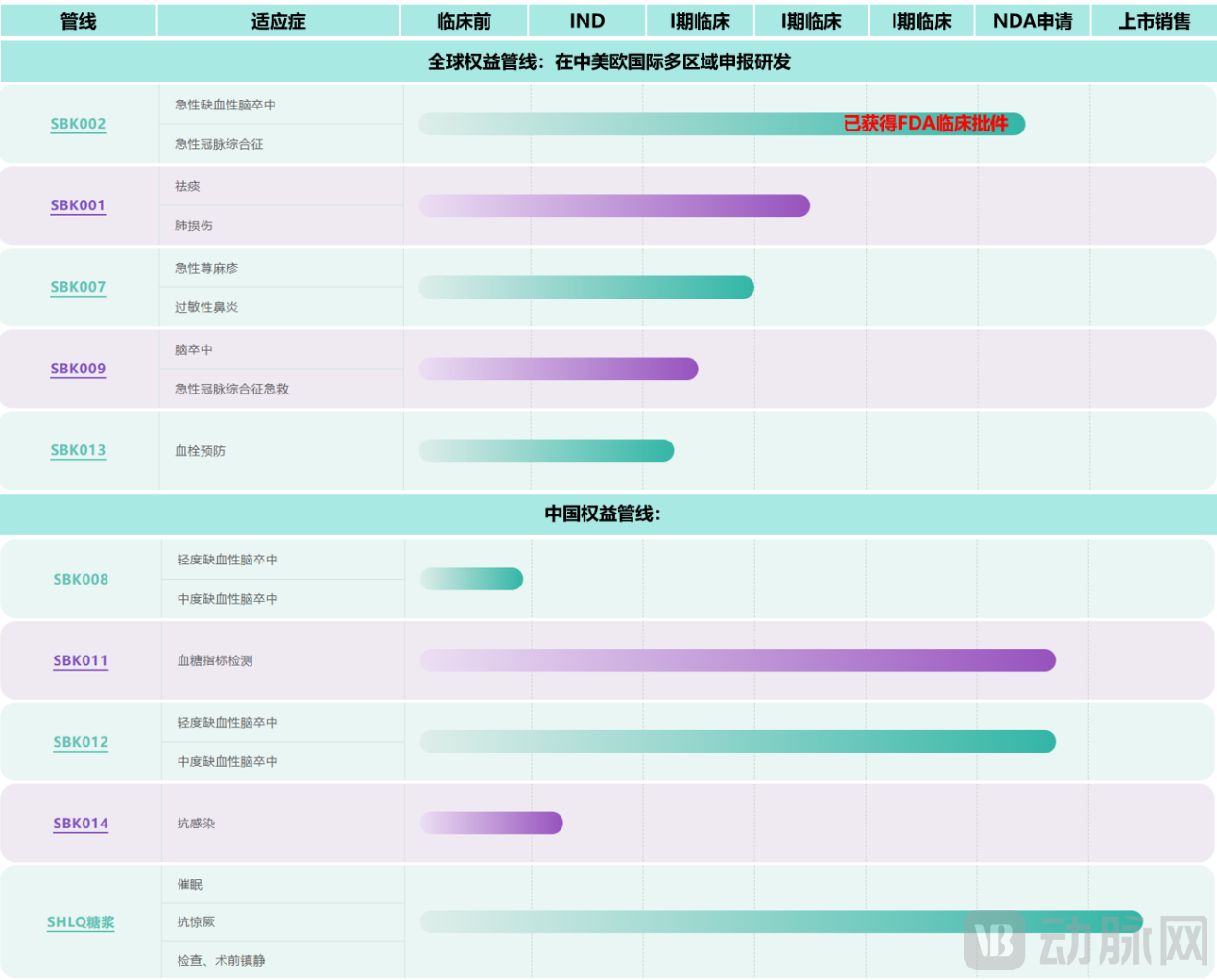
Shibeikang’s Pipeline Portfolio: SBK002, SBK001, SBK007, SBK009, and SBK013
Undergoing R&D and regulatory submissions in China, the US, and Europe
In the field of Class 1 new drugs, Shibeikang currently has six pipeline candidates at various stages of clinical development. This year alone, Shibeikang has successively obtained clinical trial approvals from the Center for Drug Evaluation (CDE) for two Class 1 innovative drugs: SBK013 tablets and SBK009 for injection.
Among these, SBK013 tablets are an oral small-molecule Factor XIa inhibitor with a novel compound structure, primarily indicated for the prevention of arterial and venous thromboembolic diseases. By selectively inhibiting the activity of coagulation Factor XI, it effectively blocks the intrinsic coagulation pathway and suppresses the amplification of the coagulation cascade, thereby potently preventing the formation of pathological thrombi. Studies have demonstrated that SBK013 exhibits significant anticoagulant efficacy, with a markedly superior prolongation of activated partial thromboplastin time (aPTT) compared to the positive control drug Asundexian. Furthermore, it carries a low risk of bleeding, similar to Asundexian and significantly lower than that of apixaban. Currently, no FXIa inhibitors have been approved for marketing worldwide. Should SBK013 receive approval, it would rapidly fill this industry gap and reshape the global $20 billion anticoagulant market landscape.
SBK009 for Injection is a Class 1 innovative drug independently developed by Shibeikang, intended for antiplatelet therapy in patients with coronary syndrome undergoing percutaneous coronary intervention (PCI) during the perioperative period. Globally, nearly ten million people die from coronary syndrome each year, creating an urgent need for effective therapeutic agents within the industry. Antiplatelet drugs play a pivotal role in the comprehensive prevention and treatment strategy for this condition. However, currently approved antiplatelet medications for coronary syndrome, both domestically and internationally, still require improvements in safety and patient compliance, leaving significant clinical gaps. The core mechanism of SBK009 lies in its effective inhibition of ADP-induced platelet aggregation, coupled with favorable safety and tolerability profiles, offering new hope for addressing these existing challenges.
In addition to several Class I new drugs that fill gaps in the chronic disease industry, Shibeikang has also rapidly deployed and commercialized multiple Class II new drugs through collaborative licensing and other models, generating nearly RMB 100 million in cash flow for the company.
Driven by a gradient-based pipeline development strategy, Shibeikang has achieved various milestone progresses at different stages of its growth. The accumulation of these achievements has positioned Shibeikang as a "dark horse" in innovative drugs for chronic diseases, attracting significant attention from numerous institutions and enterprises. In its early startup phase, Shibeikang secured support from industrial and financial investors such as Fosun Pharma and Sichuan Venture Capital. This August, Shibeikang received an investment of nearly RMB 100 million from Chengda Pharmaceutical. Beyond providing financial support, Chengda Pharmaceutical’s global CDMO capabilities will offer comprehensive and systematic empowerment to Shibeikang, facilitating the international launch of multiple products in its pipeline and accelerating Shibeikang’s globalization process. The participation of these institutions fully demonstrates the capital market’s high recognition and trust in Shibeikang as a leading enterprise in the chronic disease sector.
Prepared for Global Expansion Before the Market Boom
While gaining recognition in the domestic market, Shibeikang has also made positive progress on the international stage.
In February this year, Shibeikang received FDA approval for the safety review of SBK002 tablets with zero technical queries, obtaining an IND approval.This significant milestone marks a solid step forward for BIOMEDICAL in global innovative drug R&D, laying the foundation for the global development strategy of SBK002 tablets. The FDA has fully recognized the existing research findings on SBK002 tablets, deeming the data complete and sufficient to meet the requirements for initiating clinical trials. This recognition reflects BIOMEDICAL’s rigorous scientific approach and high-standard R&D capabilities throughout the development process.
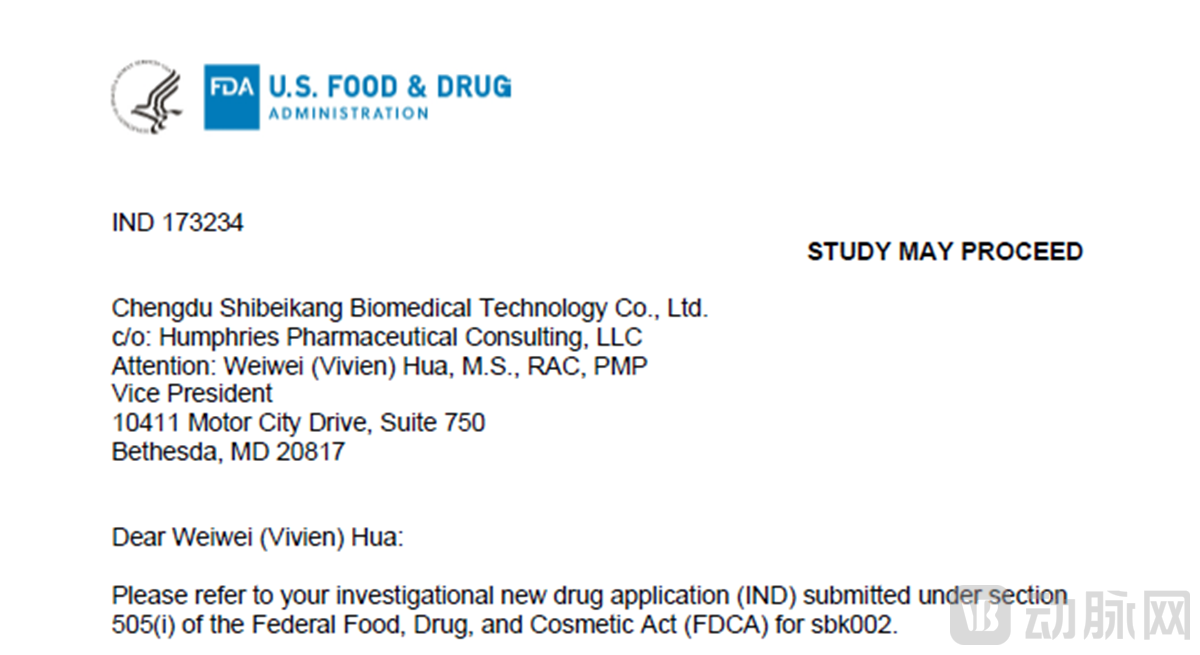
SBK002 Tablets Receive FDA Approval for IND
Building on the successful experience of obtaining U.S. IND approval for SBK002 tablets, BIOMEDICAL is also actively advancing overseas clinical trials for its new drug pipeline, including SBK001, SBK007, SBK009, and SBK013.
In addition, BIOMEDICAL also places great emphasis on out-licensing collaborations for its projects.Dr. Cen Guodong revealed, “Based on the clinical and registration progress of our core projects, BIOMEDICAL will formulate corresponding business development (BD) strategies. We have adopted tailored matching measures for domestic and international collaborations, as well as global and regional licensing, according to the distinct characteristics of each project. Currently, negotiations with various partners are proceeding smoothly, and the company will disclose relevant updates at an appropriate time.”
BIOMEDICAL’s simultaneous successes across domestic and international markets, as well as in clinical, commercial, capital market, and industrial collaboration dimensions, are the result of a confluence of favorable timing, geographic advantages, and strong human resources.
Dr. Cen Guodong remarked, “The development of innovative drugs requires aligning with prevailing trends; going against the tide rarely leads to success. Before 2015, China’s pharmaceutical industry was dominated by generic drugs. Attempting to venture into innovative drug development during that period, without policy guidance or industry experience, would have been like seedlings deprived of soil—unlikely to survive. From 2015 to the present, China’s pharmaceutical industry has gradually transitioned from ‘Fast Follow’ to ‘Best in Class’ and ‘First in Class.’ During this period, BIOMEDICAL has been privileged to witness, participate in, and promote the development of innovative drugs in China. While the industry was still debating ‘how to position itself in China’s chronic disease market,’ BIOMEDICAL, in alignment with national development priorities and needs, had already taken root in this field for a decade. Today, the breakthrough progress we have achieved both domestically and internationally is precisely the ‘fruit’ borne from our early ‘rooting.’”
Regarding future development, Dr. Cen Guodong told VCBeat, “Over the next two years, in China, Shibeikang will drive the market launch of at least one innovative drug and submit production applications for two others. Overseas, we plan to submit production applications for at least one product in both the United States and the European Union. Furthermore, as our product portfolio matures and key milestones are achieved, Shibeikang plans to initiate an IPO in the future, enabling the company to access a broader platform. Shibeikang will continue to adhere to its strategy of ‘being rooted in China while embracing the global market,’ striving to become a world-class leader in differentiated innovative medicines for metabolic diseases.”
As “healthy aging” becomes enshrined in national strategy, chronic disease medications will no longer be mere molecules but will instead serve as “infrastructure” for national governance. BIOMEDICAL’s global expansion, therefore, represents not only an extension of its commercial reach but also a test of whether the “Chinese solution” can provide affordable, scalable, and sustainable health pathways for an aging global society. Currently, this innovative practice aimed at enhancing the health and well-being of patients with chronic diseases continues to deepen, with BIOMEDICAL actively writing a new chapter in safeguarding public health.