Decoding 30 Years of Allulose Innovation: 1,243 Patents Reveal the Strategic Blueprints of CJ CheilJedang, Coca-Cola, Jinhe Biotech, and WeYuan Synbio
Click to read the article series:
The "Shadow War" Behind 466 Ergothioneine Patents
Behind 519 Squalane/Squalene Patents, the Information Is “Explosive”
Following its formal approval as a novel food ingredient, allulose is transitioning from the laboratory to the broader market at an unprecedented pace. This high-potential functional sweetener has not only sparked a formulation revolution in the food and beverage industry but also ignited an intense race for R&D and patent positioning among capital markets and industrial players.
VCBeat’s analysis of data from the China National Intellectual Property Administration reveals that,From1994Over the past 31 years to date, China has had a total of1243Allulose data.
Patent application volume, from the early sporadic state,To2016Entering a high-growth trajectory after the Spring Festival, and in2021-2023averaged approximately per year during the period150Peak of the item.Behind these data, a comprehensive innovation ecosystem—spanning from core enzyme technology discovery and efficient biomanufacturing processes to diversified end-use applications—is rapidly taking shape.
From the in-depth research on source enzyme molecular design by scientific institutions such as Jiangnan University, to the relentless refinement of production processes by industrial clusters represented by Baolingbao, Weiyuan Synthesis, Bailong Chuangyuan, and Fuyang Biology, and further to the integrated innovation in end products by global consumer giants such as Coca-Cola, various stakeholders are jointly mapping out the future technological landscape and market blueprint for the allulose industry.
A profound wave of innovation and industrial co-opetition centered on the “Sweet Future” is now in full swing.
01
Allulose: "Thirty Years of Turbulence"
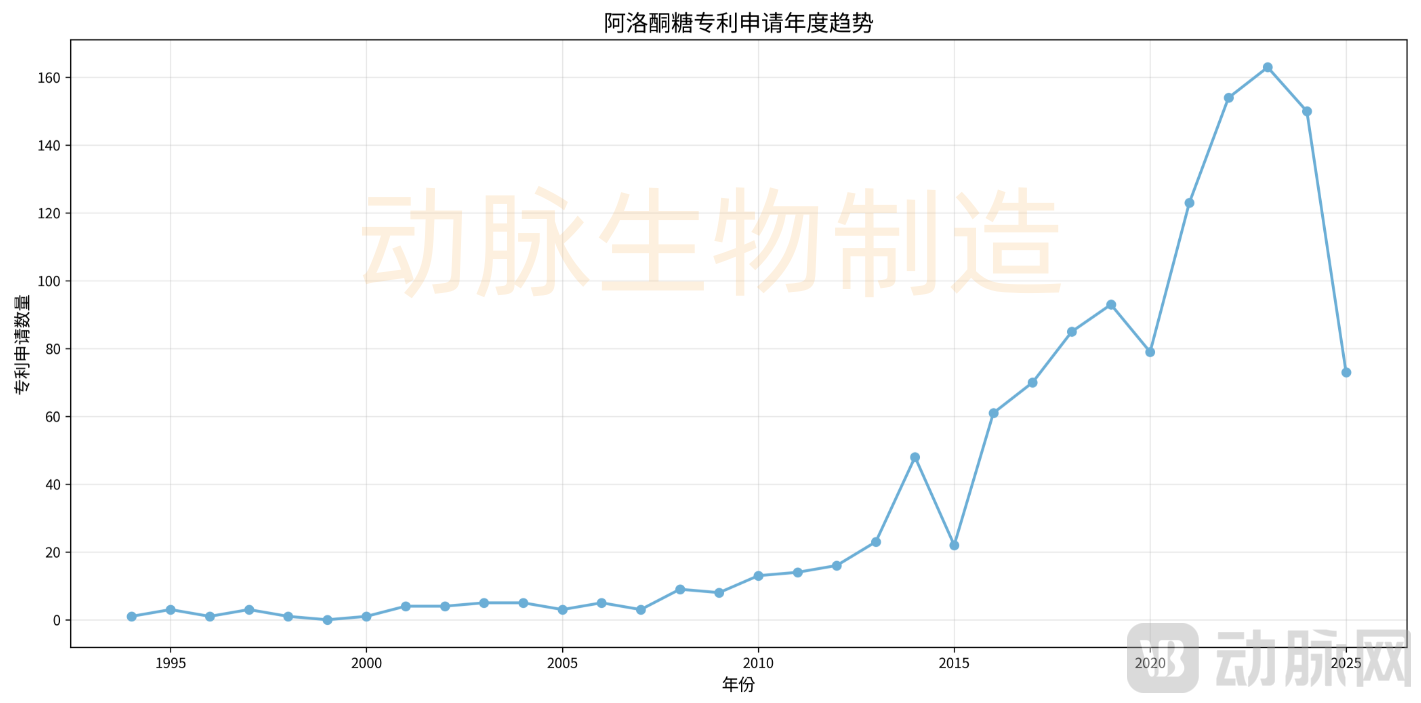
From a temporal perspective, patents on allulose from the early period (1994–2005annual average of the year) 1–5Item, to2010Significant growth began after the Chinese New Year,2016Entering a period of rapid growth after the year,2021–2023reached its peak in the year (annual average150items, etc.).
Incubation Period (1994–2009Year):Average annual application volume is below10item, the technology is still in the early research stage.2008–2009Year-on-year slight increase (8–9items), indicating that display technology has begun to attract attention.
Initial Growth Period (2010–2015Year):From2010Annual13item gradually increased to2015Year (not listed in the table, but2014year48items, indicating an acceleration in growth).2013Annual Breakthrough20Item,2014Doubling Annually to48items, indicating that display technology has entered a phase of rapid development.
High-Growth Period (2016–2023Year):2016Year (61item) began to increase significantly,2021Year (123items) exceeding one hundred,2023Peak in [Year]163items. This period may be associated with the advancement of allulose’s commercial application as a low-calorie sweetener and the growing market demand for health foods.
Recent Adjustment Period (2024–2025Year):2024Year (150Item) Compared2023a slight year-on-year decline,2025Year (73items, which may represent incomplete statistics) declined significantly. This may be attributed to the technology entering a mature phase, resulting in a slowdown in the growth rate of patent applications, the initial formation of the industry’s competitive landscape, and a reduction in new entrants, as well as because2025Annual data may not be fully included (usually, after a patent application is filed, it takes18months before being made public).
02
From Production Line to Product: The “Innovation Map” in Patents
From2016YTD10within the year1051An analysis of patent information reveals that research on allulose is predominantly focused on two key areas: the construction of highly efficient biocatalytic systems and the development of diverse food and beverage products. Meanwhile, it is gradually expanding into emerging fields such as health-oriented functionalization and material applications, thereby forming a complete innovation chain from upstream core technologies to downstream market applications.
This reflects that the technological maturity and market penetration potential of allulose, as an emerging functional sweetener, are increasing in tandem, laying a sustainable technical foundation for its future development in fields such as healthy diets and green chemical engineering. The research directions underlying these patents are as follows:
1Core Technologies and Production Process Optimization
The most densely patented technological areas revolve around the production processes and technical optimization of allulose, specifically including:
Research and Engineering of Key Enzymes:A large number of patents focus onD-Allulose-3-Epimerase (DPEase) in areas such as gene mining, protein engineering, immobilization, and the construction of high-expression engineered bacterial strains. This includes mutant enzyme design (to enhance thermal stability, catalytic activity, acid tolerance, etc.), optimization of heterologous expression systems, and immobilization techniques for enzymes and cells, all aimed at improving conversion efficiency and industrial feasibility.
Biotransformation and Fermentation Processes:This involves the biological production of allulose from raw materials such as fructose, glucose, and starch, utilizing techniques including whole-cell biocatalysis, multi-enzyme cascades, and fermentation engineering, with an emphasis on improving yield, product purity, and process economics.
Separation, Purification, and Crystallization Technologies:Covers simulated moving bed chromatography, membrane separation, and crystallization processes (including crystal morphology control, anti-caking, and mother liquor recovery), with a focus on resolving technical bottlenecks in the extraction, concentration, and crystallization of allulose.
2Product Applications and Functional Expansion
Allulose has garnered widespread attention for its applications in the food, beverage, and health product sectors.
Food and Beverage Innovation:Low-calorie, low-sugar, and low- frequently appear in patentsGIApplications in food products, such as confectionery, chocolate, ice cream, dairy products, baked goods, and beverages (including coffee, tea, fruit juices, and alcoholic beverages), highlight its improving effects on texture, sweetness, water retention, and anti-browning properties.
Development of Functional Health Attributes:Multiple patents explore the biological activities of allulose in regulating blood glucose and lipid levels, managing body weight, promoting gut health, providing oral care, skin whitening, and anti-aging effects, while attempting to enhance its health benefits through combination with other functional ingredients (such as prebiotics, plant extracts, and rare sugar blends).
Flavor and Sensory Improvement:Some studies have focused on utilizing allulose to improve the flavor profile of food and beverages, mask off-flavors, enhance sweetness, and reduce saltiness or alcoholic irritation, thereby improving product acceptability.
3Cross-disciplinary Technology Integration
Some patents highlight the potential for extending allulose applications into non-food sectors.
Pharmaceuticals and Cosmetics:It involves drug delivery systems, topical dermatological formulations, oral care products, and medical dressings, leveraging its characteristics such as biocompatibility, moisturizing properties, and stability.
Chemical Engineering and Materials:A small number of patents explore its applications in polymer synthesis, electrochemical materials, adhesives, and environmentally friendly cleaning agents, reflecting its potential value as a bio-based raw material.
4、Industrial Ecosystem and System Layout
It can be seen from the distribution of patent holders that,CJDaiichi Sugar, Sanyo Corporation, Tate & Lyle&Lair,Bao Ling Bao Biology, Shandong Bailong Chuangyuan, Jiangnan University, the Tianjin Institute of Industrial Biotechnology of the Chinese Academy of Sciences, and other enterprises and research institutions have established relatively systematic layouts in this field, covering the full chain of technologies from enzyme development and production processes to end products.
The patent content also reflects attention to production equipment, testing methods, intelligent control, and sustainable development (such as waste liquid recovery and energy conservation), demonstrating a coordinated consideration of efficiency, cost, and environmental protection during the industrialization process.
03
Holographic Scan of Corporate Strategic Landscape
From2016Year to Date10From the perspective of allulose patent layouts within the year, Chinese enterprises have established a complete system characterized by “upstream technical supply from research institutes, midstream manufacturing via industrial clusters, and downstream diversified application innovation,” leveraging their advantages in manufacturing and applications to compete globally. In contrast, multinational corporations are defined by technology leadership from South Korean firms, large-scale production by European and American giants, and end-user brand drivers, forming a layered collaborative network of “core technologies → scaled applications → market consumption → professional support.”

Among them, domestic allulose enterprises have formed an ecosystem with clear division of labor, complete industrial chains, and coordinated collaboration among industry, academia, and research institutions.
Upstream technology R&D is led by universities and research institutes., such as Jiangnan University and the Tianjin Institute of Industrial Biotechnology, Chinese Academy of Sciences, focusing on core enzymes (D-Allulose-3-Epimerase) mining, modification, and engineered strain construction to provide source innovation for the industry.
Midstream Production and Process Optimization Are the Core of Corporate Competitiveness, industrial clusters have been formed. Shandong-based enterprises represented by Baolingbao, Bailong Chuangyuan, and Fuyang Biology, as well as COFCO, Jinhe Industrial, and Weiyuan Synthesis, are strategically focusing on large-scale manufacturing technologies such as high-efficiency bioconversion, crystallization and purification, and continuous production equipment, with the aim of reducing costs and improving purity and yield.
Downstream Product Applications and Solutions Are Highly DiversifiedHuacheng Biology and IbiSee focus on the development of compound sweeteners; Sirio Pharma and Katayama Food apply allulose in health supplements and conventional foods; while SynoBiomaterials and Proya have crossed over into the pharmaceutical materials and cosmetics sectors, continuously expanding their application boundaries.
Overall, while closely tracking international technologies, China’s industrial chain is building its core competitiveness through robust manufacturing capabilities, flexible application-driven innovation, and rapid market responsiveness.
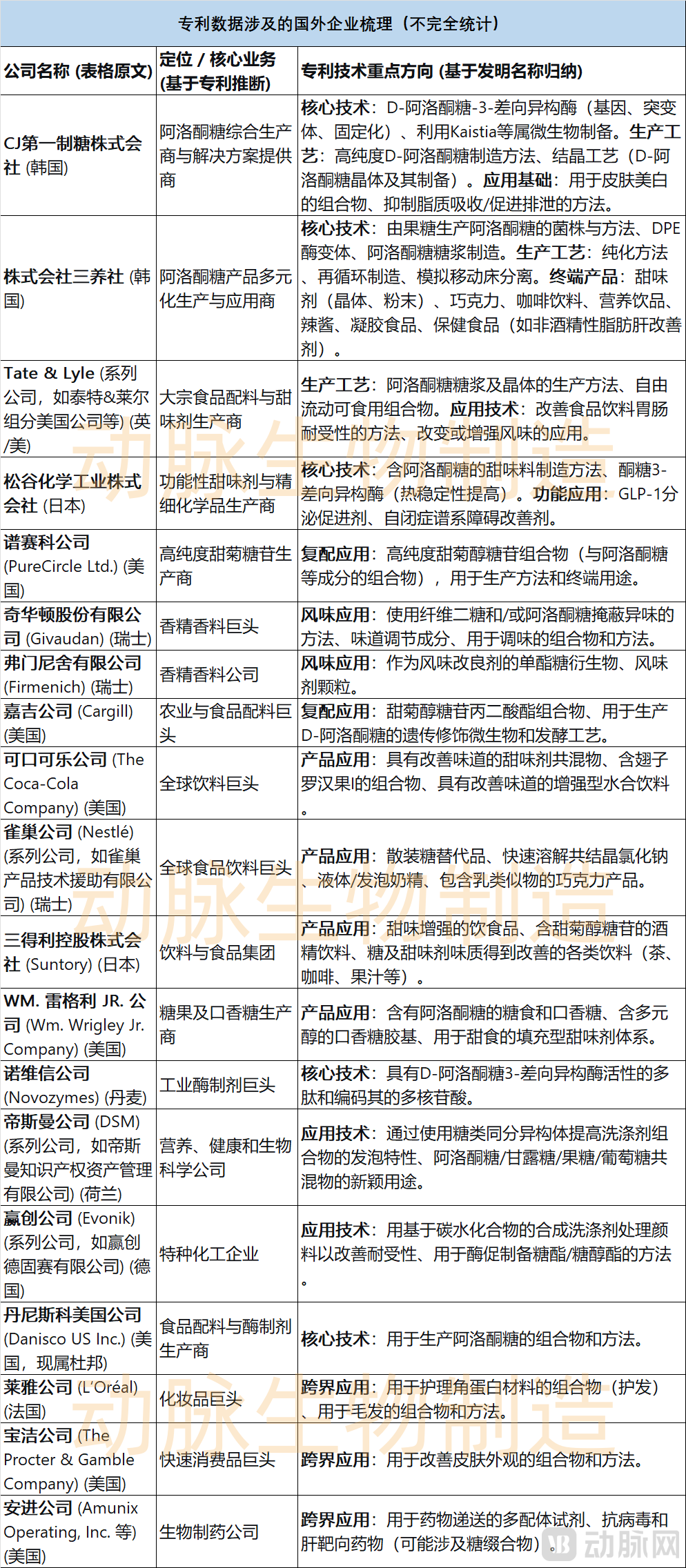
For the patent layout of foreign companies, the core layer of the industry is composed of South Korean enterprisesCJLed by First Sugar and Samyang Corporation, its patent layout is systematic and in-depth, covering everything from core enzyme technologies (gene mining, protein engineering, immobilization) to large-scale production processes (crystallization, purification), and extending broadly into end-use food, beverage, and health-focused functional products. This has established its leading position in the industrial technology chain.
The key participant tier includes the international food ingredient giant Tate & Lyle&Lyle and Cargill, et al., they leverage their global production and distribution networks to focus on large-scale manufacturing processes, ingredient applications, and formulation technologies for allulose. Meanwhile, global consumer goods giants, represented by Coca-Cola, prioritize integrating allulose into their specific product portfolios, such as beverages, thereby directly driving market adoption and consumer demand.
The specialized support layer is composed of biotechnology and nutrition and health companies such as Novozymes and DSM., they provide upstream enzyme preparations or explore applications in cross-disciplinary fields such as nutritional health and industry. In addition, flavor and fragrance companies such as Givaudan and Firmenich are dedicated to addressing flavor optimization issues in the application of allulose.
04
11Technical Roadmap and Market Positioning of Typical Enterprises
1、CJFirst Sugar Manufacturing Co., Ltd.
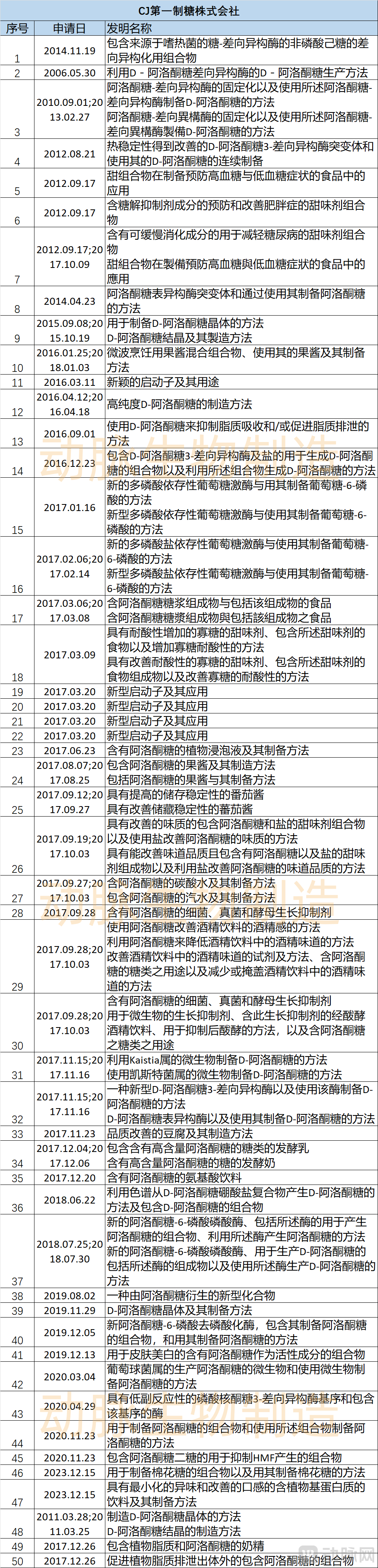
CJCJ CheilJedang’s patent layout in the field of allulose is characterized by a systematic, full-chain, and multi-scenario coverage.
Its patents date back to2006year, focusing onD-Allulose3-Epimerase Development: Step-by-Step Construction of a Comprehensive Technological Barrier Spanning Enzyme Discovery (from Thermophiles and Agrobacterium tumefaciens), Enzyme Engineering (Thermostable Mutants), Immobilization Technologies, to High-Efficiency Manufacturing Processes (Chromatographic Separation and Crystallization Purification), Ensuring Its Leading Position in Production.
Self2012Since [Year], patent focus has extended toward downstream applications, covering multiple sectors including food, beverages, and health products:
Health Functions: Development of sweetener compositions targeting diabetes, obesity, and lipid metabolism;
Food Improvement: Used in jams, ketchup, tofu, non-dairy creamer, etc., to improve texture and stability;
Beverage Innovation: Including carbonated water, amino acid beverages, and fermented milk, with an emphasis on flavor modification and functional enhancement;
Cross-industry applications: extending even to non-food uses such as cosmetics (skin whitening) and microbial inhibition.
The company continues to drive technological upgrades through enzyme mutants, novel enzyme discovery, and process optimization (such as organic solvent-free crystallization and borate separation), while also positioning itself in allulose derivatives (such as disaccharides and novel compounds), thereby forming an ecological closed loop from raw materials and intermediates to end products.
2. Coca-Cola
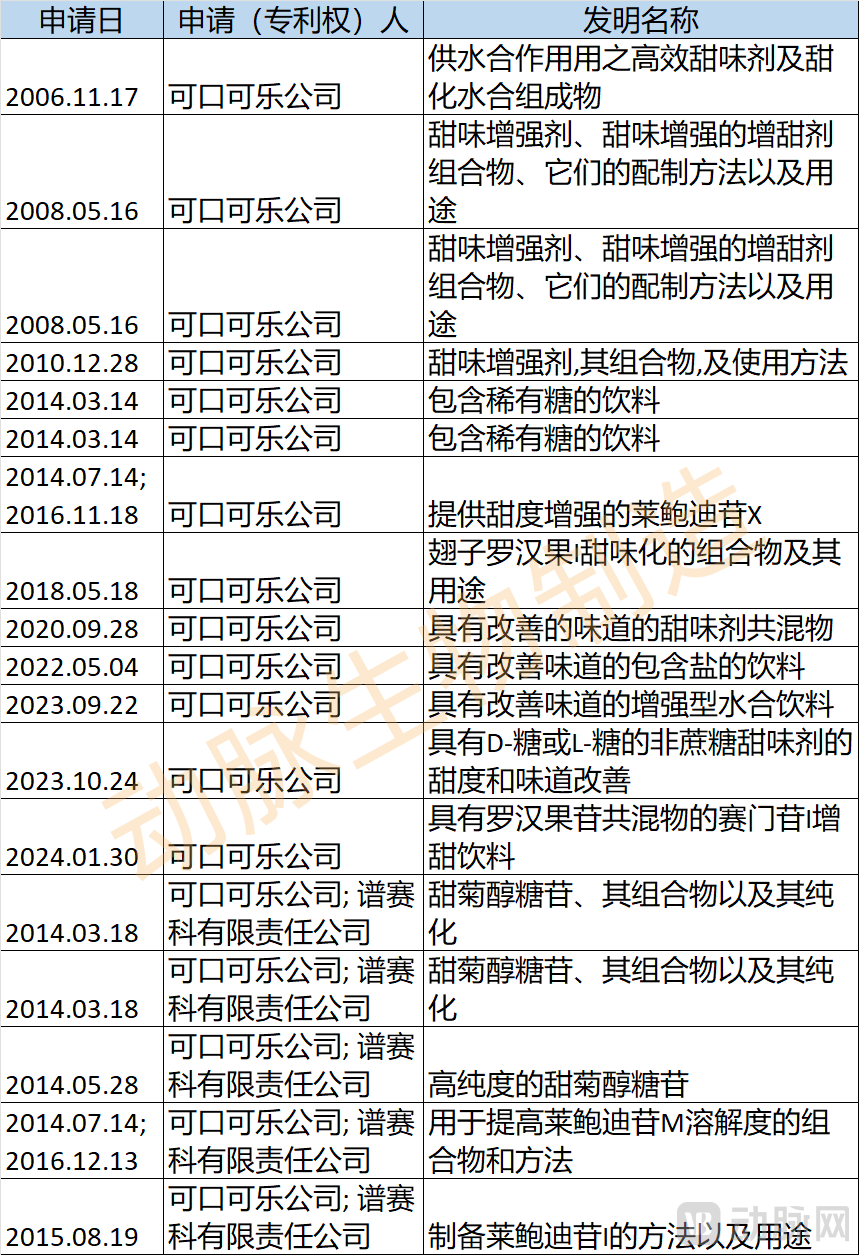
The Coca-Cola Company's Patent Layout in Allulose and Related FieldsHeavily concentrated on downstream applications, particularly the application technologies of functional sweetener compositions in consumer goods such as beverages.Its core technologies focus on improving sweetness characteristics and reducing calorie content, specifically including:
1) Using rare sugars (such as allulose) and high-potency sweeteners (such asSteviol Glycosides, sucralose, etc.) to achieve a flavor and mouthfeel closer to that of sucrose;
2) Develop and utilize various “sweetness enhancers” to amplify overall sweetness at concentrations below their own sweetness recognition thresholds, thereby reducing the amount of sweeteners required and lowering caloric content.
Furthermore, the patent also covers methods for purifying and improving the solubility of high-intensity sweeteners, particularly steviol glycosides.
3. Jinhe Industrial
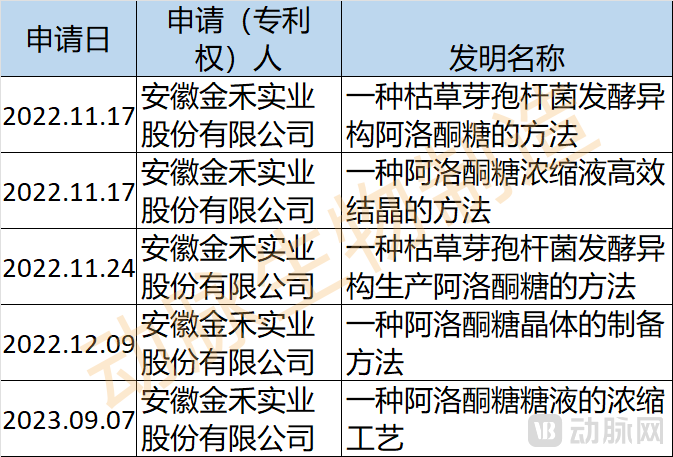
Jinhe Industrial's Patent Layout in the Field of AlluloseFocusing on Efficient, Low-Cost Production and Preparation Processes, demonstrating a clear orientation toward industrialization. Its technological core revolves aroundBacillus subtilis FermentationDevelopment of enzyme production and supporting high-efficiency separation, concentration, and crystallization processes aims to address issues of production efficiency and cost from enzymatic catalysis to the final crystalline product. The patent focuses on optimizing fermentation conversion rate (>30%), crystallization yield (>56%) and energy consumption (double-effect evaporation, membrane concentration), with the aim of directly addressing the feasibility and economic viability of large-scale industrial production.
4. Baolingbao Biology
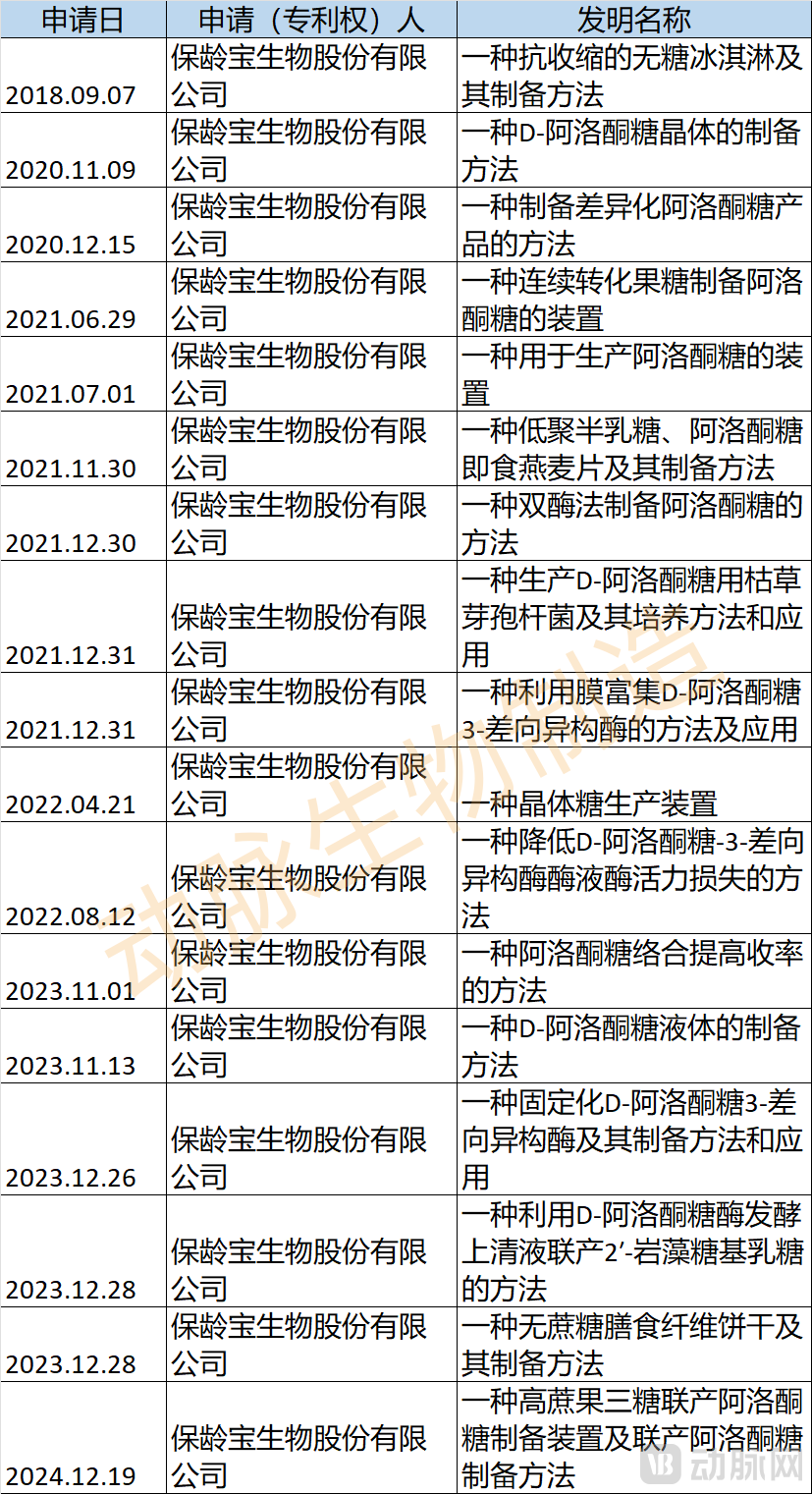
Patents of Baolingbao Biology Co., Ltd. in the Field of AlluloseCovers the entire chain from production and preparation to application.Production focuses on high-efficiency preparation processes, including key technologies such as the dual-enzyme method, immobilized enzymes, enzyme production by Bacillus subtilis, membrane-based enzyme enrichment, complexation for efficiency enhancement, and concentration and crystallization, aiming to improve conversion rates, reduce costs, and achieve industrialization. On the application side, it involves food development, using allulose as a functional sweetener or ingredient in products such as sugar-free ice cream, instant oatmeal, and dietary fiber biscuits. In addition, patents also cover specialized production equipment and the co-production of other functional sugars (such as2′-fucosyllactose, and high-fructooligosaccharides).
5. Haorui Biotech
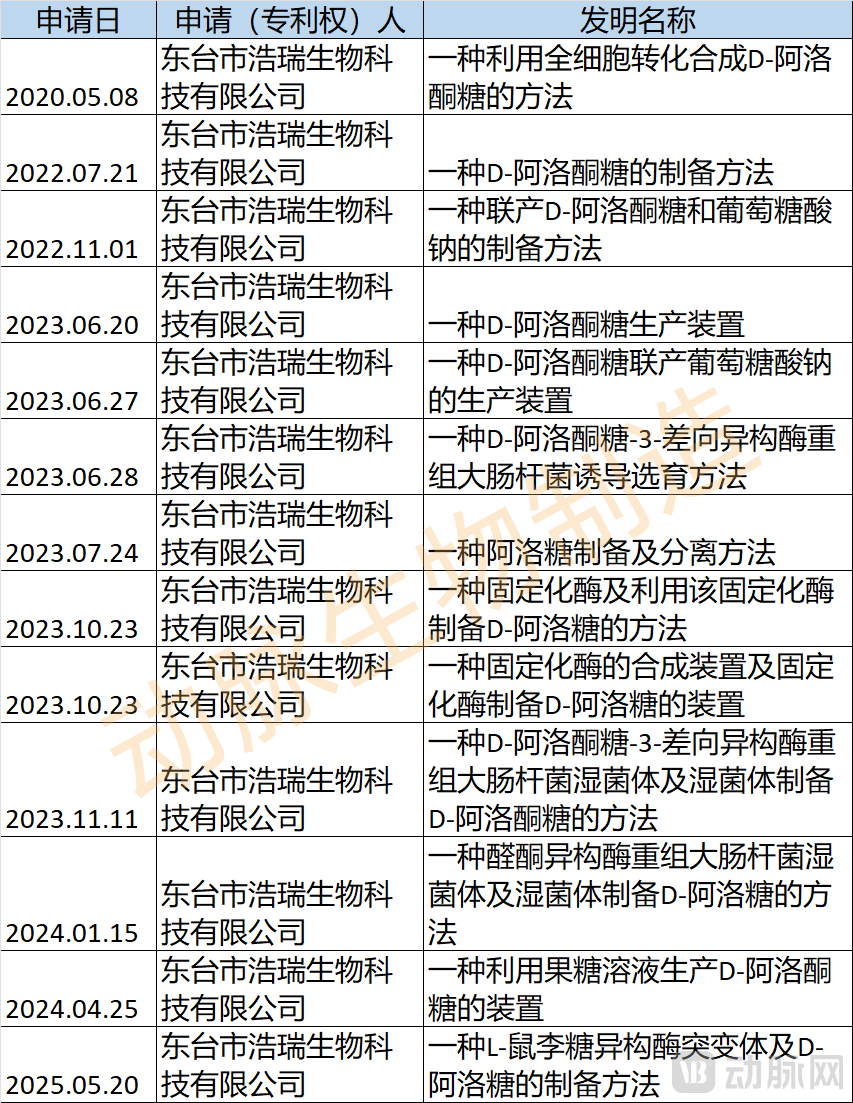
Patent Technology Layout of Dongtai Haorui Biotechnology Co., Ltd. (Haorui Bio) in the Field of Allulose, According to the Table"Mainly focuses on the efficient production using whole-cell catalysis and immobilized enzyme technologies."D-Allulose and Related Rare Sugars.Its core technologies include wet-cell bioconversion using recombinant Escherichia coli, immobilized enzyme preparation, and two-step or multi-enzyme cascade reaction systems, aiming to improve conversion rates (e.g., reaching96%) and achieve continuous production. Meanwhile, the company has established co-production processes (such as the co-production of sodium gluconate) and technological pathways for further converting allulose into allose. In addition, the patents also cover dedicated production equipment associated with these processes (such as reaction-Filter-Separation-crystallization integrated device) and high-efficiency strain selection methods.
6. Jilin COFCO
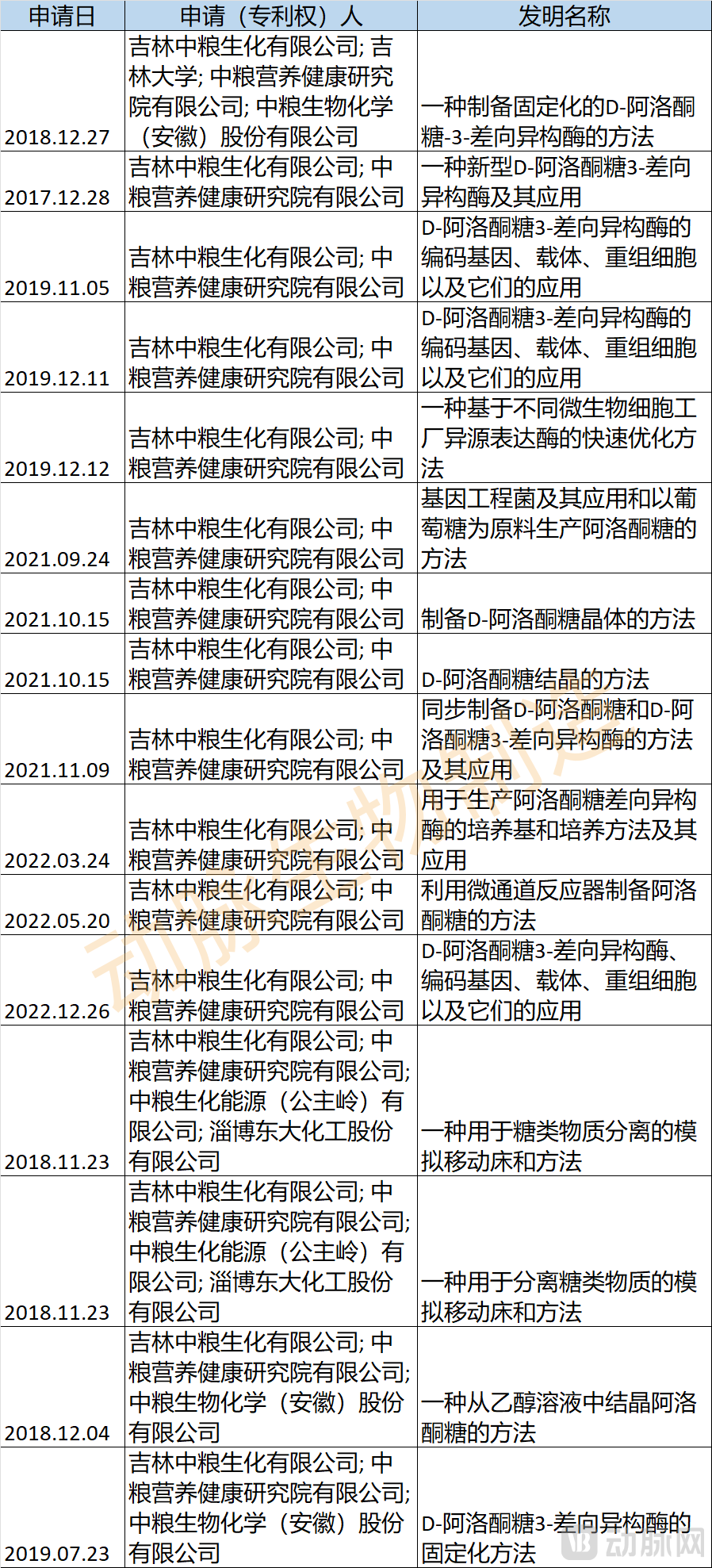
Jilin COFCO Biochemical Co., Ltd. has collaborated with multiple institutions (including Jilin University and the COFCO Nutrition and Health Research Institute, among others) to establish a patent portfolio in the field of allulose.Focusing on the Development and Application of Core Enzymes. Key technologies include: novelD-Allulose3-Discovery of epimerases, construction of genetically engineered bacterial strains, enzyme immobilization methods, and biosynthetic pathways using glucose as a substrate based on genetically engineered bacteria. Furthermore, it covers separation and purification technologies for allulose, such as simulated moving bed chromatography and crystallization from ethanol solutions, as well as innovative processes like preparation using microchannel reactors.
7. Jiangnan University
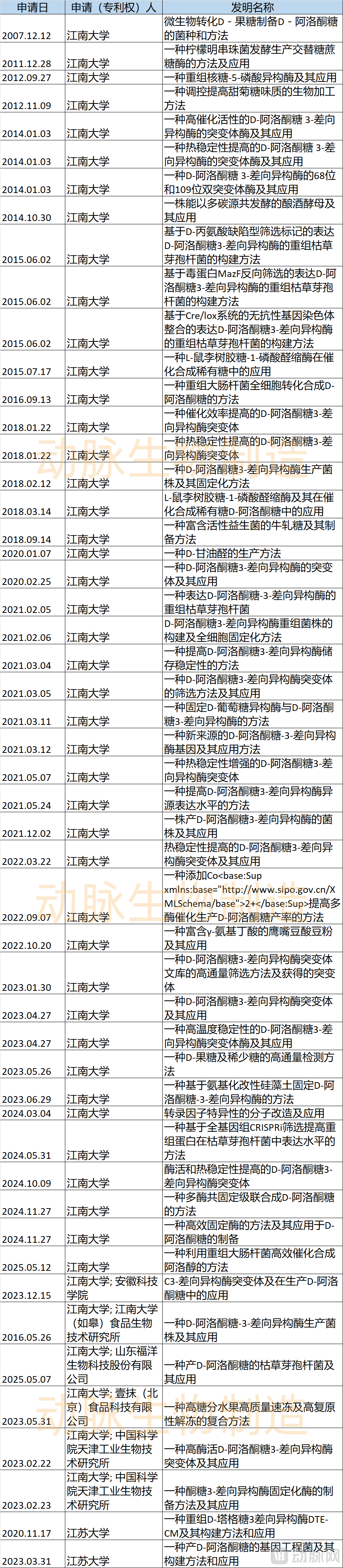
According to the table, Jiangnan University’s patent layout in the field of allulose began in2007Year,Its technology system is highly focused on core enzymes (D-Allulose3-Discovery, Engineering, and Efficient Application of Epimerases)Specifically, this includes: screening and cloning novel enzyme genes from diverse microorganisms; systematically enhancing enzyme thermostability, catalytic activity, and expression levels through site-directed mutagenesis and directed evolution; developing various recombinant engineered strains (such as Bacillus subtilis and Escherichia coli) and whole-cell biocatalysis systems; and implementing process technologies such as enzyme immobilization and multi-enzyme cascade reactions. Furthermore, it involves the extended synthesis of other rare sugars (e.g., allose and allitol) from allulose, along with the establishment of related high-throughput screening and detection methods.
8. Bailong Chuangyuan
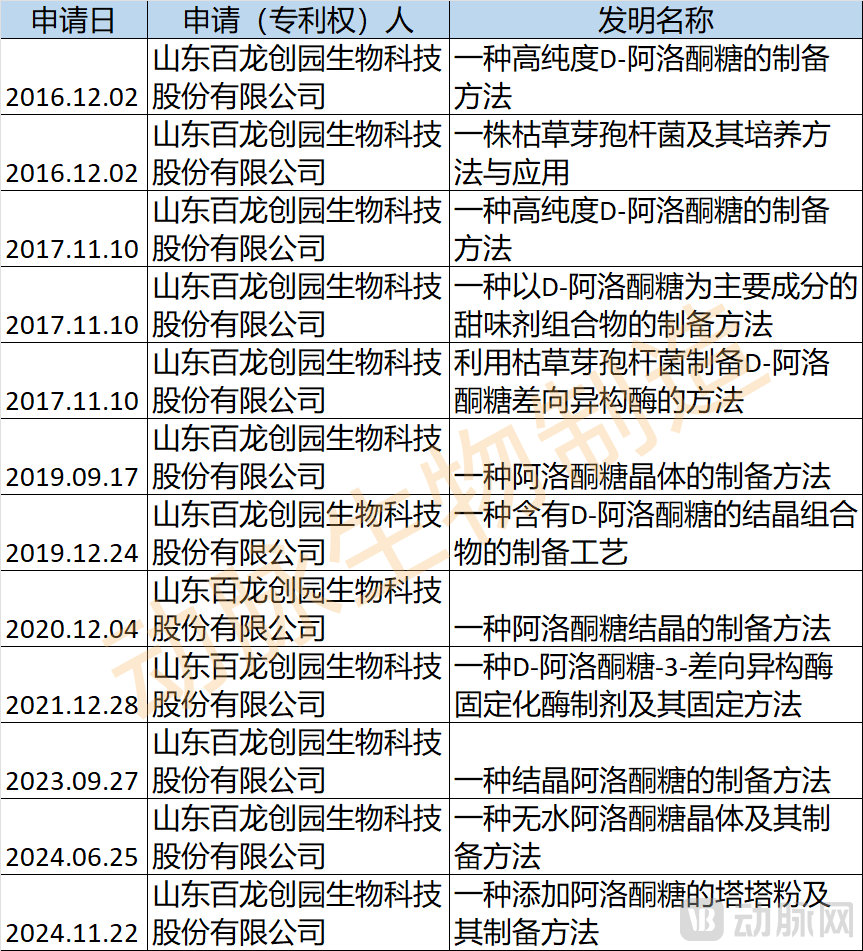
Shandong Bailong Chuangyuan Bio-Tech Co., Ltd.'s Patent Layout in the Field of AlluloseComprehensive Coverage of Core Stages from Production to Application. The production side focuses on efficient, low-cost preparation processes, with the core including: screening and cultivating high-yieldD-Allulose3-Bacillus subtilis strain of epimerase; development of immobilized enzyme (cell) technology to improveEnzyme Stability, conversion rate and reuse rate; as well as optimizing separation, purification, and crystallization processes (such as chromatographic separation, evaporation/cooling crystallization), aiming to improve product purity, yield, and crystal quality. On the application side, it involves preparing sweetener compositions with allulose as the main ingredient, as well as developing specific food additive products such as cream of tartar.
9. Fuyang Biology
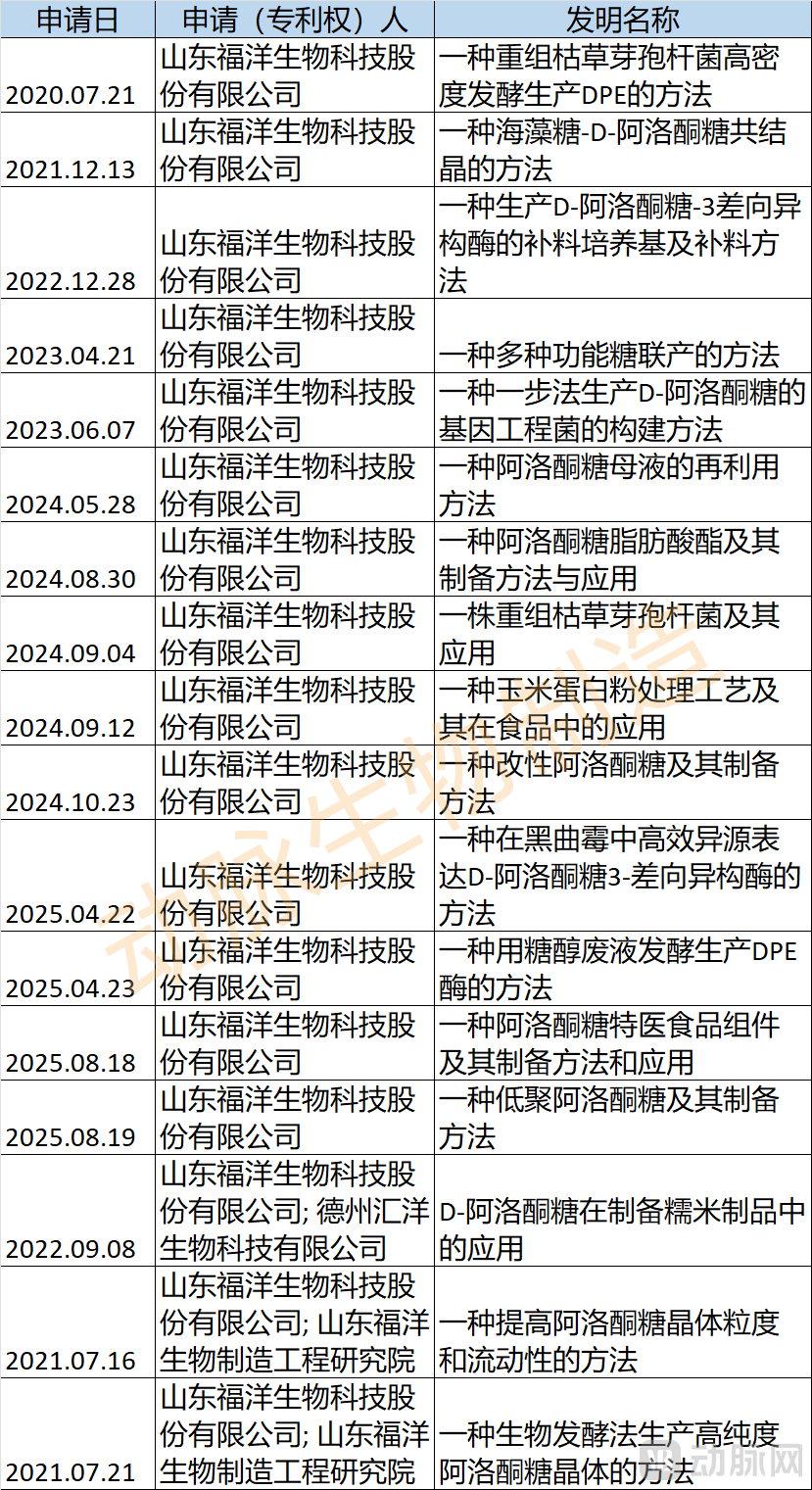
Shandong Fuyang Biotechnology Co., Ltd. in the field of allulosePatent Portfolio Comprehensively Covers Production, Modification, and Application. The core of the production side is efficient expression and fermentation: constructing high-yieldD-Allulose3-Epimerase (DPE) of recombinant Bacillus subtilis and Aspergillus niger, and optimize their high-density fermentation and feeding processes to enhance enzyme activity; develop from starch/One-Step Polysaccharide Production and Co-Production Process for Multiple Functional Sugars. In terms of processing and modification, the focus is on optimizing crystallization processes (such as co-crystallization and improving particle size flowability), reusing mother liquor (converting to allitol), and chemical modification through esterification and polymerization to enhance heat resistance and inhibit the Maillard reaction. On the application side, expansion includes specific products such as medical food components, sweetener co-crystals, cream of tartar, glutinous rice products, and allulose fatty acid esters.
10、Sanyuan Bio
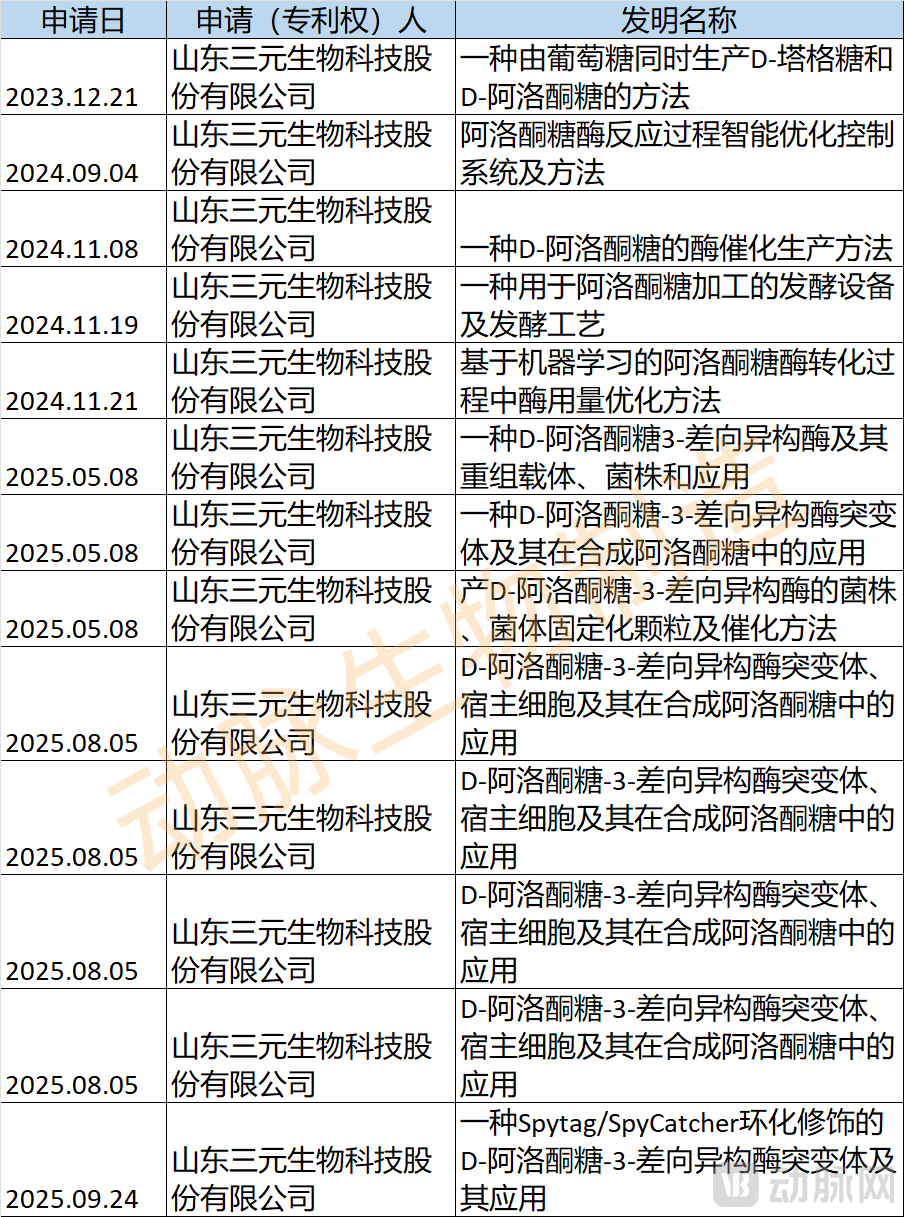
Patents of Shandong Sanyuan Biotechnology Co., Ltd. in the Field of AlluloseComprehensive and cutting-edge layout, covering enzymes, processes, equipment, and intelligent control. The core technological innovation lies in the exploration and engineering of core enzymes, including the discovery of novelD-Allulose-3-Epimerase (from *Bacillus halodurans*, etc.), subjected to multi-site site-directed mutagenesis and cyclization modification to significantly enhance catalytic activity (conversion rate>35%), thermal stability, and reusability. In terms of production processes, a multi-enzyme cascade reaction system has been developed (e.g., from glucose/Direct Starch/co-production of allulose and tagatose) to enhance raw material utilization and production efficiency. Meanwhile, the company is aggressively advancing its layout in intelligent manufacturing and equipment, such as machine learning-based/AIoptimization of enzyme dosage, intelligent control system for the reaction process, and specialized fermentation equipment integrated with stirring and shaking functions, aiming to achieve cost reduction, efficiency improvement, and automation and intelligence in production.
11. Elemental Synthesis
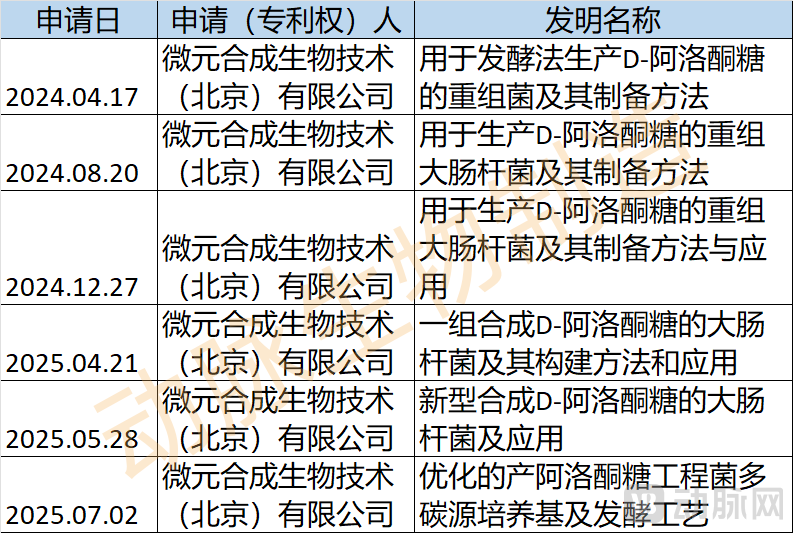
MicroPatent Layout of Yuan Synthetic Biotechnology (Beijing) Co., Ltd. in the Field of AlluloseHighly focused on building efficient, low-cost recombinant microbial fermentation systems. Its core technology involves the deep engineering of *Hansenula polymorpha* and *Escherichia coli* through synthetic biology and genetic engineering approaches, aiming to achieve carbon flux redirection and efficient conversion.