

Building Consensus and Laying Foundations: The 4th China Digital Therapeutics Quality and Regulatory Symposium Successfully Concludes in Shanghai
On December 11, 2025, the 4th China Digital Therapeutics Product Quality and Regulatory Symposium was held in Zhangjiang, Shanghai. The conference was hosted by the Digital Therapeutics Professional Committee of the China Medical Device Industry Association (hereinafter referred to as the “Professional Committee”), organized by Chongqing VCBeat Technology Co., Ltd., and jointly supported by Shanghai Tehuofen Intelligent Technology Co., Ltd., ResMed (Beijing) Trading Co., Ltd., Abbott Trading (Shanghai) Co., Ltd., and Lianren Health Medical Big Data Technology Co., Ltd.
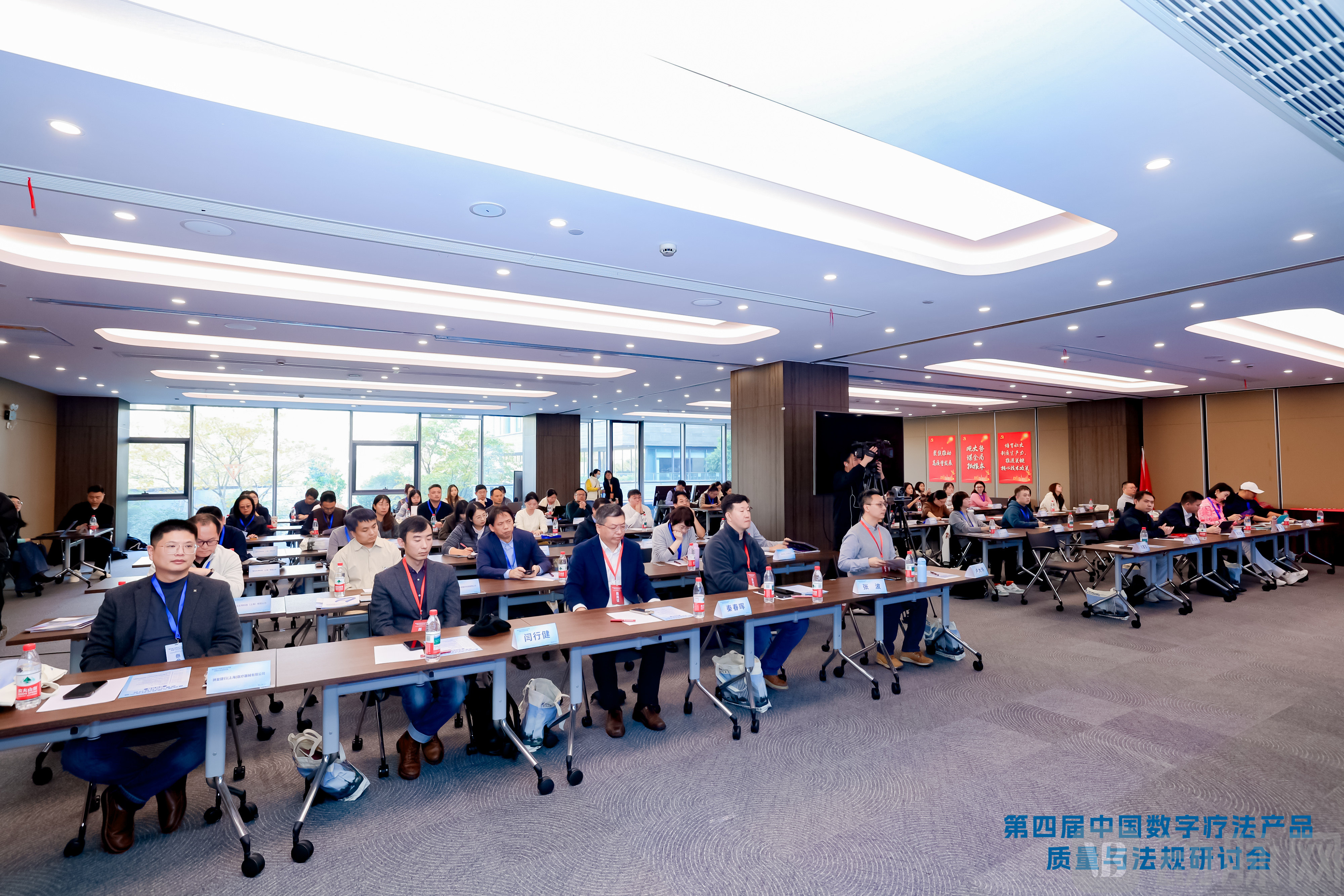
Conference Venue
He Jun, Secretary of the Party General Branch of the Shanghai Institute for Medical Device Testing, attended and delivered remarks online. Lu Dawei, Director of the Technical Regulations Department of the China Association for Medical Devices Industry, also attended and delivered remarks. Liu Chongsheng, Secretary-General of the Special Committee, presented the annual work report. Keynote speeches were delivered by Zhao Hongwei, Research Director at VCBeat; Zhang Bo, Manager at Yuli (China) Investment Co., Ltd.; Jiang Longquan, Director of the Data Mining and Artificial Intelligence Department at the Shanghai Clinical Innovation and Translation Research Institute; Qin Chunhui, Founder of Ruiku Medical; Gao Yan, Founder, Chairman, and CEO of Weiming Naonao; and Yan Xingjian, Head of Clinical Research at Yansi Brain-Inspired Technology. More than 70 participants from member enterprises of the Special Committee and domestic digital therapeutics companies attended the conference. The meeting was presided over by Liu Chongsheng, Secretary-General of the Special Committee.
He Jun, Secretary of the Party General Branch of the Shanghai Institute for Medical Device Testing, stated in his address that digital therapeutics are at a critical juncture transitioning from proof-of-concept to scaled application. While frontier technologies are expanding the scope for industrial upgrading, multiple challenges remain, including practical implementation in clinical scenarios. As the host institution of the Special Committee’s Secretariat, the Shanghai Institute for Medical Device Testing is committed to providing full-chain technical services to all stakeholders in the industry. Looking ahead, the Special Committee will deepen collaboration with various parties in areas such as standard-setting and key technology breakthroughs, jointly promoting the commercialization of digital therapeutic products and fostering a prosperous industry ecosystem.
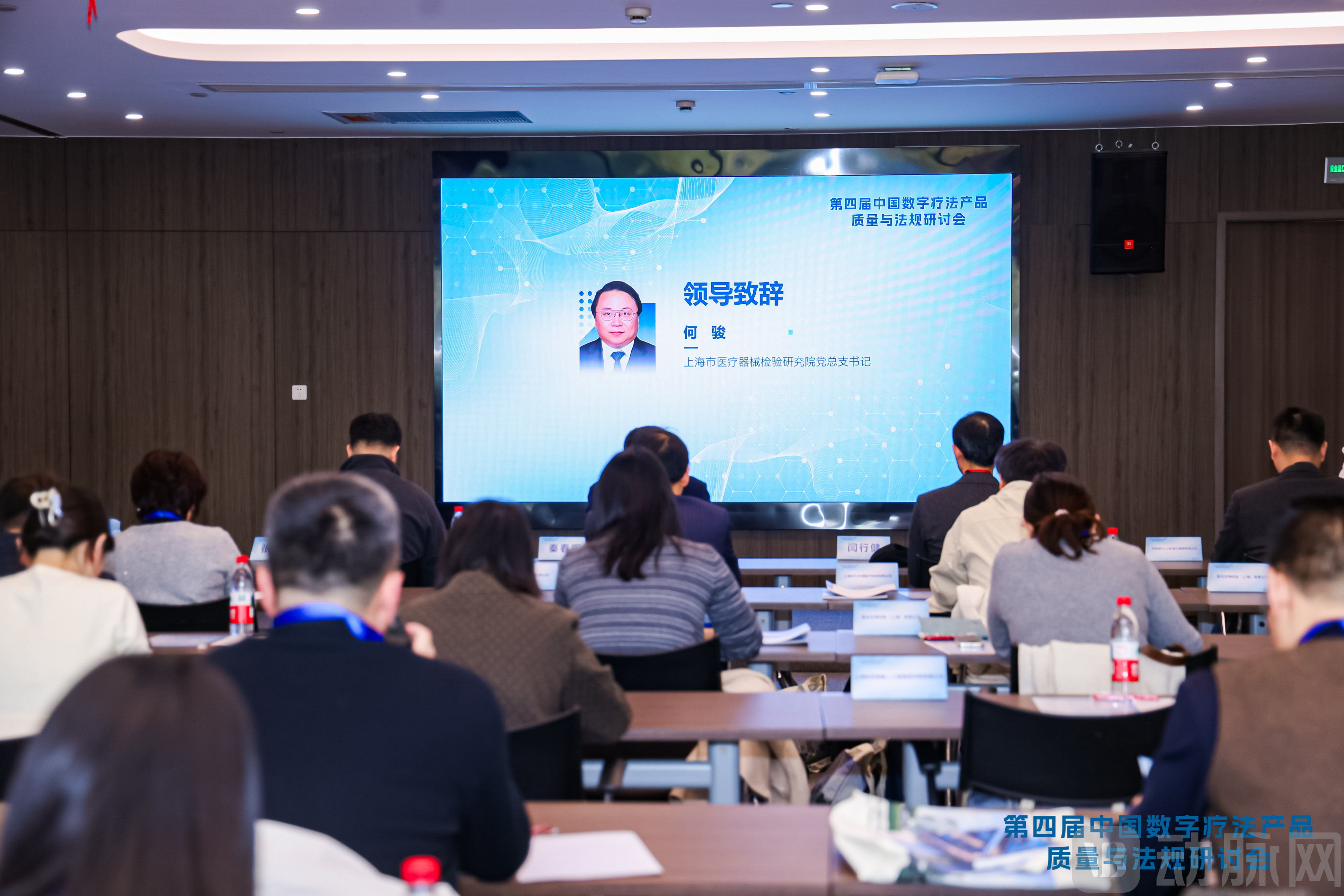
He Jun, Party Branch Secretary of the Shanghai Institute for Medical Device Testing
Lu Dawei, Director of the Technical Regulations Department of the China Association for Medical Device Industry (CAMDI), affirmed the efforts and contributions of the Professional Committee at the meeting. He pointed out that medical devices, due to their special attributes, are subject to strict regulation, and introduced the current status of China’s regulatory and standards system. He put forward three recommendations for the development of the Digital Therapeutics Professional Committee: First, strengthen institutional and mechanistic innovation to adapt to the emergence and development of new technologies and products in the industry; Second, enhance standardization efforts, leveraging the industry association’s platform to continue achieving results in industry standardization; Third, keep pace with international regulatory trends, with the Committee continuing to focus on global developments and striving to promote high-quality development in the industry.
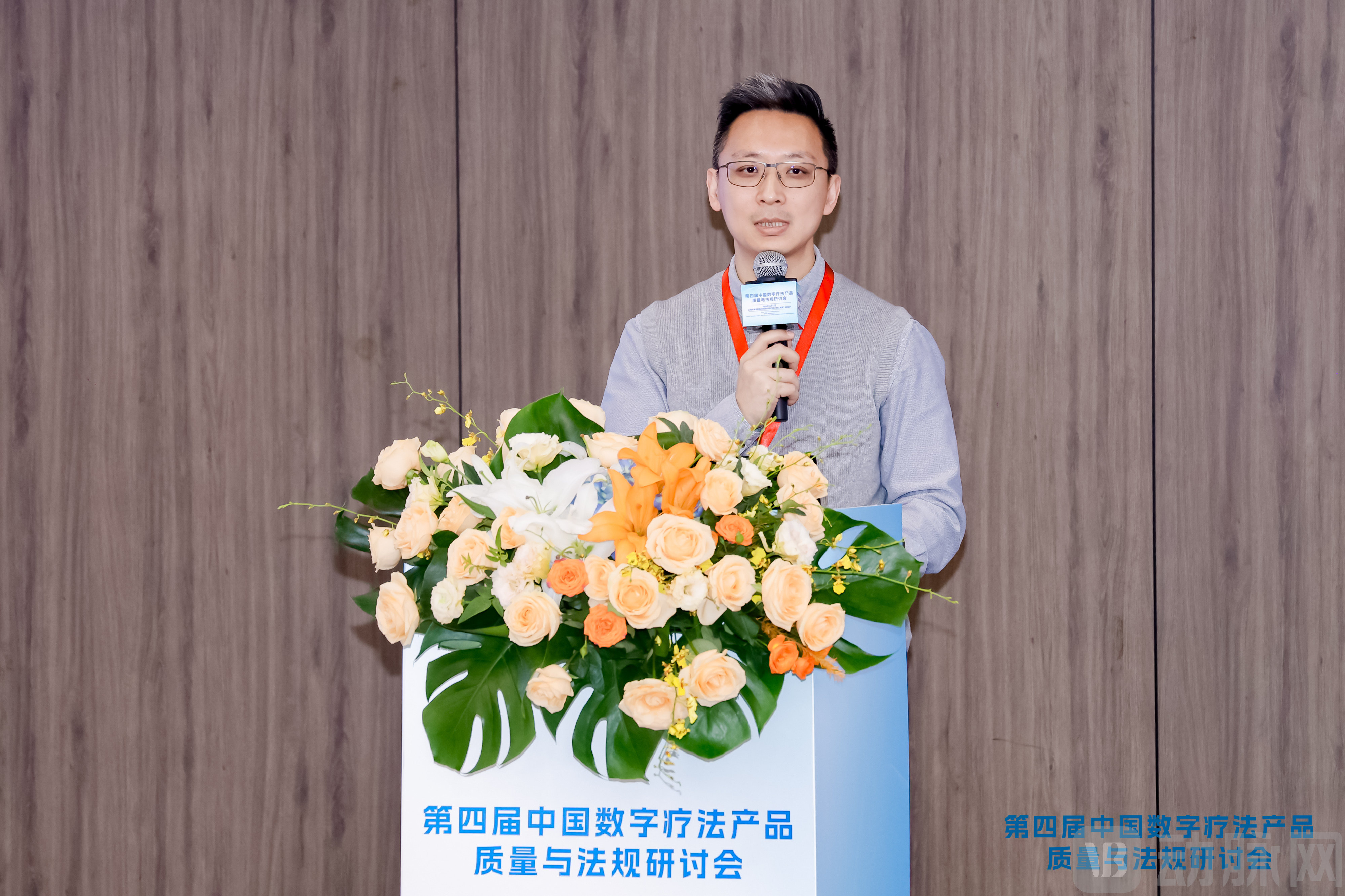
Lu Dawei, Director of the Technical Regulations Department, China Association for Medical Device Industry
Liu Chongsheng, Secretary-General of the Special Committee, pointed out in his report that over the past year, the Committee has progressively shifted towards implementing its work with a focus on technical substance. In 2026, the Committee will innovatively launch member services integrated with the entire product lifecycle and solicit proposals for new standards in emerging fields such as AI-powered digital therapeutics and brain-computer interface (BCI)-enabled digital therapeutics, thereby laying a solid foundation for the development of the digital therapeutics industry. The meeting also featured a certificate awarding ceremony for the newly appointed members added to the Special Committee in 2025.
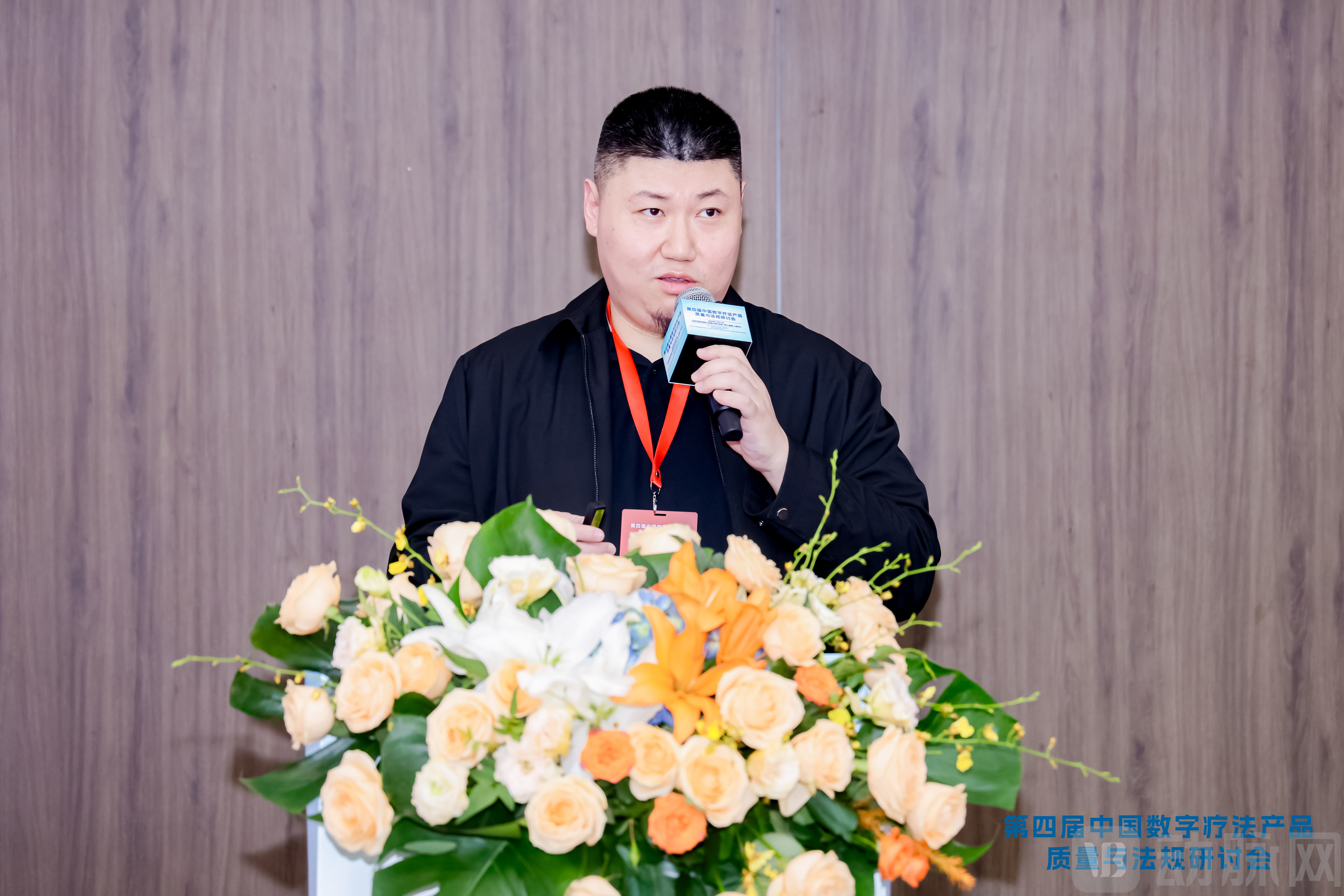
Liu Chongsheng, Secretary-General of the Digital Therapeutics Committee of the China Medical Devices Industry Association
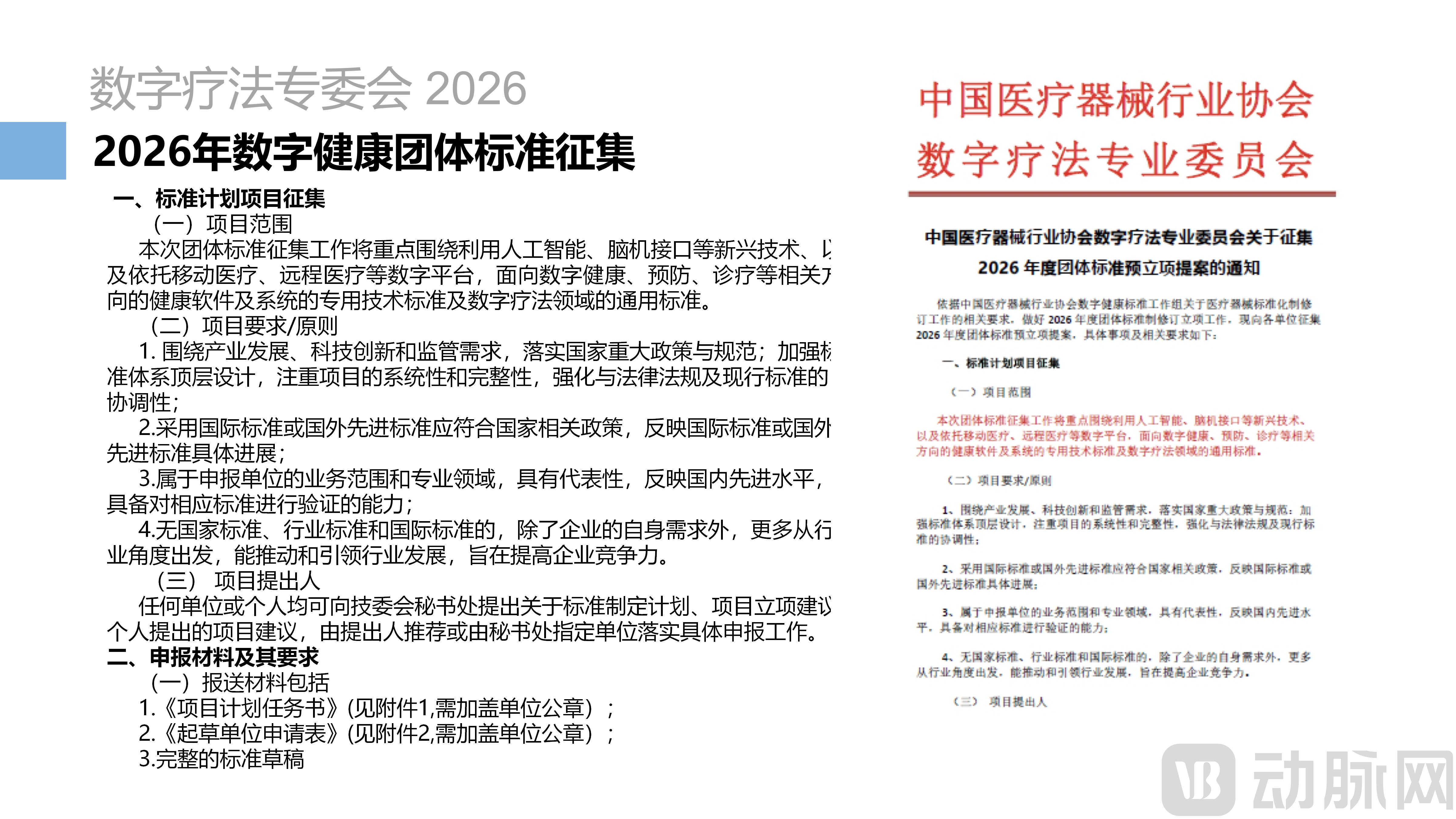
Call for Digital Health Group Standards in 2026
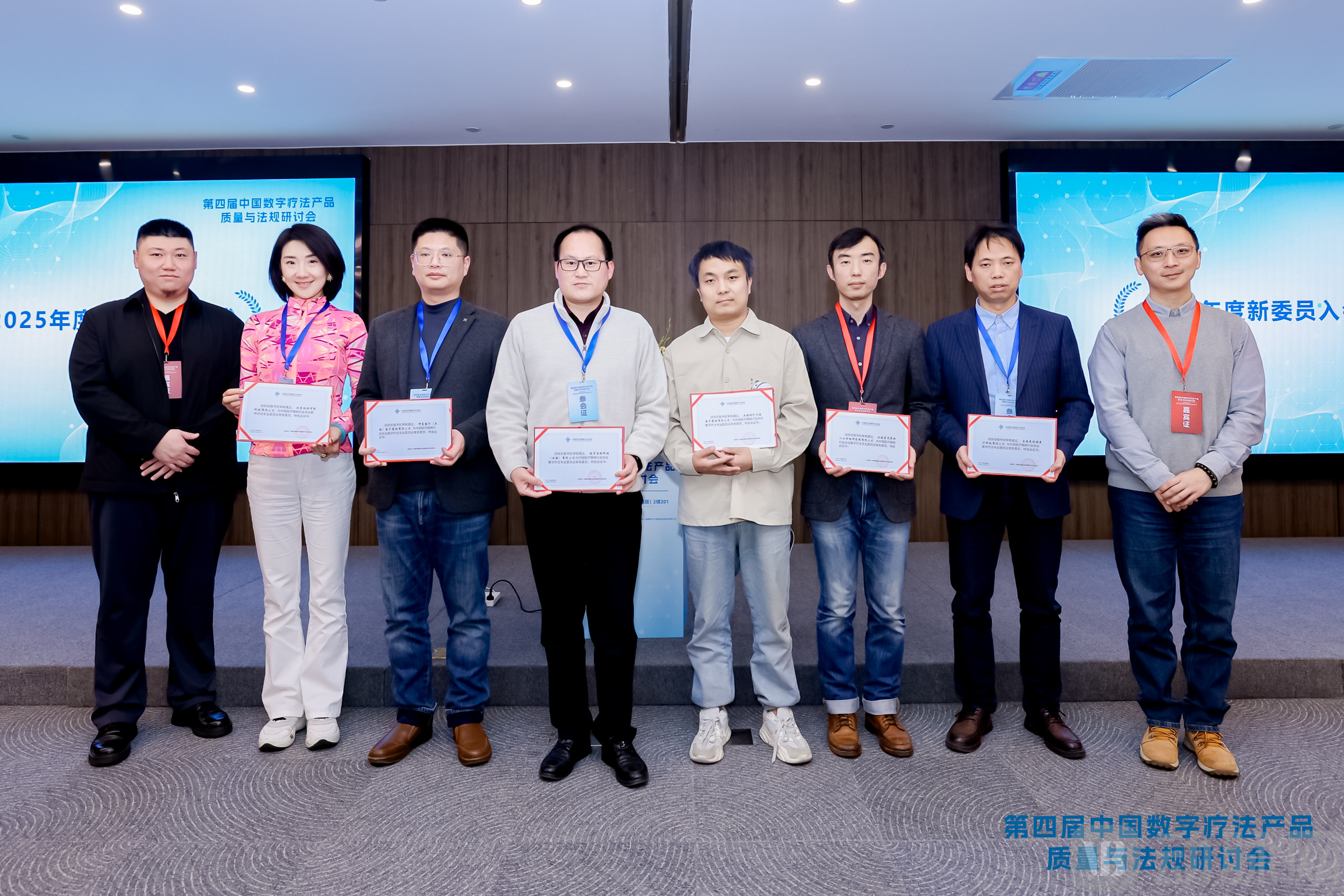
Certificate Presentation Ceremony for the Newly Appointed Members of the Digital Therapeutics Special Committee
Zhao Hongwei, Research Director at VCBeat Institute, pointed out that medical AI in 2025 exhibits three major development characteristics: Large healthcare models have entered the stage of independent research and development by hospitals, but they face pain points such as poor model generalizability, high costs, and ambiguous liability definitions. Over the next three to five years, these challenges need to be addressed by leveraging regional trusted data spaces, while new regulations from the National Medical Products Administration (NMPA) will optimize the market access approval process for large-model-based medical devices. As clinical applications extend from diagnosis to treatment, difficulties in measuring commercial value and divergent interests among hospitals can be resolved through pathways such as policy-covered payments and out-of-pocket patient payments. In addition, with the rise of the medical data trading market, it is necessary to improve the policy framework to address issues related to data supply and ownership, thereby unlocking the value of data.
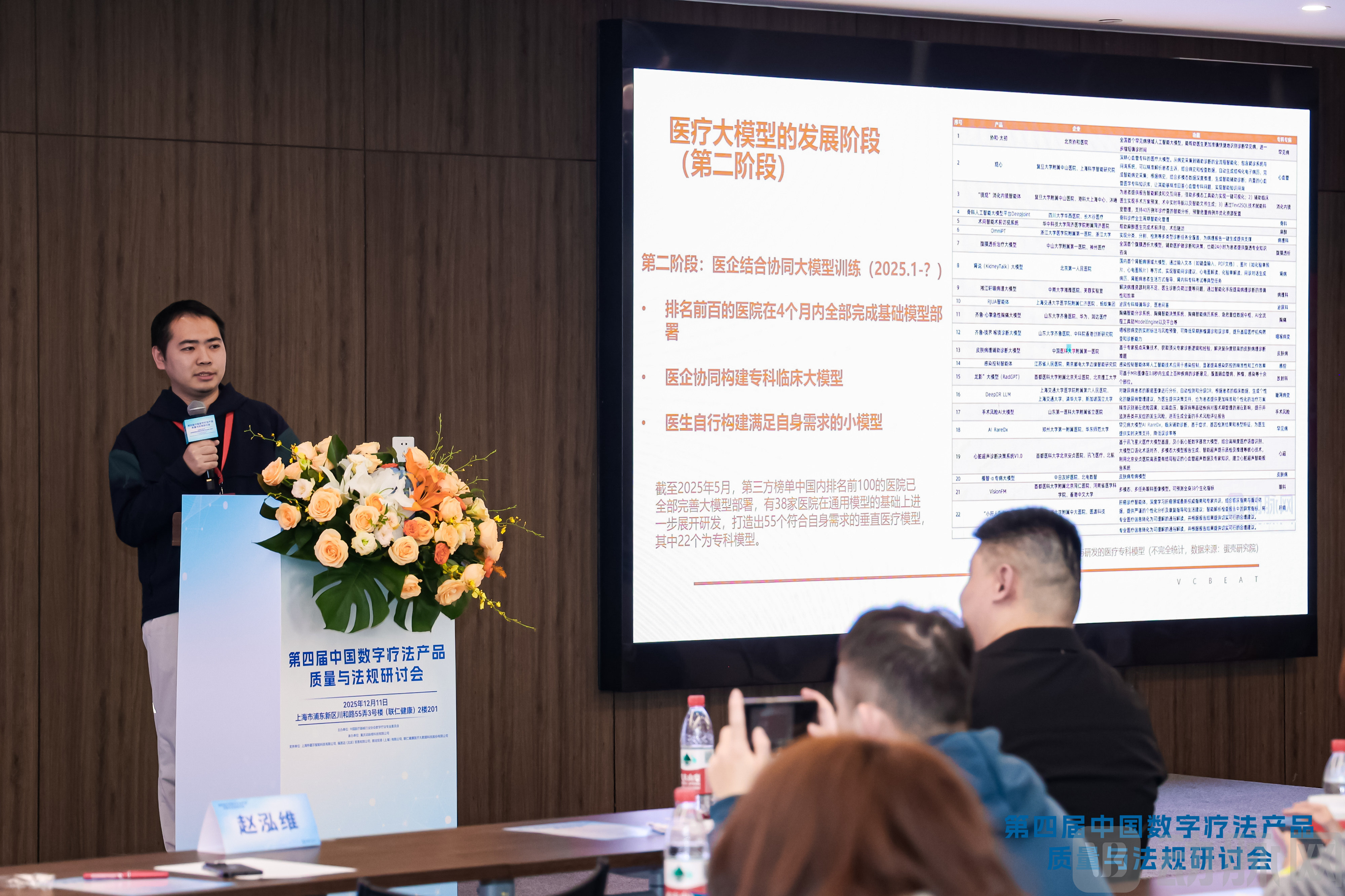
Zhao Hongwei, Research Director at VCBeat
Zhang Bo, Manager of Youli (China) Investment Co., Ltd., analyzed the regulatory landscape and market dynamics of digital therapeutics (DTx) in the United States at the conference. He pointed out that the U.S. is a global hub for medical devices and the largest consumer market, with DTx primarily applied in areas such as chronic disease management and remote care. The industry is exhibiting three major trends: integration with AI, combination with VR/AR technologies, and reforms in reimbursement systems. He also noted that the FDA currently lacks a clear regulatory pathway for DTx, posing challenges related to reimbursement and data privacy. Furthermore, he introduced recent regulatory developments, including the FDA’s new cybersecurity regulations in 2025 and the ongoing development of standards for the lifecycle of health software. He emphasized that companies must prioritize compliance determination for DTx and the accumulation of clinical data.
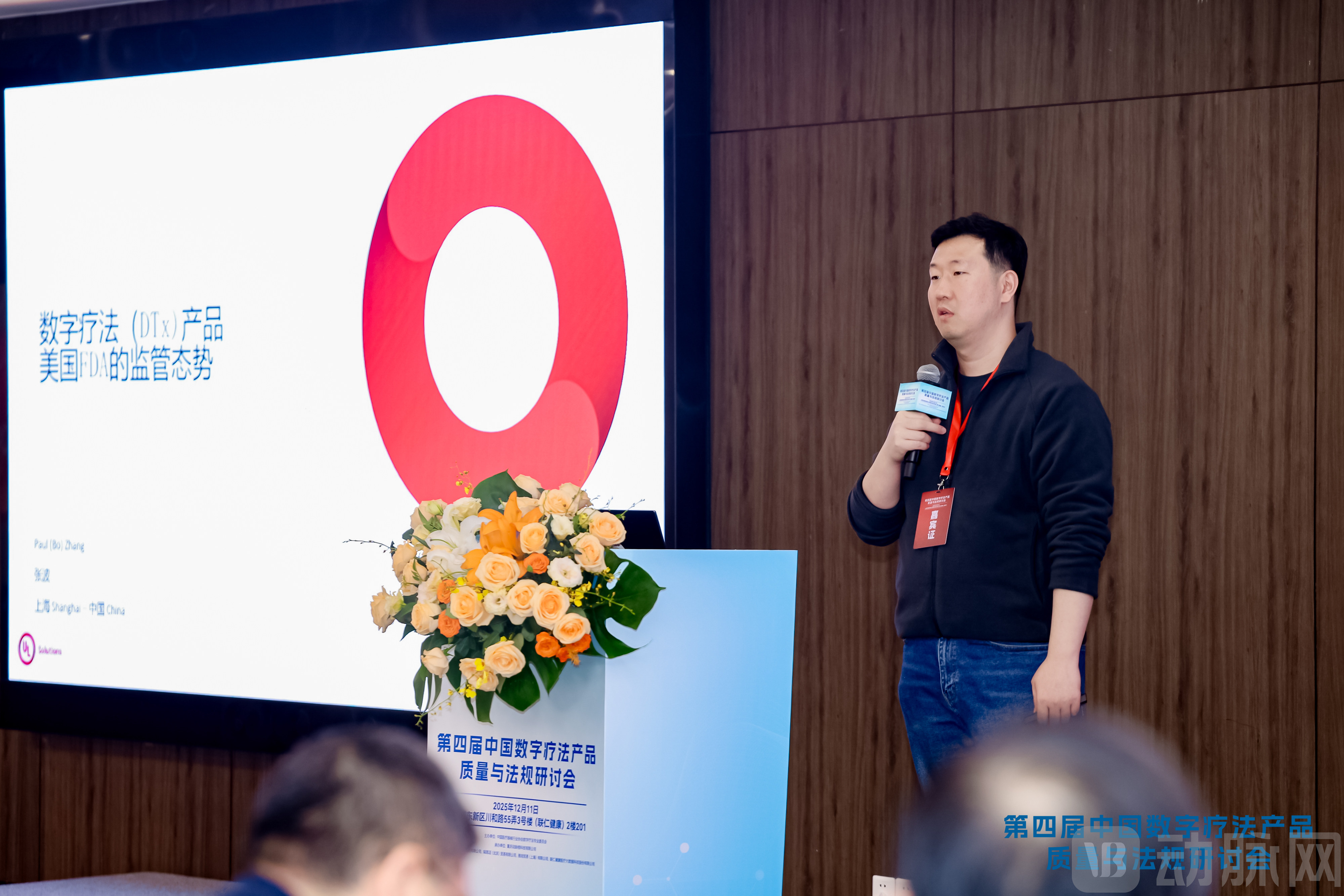
Zhang Bo, Manager of Youli (China) Investment Co., Ltd.
Jiang Longquan, Director of the Data Mining and Artificial Intelligence Department at the Shanghai Institute for Clinical Innovation and Translation, noted in his presentation that facilitating the translation of medical innovations requires addressing bottlenecks in intellectual property (IP) commercialization. The mechanism of valuing hospital-owned IP as equity contributions can effectively activate clinical innovation resources. Currently, compliant pathways for unlocking the value of healthcare data, such as authorized operations of public data, are already in place, with medical big data training infrastructure serving as a core support for the deployment of medical AI technologies. Furthermore, he emphasized the need to establish a full-chain incubation system for medical AI, spanning from proof-of-concept to market launch. By leveraging resource alignment through interdisciplinary collaboration between medicine and engineering, this system supports the rapid validation of innovative technologies against clinical needs, thereby laying a solid foundation for the industrialization of medical innovations such as digital therapeutics.
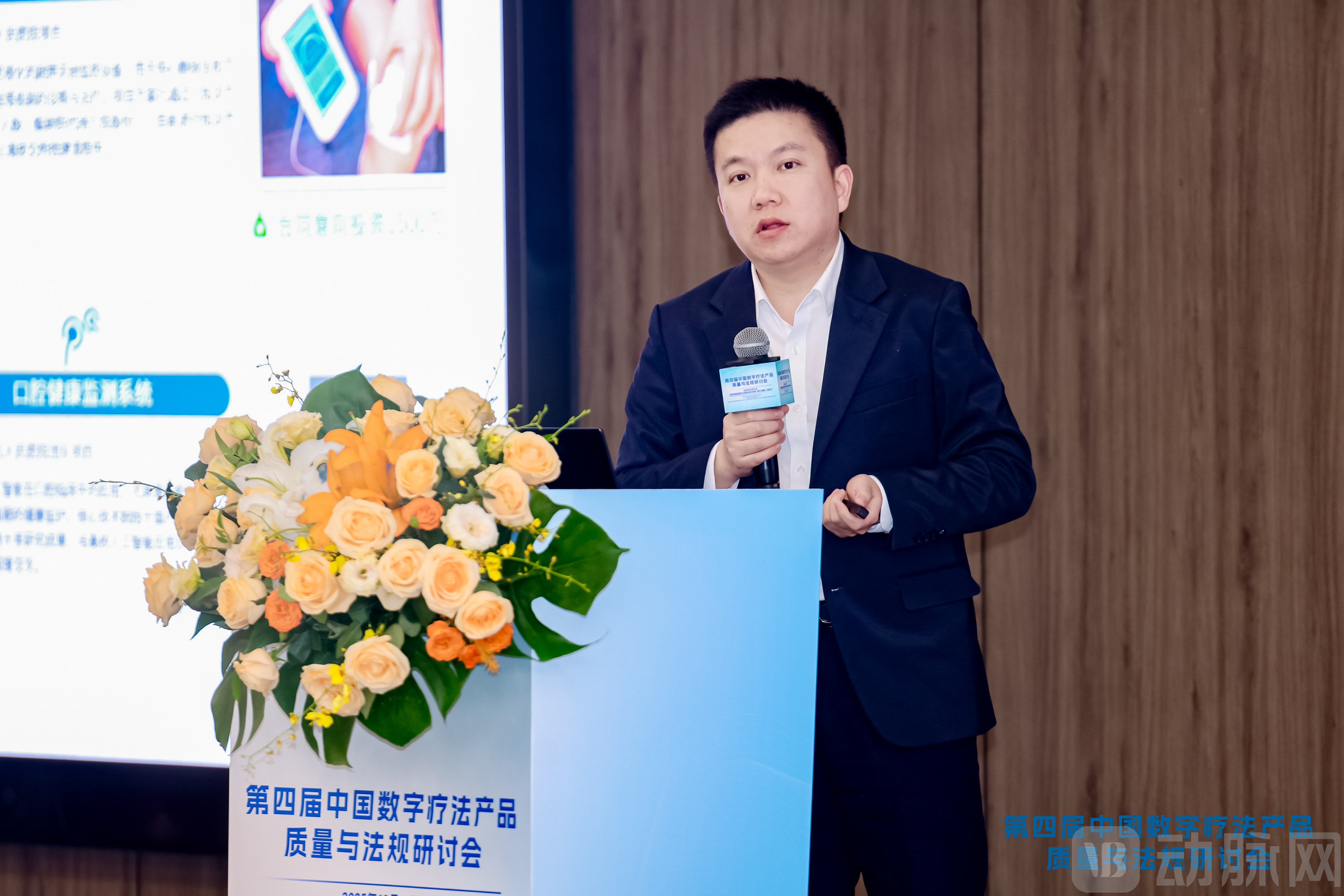
Jiang Longquan, Director of the Data Mining and Artificial Intelligence Department at Shanghai Clinical Innovation Translation Institute
Qin Chunhui, founder of Ruiku Medical, discussed chronic pain from the dual perspectives of a clinician and an entrepreneur. He stated that digital interventions for chronic pain can be based on the core principle that “pain and emotional cognitive pathways are interconnected,” and that brain-computer interface (BCI) technology can offer novel solutions for pain rehabilitation. Meanwhile, he pointed out key industry pain points, such as the lack of unified standards for electroencephalogram (EEG) data and regulatory gaps in related fields. He recommended integrating diagnostic and treatment data across hospitals, communities, and home settings to extend digital analgesia solutions to primary care scenarios. He also called for industry-wide collaboration to explore the appropriate boundaries between technological application and compliant regulation, thereby accelerating the standardized implementation of digital therapeutics for pain management.
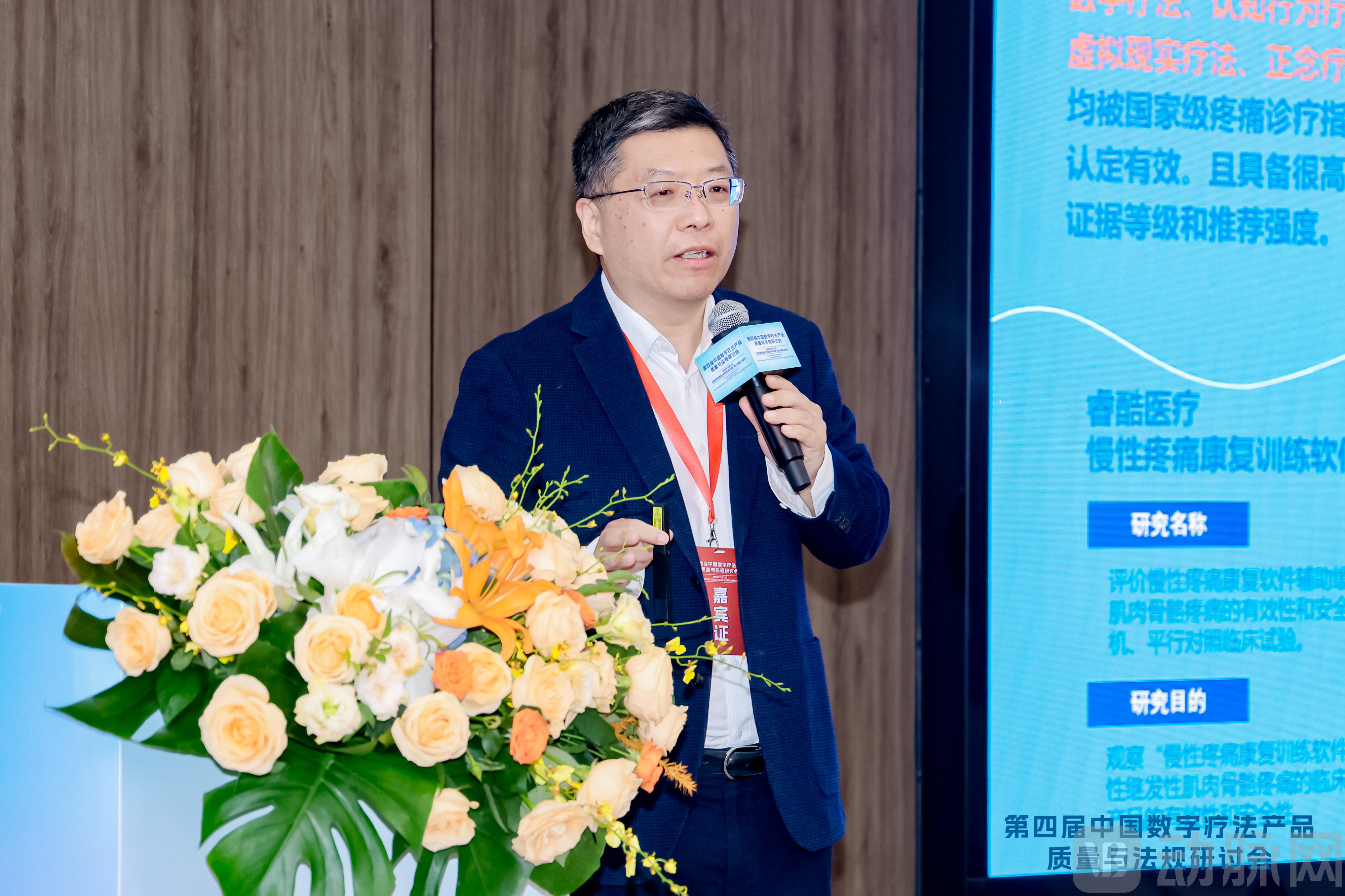
Qin Chunhui, Founder of Ruiku Medical
Gao Yan, Founder, Chairman, and CEO of Weiming Naonao, pointed out in her sharing that psychological issues among adolescents in China are trending toward younger age groups, with a shortage of over 5 million professional mental health personnel. She noted that psychological assessments in schools are often merely formalistic, leading to a prominent supply-demand mismatch. She proposed leveraging three core technologies—the 32B psychological large language model, multimodal non-invasive brain-computer interfaces, and data flywheels—to construct a closed-loop system for lifelong mental health care spanning medical, educational, and family settings. She also emphasized that commercialization and regulatory approval are equally critical for the digital therapeutics industry. It is essential to rapidly establish data and product barriers and explore collaborative business models involving hospitals, schools, and insurance providers, thereby empowering precise screening and intervention for adolescent mental health through technology.
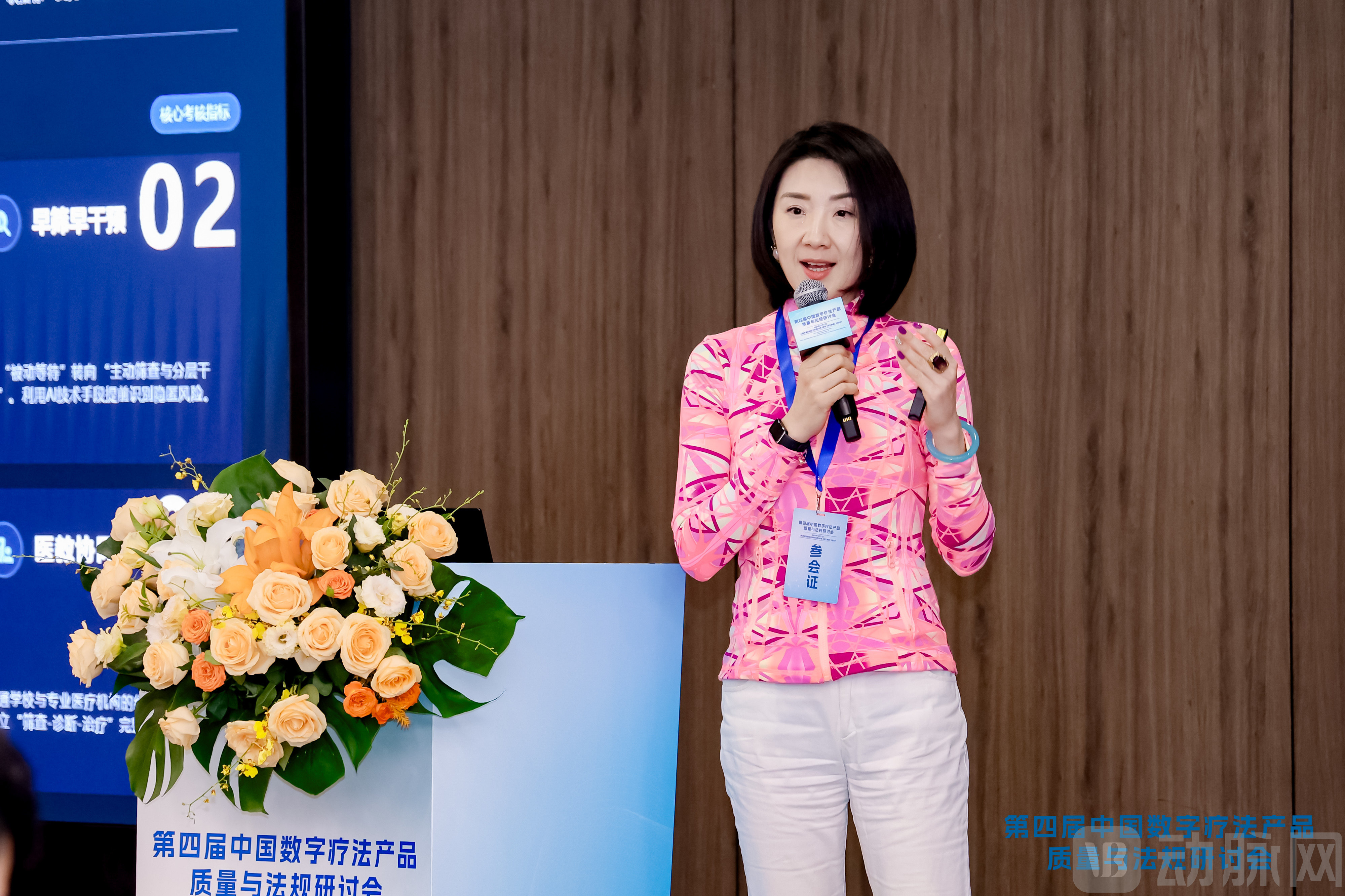
Gao Yan, Founder/Chairman/CEO of Weiming Naonao
Yan Xingjian, Head of Clinical Research at YanSi Brain-Inspired Intelligence, points out that non-invasive electroencephalography (EEG) is currently the mainstream application form of brain-computer interfaces. Large EEG models can achieve adaptation to specific diagnostic and therapeutic tasks with limited data through general pre-training, significantly improving the accuracy of diagnostic indicators for related diseases. The SSVEP (Steady-State Visual Evoked Potential) paradigm has already achieved stable implementation in scenarios such as brain-controlled games and robotic dog operation. In the field of sleep intervention, he proposes building solutions based on lightweight hardware, sleep staging algorithms, and neuroscience-based intervention targets, while emphasizing the need to optimize device comfort and signal stability to promote clinical translation of the technology.
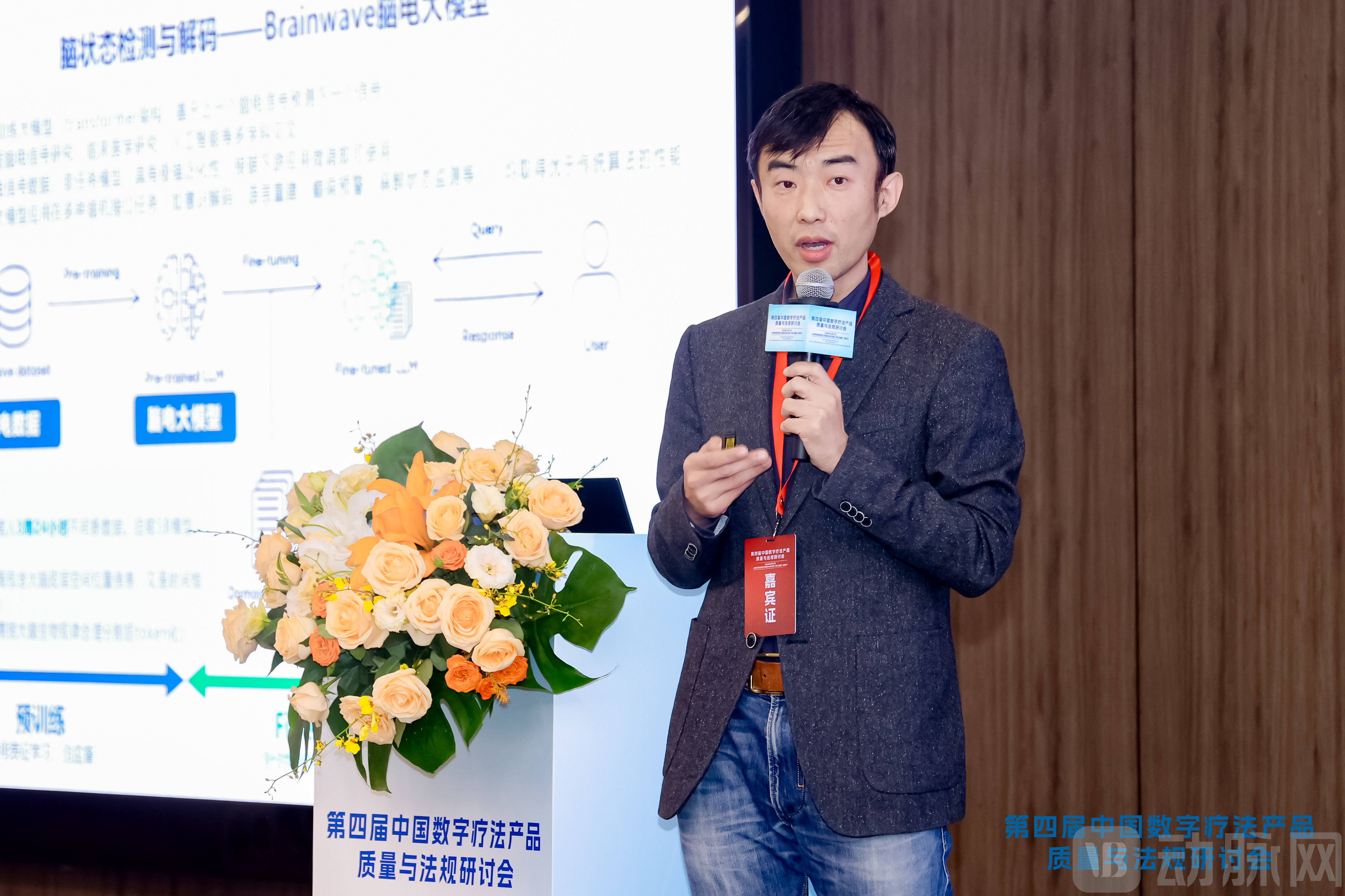
Yan Xingjian, Head of Clinical Research at YanSi Brain-Inspired Computing
This symposium established an in-depth platform for exchange among policy, technology, clinical practice, and industry stakeholders in the field of digital therapeutics. It comprehensively reviewed the Special Committee’s annual achievements and future strategic layout, while also consolidating multi-party consensus on technological breakthroughs, standard establishment, regulatory adaptation, and clinical translation. Attendees unanimously agreed that the conference provided viable solutions to address key industry pain points, such as difficulties in implementing digital therapeutics in real-world scenarios, inconsistent data standards, and unclear commercialization pathways. Furthermore, it laid a solid foundation for the Special Committee to galvanize industrial synergy and advance the formulation of group standards and the construction of technical platforms in this emerging field. Looking ahead, with deepened collaboration among academia, research institutions, industry, and healthcare providers, the digital therapeutics sector will accelerate its transition toward a new stage of standardized and regulated development, injecting stronger momentum into improving the quality and efficiency of medical services and supporting the Healthy China initiative.