

Hongyin Bio Leverages High-Purity Bovine Milk Exosomes to Drive Anti-Aging Ingredient Innovation
Exosomes are undoubtedly the hottest concept in the current beauty and skincare industry. These tiny vesicle-like structures, secreted by cells and ranging from 50 to 200 nm in diameter, are regarded as “communication messengers” for intercellular information transfer. By delivering bioactive components such as proteins, nucleic acids, and lipids encapsulated within them, exosomes can exert regulatory effects on target cells, thereby precisely modulating the body’s metabolic, repair, and regenerative processes.
In layman’s terms, exosomes act like express packages exchanged between cells. They carry biomolecules such as proteins, nucleic acids, and lipids, delivering “boost collagen production” instructions to aging collagen cells and “repair” signals to damaged cells. This highly efficient and precise communication is key to maintaining skin firmness and vitality; once this communication breaks down, skin aging accelerates.
Multiple studies published in Nature Cell Biology have indicated that the essence of aging lies in the human body’s gradual loss of capacity to maintain normal cellular renewal and metabolic homeostasis, a process closely linked to the efficiency of intercellular communication. As key mediators of cell-to-cell communication, exosomes represent an ideal target for anti-aging interventions.
From an efficacy perspective, existing research and application explorations indicate that exosomes have demonstrated potential in skincare R&D to cover multiple core benefits, including anti-aging, antioxidant, anti-inflammatory, pigmentation regulation, and moisturizing effects, thereby addressing nearly all mainstream demands for current functional skincare products. This “multi-efficacy” advantage has prompted international cosmetics giants such as Estée Lauder, Amorepacific, and Clarins to actively invest in this field.
However, the industrialization of exosomes is far from straightforward. Due to potential pathogenic risks, ethical controversies, and high extraction barriers, Chinese regulations explicitly prohibit the direct addition of human-derived or stem cell-derived exosomes into cosmetics. Although plant-derived exosomes are gaining significant traction, companies capable of achieving high purity, verifiable efficacy, and stable large-scale supply remain exceedingly rare at this stage.
It is precisely under this realistic constraint thatHongyin Bio has chosen a more viable path—using milk-derived exosomes as an entry point to explore an application strategy that balances safety, regulatory compliance, and industrialization efficiency.
Hongyin Bio’s inception was distinctly characterized by a “product-driven” approach.
Prior to launching his startup, Li Ye had already spent many years in the film and television industry and was at a transitional stage in his career path. A conversation with a high school classmate became a key turning point that changed his direction. At that time, Dr. Li was conducting research on stem cell-derived exosomes for anti-aging and neural repair at Peking Union Medical College. After observing Li Ye’s facial skin issues, Dr. Li customized an exosome-based topical solution for him. Upon use, Li Ye experienced significant improvement in his skin condition.
This experience, grounded in tangible results, sharpened Li’s keen awareness—backed by years of product and market expertise—of the potential for commercial conversion. Unlike entrepreneurial paths that begin with concepts or capital, Hongyin Bio’s starting point was a product whose efficacy had already been validated at the individual level.
Soon, the two parties reached a consensus and jointly founded Beijing Hongyin Biotechnology Co., Ltd. in November 2024.
This cross-disciplinary collaboration has also established a clear division of roles and set the tone for the company’s development: On the technical front, Dr. Li leads a core team comprising members from Peking Union Medical College Hospital, Beijing Technology and Business University, and other top-tier industry institutions, building a solid foundation in research and process development across exosome isolation and purification, peptide design, complex construction, efficacy validation, and engineered scale-up. On the market front, Li Ye, leveraging his expertise in product definition and commercialization, ensures that technological achievements are efficiently aligned with real-world market demands and successfully translated from the laboratory to commercial products.
Hongyin Biotechnology’s strategic decision to focus on “milk-derived exosomes” among various exosome sources—including animal-, plant-, and human-derived—was made after careful consideration of multiple factors, such as safety, regulatory compliance pathways, maturity of efficacy data, and feasibility of industrial-scale production.
First, at the level of safety and cognitive foundations,As a natural substance consumed by humans over an extended period, milk boasts a millennia-long history of dietary use, and its safety has been widely accepted. This inherent natural attribute provides a more robust foundation of trust for the application of milk-derived exosomes in non-medical scenarios, such as skincare.
Secondly, in terms of the regulatory compliance pathway,Milk-derived exosomes can be classified as “milk extracts,” thereby integrating into the existing framework of cosmetic ingredients. This compliant positioning provides a clear and actionable pathway for their application in skincare, significantly reducing industrialization risks compared to the regulatory uncertainties associated with human-derived exosomes.
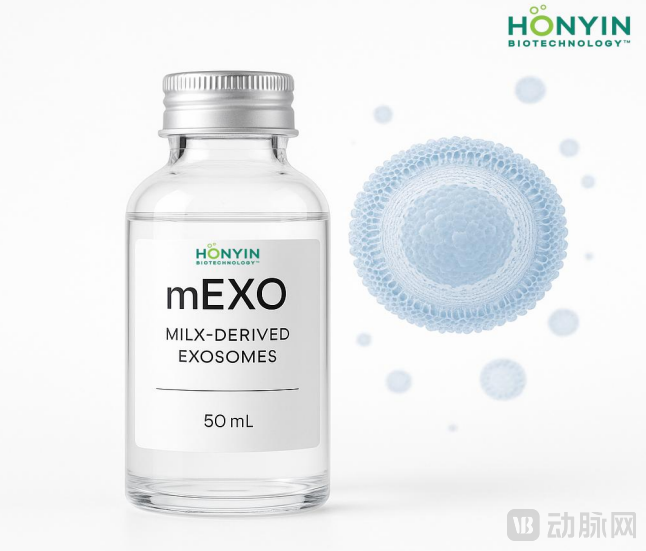
Hongyin Biotech’s Proprietary Milk-Derived Exosomes
In terms of efficacy and research foundation,Milk-derived exosomes are natural nanoscale extracellular vesicles originating from milk. Enclosed by a lipid bilayer membrane, they can stably carry various proteins, lipids, and trace RNA components, making them one of the most well-studied natural sources with significant application potential in international exosome research.
From a comparative application perspective, milk-derived exosomes, unlike plant-derived exosomes, are enriched with highly conserved signaling molecules such as miR-148a and miR-21, as well as pro-repair proteins. These components enable more efficient interaction with human skin cells, playing pivotal roles in key pathways including collagen synthesis and inflammation regulation. In terms of skincare efficacy, both types address anti-aging, anti-inflammatory, and antioxidant benefits; however, plant-derived exosomes primarily emphasize soothing and superficial barrier repair, whereas milk-derived exosomes boast a more mature research foundation in deep tissue repair and cellular activation.
Finally, from the perspective of industrialization and cost,Compared to human-derived or stem cell-derived exosome approaches, which are characterized by high capital investment, stringent regulatory barriers, and prolonged clinical development cycles, milk-derived exosomes offer significant advantages in scalable production: lower thresholds for industrialization and shorter commercialization timelines. Furthermore, bovine milk exosomes maintain stability across a broad range of temperatures and pH levels, making them compatible with various formulations such as serums and creams, while offering extended shelf life and greater flexibility in commercial applications.
The biggest challenge in the exosome industry is not extraction, but rather the dilemma of “impurity at scale, loss of activity upon purification.” Hongyin Biotech’s solution is a two-pronged approach that builds barriers in both raw materials and manufacturing processes.
First, ensure quality from the source.Through experimental comparisons, Hongyin Biotech discovered that fresh milk contains 3–5 times more exosomes than commercially available boxed sterile milk. Consequently, after comparing milk sources from multiple regions, including Inner Mongolia, Xinjiang, and Beijing, the company ultimately selected the highest-quality option.Partnership Established with the Beijing Agricultural Machinery Test Station of the Chinese Academy of Agricultural Mechanization Sciences, directly obtain fresh bovine milk with “zero dilution” to ensure the high activity and high content of exosome raw materials.
Second, the purification process has been iterated.The primary challenge in isolating milk exosomes lies in purification. The abundant free proteins and lipids present in milk can compromise the efficiency and purity of exosome extraction and purification.. Building upon the internationally recognized “gold standards” of differential ultracentrifugation and size-exclusion chromatography (SEC), Hongyin Biology has implemented multiple rounds of process upgrades. This proprietary technology not only effectively removes microproteins and micropeptides, thereby preventing product fermentation and spoilage, but also elevates product purity to research-grade standards.
Currently, its products can consistently meet the purity standards for research-grade (10¹¹–10¹³ particles/mL) and cosmetic-grade (10⁷–10⁹ particles/mL) applications, with an annual large-scale production capacity of approximately one ton.
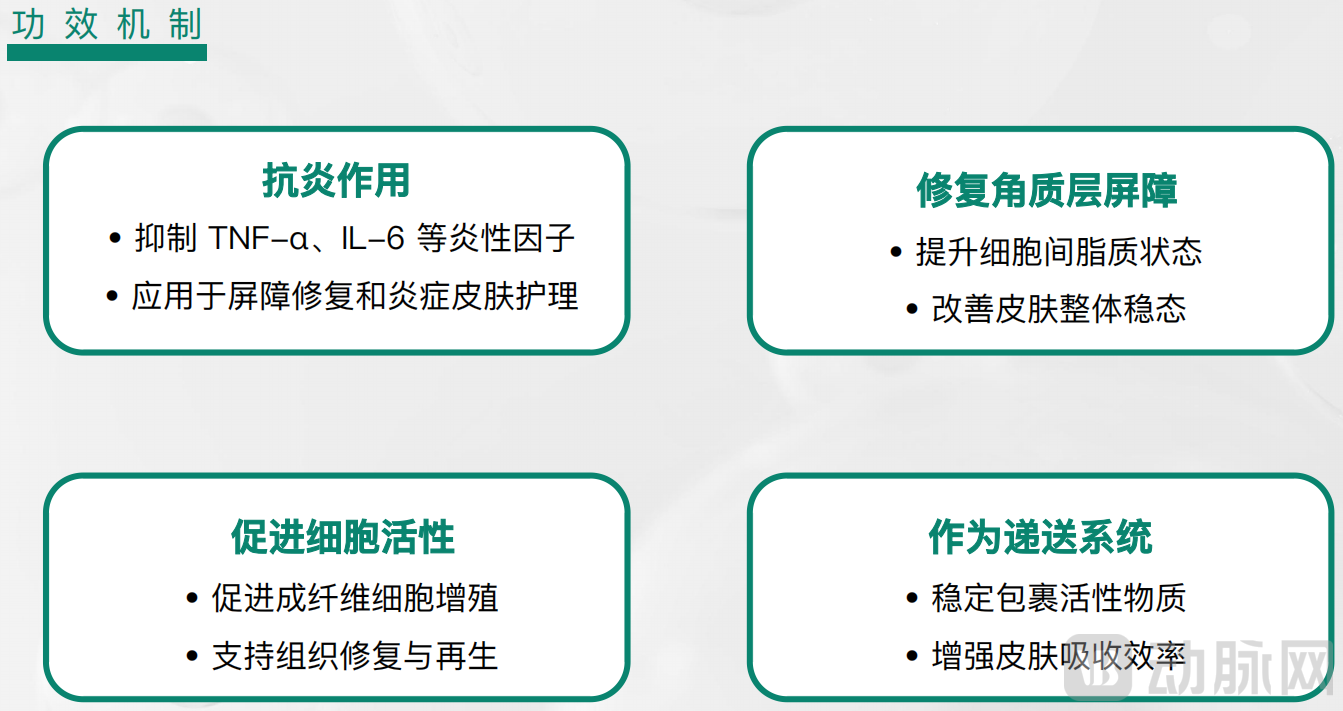 Mechanisms of Action of Hongyin Biotech's Milk Exosomes
If high-purity milk exosomes are the cornerstone of Hongyin Biotech, then its independently developed SYN Milk Exosomes (SYN-mEXO) represent a “next-generation anti-aging weapon” crafted through science-driven innovation.
SYN Milk Exosomes (SYN-mEXO) are not a simple mixture, but a rationally designed engineered exosome complex—an innovative anti-aging ingredient formed by the combination of SYN and high-purity milk-derived exosomes.
SYN features an ingenious design. Drawing inspiration from the human body’s collagen synthesis mechanism, the team reverse-screened seven key amino acids—including glycine, proline, and hydroxyproline—and combined them with a type III collagen peptide possessing signal-activation functionality. Its action is akin to a precise “repair instruction package.”
Milk-derived exosomes serve as “smart nano-delivery vehicles.” Leveraging their natural lipid bilayer structure and optimal nanoscale size, they efficiently penetrate the skin barrier and precisely deliver the SYN peptide chains—acting as “repair instruction packages”—to target cells in the deeper layers of the skin. The combination of the two achieves a synergistic effect where “1+1>2”:Exosomes enhance the transdermal delivery and targeting of active ingredients, while SYN provides precise substrates and signaling molecules for collagen regeneration, synergistically promoting extracellular matrix remodeling.
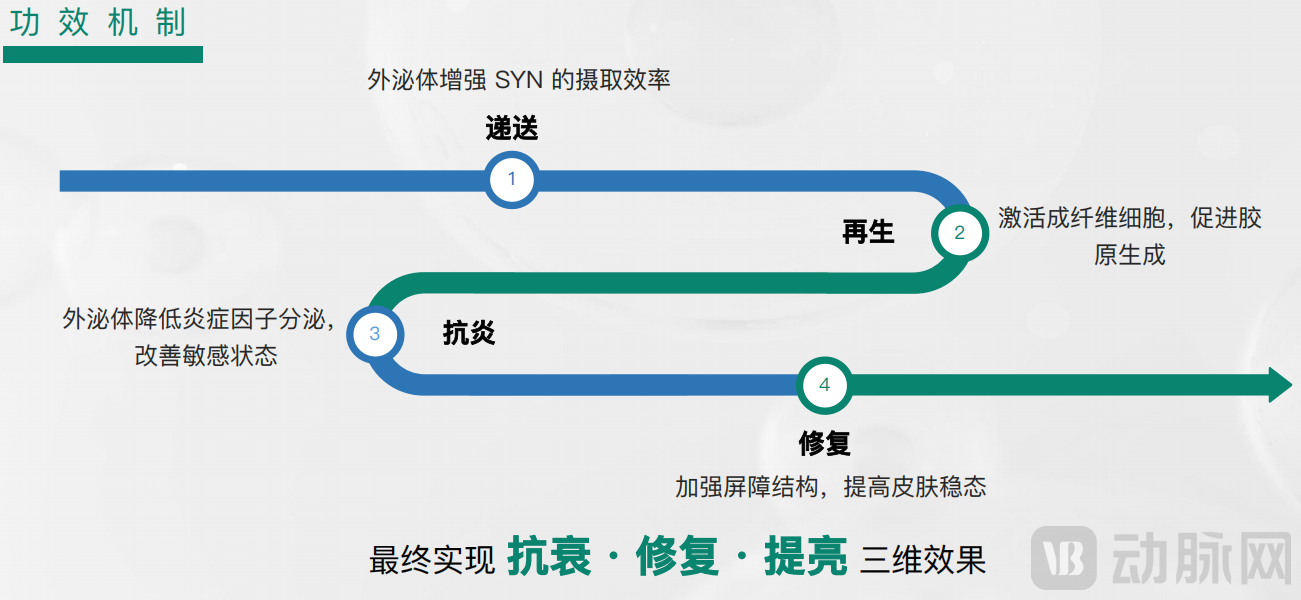 SYN: Mechanisms of Action of Milk-Derived Exosomes
Milk-derived exosomes, as natural nanocarriers, facilitate the penetration of SYN through the skin barrier. SYN provides a precise combination of amino acids required for collagen synthesis, promoting extracellular matrix (ECM) reconstruction; meanwhile, milk-derived exosomes themselves possess potent anti-inflammatory properties that reduce TNF-α levels and assist in barrier repair. The dual-structure complex exhibits enhanced active stability, supporting long-term storage and formulation across diverse scenarios. Leveraging the natural targeted delivery capability of milk-derived exosomes, Hongyin Bio’s SYN achieves higher ingredient permeability, stronger cellular response, and more precise pathways for collagen regeneration within the skin.
It is reported that the product hasAnti-wrinkle, Anti-inflammatoryIt has demonstrated outstanding performance in efficacy testing, and downstream clients have already initiated cooperation negotiations with Hongyin Biotech.
Based on a clear product matrix, Hongyin Biotech has adopted a tiered advancement strategy for commercialization. The first is oriented towardResearch Market, providing hospitals, universities, and research institutes with high-concentration, high-purity exosome reagents to support cutting-edge scientific exploration; secondly,Focus on the Cosmetic Ingredients Market, providing core raw materials to beauty brands and engaging in collaborative development at the formulation stage.
In terms of compliance and infrastructure development,Hongyin Biology has obtained the raw material submission code from the National Medical Products Administration (NMPA) and completed the establishment of its proprietary laboratory and core equipment production lines.. As sample preparation and delivery progress, the Company has entered into substantive discussions and advanced potential orders with multiple downstream manufacturers, and expects to achieve full commercialization of its products in 2026.
From the perspective of Hongyin Biotech, exosomes are transitioning from a cutting-edge biotechnology concept into an industrial-grade raw material that requires engineering, scalability, and long-term validation. Its core competitive advantage lies in “high-standard mass production capabilities.” Based on this, Hongyin Biotech’s future roadmap is clear and pragmatic: first, validate its core raw materials in the real market; then, drive product and process iterations based on feedback; meanwhile, continuously enhance systemic capabilities by strengthening its R&D and marketing teams.
Finally, the Hongyin Bio team stated that the company has completed key strategic deployments in technology, regulatory compliance, and engineered mass production.Next, we aim to introduce investment partners and core talent with backgrounds in the biopharmaceutical or daily chemical industries.Jointly drive the product toward maturity and large-scale implementation.