

Meishangjie Biotech and Cornell-Returned Postdoc Team Launch World’s First Maize-Based Recombinant Collagen Platform with 8 Million Ton Annual Capacity

MSJ
Recombinant Gene Editing Technology Researcher
Recently, Jiangsu MSJ Biotechnology Co., Ltd. (hereinafter referred to as “MSJ”) has entered into a major R&D collaboration with the team of Professor Wu Hao from Nanjing Agricultural University (formerly a postdoctoral fellow in botany at Cornell University in the United States). Both parties will jointly advance“Synthesis of Recombinant Humanized Collagen Using Maize Grain Bioreactors”the R&D and industrialization, aiming to build a globally competitive production platform, overcome the industry pain points of high cost and difficulty in mass production of recombinant human collagen, so as to fully replace animal-derived collagen and meet the urgent market demand for high-quality collagen.
Maize Kernel Bioreactor Technology: One of the Most Forward-Looking Innovative Directions in the Current Biopharmaceutical FieldThe core of this technology lies in utilizing genetically modified maize kernels as natural and efficient "protein factories" to achieve stable expression and large-scale production of target proteins. This eukaryotic expression system not only possesses post-translational modification capabilities similar to those in humans, but also fundamentally overcomes the industrial bottlenecks associated with animal-derived collagen, namely high costs and difficulties in scaling up. Consequently, it breaks the industry dilemma that "high quality inevitably entails high cost" for recombinant collagen.
As the world’s first company to utilize corn kernels for the expression of recombinant collagen, MSJ’s in-depth collaboration with a top agricultural science university not only serves as a model for industry-academia-research collaborative innovation but also holds the promise of bringing disruptive transformation to the industry.It is estimated that future production capacity will support an annual output of 8 million tons of recombinant humanized collagen with 99% purity, while controlling the end-user cost of injection-grade raw materials at approximately RMB 3,000 per kilogram.This breakthrough not only opens up a new pathway for the green manufacturing of human-derived collagen, but also accelerates China’s biopharmaceutical industry toward greener, large-scale, and high-quality development.

Recombinant collagen has become a key raw material in multiple fields, including serious medical care, medical aesthetics, functional skincare, regenerative medicine, and health supplements, owing to its unique regenerative and reparative properties.
According to Frost & Sullivan forecasts, the penetration rate of recombinant collagen in the overall collagen market will continue to rise, reaching 62.3% by 2027. During the same period, the market size of recombinant collagen in China is expected to exceed RMB 193.7 billion, with a compound annual growth rate (CAGR) maintained at a high level of 35%. By application scenario, the market sizes for functional skincare, medical dressings, and skin revitalization are projected to reach RMB 64.5 billion, RMB 25.5 billion, and RMB 12.1 billion, respectively, by 2027.
Currently, there are three main categories of production technologies for recombinant collagen:Microbial Fermentation, Mammalian Cell CultureandEmerging Plant-Based Expression SystemsAmong these, traditional microbial fermentation technologies (e.g., using Escherichia coli or yeast) offer cost advantages but are limited by incomplete protein folding and significant differences in glycosylation patterns compared to humans. Mammalian cell culture (e.g., CHO cells) can produce high-activity proteins but incurs higher costs and carries risks of viral contamination and immunogenicity. In contrast, plant expression systems, which use plant cells as bioreactors, combine advantages in safety, efficacy, scalability, and cost-effectiveness.
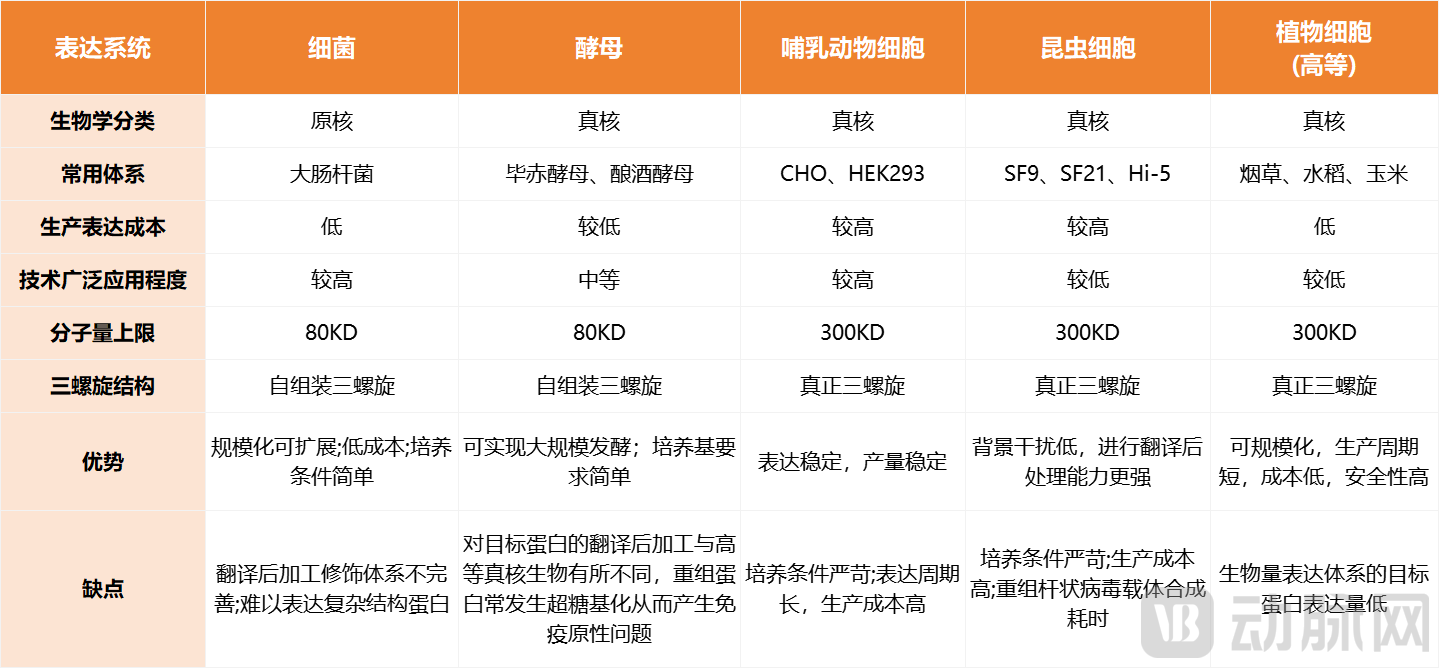
Pros and Cons of Collagen Production Across Different Expression Systems | Graphic by VCBeat
With the continuous iteration of protein extraction and purification technologies,Plant expression systems have approached microbial and animal expression systems in terms of protein yield, with significantly accelerated industrialization.From the successful market launch of Yuanhe Biotechnology, which adopted a rice endosperm expression system in China, to Israel’s Collplant, which has scaled up the production of recombinant human type I collagen using tobacco plants and advanced it into clinical trials, the successful practices of domestic and international enterprises demonstrate that the commercial pathway for plant-derived recombinant collagen has been validated and is emerging as a new engine driving industry development.
Among the various plant-based expression systems, maize kernels demonstrate significant comprehensive advantages due to their unique biological characteristics and established industrial foundation.
First, corn kernels themselves are natural protein storage organs.Mature maize kernels exhibit low moisture content and low protease activity, which facilitates the accumulation of exogenous proteins. They are rich in molecular chaperones and protein disulfide isomerases, which assist in the correct folding of exogenous proteins. Furthermore, the large kernel volume and concentrated dry matter enable higher target protein abundance per unit of biomass. The protein profile is relatively simple, and the levels of secondary metabolites that interfere with purification, such as phenolics and alkaloids, are low.[1], facilitating downstream purification processes or direct use, thereby reducing process costs.
In terms of production capacity and cost, corn benefits from a solid agricultural foundation.China’s corn yield is nearly 500 kg per mu. Under conditions of high-level expression, each mu can theoretically produce approximately 20 kg of recombinant collagen. With optimized purification processes, its unit cost will be significantly lower than that of traditional methods such as cell culture, thereby providing economic feasibility for large-scale production.
More critically,As a eukaryotic expression system, maize is capable of synthesizing high-molecular-weight (>80 kDa) collagen and performing critical post-translational modifications, including hydroxylation. This hydroxylation is essential for collagen to form a stable triple-helix structure and maintain its biological activity. By co-expressing human prolyl-4-hydroxylase, the maize-based system produces collagen with sufficient hydroxylation levels, resulting in a thermal denaturation temperature that can even exceed that of certain animal-derived collagens.[2]. This not only endows the product with excellent stability during storage and transportation at ambient temperature, but also provides the essential guarantee of structural integrity for its application in high-end medical scenarios such as injectable fillers and high-temperature sterilization.
In terms of safety, corn grain-derived recombinant collagen completely eliminates the risk of viral contamination associated with animal-derived materials and exhibits extremely low endotoxin levels, demonstrating significant safety advantages.This significantly broadens the application scope of its downstream products, enabling direct use in medical dressings, functional foods, cosmetics, and other fields, without the need for complex viral inactivation and endotoxin removal processes.
In summary, maize kernel bioreactors integrate“Eukaryotic Modifications + Ton-Scale Production + Ambient Storage and Transportation + Low Capital Expenditure”Fourfold Advantages: Providing a More Practical Pathway for the Comprehensive Replacement of Animal-Derived Collagen and Enabling Green, Efficient, and Low-Cost Manufacturing of Recombinant Collagen, Undoubtedly the Most Promising Next-Generation Industrialization Platform.
Leveraging the significant advantages of corn-based expression systems, MSJ has joined forces with Nanjing Agricultural University to launch this joint R&D initiative, aiming to achieve the industrial-scale production of recombinant collagen in corn kernels and drive its comprehensive replacement of traditional animal-derived collagen.
Currently, although animal-derived collagen is widely used, it cannot completely avoid issues such as viral contamination, immunogenicity risks, and batch-to-batch stability. Furthermore, constrained by breeding cycles and ethical considerations, it struggles to meet the rapidly growing market demand. In contrast,The maize expression system provides a highly controllable, reproducible, and scalable production platform that fundamentally circumvents the drawbacks of animal-derived materials, offering advantages such as intrinsic safety, cost controllability, and sustainable supply.
Through this novel bio-manufacturing pathway, the two parties aim to build a safer, more cost-effective, and more stable collagen supply chain from the source, systematically addressing the long-standing dual challenges of high costs and high risks in the biopharmaceutical sector.
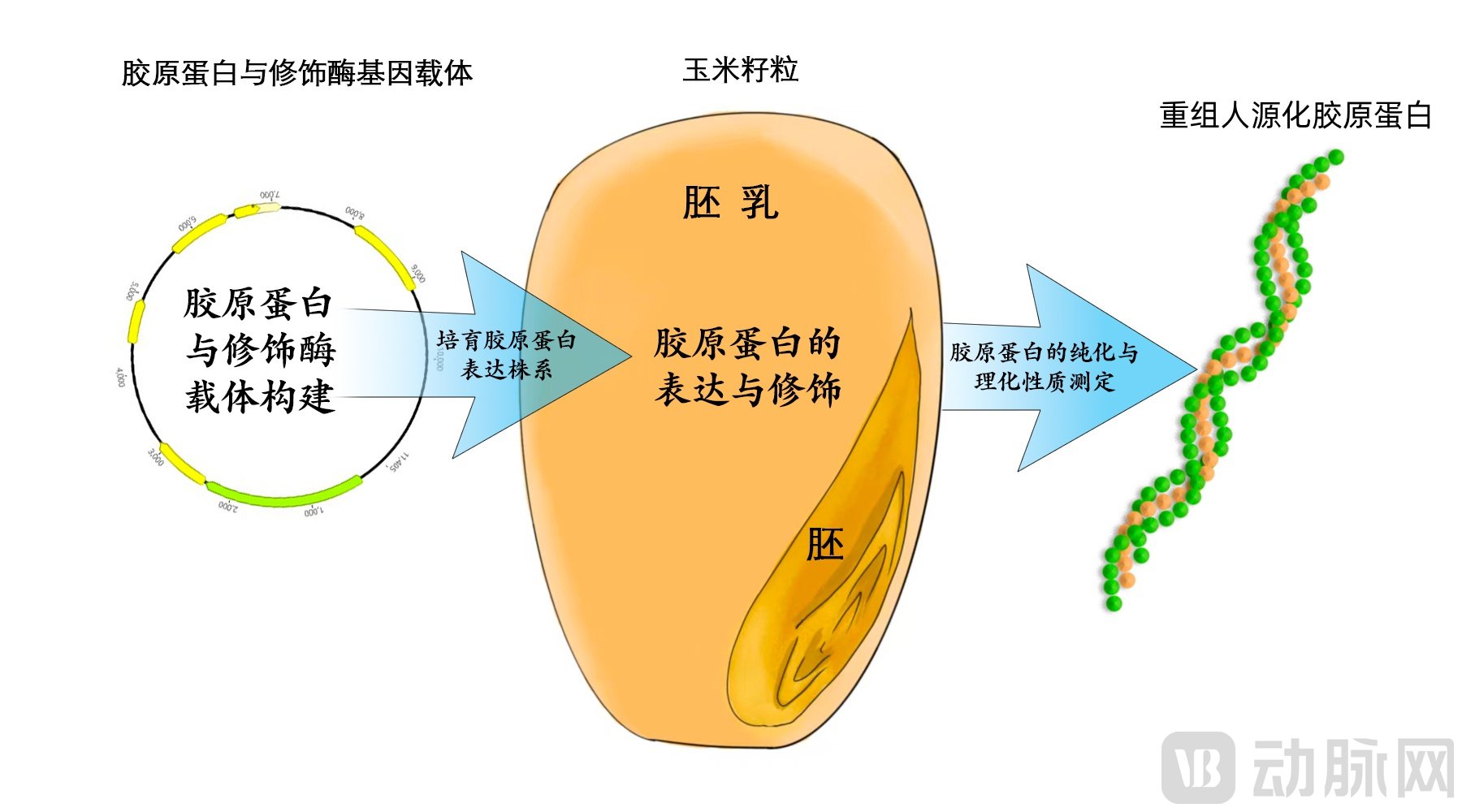
Schematic Diagram of Recombinant Collagen from Corn Kernels
This strategic collaboration was forged by the complementary strengths of both parties in their respective industry and academic domains.MSJ, a pioneer in AI-driven recombinant fusion protein R&D,An internationally leading recombinant humanized protein technology platform has been established. It leverages AI models for the intelligent design and optimization of protein sequences, and possesses mature synthetic biology fermentation and extraction processes, providing a solid technological foundation for the molecular design, high-efficiency expression, and subsequent product development of corn-derived collagen.
Project LeaderProfessor Wu Hao,Formerly a Postdoctoral Fellow in Botany at Cornell University, USA (an Ivy League member institution ranked 16th globally by QS),Currently a Jiangsu Distinguished Professor and Doctoral Supervisor at Nanjing Agricultural University, he has devoted over fifteen years to research in maize kernel genetics, evolutionary developmental biology, and bioinformatics, and is a leading authority in the fields of molecular cloning and crop genetic transformation. The team members possess extensive expertise in molecular cloning and crop genetic transformation, have won the Gold Award in a national-level entrepreneurship competition, and demonstrate robust capabilities in research and development as well as engineering commercialization.As the only institution in East China with a State Key Laboratory of Crop Genetics and Germplasm Innovationuniversities with laboratories,Nanjing Agricultural UniversityIt is at the forefront in China in the fields of plant gene editing, synthetic biology, and seed bioreactors, serving as the core support for this collaborative project in the area of plant science and technology.
It is reported that,Both parties have established 4-mu experimental bases in Hainan and Nanjing., planting and expression tests under different climatic conditions are being advanced simultaneously. The project features a clear roadmap, with phased completion of transgenic plant construction, seed multiplication, pilot-scale extraction, and system optimization. The recombinant collagen produced in corn kernels offers comprehensive advantages, including high yield, low cost, and favorable post-translational modifications. As planned, the project is expected to launch human-derived collagen products with independent intellectual property rights by 2028.
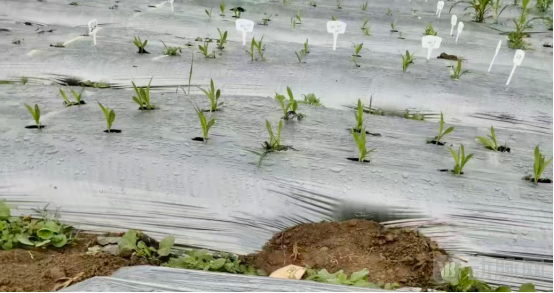
Live Photos from the Experimental Base
For MSJ, this collaboration represents a critical breakthrough in achieving the stable production of “medical-grade” collagen at “agricultural-grade” costs, and serves as a core strategy for advancing technological iteration and positioning itself for the future of protein manufacturing. For the industry at large, the successful industrialization of corn kernel bioreactors offers far more than just an additional production option. Against the backdrop of a global shift toward green, low-carbon, and inclusive biomanufacturing, it provides a new pathway that is more environmentally friendly, capital-efficient, and accessible, with the potential to drive high-quality collagen from niche high-end applications into the broader health and wellness market.
This collaboration represents not only a significant practice in the synergistic innovation of industry, academia, and research, but also marks a critical leap for China in the field of plant-based biomanufacturing, transitioning from frontier technological exploration to systematic industrial deployment. By integrating the company’s engineering capabilities in AI-driven protein design and process development with the university’s source innovation advantages in crop genetics and germplasm creation, both parties will jointly advance the production of high-quality recombinant collagen using corn.
As the platform undergoes iterative development and deepening, it is poised to redefine the production paradigm for high-quality collagen, promoting a transition of biomaterials from “expensive and scarce” to “affordable and accessible” through greener, more cost-effective, and sustainable approaches. This will not only strengthen China’s self-reliance and controllability in the field of biomanufacturing, but also provide an insightful Chinese solution for global efforts to address rising pharmaceutical costs and pursue low-carbon development.
References:
[1] “What Is a Corn Bioreactor? What Can It Do?”, Quantum Bio-Agriculture Alliance
[2] <Bioprocessing of Plant In Vitro Systems>
[3] “White Paper on the Repair of Damaged Skin with Recombinant Humanized Type III Collagen,” Frost & Sullivan