

Nature Outlook 2026: Breakthroughs in AI Scientists, CRISPR 2.0, and Deep Earth Exploration
As 2025 draws to a close, the scientific community stands at a critical turning point.
Nature’s recently released 2026 Science Outlook points out that this will be a year for moving from theoretical validation to critical breakthroughs. From “AI scientists” capable of independently publishing papers, to China’s “Dream Ship,” which aims to drill through the Earth’s crust directly into the mantle, scientific breakthroughs in 2026 will once again expand the boundaries of human cognition.
“AI Scientists” Take Center Stage
Artificial intelligence is undergoing a transformation from a “tool” to a “researcher.” Sakana AI, a Japanese startup founded by former Google researchers David Ha and Llion Jones, has drawn widespread attention for its “AI Scientist” system. Unlike traditional assistive AI, this system aims to fully automate scientific discovery—from generating research topics, writing code, and conducting experiments to ultimately producing complete scientific papers. In fact, Sakana AI’s system has already successfully generated papers that passed peer review at workshops of top-tier conferences in the field of machine learning.
In 2026, we may witness the first major scientific discovery independently made and published by an AI agent. However, as AI becomes more deeply integrated into research, its potential risks cannot be overlooked. Researchers have already found that unregulated AI agents may reach incorrect conclusions due to “logical hallucinations,” and may even accidentally delete critical data when granted excessive permissions.
“The Logical Counterattack of ‘Small Models’”
After years of chasing trillion-parameter giant models, the technological trend in 2026 will shift significantly toward “small and beautiful.” The “Tiny Recursive Model” (TRM) proposed by Samsung AI Lab and Microsoft’s Phi series have demonstrated that, through high-quality data training and optimized architectures, small models can fully match or even surpass large language models (LLMs) on specific logical reasoning puzzles. These small models do not excel at generating fluent but meaningless text; instead, they focus on tackling hard-core tasks such as mathematical proofs and programming logic. Their exceptional energy efficiency will open up new possibilities for scientific computing.
CRISPR 2.0: From Orphan Drugs to a Universal Platform
2026 is poised to become the year when gene therapy transitions from a “desperate last resort” to a “standardized treatment.”
It all began with a baby boy named KJ Muldoon. He suffered from an extremely rare deficiency of carbamoyl phosphate synthetase 1 (CPS1), a fatal metabolic disorder. Dr. Rebecca Ahrens-Nicklas at Children’s Hospital of Philadelphia (CHOP) collaborated with Dr. Kiran Musunuru, a gene-editing specialist at the Perelman School of Medicine at the University of Pennsylvania (Penn Medicine), to develop a customized CRISPR base-editing therapy for him. The success of the treatment not only saved KJ but also validated the safety of this specific editing strategy.
Based on this, the research team plans to apply to the U.S. FDA to launch broader clinical trials in Philadelphia, expanding this therapeutic strategy from targeting a single disease to addressing seven different rare metabolic disorders. This marks the gradual maturation of CRISPR technology into a versatile medical platform, rather than merely an expensive “orphan drug” manufacturing machine.
In the United Kingdom, the results of a massive trial that could rewrite the history of cancer screening will be revealed in 2026. Named NHS-Galleri, this trial is conducted in partnership between the UK’s National Health Service (NHS) and the US biotechnology company GRAIL. With more than 140,000 volunteers enrolled, it is the world’s largest clinical trial for multi-cancer early detection.
The core technology of the Galleri test detects specific methylation patterns in cell-free DNA (cfDNA) in the blood—unique “fingerprints” left by cancer cells. With just a single blood draw, this technology can identify signals for more than 50 types of cancer, including hard-to-treat cancers such as liver and pancreatic cancer, and can even precisely locate the primary tissue of origin. If final results released in 2026 confirm that it effectively reduces the incidence of advanced-stage cancer, the NHS will consider incorporating it into its universal healthcare coverage, marking a revolution in public health.
HeavyReturn to the Moon and Exploration of the South Pole
In 2026, the Moon once again became the focal point of human exploration.
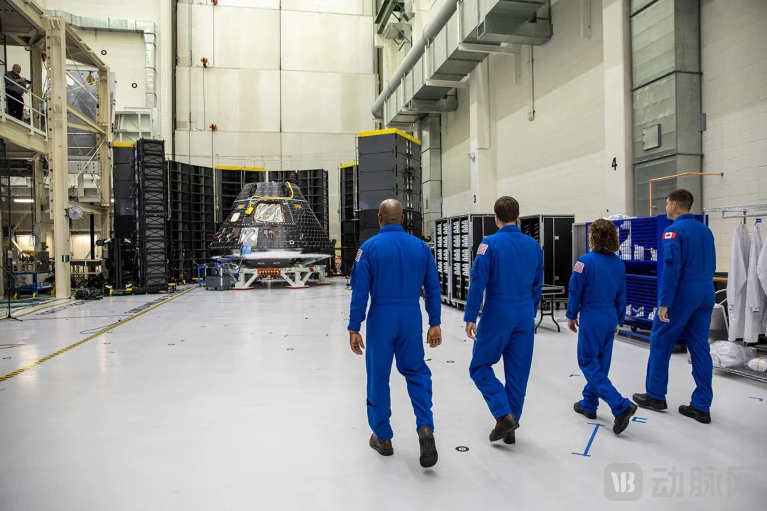
Figure: Artemis II crew members Victor Glover, Reid Wiseman, Christina Koch, and Jeremy Hansen pose for a photo in front of the Orion spacecraft’s crew module (Source: NASA)
· NASA Artemis II:For the first time since the end of the Apollo program in 1972, humans will return to deep space. Four astronauts will undertake a lunar orbit mission aboard the Orion spacecraft, conducting critical rehearsals for future crewed lunar landings.
· China's Chang'e-7:Unlike previous landing missions, Chang’e-7 will tackle the complex terrain of the lunar south pole. The mission will carry a “hopper” probe capable of jumping mobility, venturing deep into permanently shadowed craters to search for water ice. Following India’s successful Chandrayaan-3 landing near this region, Chang’e-7’s findings will directly inform site selection and resource resupply for future lunar research stations.
The Mystery of the Origin of Mars' Moons
The Japan Aerospace Exploration Agency (JAXA) plans to launch the highly ambitious Martian Moons eXploration (MMX) mission, which represents a significant undertaking not only for Japan but also in human history. The mission targets Mars’s two moons, Phobos and Deimos.
The origins of these two moons have long been a subject of scientific debate: are they asteroids captured by Mars’ gravity, or debris ejected after a massive impact on Mars? The MMX mission aims to land on the surface of Phobos and collect samples, with plans to return these precious samples to Earth in 2031. This endeavor will not only unravel the origins of Mars’ moons but also provide key insights into our understanding of planetary formation in the solar system.
“Dream Vessel”: The “Moon Landing Program” of the Geoscience Community
Beneath the Earth’s surface, China’s first independently designed ultra-deepwater ocean drilling vessel, “Dream,” is expected to embark on its landmark maiden voyage in 2026. This massive ship, with a displacement of 33,000 tons (approximately 42,600 tons), not only boasts the world’s most advanced onboard laboratories but also carries an ultimate mission: to drill through the boundary between the Earth’s crust and mantle—the “Moho discontinuity.” If successful, humanity will obtain direct samples of mantle rocks for the first time, holding immeasurable scientific value for understanding plate tectonics, earthquake mechanisms, and the deep evolution of the Earth.
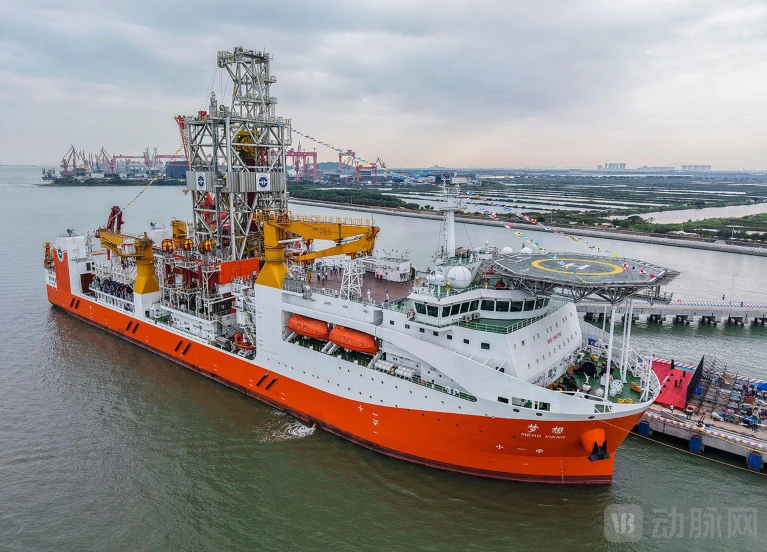
Figure: China's deep-sea drilling vessel "Dream," designed to drill through the Earth's crust into the mantle (Source: Xinhua News Agency)
At Fermilab in the United States, physicists are eagerly awaiting the launch of the Mu2e experiment. The experimental apparatus is scheduled for completion in April, followed by an extended commissioning period.
The goal of Mu2e is exceptionally pure and profound: to detect whether muons can directly convert into electrons without producing neutrinos. In the current Standard Model of particle physics, this process is considered virtually impossible. Mu2e increases experimental sensitivity by a factor of 10,000; detecting this phenomenon would signify the discovery of New Physics beyond the Standard Model, representing the most significant upheaval in the physics community since the discovery of the Higgs boson.
In 2026, U.S. President Donald Trump’s second term will enter a critical phase. His “America First” governing philosophy will profoundly reshape the global scientific landscape.
Clear signals have emerged: traditional fields such as environmental science, climate change, and public health may face sustained funding cuts and policy neglect. In contrast, AI and quantum technologies, regarded as critical to national competitiveness, will receive unprecedented resource allocation. This research strategy of “playing to strengths while avoiding weaknesses,” coupled with increasingly stringent immigration policies and federal scrutiny of higher education institutions, will introduce significant uncertainty into the global flow of scientific talent and international collaboration.