

Why CERN Trusts KNF Diaphragm Pumps for Particle Collider Gas Systems
The particle accelerators at the European Organization for Nuclear Research (CERN) have yielded significant discoveries regarding the composition of the universe, including insights into antimatter and the Higgs boson. Within these particle detectors, pumps used to circulate gas mixtures must demonstrate exceptional reliability and ensure contamination-free gas flow. To meet these stringent requirements, the particle collider selected KNF, a global leader in diaphragm pump technology, to provide its solutions.
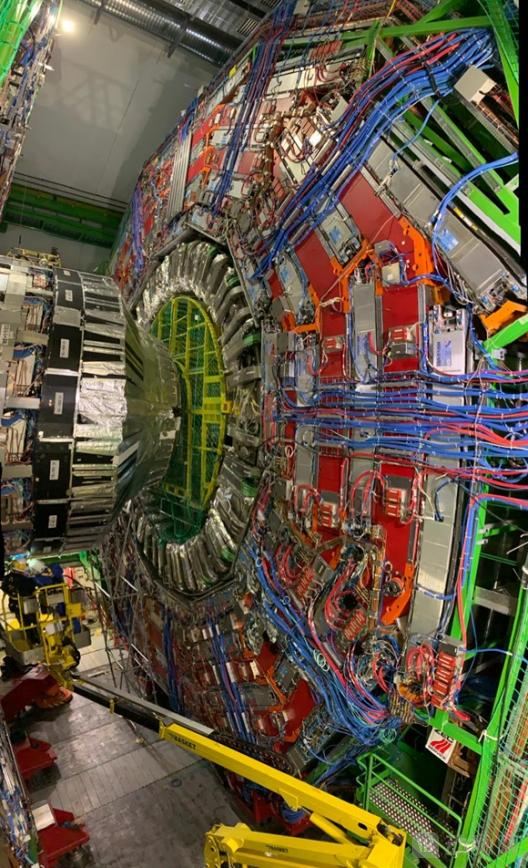
The European Organization for Nuclear Research (CERN) is located on the border between Switzerland and France and conducts experiments using multiple circular and linear particle colliders.
The world-renowned research institution, the European Organization for Nuclear Research (CERN), is dedicated to exploring the structure of the fundamental particles that constitute all matter. Located underground on the border between Switzerland and France, it conducts experiments using multiple circular and linear particle colliders, achieving numerous breakthroughs such as the discovery of the Higgs boson and the isolation of antimatter.
Research at the European Organization for Nuclear Research (CERN) utilizes the world’s largest and most complex scientific instruments. The facility’s largest particle collider, the Large Hadron Collider (LHC), is situated 100 meters underground to mitigate environmental influences such as radiation. Here, particles are accelerated to near-light speeds and then made to collide, with detectors recording the phenomena that occur during these collisions.
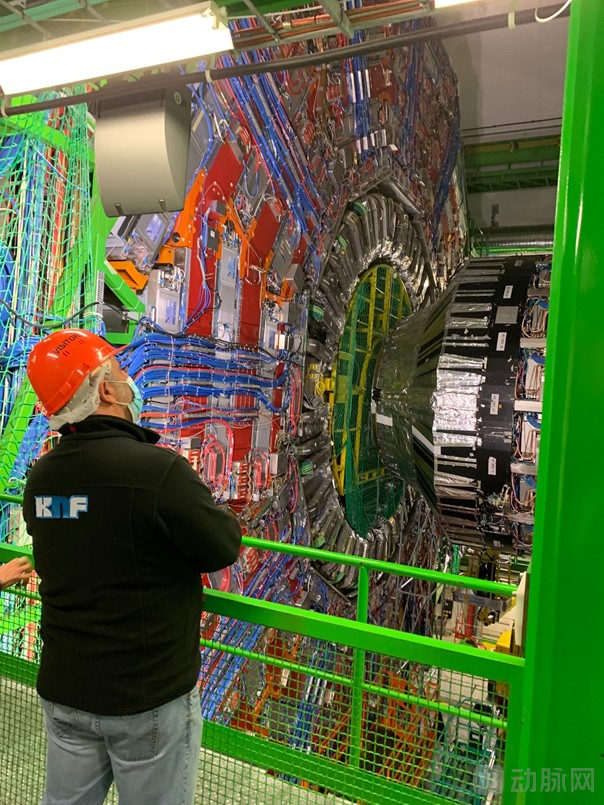
The Compact Muon Solenoid (CMS) detector is used to observe particle collision effects.
When charged high-energy particles collide with gas, they leave ionization trails in their wake. These signals are amplified by an electric field and then electronically measured, enabling high-precision tracking of particle trajectories. Such experimental results contribute to a deeper understanding of the structure of matter.
At CERN, approximately 30 gas systems supply precisely proportioned gas mixtures to the detectors used in Large Hadron Collider experiments. These gas mixtures serve as sensitive media, where charge multiplication generates signals that are recorded and analyzed. Therefore, precise and stable gas mixtures are critical to the efficient and reliable operation of particle collider experiments.
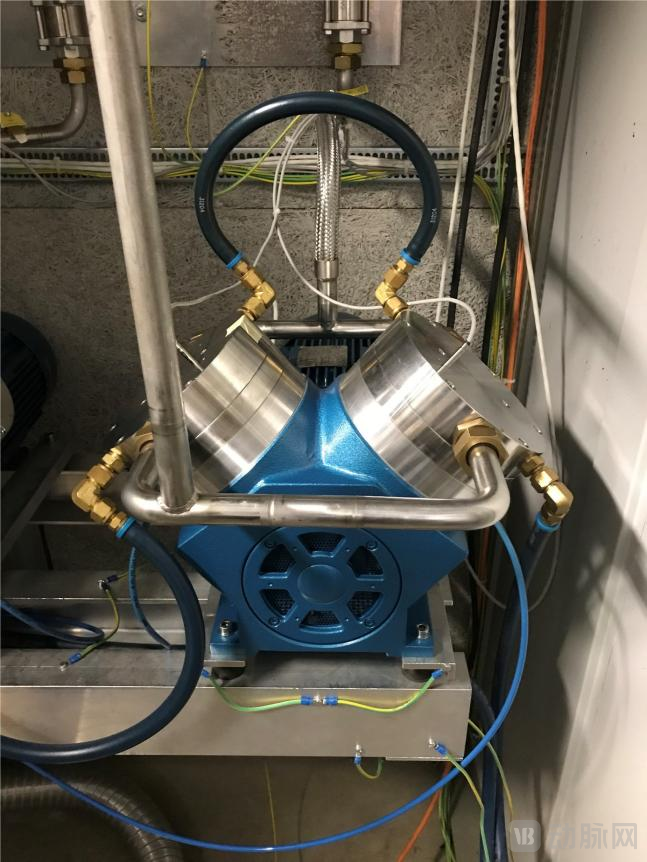
Various ultra-high-purity gas mixtures are used in the complex detectors of particle accelerators.
These particle detectors use a gas mixture composed of various inert gases, such as argon, xenon, and helium, along with other gases including tetrafluoromethane, tetrafluoroethane, sulfur hexafluoride, isobutane, and carbon dioxide. KNF diaphragm pumps are used to circulate the gas mixture, ensuring it remains uncontaminated.
After decades of collaboration with KNF, the experimental team has spoken highly of KNF’s expertise and experience. When the Compact Muon Solenoid (CMS) detector, one of their four particle detectors, required new diaphragm pumps to purify and circulate a specific gas mixture, the team once again chose KNF, installing two pumps along with an additional unit as a backup.
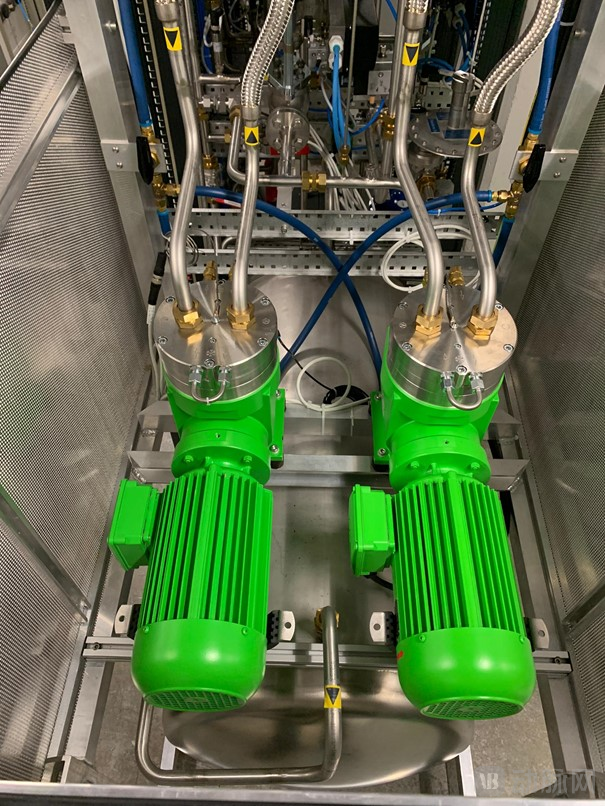
The KNF diaphragm pumps used at the European Organization for Nuclear Research (CERN) are the result of close collaboration between both parties, achieving a high degree of customization.
Years of successful collaboration with the European Organization for Nuclear Research (CERN) have enabled KNF to gain in-depth understanding and provide customized solutions for these highly specialized applications. Recently, CERN’s Gas Team actively participated in the custom development of KNF’s N 0150 and N 1200 process pumps.
According to observations by the Gas Team at CERN (European Organization for Nuclear Research), KNF has successfully extended diaphragm service life through improved pump design. The research center has maintained strong trust in KNF, placing an additional order for 18 pumps with a flow rate of approximately 170 liters per minute, which were installed on particle accelerators in 2022.