

TCE Pioneer EpimAb Biotherapeutics Advances Toward IPO with Integrated Platform, Pipeline, and Global BD Engine

EpimAb Biotherapeutics
Developer of Tumor Bispecific Antibodies
Currently, T-cell engagers (TCEs) are spearheading a global wave of innovative drug development as the “core of next-generation immunotherapy.” Multinational corporations (MNCs) are aggressively acquiring TCE assets, with Chinese TCE developers demonstrating an overseas expansion momentum comparable to that of antibody-drug conjugates (ADCs) in their heyday. According to Frost & Sullivan data, the global TCE drug market has grown from $400 million in 2020 to $3 billion in 2024, and is projected to reach $110.1 billion by 2034. Behind this surge lies the breakthrough progress of TCE therapies across three major areas: hematologic malignancies, solid tumors, and autoimmune diseases.
Currently, Chinese pharmaceutical companies have embarked on a differentiated path in the TCE field, characterized by the parallel advancement of “in-depth development of technology platforms” and “global business development (BD) collaborations.” Behind the more than 150 active TCE pipelines in China (data source: Insight Database; only active pipelines are included) lies a comprehensive upgrade of Chinese pharmaceutical enterprises—from target imitation to technology definition, and from simple license-out deals to the establishment of NewCos. Amid the sustained boom in TCEs,In December, EpimAb Biotherapeutics renewed its push for a Hong Kong listing by submitting another prospectus, providing the international market with a comprehensive overview of the latest progress in its TCE asset portfolio. This move serves both as a “valuation benchmarking” exercise and a “self-assessment of value”: with the sector heating up, investors are no longer asking “whether” but rather “who can”—specifically, who can build differentiated barriers across platforms, pipelines, and business development (BD), and continue to maximize the value of TCE technologies.
EpimAb Biotherapeutics’ IPO filing itself does not provide a valuation answer, but it offers a window for observation: Against the backdrop of expiring patents for traditional monoclonal antibodies, significant unmet needs with existing therapies, and aggressive acquisition activities by global pharmaceutical giants, can Chinese biotech companies leverage their platforms and pipelines to go global and lead T-cell engagers (TCEs) into the broader blue ocean of autoimmune diseases? EpimAb’s second attempt at going public serves as an immediate case study to test this logic.
TCE Autoimmune Disease Opportunity:
Unmet Needs and the Value Anchor of EMB-06
The emergence of a “blockbuster drug” in the autoimmune field is a key reason why major companies are rushing to enter this sector. According to Frost & Sullivan data, the compound annual growth rate (CAGR) of the autoimmune drug market in China alone will reach 22.7% from 2024 to 2034, with the market size projected to grow to USD 35.2 billion by 2034. In addition to the vast market size, another factor driving the surge in interest is the impending expiration of patents for drugs such as infliximab and adalimumab, while new therapies targeting novel mechanisms or targets have not yet been launched on a large scale. The approaching “patent cliff” will create a “window period” in the autoimmune market, attracting both multinational corporations (MNCs) and biotechnology companies (Biotechs) to compete simultaneously. These players aim to transform this “window period” into a “strategic repositioning phase,” thereby reshaping the competitive landscape of the autoimmune market.
Currently, there are more than 300 drugs and vaccines in clinical development worldwide for autoimmune diseases. In the highly competitive landscape of autoimmune therapeutics, T-cell engagers (TCEs) have emerged as a “new leading contender” for the following reasons.
In terms of precision, safety, and efficacy,Currently widely used immunosuppressive therapies, such as corticosteroids and biologics, can alleviate symptoms but fail to provide long-term disease control, suffering from high relapse rates, numerous side effects, and drug resistance. TCEs can specifically recognize and eliminate pathogenic immune or inflammatory cell populations, enabling more precise and thorough treatment of autoimmune diseases while reducing systemic toxicity.
Importantly,Traditional biologics typically require different drugs for different indications, whereas TCEs are designed to eliminate pathogenic B cells by activating autologous T cells (e.g., BCMA-targeting TCEs), making them effective for autoimmune diseases that share the same inflammatory pathways. Therefore,A single TCE drug has the potential to effectively target multiple autoimmune diseases.Meanwhile, unlike most current autoimmune drugs that merely alleviate symptoms by suppressing immune responses, TCEs reshape the body’s B-cell immune system by thoroughly eliminating pathogenic B cells, offering the potential to address both the symptoms and the root cause of the disease.
While the industry is still contemplating how to position itself in the innovative autoimmune drug market, EpimAb Biotherapeutics has already leveraged its proprietary TCE pipeline candidate EMB-06 to expand from oncology into the autoimmune space, thereby extending the product pipeline’s lifecycle and enhancing valuation. Currently, EMB-06 has demonstrated unique competitive advantages.
On one hand, based on the date when the pipeline was first announced for application in autoimmune indications, EpimAb Biotherapeutics is the first pharmaceutical company globally to publicly disclose the use of a BCMA/CD3 TCE (EMB-06) for the treatment of autoimmune diseases.Clearly, EMB-06 has taken the lead from the outset in the field of autoimmune diseases. Chinese pharmaceutical companies, represented by EpimAb Biotherapeutics, have demonstrated the capability to deliver first-in-class therapies to autoimmune patients worldwide.

Global Clinical-Stage BCMA/CD3 Bispecific Antibodies for the Treatment of Autoimmune Diseases
Source: Prospectus
On the other hand, in terms of safety and efficacy,EMB-06 has been rationally designed with reduced CD3-binding affinity to minimize T-cell hyperactivation, while employing an innovative 2+2 Fab cross-linked tandem structure to enhance tumor-targeting specificity through dual-epitope binding to target cells.These design advantages translate into unique safety and efficacy profiles, significantly reducing the incidence and severity of cytokine release syndrome (CRS). This achieves a distinct balance between reduced toxicity and sustained clearance of pathogenic target cells, thereby facilitating expansion into autoimmune indications.Furthermore, EMB-06 offers industrial scalability. Built on the FIT-Ig platform, EMB-06 can be efficiently expressed in mammalian cells and purified to high purity using standard protocols, thereby minimizing the need for extensive process optimization.
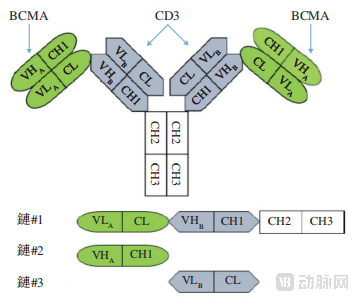
EMB-06 Molecular Structure
Source: Prospectus
Especially in terms of safety,Most autoimmune diseases are chronic conditions and, unlike cancers, are not fatal in the short term. Therefore, the long-term safety of autoimmune disease therapies is particularly important while ensuring efficacy. In the Phase I clinical trial that has completed the dose-escalation stage for relapsed or refractory multiple myeloma,The overall response rate in the 120 mg dose group of EMB-06 was 100.0%, with no cases of cytokine release syndrome observed.At higher dose levels (120 mg to 300 mg), EMB-06 demonstrated an overall response rate of 91.7%, which, based on published clinical data, is higher than that of teclistamab (63.0%) and elranatamab (61.0%). These data intuitively demonstrate that EMB-06 possesses potent antitumor activity while maintaining a favorable safety profile, and holds the potential to improve the therapeutic window for autoimmune diseases.
EMB-06’s safety profile and therapeutic window potential in the field of autoimmune diseases have gained recognition from overseas pharmaceutical companies.In September 2024, EpimAb Biotherapeutics and Vignette (acquired by Candid) reached an agreement on EMB-06. The lead investor of Vignette expressed recognition of this pipeline: “EMB-06 is a promising clinical product, and we look forward to building a leading company focused on developing TCEs for the treatment of autoimmune diseases.”
Platform Depth:
Patent Moat and Full-Chain Team
The outstanding data for EMB-06 stem from EpimAb Biotherapeutics’ proprietary FIT-Ig platform. Before analyzing the differentiated value of this platform, we must first clarify the pain points associated with current TCE platforms in the industry.
First, the establishment of a TCE platform faces high technical barriers. It is a systematic engineering endeavor that requires an experienced team to create a closed loop encompassing “molecule screening and design – safety prediction – patent breakthrough – process scale-up – clinical pathway.” A failure in any single link will halt further advancement of the pipeline. Importantly, possessing a platform merely signifies that a company has crossed the threshold into the TCE arena; how quickly and effectively it competes within this arena depends on the differentiation of its respective platform. Currently, TCE platforms in the industry commonly suffer from pain points such as extensive molecular engineering modifications, low binding affinity of parental Fab fragments, and high CMC and GMP manufacturing costs, which severely compromise the quality and speed of subsequent TCE development races.
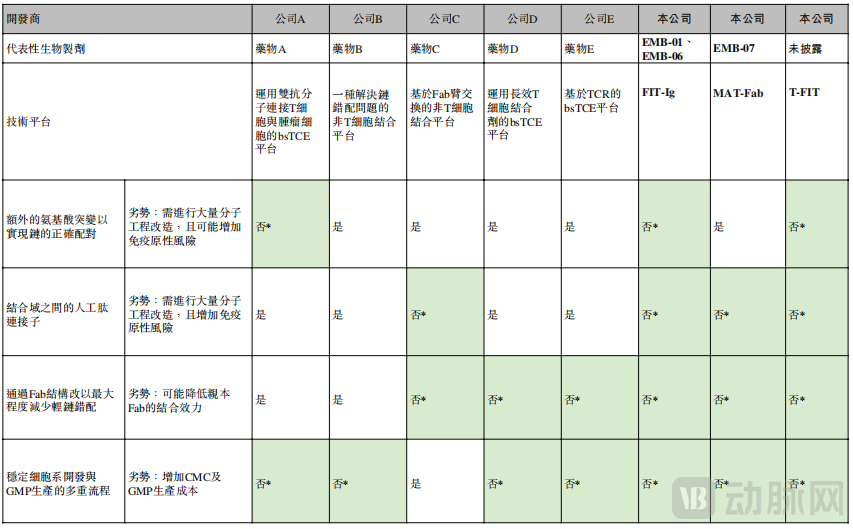
Summary of Key Features and Technologies of TCE Platforms in the Industry
Image source: Prospectus
Addressing industry pain points, the FIT-Ig platform employs a unique 2+2 bispecific configuration that integrates two monoclonal antibody sequences via molecular biology to create a structurally distinct bispecific antibody. It is the world’s only bispecific antibody technology that requires neither amino acid mutations nor the inclusion of linker peptides or any non-antibody sequences, offering high druggability and industrialization efficiency.Specifically, the FIT-Ig platform overcomes the limitations of traditional bispecific antibody technologies. By preserving the native IgG structure, it ensures favorable pharmacokinetics, tissue penetration, and low immunogenicity (Phase I clinical data for EMB-01 showed a low anti-drug antibody [ADA] incidence rate of 3.7%). Its unique design eliminates steric hindrance between the two target-binding sites, making it suitable for targets such as membrane-bound receptors and soluble antigens without causing functional interference.
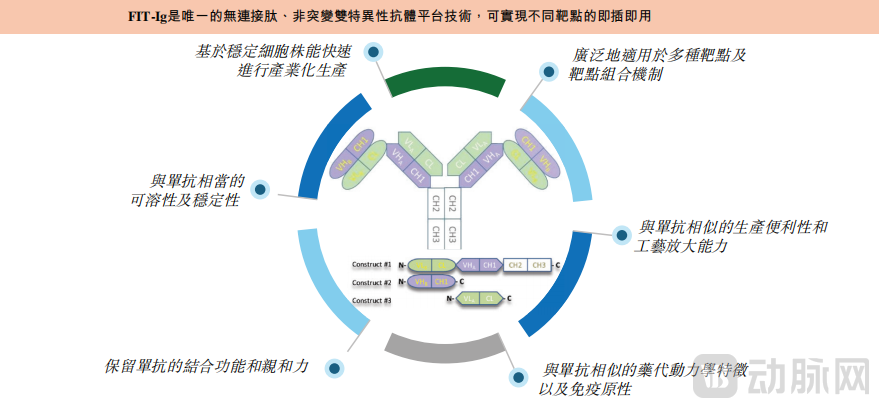 FIT-Ig Platform
Source: Prospectus
Importantly, the platform supports a “plug-and-play” approach, enabling the rapid development of bispecific antibodies from existing monoclonal antibodies within an average of 4 to 6 weeks. Furthermore, this workflow integrates high-throughput antibody screening, mRNA-based rapid immunization, and automated clone screening, allowing the entire process from target identification to preclinical candidate selection to be completed within 12 months. The FIT-Ig platform represents a scalable and versatile solution for next-generation bispecific antibody therapies, bridging the gap between innovative design and commercial viability.
Based on the FIT-Ig platform, EpimAb Biotherapeutics has designed an asymmetric MAT-Fab platform. This design is critical for targets requiring controlled binding valency and serves as an effective complement to the FIT-Ig platform. Additionally, EpimAb Biotherapeutics has developed the T-FIT platform, which combines the precision of TCR targeting with the versatility of Fab-based linkers. This platform overcomes challenges associated with existing TCR therapies, such as complex manufacturing and short half-life, while reducing production costs. It is suitable for developing T-cell engagers (TCEs) against intracellular tumor-specific targets, offering high specificity and low off-target toxicity.
EpimAb Biotherapeutics’ CD3-binding domain library is also one of the core advantages in developing T-cell engagers (TCEs). To address the challenge of balancing the affinity between CD3-binding domains and T cells—a key hurdle in TCE development—EpimAb has developed a proprietary CD3-binding domain library with binding affinities ranging from nanomolar to micromolar levels. Leveraging this tool, multiple TCE variants with diverse combinations of CD3-binding activities can be rapidly developed, thereby identifying the optimal candidate to balance efficacy and safety.
Leveraging these platforms, EpimAb Biotherapeutics has seven self-developed drug candidates in its pipeline, with indications covering hematologic malignancies, solid tumors, and autoimmune diseases. Among them, the core candidate EMB-01 is a global first-in-class EGFR/cMET bispecific antibody to enter Phase II clinical trials for the treatment of colorectal cancer, holding promise to overcome resistance associated with single-target therapies. According to the prospectus, the Investigational New Drug (IND) application submitted by EpimAb Biotherapeutics in May 2025 for EMB-01 monotherapy in third-line metastatic colorectal cancer was approved by the Center for Drug Evaluation (CDE), and the Phase II clinical trial for this monotherapy is expected to commence before the end of 2025.
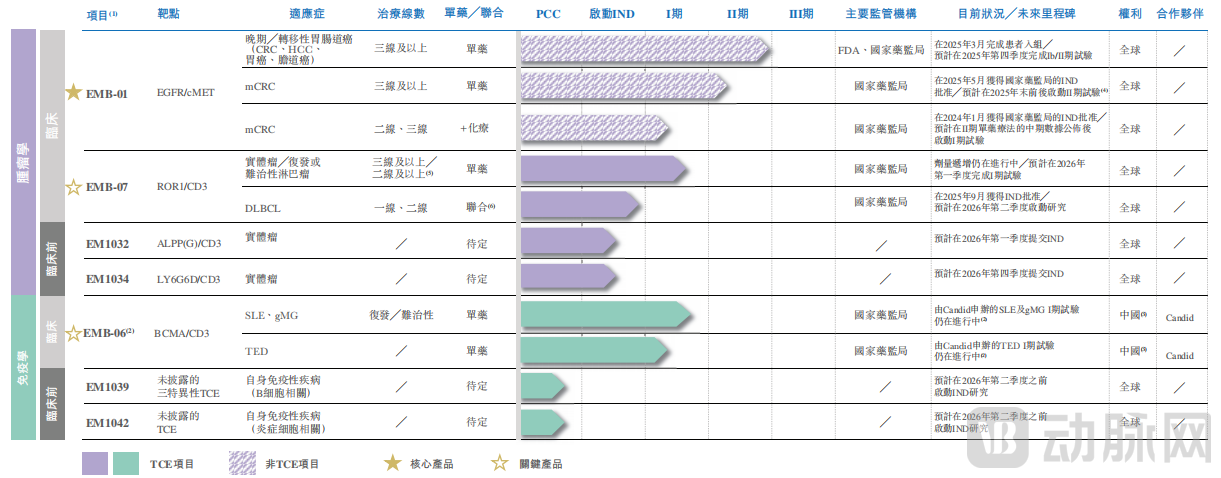 EpimAb Biotherapeutics Pipeline
Source: Prospectus
It is evident that the technology platform holds a position within TCE analogous to that of chips in computers, serving as a vital source of innovation and a core determinant of success or failure. As a scarce platform-based enterprise, EpimAb Biotherapeutics has implemented robust measures to safeguard its platform.
The prospectus reveals that EpimAb Biotherapeutics holds 52 granted patents and has 80 patent applications pending worldwide, establishing a patent moat in major global pharmaceutical markets, including China, the United States, Europe, Japan, South Korea, and Australia. Furthermore, its patent clusters are scheduled to expire gradually only after 2035, providing a sufficient time window for the continuous output of preclinical candidates (PCCs) and maximizing the value of its platform and pipeline.
Behind this high-tech moat is a highly skilled team covering the entire process, including target selection and validation, drug discovery, high-throughput screening, antibody engineering, preclinical research, CMC, and IND support.
Take Dr. Wu Chenbing, the principal inventor of the FIT-Ig platform and Founder and CEO of EpimAb Biotherapeutics, as an example. With over 20 years of experience in biopharmaceuticals, Dr. Wu’s expertise spans biologics R&D and innovation, antibody engineering, and project leadership from concept to regulatory submission. Prior to founding EpimAb Biotherapeutics, he served as Chief Scientific Officer and President of R&D at 3SBio Inc., and as Senior Vice President of Biologics at Shanghai Wisdom Pharmaceutical. Early in his career, Dr. Wu was a Volwiler Fellow at Abbott Laboratories, where he invented the “Dual Variable Domain Immunoglobulin” (DVD-Ig) macromolecular pharmaceutical technology. This innovation was honored with the 2009 Innovation Award of the Year by Pharmaceutical Technology and recognized as one of the five major technological achievements in the global pharmaceutical industry.
Furthermore, core members of EpimAb Biotherapeutics, including Dr. Stephen Lensky, Chief Business Officer; Dr. Yonghong Zhu, Chief Medical Officer; and Dr. Xinyi Gu, Chief Financial Officer, have all accumulated decades of R&D and leadership experience at major pharmaceutical companies, possessing extensive expertise in the preclinical research and clinical trials of bispecific antibodies and T-cell engager (TCE) therapeutics.
Supported by its technical team, EpimAb Biotherapeutics continuously optimizes its platform, thereby generating a steady stream of superior drug candidates. This sustainable development capability has earned recognition from industry partners. In October 2023, EpimAb Biotherapeutics entered into a collaboration with Almirall, whereby Almirall will exclusively develop and commercialize bispecific antibodies targeting up to three undisclosed targets using the FIT-Ig platform technology. Notably, Almirall is Spain’s first multinational pharmaceutical company and the first Spanish drug R&D enterprise to possess FDA-certified manufacturing facilities. The endorsement by top-tier industry players fully demonstrates the professional market’s high regard for and trust in EpimAb Biotherapeutics as a leading enterprise in the bispecific antibody field.
Strategic Dimensional Upgrade:
Fast Targeting, Deep Binding Affinity, and Sustainable Recycling
Relying solely on a few limited dimensions is insufficient to predict a company’s future trends. To gain a comprehensive and in-depth understanding of the enterprise, it is necessary to analyze its overall development strategy. The prospectus reveals that EpimAb Biotherapeutics will leverage its competitive advantages across multiple areas, including its candidate pipeline, R&D platforms, global ecosystem partnerships, corporate operations, and talent development. The company also adheres to an asset-light model in formulating its commercialization strategy, a approach validated by its collaborations with Almirall, Candid, and Juri as reasonable and highly adaptable. These coordinated initiatives build an integrated ecosystem that accelerates the translation of research outcomes into market value, solidifying EpimAb’s leading position in the global novel drug sector.
Beyond these “official” strategies, EpimAb Biotherapeutics’ responsiveness to emerging industry trends further underscores its pioneering leadership qualities.
For example, EpimAb Biotherapeutics demonstrates foresight and global leadership in identifying emerging targets.Currently, only a handful of companies worldwide, including Johnson & Johnson, EpimAb Biotherapeutics, and Fate Therapeutics, have developed pipelines targeting KLK2. Among them, Johnson & Johnson is the most advanced, with its candidate still in Phase I clinical trials. Furthermore, Johnson & Johnson has simultaneously pursued multiple therapeutic modalities against the KLK2 target, including T-cell engagers (TCEs), radiopharmaceuticals, and CAR-T therapies, underscoring its strong confidence in KLK2. In June 2025, Johnson & Johnson disclosed the initial Phase I clinical trial results of pasritamig in humans, marking the first global disclosure of clinical data for a CD3/KLK2 bispecific T-cell engager.
But prior to this, in May 2025, EpimAb Biotherapeutics announced a collaboration with Juri,Grant the latter an exclusive license, enabling Juri to research, develop, manufacture, and commercialize licensed compounds and licensed products targeting KLK2 for all uses, including the treatment of metastatic prostate cancer worldwide,To become the first company globally to out-license a therapy targeting KLK2.EpimAb Biotherapeutics’ predictive capabilities for emerging targets, its rapid responsiveness, and its alignment with the development trends of multinational corporations (MNCs) have demonstrated its strength in leading the TCE “trend.”
EpimAb Biotherapeutics has also pioneered transaction models, becoming one of the first Chinese pharmaceutical companies to expand globally through the NewCo model.In September 2024, EpimAb Biotherapeutics partnered with Vignette on EMB-06 through a NewCo model, drawing significant attention within the industry. Compared to traditional business development (BD) deals, the NewCo model offers a higher upfront payment ratio and maximizes the value of innovative assets through resource integration, risk diversification, and revenue sharing. By being the first to flexibly leverage the NewCo model for global expansion, EpimAb Biotherapeutics not only maximized the value of its non-core assets but also demonstrated the strategic evolution of domestic pharmaceutical companies in their internationalization journey, setting a precedent for the global rollout of other Chinese innovative pipelines via the NewCo model.
Furthermore, unlike most opportunistic business development (BD) deals, EpimAb Biotherapeutics has transformed BD into a continuous stream of transactions based on its core technology platform.For instance, after entering into its initial collaboration with EpimAb Biotherapeutics in September 2024, Candid forged a new partnership with the company in December 2024 to develop novel TCE candidate drugs for autoimmune diseases. In addition to these successive business development deals, EpimAb Biotherapeutics has completed multiple rounds of financing since its inception, securing investments from top-tier institutions such as SDIC Innovation, Decheng Capital, Sherpa Partners, CMB International, HSG Venture, Mirae Asset, and Hony Capital. This fully demonstrates the recognition and trust bestowed upon EpimAb Biotherapeutics by the capital market.
EpimAb Biotherapeutics is achieving simultaneous breakthroughs across multiple dimensions, including its technology platforms, clinical pipeline, industrial collaborations, and capital market performance. This demonstrates the recognition of Chinese innovative assets by regulatory authorities, international investors, and pharmaceutical companies within the industry chain. From a broader perspective, as autoimmune diseases have become the third largest category of chronic conditions after cardiovascular diseases and cancer, autoimmune therapeutics are no longer merely molecular entities; they have become a vital component in safeguarding public health and advancing medical progress. Therefore, EpimAb’s global expansion is not simply an extension of its commercial reach, but rather a test of whether the “Chinese solution” can provide affordable, scalable, and sustainable healthcare pathways for patients worldwide. Currently, this innovative practice centered on T-cell engagers (TCEs) continues to deepen, with EpimAb Biotherapeutics writing a new chapter in health protection through its actions.