

Children's Hospital Colorado Completes First Pediatric Heart-Liver Combined Transplant in 11-Year-Old with HLHS
December 19, 2025,Children's Hospital ColoradoAnnounced the successful completion of the hospital'sThe First Pediatric Combined Heart and Liver Transplantation.The patient who underwent surgery was Gracie Greenlaw, an 11-year-old with hypoplastic left heart syndrome (HLHS).
This time-consuming16 Hourscomplex surgeries performed byDozens of experts from the hospital's 25 multidisciplinary nursing teamsCompleted through collaborative efforts. Gracie was discharged from the cardiac intensive care unit just over a month after surgery and has now returned to school.
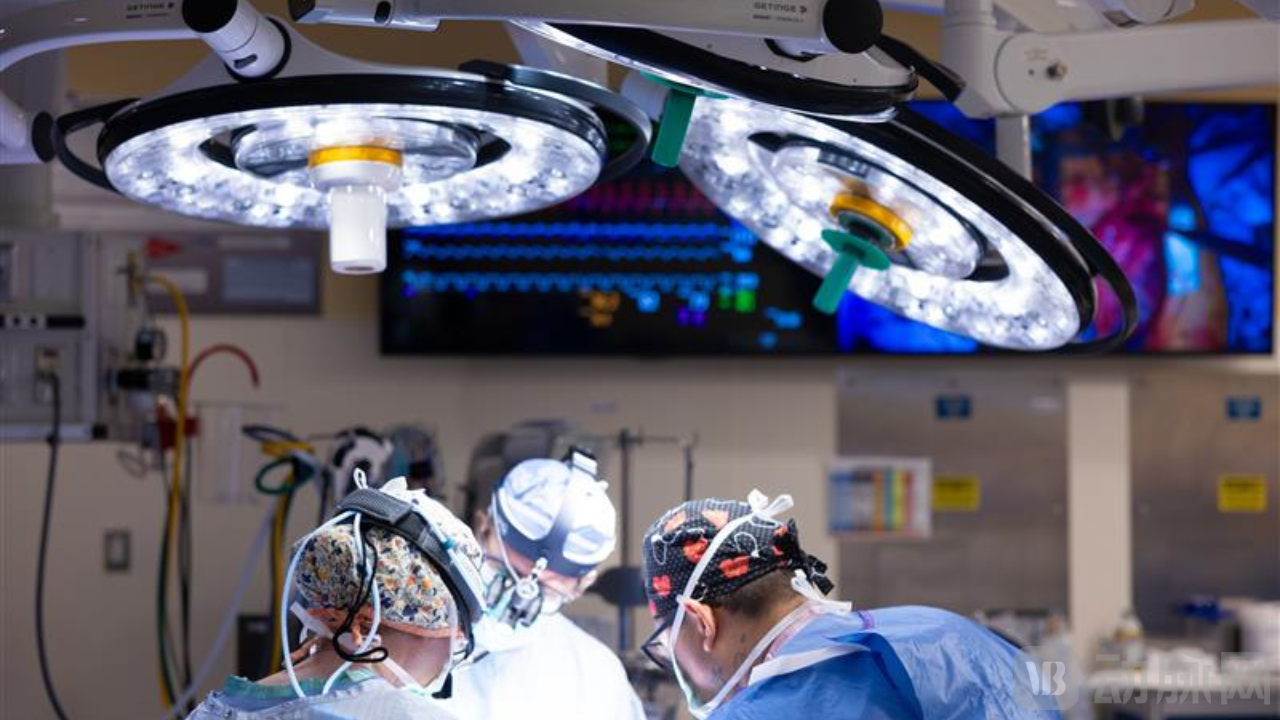
Figure: Children’s Hospital Colorado successfully performed its first combined heart and liver transplant, supported by dozens of members from 25 different multidisciplinary medical teams (Source: Children’s Hospital Colorado)
According to statistics, previously in the United StatesOnly 38 casesA pediatric patient has undergone such a combined heart-liver transplantation. This case also provides valuable clinical experience for addressing late-stage complications of complex congenital heart disease through multidisciplinary collaboration.
Hypoplastic Left Heart Syndrome (HLHS) is a severe congenital heart defect characterized by underdevelopment of the left side of the heart at birth, resulting in only one functional ventricle to supply blood to the entire body.
For pediatric patients like Gracie, it is usually necessary to undergo treatment before the age of 3.Three Major Surgeries (Norwood Procedure, Glenn Procedure, and Fontan Procedure)to reconstruct blood circulation. Although these surgeries have significantly improved patient survival rates, allowing many pediatric patients to survive into adulthood, the Fontan circulation itself is not a perfect physiological state. This single-ventricle circulation relies on venous pressure to drive blood flow to the lungs, and long-term exposure to elevated venous pressure leads to a series of pathophysiological changes, including hepatic congestion.
As survival time extends, this unique hemodynamic environment inevitably leads to severe long-term complications, the most challenging of which is"Fontan-associated liver disease" (FALD), manifesting as hepatic fibrosis, cirrhosis, and even liver failure.
Secondary organ failure caused by cardiac defects and their palliative treatments places patients in an extremely challenging clinical dilemma.:Deteriorating cardiac function urgently necessitates heart transplantation; however, the liver, having sustained irreversible damage, cannot tolerate isolated heart transplantation, while isolated liver transplantation fails to address the underlying issue of inadequate cardiac output.
For pediatric patients in this terminal stage,Combined Heart-Liver Transplantation Is the Only Viable Path to Survival. However, this surgery is not a simple superposition of organs; it requires the medical team to simultaneously address the transplantation challenges of two vital organs, involving extremely complexHemodynamic Management and Perioperative Monitoring。
In Gracie’s case, she not only faced the threat of liver failure but also suffered from long-standing plastic bronchitis—a severe complication characterized by the formation of thick proteinaceous casts within the airways.
In the face of this multifaceted challenge, Children's Hospital Colorado leverages its"Single Ventricle Project"under the (Single Ventricle Program)“Fontan Multidisciplinary Clinic”, a comprehensive long-term monitoring mechanism was established. Through joint consultations with specialists such as Dr. Kathleen Simpson, a cardiologist, and Dr. Dania Brigham, a hepatologist, the medical team was able to accurately assess Gracie’s condition when her symptoms worsened and place her on the combined transplant waiting list before her physical condition deteriorated completely.
This highly complex combined transplant surgery was a race against time and the ultimate test of modern transplantation techniques.
The entire surgical procedure lasted 16 hours and was divided into two main stages.
Due to the extremely short tolerance for ischemia time after the donor heart is explanted (typically only 4–6 hours), the surgical team must prioritizeHeart Transplantation. By the Surgical Director of the Heart Transplant ProgramMatthew Stone(Dr. Matthew Stone) and a congenital heart disease surgeonEmily Downs(Dr. Emily Downs) Duration of the heart transplantation procedure performed by the lead surgeon9 hours. Under the traditional transplantation model, this means that the donor liver must remain in a state of cold ischemia for a prolonged period of 9 hours, which significantly increases the risk of hepatic ischemia-reperfusion injury and may even affect post-transplant survival rates.
To overcome this technical bottleneck, the medical team adopted advancedTransMedics Organ Care System (OCS)Unlike traditional "ice box" cold preservation techniques, OCS is a specially designed ex vivo perfusion device that simulates the human physiological environment (constant temperature of 37°C) to provide continuous warm blood perfusion for the explanted liver. This technology enables the donor liver to maintain normal metabolic activity and functional status ex vivo, which not only minimizes organ injury but, more critically, buys valuable time for cardiac surgeons. With the liver properly maintained "ex vivo," the cardiac team can focus on meticulous anastomosis without being forced to compress operative time due to concerns about liver ischemia time limits.
After confirming that the function of the newly implanted heart is stable, the second phase ofLiver TransplantationImmediately unfolded.
By the Surgical Director of the Pediatric Liver Transplantation ProgramMegan Adams(Dr. Megan Adams) and transplant surgeonKendra Conson(Dr. Kendra Conzen) led the liver transplant surgery, which lasted7 hours. Throughout the procedure, the anesthesia team maintained close collaboration with the surgical team, precisely regulating inter-organ differences in intravascular volume requirements and electrolyte balance that may arise intraoperatively. This meticulous management of the profound physiological fluctuations induced by dual-organ transplantation was another key factor contributing to the success of the surgery.
The success of this surgery marks a milestone for Children's Hospital Colorado and the Rocky Mountain region in pediatricA Milestone Leap in the Field of Complex Transplantation. The mere 38 recorded cases of similar procedures nationwide previously underscored the high degree of difficulty and rarity of this technique.
For Gracie personally, this surgery marked a reboot of her quality of life. She was not only freed from the years-long burden of protein-losing bronchitis and the threat of liver failure but also returned to normal school life within seven months post-surgery, even resuming companionship with her beloved dog. Although, like all pediatric heart transplant recipients, she may still face the need for another heart transplant in the future, the transplanted liver is expected to last her lifetime, providing a solid foundation for her long-term survival.
More importantly, this case strongly validates"Full Lifecycle Multidisciplinary Management" Modelthe efficacy.
Since the establishment of the Fontan Multidisciplinary Clinic in 2016, the medical team has proactively planned for the potential long-term complications in patients with single ventricle physiology. This"Early Monitoring–Multidisciplinary Intervention–Timely Transplantation" Closed-Loop Management Strategy, providing a replicable clinical pathway for managing similar complex cases within the growing population of adults with congenital heart disease (ACHD). It demonstrates that, through highly integrated medical resources and advanced device support (such as the OCS system), even pediatric patients with the most complex end-stage organ failure can be given a chance at a new lease on life.
Director of Surgery, Children's Hospital ColoradoDuncan Wilcox(Dr. Duncan Wilcox) pointed out that this achievement demonstrates the hospital’s profound expertise as a leading regional pediatric institution in managing complex medical needs. With advancements in medical technology, particularly the widespread adoption of ex vivo organ preservation techniques and the maturation of multidisciplinary collaboration models, similar high-complexity dual-organ transplant procedures are expected to benefit more children with complex congenital heart disease facing the threat of multi-organ failure, like Gracie, in the future.