

Xinguang Bio Completes Tens of Millions of RMB Series A1 Financing, Aiming to Reshape Dialysis Industry with Regenerative Dialysate Technology
XBP
Hemodialysis Consumables Developer

WinX Capital
Investment Institutions in the Greater Health Field
RICHEN CAPITAL
A Leading New Private Equity Investment Institution in China
VCBeat has learned that Shanghai Xinguang Biopharmaceutical Co., Ltd. (hereinafter referred to as “XBP”) recently announced the completion of its A1 round of financing, amounting to tens of millions of yuan. The round was led by a renowned international institution, with existing shareholder RICHEN CAPITAL participating as a follow-on investor, and WinX Capital serving as the long-term financial advisor. The funds raised will be primarily allocated to type testing, clinical trials, and regulatory registration for its upcoming regenerative peritoneal dialysis products.
At a time when the capital market is returning to rationality and placing greater emphasis on core competitive barriers, XBP has completed four consecutive rounds of financing within 19 months from April 2024 to December 2025, leveraging its globally leading dialysate regeneration technology. The accelerating pace of these financings underscores the capital market’s strong recognition of its innovative pathway.
End-stage renal disease (ESRD), as the final stage of chronic kidney disease, requires patients to rely on hemodialysis or peritoneal dialysis for life. It is characterized by the need for uninterrupted treatment, complex management of complications, and high medical costs.
According to data disclosed at the 2025 Annual Academic Conference of the Chinese Society of Nephrology (CSN), the total number of dialysis patients in China reached nearly 1.2 million in 2024 (1.02 million on hemodialysis and 156,000 on peritoneal dialysis), maintaining a compound annual growth rate of approximately 12%.

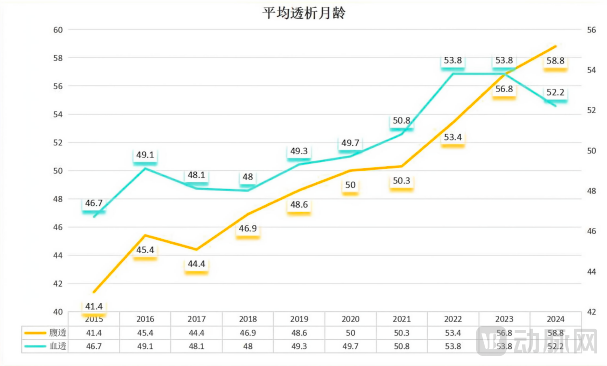
“Dialysis is one of the largest single-product markets in the medical device sector, yet it is also among the fields with the slowest technological evolution. Over the past five to six decades, a lack of fundamental innovation has resulted in poor quality of life for patients, hindering their reintegration into normal social and professional roles, while clinical benefits have long remained stagnant. For instance, the average dialysis vintage for patients in China is only 4.5 years, significantly lower than the 7–9 years observed in developed countries,” said Li Xianghai, founder of XBP, in an interview with VCBeat.
On one hand, China has a large and widely distributed population, yet dialysis centers are predominantly concentrated in county-level cities and above. Many patients from townships and rural areas are forced to wake up at 4 or 5 a.m. three times a week to reach county-level dialysis centers by 7 or 8 a.m. for early-shift treatments. This years-long burden of arduous travel is extremely painful for patients who are already physically frail—especially the elderly—and severely impacts treatment adherence. This is one of the fundamental reasons for the shorter survival rates among grassroots-level patients.
On the other hand, donor kidneys are extremely scarce, making dialysis the inevitable reality for the vast majority of patients. Regardless of their economic status or social standing, patients must visit dialysis centers three times a week, confronting cold machines and hospital beds as if bound by invisible shackles, stripped of the basic freedoms of daily life. Yet this heavy toll often yields only about 10% of normal renal function, providing merely the minimal dialysis efficacy required to sustain life.
“Although dialysis is the largest single category of medical devices, characterized by inelastic demand and high frequency, it has long been constrained by the dual bottlenecks of ‘rigid treatment settings’ and ‘capped clinical benefits.’” Li Xianghai pointed out profoundly. “Meanwhile, most domestic dialysis centers face profitability challenges, with hospitals generating zero revenue from peritoneal dialysis services. As the burden on medical insurance intensifies, China has adopted a normalized centralized procurement strategy for dialysis consumables. In contrast, the United States is vigorously promoting the ‘decentralization’ of dialysis, encouraging peritoneal dialysis and hemodialysis in more dispersed care settings, particularly in home environments, and even reinforcing this trend by adjusting medical insurance reimbursement rates. It is evident that the global dialysis industry and treatment models have reached an impasse where patients, hospitals (dialysis centers), and payers are all dissatisfied.”
XBP, an innovative company dedicated to enhancing the convenience of dialysis technology, has overcome the bottlenecks of traditional dialysis methods. Through foundational innovations combining enzymatic catalysis with adsorptive dialysis, XBP enables the recycling of dialysate, thereby addressing the industry’s core pain points: high consumable costs, transportation limitations, and reliance on complex water treatment systems.
Its independently developed portable dialysis platform weighs only 8 kilograms and features pneumatic diaphragm pumps with a cartridge-based design, supporting one-touch automated operation. Different models can cover various treatment scenarios, including hemodialysis and peritoneal dialysis, meeting the needs of diverse settings such as homes and primary care hospitals. This not only reduces fixed costs by 70% but also makes safe and controllable home dialysis possible.
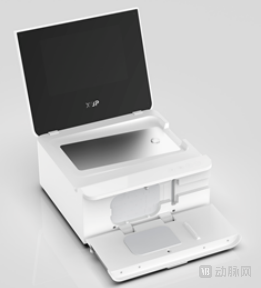
XBP's Self-Developed Portable Automated Peritoneal Dialysis Machine
Leveraging its independently innovated dialysate regeneration technology, XBP is poised to reconstruct the value ecosystem of the dialysis industry through three key mechanisms:
• Technological Breakthroughs:Achieving the safe recycling of dialysate is expected to increase clinical benefits for patients by 2–3 times and significantly extend survival by 3–5 years, all while effectively controlling treatment costs. Furthermore, it supports patients in undergoing safe and efficient home-based dialysis under remote monitoring.
• Scenario Expansion:Empowering home dialysis and nocturnal treatment models to enable patients to better reintegrate into normal life and work, while significantly alleviating hospital bed shortages and turnover pressures.
• Business Model Upgrade:Based on the regenerative medicine ecosystem, establishing an integrated service model of “center-based treatment + home-based extension” can enhance the operational efficiency of healthcare institutions and the lifetime value of patients.
To date, the company has filed over 50 patents, including U.S. invention patents and multiple international PCT patents. Its core products have been validated through large-animal model experiments, and their clinical value has been endorsed by experts at leading medical institutions. Across four funding rounds within 19 months, capital has been continuously focused on iterating core technologies, testing engineering prototypes, and obtaining regulatory approvals for mass production, thereby accelerating the implementation of its innovative business model centered on “center-based treatment + home-based extension.”
Regarding the completion of this financing round,Li Xianghai, Founder of XBPstated: “Under the dual challenges of the normalization of centralized procurement and the accelerated localization strategies of international giants, traditional ‘follow-on’ innovation has hit a ceiling. Only by grounding ourselves in source-level innovation based on foundational technologies can we truly open up new blue oceans for China’s medical device industry and export genuine ‘Created in China’ solutions to the world.”
In the future, we will advance clinical translation and achieve key milestones with a sense of urgency, while continuously refining our products and expanding into overseas markets. We look forward to working hand in hand with investors to transform this medical device innovation from China into healthcare breakthroughs that benefit patients worldwide! (As a recipient of the Qipu Seed Award and a founding member of VCBeat 50, XBP extends its sincere gratitude to the VCBeat Healthcare Entrepreneur Elite Club for providing in-depth guidance during this financing round!)
Sun Hailong, Vice President of Walden Internationalstated: “We have always focused on venture capital in hard technology, aiming to support enterprises that dare to innovate. These companies leverage unique and innovative technologies to address critical industry pain points, thereby delivering convenience and benefits to a broad user base. XBP has long been dedicated to the development and improvement of processes and products, tackling the inefficiency pain point in home-based dialysis. Widespread adoption would greatly facilitate the lives of dialysis patients worldwide, benefiting patients across the globe.”
Sun Hailong, Vice President of Investment at a Renowned International Investment Firmstated: “We have always focused on venture capital in hard technology, aiming to support enterprises that dare to innovate. These companies leverage uniquely innovative technologies to address critical industry pain points and deliver convenience and benefits to a broad user base. XBP has long been dedicated to the development and improvement of processes and products, addressing the inefficiency pain points in home-based dialysis. Widespread adoption would greatly enhance the quality of life for dialysis patients worldwide, benefiting patients globally.”
Ding Yu, Partner at RICHEN CAPITAL“Challenges in home dialysis include either prohibitive costs that are unaffordable for the majority of patients, or inadequate dialysis adequacy that compromises clinical outcomes. XBP has revolutionized the home dialysis paradigm by adopting a dialysate regeneration strategy, which significantly enhances dialysis adequacy while maintaining cost controllability. Furthermore, it enables the assessment of dialysis efficacy through quantitative home urea testing. In the future, XBP will implement remote intelligent monitoring of the entire dialysis process and patient vital signs, thereby establishing a comprehensive solution for full-course treatment and follow-up management of patients with end-stage renal disease (ESRD). This innovation brings new hope to millions of dialysis patients in China.”
About RICHEN CAPITAL
RICHEN CAPITAL was established in 2015. Its management team possesses extensive backgrounds in private equity, investment banking, and corporate operations. The firm is dedicated to identifying and supporting outstanding enterprises in China’s emerging industries to become “hidden industry champions,” having accumulated robust industry insights and resource integration capabilities in the core and application domains of digitalization and intelligence. RICHEN CAPITAL manages assets exceeding RMB 10 billion, with its fund’s primary limited partners including renowned market-oriented funds of funds, insurance companies, listed companies, private entrepreneurs, and family wealth funds. It has invested in over 90 projects, predominantly as the sole investor or lead investor in niche-market “hidden champions” or promising candidates for such status.