

"Golden 20 Minutes" to Save the Brain: Chinese-Originated Technology Accelerates Stroke Emergency Care!
In December 2025, a major signing ceremony at the 8th Chinese Forum on Vascular Neurology drew widespread attention. Beijing Tiantan Hospital, Capital Medical University; the Capital Institute for Transformation of Medical Science and Technology Achievements; and Beijing Yisu Ruiyi Technology Co., Ltd., a subsidiary of Beijing Tianhang Ruiyi Technology Co., Ltd., formally signed a patent licensing agreement for the commercialization of the “Emergency Stroke Unit (ESU).” At the core of this agreement is Tiantan Hospital’s grant of an exclusive, sole license for ESU-related patents to Yisu Ruiyi. Consequently, Yisu Ruiyi has become the official technical platform service provider and exclusive operator for the Emergency Stroke Unit. The three parties will collaborate to establish a closed-loop system encompassing “clinical needs–technology R&D–implementation of achievements,” thereby advancing the industrialization of China’s solution for emergency stroke care.
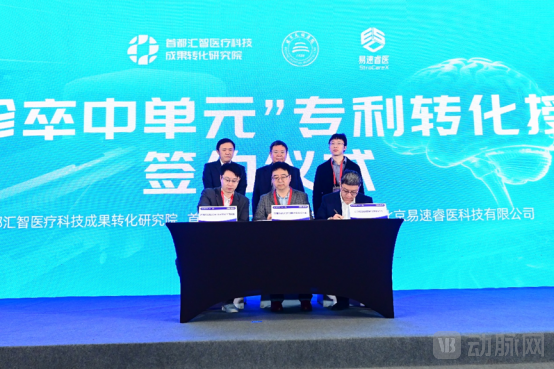
Academician Wang Yongjun of Beijing Tiantan Hospital (second from the left in the back row), Mr. Qiao Yan, Chairman of the Capital Huizhi Research Institute (first from the left in the back row), and Mr. Yuan Qiang, Deputy General Manager of the Beihang Tianhui Incubator (third from the left in the back row), took the stage to witness the signing; Professor Qin Haiqiang of Beijing Tiantan Hospital (second from the left in the front row), Mr. Wu Haoming, Director of the Capital Huizhi Research Institute (first from the left in the front row), and Dr. Li Zheng, CEO of Tianhang Ruiyi (third from the left in the front row), signed the cooperation agreement.
The lead expert spearheading this signing ceremony is Professor Wang Yongjun, an academician of the Chinese Academy of Sciences, President of the Chinese Stroke Association, and Director of Beijing Tiantan Hospital. As the inventor of the Emergency Stroke Unit, he has consistently upheld a firm belief: “Time is Brain!” Every minute of delay results in the loss of 1.9 million brain cells for the patient; conversely, every 15-minute reduction in door-to-needle time (DNT) increases the patient’s survival rate by 4%.
This signing will propel the ESU model from clinical validation to large-scale implementation, leveraging process and technological innovations to advance the goals of the “Haikou Declaration” (increasing the thrombolysis rate to 80% by 2030), thereby enabling more stroke patients to regain vitality within the golden window.
During the signing ceremony, Yisu Ruiyi (a subsidiary of Tianhang Ruiyi), which is responsible for the operation and implementation of emergency stroke units, was highlighted. Co-founded by Professor Liu Tao from the School of Biological Science and Medical Engineering at Beihang University together with industry elites, the company was established with a clear and profound mission: to conquer brain diseases, safeguard brain health, and overcome the “time bottleneck” in stroke emergency care through the integration of medicine and engineering. Little known to the public is that Professor Liu Tao and Academician Wang Yongjun have been research partners deeply engaged in the field of brain diseases for 11 years, jointly producing a series of papers published in top-tier international journals and securing numerous patents over the years. The two have always shared a common ideal: to break the constraints of traditional treatment models, race against time using cutting-edge stroke emergency technologies, and promote these advancements across China and even globally, thereby benefiting a vast number of patients.
Today, the team has welcomed another core member who shares its vision—Dr. Li Zheng. Previously, Dr. Li held key positions at United Imaging Healthcare, including Director of the Beijing United Imaging Research Institute and President of Wuhan United Imaging Life Science Instrument Co., Ltd. He spearheaded the project initiation, R&D, production, and marketing of multiple imaging devices, accumulating extensive experience across the entire medical device value chain. Motivated by the pain points in acute stroke emergency care processes and the growing trend of medical-engineering integration, Dr. Li made a bold decision in 2025: he resigned from United Imaging Healthcare to officially join Tianhang Ruiyi as Co-Founder and CEO, dedicating himself to this race-against-time revolution in acute stroke emergency care.
As this major signing agreement was finalized, we promptly reached out to Dr. Li Zheng for an in-depth interpretation of the operational mechanisms and core technological underpinnings behind this original Chinese innovation, as well as how its 20-minute rapid intervention is rewriting the fate of stroke patients.
Li Zheng told VCBeat that one of Tianhang Ruiyi’s core objectives is to create the world’s first integrated solution for “Emergency Stroke Units (ESUs),” reducing thrombolysis time from the national average of 90 minutes to 20 minutes, and making China’s original technology a “lifeline” for stroke emergency care.
Stroke, commonly known as “apoplexy,” is a disease dubbed the “number one killer of human health.” It is the leading cause of disability and the second leading cause of death. In China, there are over 3.3 million new stroke cases each year. More alarmingly, even when patients receive timely medical attention, they may still encounter significant “pain points in the care process.”
The traditional stroke treatment process suffers from six fatal "slow" bottlenecks:Slow imaging examination,Long waiting times for large-scale MRI or CT scanners, which are even harder to equip in primary hospitals;Slow image interpretation,Reliance on manual analysis by senior physicians is susceptible to variations in experience and fatigue, harboring hidden risks of misdiagnosis and missed diagnosis;Slow testing,Key indicator testing takes more than one hour, delaying treatment decisions;Slow decision-making,Multi-departmental consultation coordination is cumbersome, and cross-departmental communication costs are high;Slow medication dispensing,Redundant processes for thrombolytic drug preparation require multi-step approvals;Slow medication administration,Preoperative preparation is complex, and patients may miss the optimal window for treatment while waiting.
Internationally, Europe and the United States have proposed the Mobile Stroke Unit (MSU) model, which equips ambulances with mobile CT scanners and other devices to achieve “thrombolysis upon boarding.” The advantage of this model is that it advances thrombolysis to the pre-hospital phase; however, due to high equipment costs, substantial operational expenses, and significant waste of medical human resources, it is difficult to widely implement in China and other countries facing shortages of healthcare personnel.
Particularly regarding the deployment of equipment prior to hospital admission, clinical assessments rely primarily on descriptions provided by family members, which may lead to the misallocation of medical resources. Furthermore, due to the constraints of the pre-hospital environment, the stability of diagnostic examinations and therapeutic interventions is difficult to guarantee. Given China’s current reality of unevenly distributed medical resources and a vast patient population, this model is clearly ill-suited and fails to fundamentally address the core issue of in-hospital delays.
Academician Wang Yongjun pioneered the innovative concept of the “Emergency Stroke Unit,” aiming to achieve highly centralized, one-stop treatment through deep integration of medicine and engineering. By consolidating diagnostic and therapeutic procedures scattered across various departments, this model ensures that “patients remain stationary while departments collaborate,” thereby minimizing in-hospital delays and seizing the critical time window for stroke treatment.
“The golden window for stroke treatment is only4.5 hours,Every Minutedelays may result inIrreversible Nerve Damage.” Li Zheng explained. Even more concerning is that the current national rate of intravenous thrombolysis for stroke in China is only40%. Primary healthcare institutions, lacking high-end equipment and specialized teams, are even more challenged in delivering effective treatment.
“Traditional treatment models are like patients on the brink of life and death‘Running oneself ragged’, patients have to shuttle back and forth between the radiology department, laboratory, and consulting rooms. What we aim to do is straighten this detour and condense it into a single point, namely the Emergency Surgery Unit (ESU). Patients no longer need to run around, as all medical resources are fully prepared and on standby at the ESU. Here, we will work together with patients using20 minutesWinning the Life-and-Death Battle.” Li Zheng articulated the company’s important mission.
Tianhangrui Medical’s proprietary technology is built upon Academician Wang Yongjun’s innovative concepts in stroke care and Professor Liu Tao’s decade-plus technical expertise in the integration of medicine and engineering.Completely Reengineer the Emergency Care Process, consolidating core life-saving functions originally scattered across multiple departments into an “Emergency Stroke Unit” of approximately 30 square meters, enabling technology to meet the core demand for “rapid treatment.”
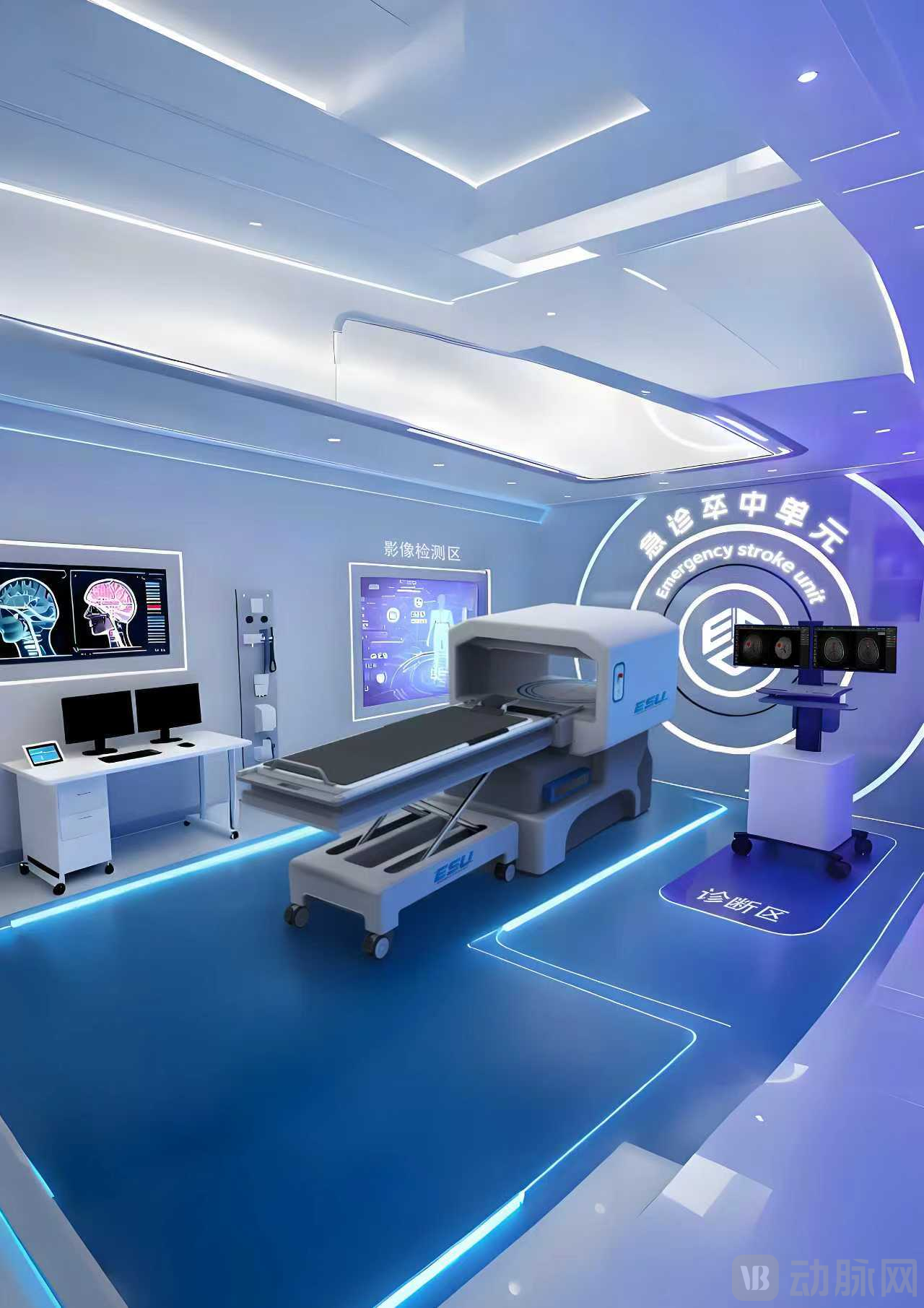
“Since the traditional segmented treatment model is unworkable, we will redesign a system—keeping patients stationary while all treatment processes actively converge around them.” This bold idea, which upends industry conventions, became the starting point for Tianhang Ruiyi’s technological innovation. Its core logic is"Spatial Integration + Intelligent Acceleration"Dual-pronged approach.
On one hand, all critical care components—including clinical assessment, imaging studies, point-of-care testing, and precision therapy—are highly integrated within the emergency stroke unit. This eliminates the need for patients to shuttle between multiple departments, thereby fundamentally reducing wasted time.
On the other hand, AI technology replaces labor-intensive manual operations, significantly reducing the time required for diagnosis and decision-making. “Our AI algorithms are trained on a globally rare database of paired low-field and 3T MRI scans, where each sample undergoes two scans within an extremely short interval. This ensures diagnostic accuracy, reducing image interpretation time from the traditional 20 minutes to just 1.5 minutes.”
This seemingly compact space is, in fact, a “mobile emergency station” that integrates imaging, laboratory testing, clinical decision-making, and treatment. By leveraging the coordinated operation of six core modules, it precisely addresses the pain points of the “six delays.”
To address "slow imaging," the team independently developed a new generation of low-field MRI systems that are compact and flexible to deploy, enabling easy adaptation in primary care hospitals and eliminating the need for patients to travel long distances.
Addressing the challenge of "slow interpretation," the system incorporates an AI-based super-resolution algorithm that enhances low-field MRI image quality by over 80%, with precise optimization for stroke lesions. Related findings have been published in top-tier international journals, reducing interpretation time from 20 minutes to just 5 minutes.
To address the issue of "slow laboratory testing," a Point-of-Care Testing (POCT) rapid detection system has been established, enabling the completion of key indicator tests within 12 minutes and providing immediate evidence for treatment decisions;
To address "slow decision-making," we developed an AI-assisted decision support system trained on nearly 10,000 clinical cases from 30 hospitals across China, achieving a 99.7% accuracy rate in ischemia differentiation and providing rapid thrombolysis recommendations.
Integrating smart medication cabinets with novel thrombolytic drugs to enable instant drug retrieval, thereby resolving the challenges of “slow drug dispensing” and “delayed administration.”
In practice, this system has significantly shortened the thrombolysis time. Thirty days after its deployment at Chenzhou No. 1 People's Hospital, the average thrombolysis time was reduced to13 minutes; Nanning No. 2 People’s Hospital has even achieved a miracle, with the actual time from examination to thrombolysis for a 41-year-old male patient being only7 minutes. To date, the ESU has been deployed in more than 30 hospitals across China, including tertiary Grade A hospitals, specialized neurology hospitals, and county-level hospitals, fully validating the technology’s broad applicability and achieving a leapfrog reduction in door-to-needle time (DNT) from 90 minutes to 20 minutes.
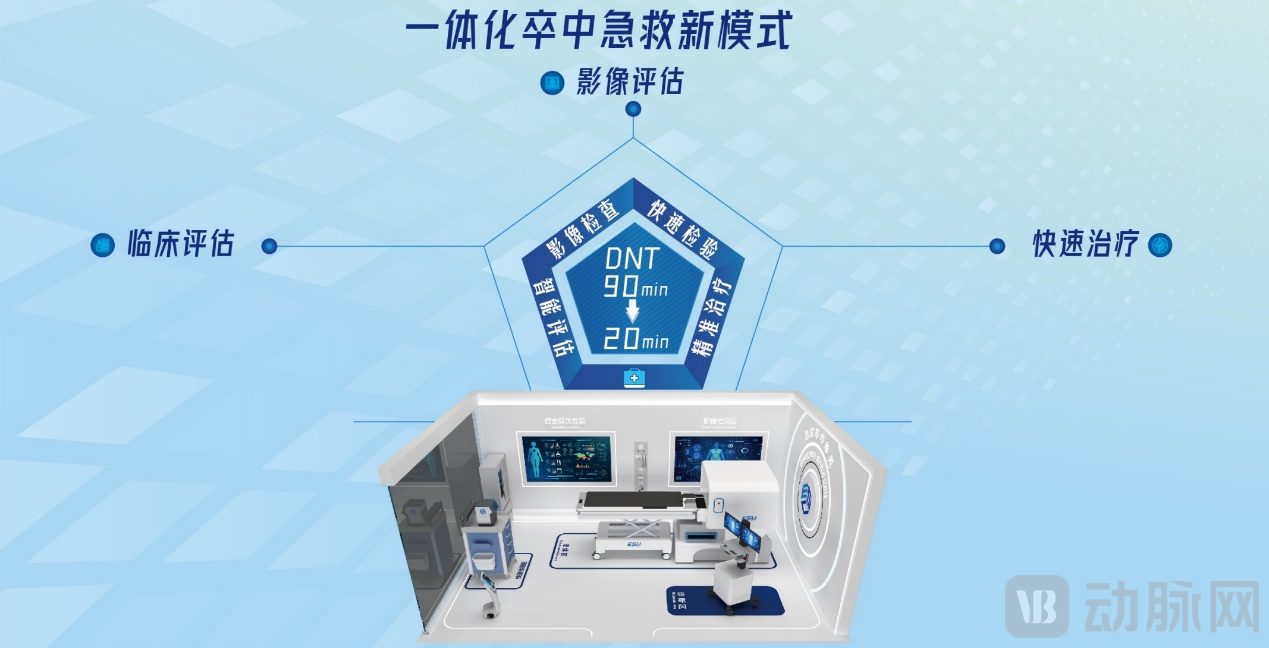
Li Zheng emphasized that the team always prioritizes safety and must never compromise diagnostic and treatment quality for the sake of speed. They proposed ensuring accurate results through dual verification using CT and high-field MRI to avoid misdiagnosis and missed diagnoses. For complex cases, hospitals can directly upload data for remote consultation with Beijing Tiantan Hospital, leveraging top-tier expert resources to support primary care institutions.
Tianhang Ruiyi’s core competitiveness stems from the synergistic layout of its product portfolio across three key areas.
These three major products target the critical stages of “prevention–emergency care–rehabilitation” for brain diseases. With medical-engineering integration as their core technology, they establish a brain health service platform that covers the entire population and full life cycle, providing end-to-end protection from early warning and emergency treatment to postoperative rehabilitation. Specifically, the emergency care component is an integrated “Emergency Stroke Unit” solution, while the other two focus on brain health assessment and personalized precision neuromodulation.
Brain Health Assessment System: A “Brain Checkup” Tool for Early Screening and Warning
As the “sentinel” of brain health management, Tianhang Ruiyi’s Brain Health Assessment System features three proprietary core indicators and has been deployed at the Health Management Center of Beijing Tiantan Hospital, providing early warning for both healthy individuals and high-risk populations.
Three Key Metrics Establish a Comprehensive Evaluation System: Brain Age, as a biological marker for measuring the aging process of the brain, employs a dual-level cascaded refinement network algorithm, reducing the mean squared error by 40.2%, and was evaluated by reviewers from the top medical journal TMI as“The Most Advanced Brain Age Prediction Algorithms at Present”, further studies have revealed brain ageFor Each Additional Year of Age, Risk of Stroke RecurrenceIncreased by 9%; Brain entropy characterizes the complexity and flexibility of cerebral information processing, demonstrating significant discriminative power for populations at risk of vascular and cognitive impairments. Brain resilience reflects the brain’s capacity to withstand damage and maintain function under stress, exhibiting significance specific to brain morphological metrics in mediating the pathways from aging and vascular risk factors to cognition.
Personalized Precision Neuromodulation Therapy Robot: A Precise Tool for the Rehabilitation Phase
Addressing the core rehabilitation needs of postoperative stroke patients, Tianhang Ruiyi has developed a fully domestically produced, independently innovated neuromodulation therapy robot, which has entered the clinical trial phase. Centered on “precise targeting and personalized intervention,” this product provides patients with comprehensive rehabilitation services spanning from assessment to treatment.
This product achieves multiple technological breakthroughs: it integrates a visual positioning system, a robotic arm system, and a magnetic stimulation intervention system, enabling fully automated processes including precise tracking, automatic navigation, automatic intervention, and automatic data recording. Its target coverage exceeds 90% of the whole brain, and its 6-degree-of-freedom spatial movement design meets the complex spatial requirements for brain stimulation. With a positioning accuracy at the millimeter level, it ensures precise targeting of stimulation sites, thereby avoiding ineffective interventions.
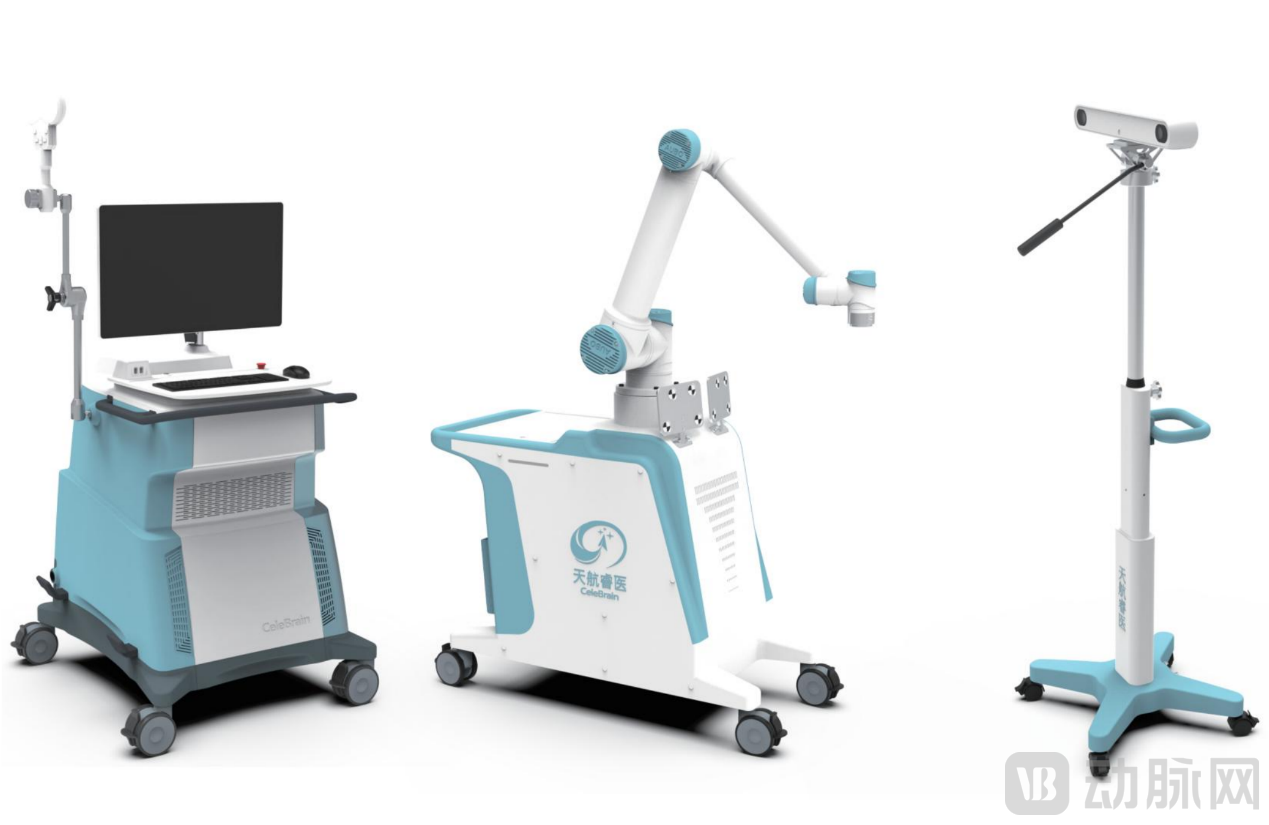
Product advantages are better aligned with clinical needs: It supports the calculation of personalized modulation protocols by leveraging a symptom disconnection network atlas built upon the world’s largest cerebrovascular disease sample repository, thereby establishing a precise experimental database. Meanwhile, it is complemented by newly developed equipment for assessing motor function impairment, enabling real-time and precise evaluation of intervention effects to form a closed-loop optimization mechanism of “assessment–treatment–feedback.” The software underlying the product’s modulation strategies has achieved technological breakthroughs, with related papers published in Annals of Neurology, and core patents have established a robust technical barrier for the product.
Leveraging the core model of medical-engineering interdisciplinary integration, the products in these three areas form an organic whole through data sharing, clinical collaboration, and commercial customer acquisition. This ultimately establishes a full-cycle brain health service platform covering “prevention – emergency care – rehabilitation – management,” thereby achieving comprehensive, end-to-end coverage and precise intervention for brain diseases.
The success of a product relies on a robust ecosystem of industry-academia-research collaboration. Tianhang Ruiyi has innovatively established a tripartite collaborative model involving “Tiantan Hospital + Capital Huizhi Research Institute + Tianhang Ruiyi,” creating a closed loop of “clinical practice–R&D–industrialization” to accelerate the translation of scientific and technological achievements.
As a benchmark in the field of neurology in China, Beijing Tiantan Hospital provides clinical requirements, core patents, and standards. The team led by Academician Wang Yongjun and the team led by Professor Liu Tao, founder of Tianhang Ruiyi, have an 11-year foundation of scientific research collaboration; this team is the proponent of the concept of the emergency stroke unit and the inventor of its patents.
Next is the Capital Huizhi Medical Technology Achievement Transformation Research Institute. As a professional institution for medical achievement transformation under key cultivation in Beijing, it has built a full-chain transformation service system to bridge the gap between scientific research and industry, serving as a powerful accelerator for the rapid implementation of collaborative achievements.
Finally, there is Beijing Tianhang Ruiyi Technology Co., Ltd., which specializes in the R&D of medical devices, AI algorithm optimization, and medical imaging technology. Leveraging its profound technical expertise, the company provides integrated services for emergency stroke units, ranging from customized equipment development and performance iteration to end-to-end technical support and operational assurance.
Today, Tianhang Ruiyi is at a critical stage of rapid development.
While advancing the NMPA certification for products such as emergency stroke unit modules, personalized precision regulation systems, and brain health assessments, the team is also addressing the challenges of high regulation and long cycles in the medical device industry.
“Each device requires individual certification; the approval process alone is a formidable challenge,” Li Zheng admitted. Yet he believes that however long the road, steady progress will lead to success: “We have rigorous scientists, innovative engineers, and pragmatic clinical experts. This interdisciplinary synergy is the key to solving all problems.”
Looking to the future, Li Zheng stated that his vision is straightforward: “I hope that within three years, stroke patients in both tier-1 cities and county-level hospitals will be able to receive thrombolytic therapy within 20 minutes; I hope that brain health assessments will become a routine part of health checkups, enabling more people to avoid the burden of brain diseases; and I hope that China’s innovations in medical-engineering integration will provide replicable and scalable solutions for global brain health management.”
On the track of medical innovation, Li Zheng and his team are still engaged in a fierce race against time. By leveraging advanced technologies to break through numerous barriers and employing efficient collaboration to solve complex problems, they warm every life with their sincere original aspiration. Much like the swift and precise treatments delivered in an emergency stroke unit, this breakthrough battle integrating medicine and engineering will undoubtedly help more people “outrun” the golden hour, safeguarding the most precious “brain wealth” of life. This is not only the persistent pursuit of an entrepreneur but also a vivid testament to China’s medical innovation shifting from “following” to “leading.”