

Glengary Brain Health Files IPO Prospectus Highlighting Breakthrough Therapy for Reversing Late-Stage Alzheimer’s Disease by Restoring Brain Energy Metabolism
According to statistics from Alzheimer's & Dementia,Alzheimer's disease (AD)It has become the leading cause of dementia worldwide and is projected to affect more than 150 million people by 2050. For a long time, the medical community has generally held that Alzheimer’s disease (AD) is irreversible once it progresses to the late stage; current therapeutic approaches primarily focus on preventing or delaying disease progression.
However, published in December 2025 in"Cell Reports Medicine"A landmark study published in challenges this century-old dogma. FromUniversity Hospitals, Case Western Reserve Universityresearch team, by modulating core molecules of brain energy metabolism, not only prevented the onset of AD in mouse models but also achieved pathological reversal and comprehensive restoration of cognitive function in the late stages of the disease. This study was conducted byDr. Andrew A. PieperServed as the corresponding author and provided the first proof that restoring the brainNicotinamide Adenine Dinucleotide (NAD+)Homeostasis is a key therapeutic pathway for Alzheimer’s disease, bringing new hope for the treatment of this intractable condition.

Figure: Dr. Andrew A. Pieper
(Source: University Hospitals)
For more than a century since its discovery, Alzheimer’s disease has been regarded as a progressive, irreversible neurodegenerative disorder. Current clinical treatmentPrimarily targets amyloid-beta (Aβ)or involve symptom-targeted interventions, but these therapies offer very limited clinical benefit to patients. Several anti-amyloid antibody drugs approved in recent years, although capable of reducing brain plaques, remain controversial in their efficacy for improving cognitive function. Meanwhile, a growing body of research is beginning to focus on metabolic homeostasis in the brain, particularlyNAD+ in Neuroprotectionthe role of. As a key coenzyme in cellular energy metabolism, NAD+ playsMaintaining DNA repair, oxidative stress defense, and mitochondrial functionplays a core role in.
As individuals age, NAD+ levels in the human body naturally decline, a reduction that is particularly pronounced in the brains of patients with Alzheimer’s disease (AD). Previous studies have shown thatNAD+ depletion is closely associated with neuroinflammation, blood-brain barrier (BBB) disruption, and synaptic dysfunction.Although supplementation with NAD+ precursors has demonstrated certain therapeutic efficacy in some animal models, traditional administration methods often lead to excessively high NAD+ levels, thereby posing potential carcinogenic risks. Consequently, achieving precise restoration of cerebral NAD+ homeostasis without adverse effects has become an urgent challenge in the treatment of Alzheimer’s disease (AD).
Notably, clinical observations have revealed that some individuals carrying pathogenic Alzheimer’s disease (AD) mutations can remain asymptomatic for decades before disease onset, with some even referred to as“Nondemented Individuals with Alzheimer’s Neuropathology” (NDAN), despite the presence of abundant amyloid plaques in the brain, normal cognitive function can still be maintained. This phenomenon suggests that there is an intrinsic “resilience mechanism” within the brain capable of resisting pathological damage. Researchers speculate that this resilience may be directly related to the brain’s ability to maintain NAD+ homeostasis. If drugs could be developed to activate this endogenous protective mechanism, it might break the curse of irreversible Alzheimer’s disease (AD).
To validate this hypothesis, the research team designed a series of rigorous experiments. They selected two classicAD Mouse Model: 5xFAD mice, characterized primarily by amyloid-beta deposition, and PS19 mice, characterized primarily by Tau pathology. These two models respectively recapitulate the two core pathological features of human Alzheimer's disease (AD). The research team employed a method namedP7C3-A20: A Neuroprotective Compound, this compound can activate nicotinamide phosphoribosyltransferase (Nampt), the rate-limiting enzyme in the NAD+ salvage pathway, thereby restoring intracellular NAD+ homeostasis without elevating NAD+ levels beyond physiological limits.
The experimental results are encouraging. In5xFAD Mouse ModelIn this study, when the mice had already reached the late stage of Alzheimer's disease (AD) at 6 months of age, exhibiting significant cognitive impairments and pathological changes, they were administered daily treatment with P7C3-A20 until 12 months of age (for a total of 6 months). The results showed that,P7C3-A20Not only restoredNAD+ Levels in the Cerebral Cortex and Hippocampus, and also reversed includingTau protein phosphorylation, blood-brain barrier leakage, oxidative stress, DNA damage, and neuroinflammationvarious pathological features, among others. More importantly, hippocampal neurogenesis and synaptic plasticity were significantly enhanced in the mice of the treatment group. In behavioral tests such as the Morris water maze, the treated mice exhibited performance comparable to that of wild-type healthy miceNo differencelearning and memory capabilities, achieving complete restoration of cognitive function.
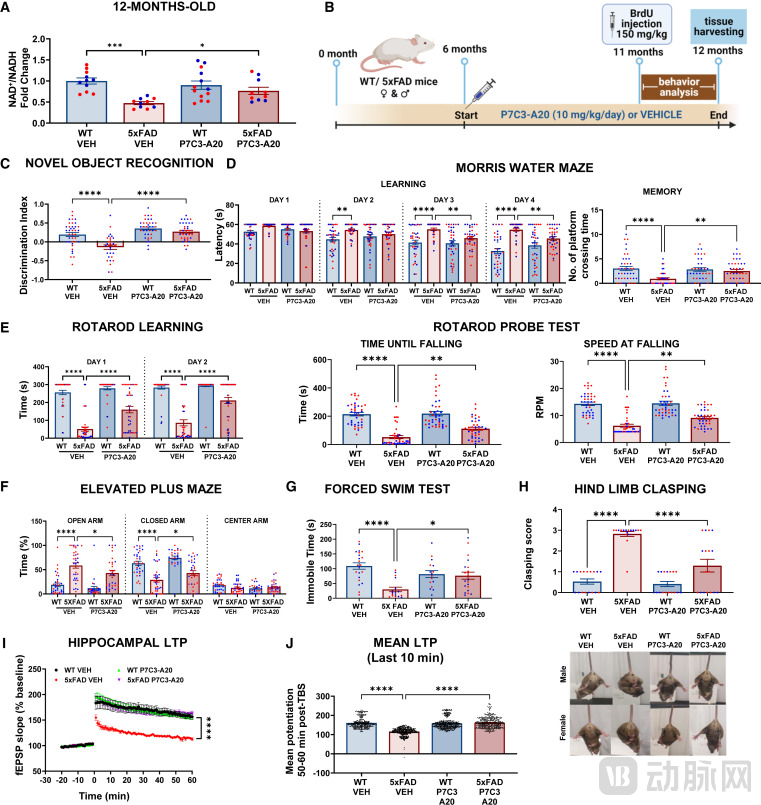
Figure: P7C3-A20 Restores Brain NAD(+) Homeostasis, Cognitive Function, and Synaptic Plasticity in Aged Symptomatic 5xFAD Mice
(Source: Cell Reports Medicine)
The same therapeutic effect was also observed inPS19 Tau Protein Pathology Mouse Modelwas validated. Treatment was initiated when the mice had already reached the end-stage of the disease (11 months of age), with an expected remaining lifespan of only one month. P7C3-A20 successfully reversed motor dysfunction and significantly reduced Tau protein aggregation in the brain. Furthermore, the research team monitored the blood biomarker phosphorylated Tau-217 (p-tau217). The data showed that plasma p-tau217 levels in the mice decreased significantly as treatment progressed, a finding highly consistent with changes in biomarkers currently used in clinical practice for diagnosing and monitoring AD patients. Dr. Pieper stated:“Observing this effect in two animal models driven by distinct genetic causes strengthens confidence that restoring NAD+ homeostasis in the brain may help patients with Alzheimer’s disease recover.”
The significance of this study lies not only in achieving disease reversal in animal models, but also in revealing cross-speciesCommon Mechanisms of AD. By comparing brain tissue transcriptome data from human AD patients and mouse models, the research team found that the degree of disruption in NAD+ homeostasis is correlated with disease severityPositive Correlation. In the human brain, particularly in NDAN individuals who exhibit pathological changes but do not display dementia symptoms, their gene expression profiles showNAD+ Homeostasiswas well preserved. This further corroborates that NAD+ homeostasis is a key resilience factor in the brain’s defense against neurodegenerative diseases.
Through multi-omics analysis, researchers also identified 46 types ofIn late-stage 5xFAD mice and human AD brainsProteins that undergo co-alterations and can be corrected by P7C3-A20 treatment. These proteins are involved in multiple key biological processes, including synaptic transmission, mitochondrial metabolism, and cytoskeletal maintenance, thereby providing a potential library of targets for the future development of precision therapeutics for human Alzheimer’s disease (AD). Compared with existing market-availableNAD+ SupplementsDifferent,P7C3-A20By modulating enzyme activity to maintain homeostasis, this approach avoids the potential tumor-promoting risks associated with excessive NAD+ levels, representing a significant advantage in terms of safety considerations.
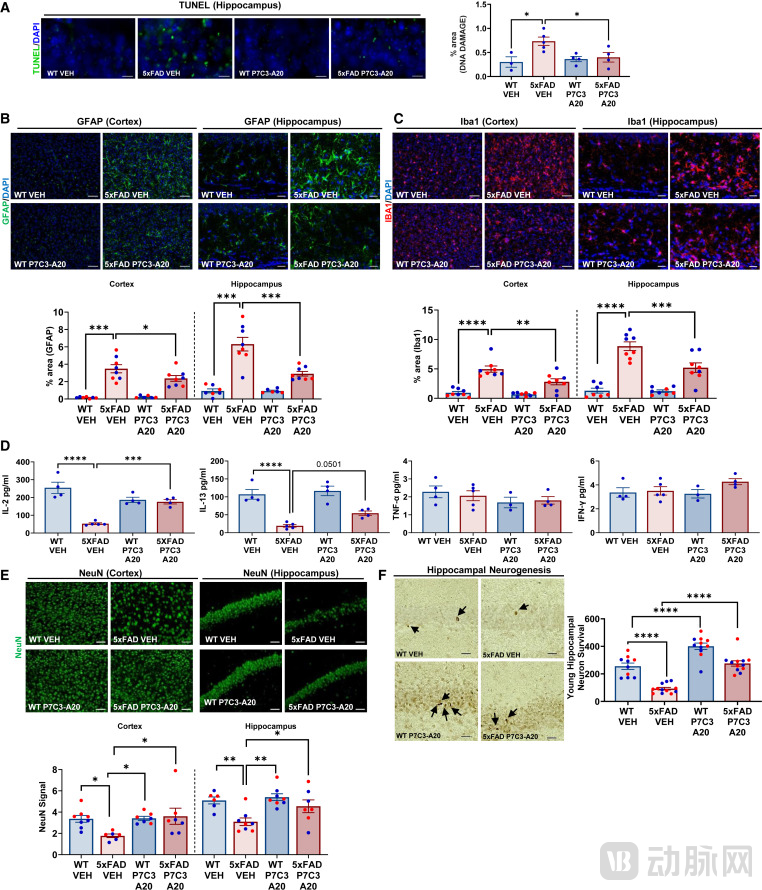
Figure: P7C3-A20 treatment reverses DNA damage and neuroinflammation and prevents cell death of young and mature neurons in aged symptomatic 5xFAD mice
(Source: Cell Reports Medicine)
Although current research findings are primarily based on animal models, the demonstrated potential for “reversal” has undoubtedly provided a significant boost to the field of Alzheimer’s disease (AD) treatment. The research team is actively advancing this technology toward clinical application, byDr. Pieper co-founded Glengary Brain HealthCommercial development has been initiated. As Dr. Pieper stated:“Under specific conditions, the damaged brain can self-repair and restore function.”Future studies will further explore the therapeutic potential of this approach in other age-related neurodegenerative diseases, with the aim of validating its safety and efficacy in humans through Phase I clinical trials.
This study, published in"Cell Reports Medicine"This research challenges the conventional belief that Alzheimer’s disease is irreversible through robust experimental data. It demonstrates that precisely restoring NAD+ metabolic homeostasis in the brain via pharmacological interventions can not only halt disease progression but also potentially activate the brain’s self-repair mechanisms, leading to the restoration of cognitive function. This represents not only a leap forward in scientific understanding but also offers hope for regaining memory and dignity to hundreds of millions of patients and their families worldwide.